

The Maharashtra government’s decision to order a detailed inquiry into the alleged illegal transfer and sale of more than 4,121 acres of Inam land linked to the revered Shri Tuljabhavani Devi Mandir is more than an administrative development. It touches a deeper question of temple governance, sacred property, public accountability, and the protection of institutions that have shaped the religious and cultural life of Maharashtra for centuries.
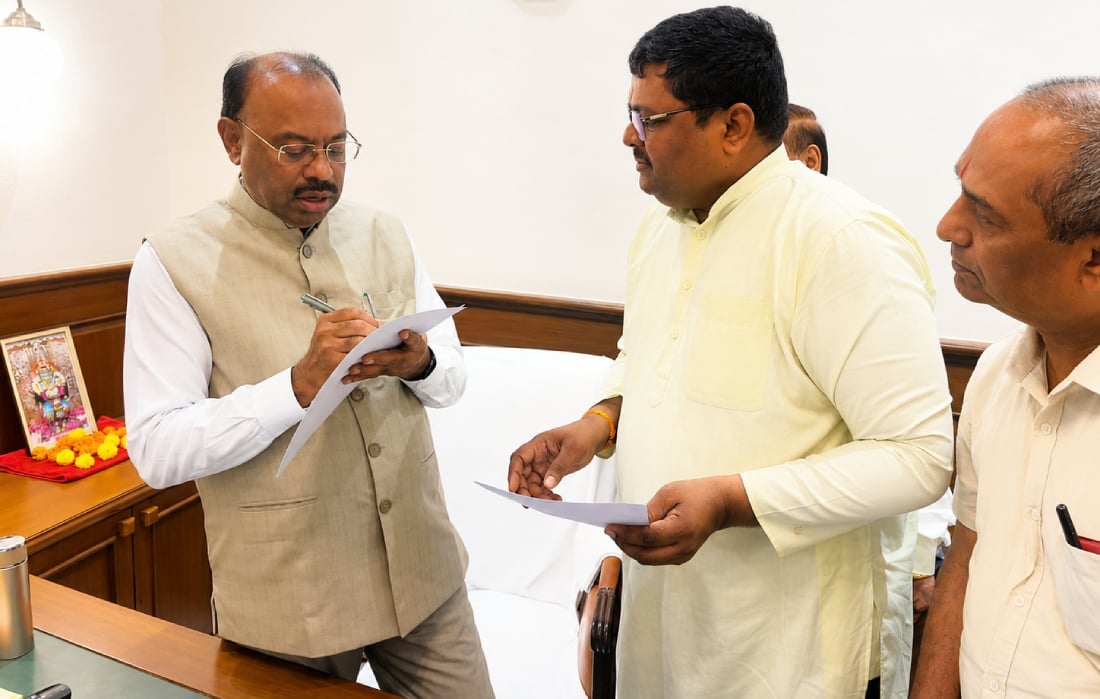
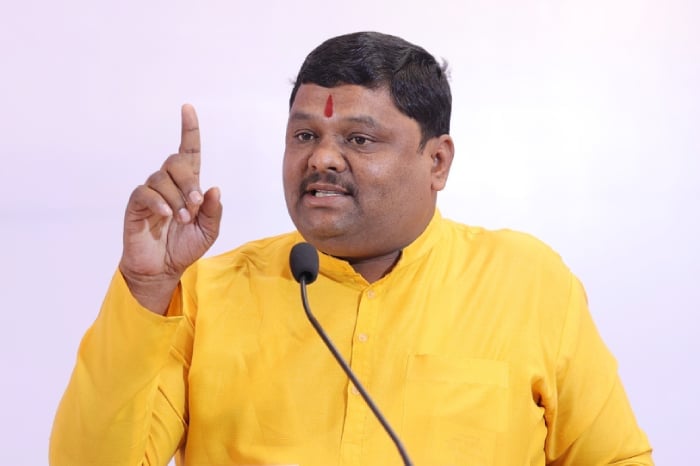
The inquiry follows a memorandum submitted by Maharashtra Mandir Mahasangh’s National Coordinator Shri Sunil Ghanwat. According to the available account, the memorandum raised concerns that land historically associated with the temple may have been transferred, alienated, or sold in a manner that requires official scrutiny. Since the matter concerns alleged irregularities, the inquiry must be understood as a fact-finding process rather than a final determination of guilt.
Shri Tuljabhavani Devi Mandir at Tuljapur in Maharashtra’s Dharashiv district occupies a special place in the devotional imagination of the region. For countless families, the temple is not merely a place of ritual worship; it is a living centre of faith, identity, pilgrimage, memory, and community continuity. The deity is revered across Maharashtra and beyond, and the temple’s history is closely associated with the broader Shakti tradition, Maratha memory, and the devotional geography of Hindu society.
This is why the alleged loss or misuse of temple land carries emotional weight. Temple property is not viewed by devotees as ordinary real estate. In the dharmic understanding of sacred endowments, such land is traditionally meant to sustain worship, festivals, annadanam, maintenance, pilgrimage services, priestly duties, heritage conservation, and the wider welfare functions attached to the temple. When such land becomes the subject of disputed transactions, the concern is not only financial; it is civilisational.
The term Inam land refers broadly to land historically granted for a specific purpose, often by rulers, local authorities, or patrons. In many temple contexts, such grants were intended to support daily rituals, lamps, offerings, festivals, religious learning, maintenance of temple premises, or service obligations connected with the deity. Over time, changes in land law, tenancy rights, revenue records, administrative control, and local occupation patterns have made many such lands legally complex.
A technical inquiry into the alleged Shri Tuljabhavani Mandir land scam would therefore need to examine several layers of evidence. These may include original grant records, revenue extracts, mutation entries, tenancy documents, sale deeds, trust registers, government permissions, court orders, land ceiling records, and correspondence between temple authorities and state departments. The inquiry would also need to determine whether any transfers complied with the applicable laws governing religious endowments, public trusts, Inam lands, and charitable property.
The phrase “illegal transfer and sale” must be handled with precision. If land belongs to a temple trust, its alienation generally cannot be treated like a private sale between individuals. Religious and charitable trust property is usually subject to higher standards of scrutiny because it is held for a defined public or sacred purpose. Any sale, lease, mutation, or change in possession may require approvals, public-interest reasoning, valuation safeguards, and compliance with statutory procedures.
In practical terms, the government inquiry should clarify whether the land in question was legally owned by the temple, whether it was recorded in the name of the deity, trust, service-holder, occupant, or government authority, and whether subsequent transactions altered that status lawfully. It should also identify whether any public servants, private parties, intermediaries, or institutional office-bearers had a role in facilitating irregular transfers, if such irregularities are established.
The scale of the allegation makes the matter significant. A figure of more than 4,121 acres is not a minor clerical dispute. Land of that magnitude can affect temple revenue, agricultural income, local livelihoods, development pressures, and the long-term ability of the institution to serve devotees. If even a portion of such land was alienated without lawful authority, the loss could be structural rather than temporary.
At the same time, a responsible public discussion must avoid premature conclusions. Many temple land disputes involve overlapping claims, old records, missing files, tenancy protections, hereditary service arrangements, government interventions, and decades of administrative neglect. A fair inquiry must separate deliberate wrongdoing from historical confusion, procedural irregularity, and genuine legal ambiguity.
The role of Maharashtra Mandir Mahasangh in submitting the memorandum reflects a growing public concern around temple governance and heritage protection. Across India, many dharmic institutions hold land that was historically dedicated to religious, educational, charitable, and cultural purposes. When such lands are poorly documented or inadequately protected, they become vulnerable to encroachment, undervalued transactions, political interference, and private capture.
For devotees, this issue is often experienced in a deeply personal way. A person visiting Tuljapur may see the temple through the lens of darshan, vows, family tradition, and gratitude. Yet behind that sacred experience stands a large administrative framework: land records, trust management, revenue systems, police protection, sanitation, crowd management, restoration, accounting, and legal compliance. When governance fails, the devotional experience also becomes vulnerable.
The Shri Tuljabhavani Mandir inquiry should therefore be seen as an opportunity to strengthen institutional trust. A transparent investigation can help establish the factual position of the land, identify the legal status of disputed parcels, recover property where recovery is legally possible, and recommend systems that prevent future alienation. Such a process can also reassure devotees that sacred endowments are being treated with seriousness.
A comprehensive inquiry should ideally include digitisation of land records, geo-tagging of temple properties, reconciliation of revenue entries with trust records, public disclosure of non-sensitive findings, independent valuation review, and a clear timeline of all transfers. It should also examine whether permissions were granted by competent authorities and whether those permissions were based on proper legal and financial reasoning.
One of the recurring problems in temple land administration is the gap between religious ownership and revenue documentation. In many cases, land may have been dedicated to a deity or temple, but the actual revenue records may reflect managers, service-holders, tenants, cultivators, trustees, or government departments. Over generations, this gap can become a route for confusion or misuse. Correcting it requires legal care, not slogans.

The inquiry also raises a larger policy question: how should Maharashtra protect religious endowments while respecting lawful occupancy rights and due process? A just system must protect temples from land grabbing and unauthorized alienation, but it must also ensure that ordinary cultivators or occupants are not treated unfairly without evidence. Dharma-based public ethics require both protection of sacred institutions and fairness toward individuals.
This balance is important for unity among dharmic traditions. Hindu, Buddhist, Jain, and Sikh institutions have all historically relied on endowments, community donations, land grants, and public trust structures to sustain worship, learning, pilgrimage, service, and cultural continuity. The protection of sacred and charitable property is therefore not a narrow sectarian issue. It is part of a wider civilisational responsibility to preserve institutions that serve society across generations.

From an administrative standpoint, the Maharashtra government’s decision to order a high-level inquiry is significant because it acknowledges that the allegations deserve formal scrutiny. The credibility of the process will depend on the independence of investigators, access to records, cooperation from departments, protection for complainants and witnesses, and the willingness to act on findings rather than merely produce a report.
The inquiry should also examine whether previous complaints were made, whether departmental warnings were ignored, and whether any transactions occurred despite legal restrictions. If there were failures by officials, trustees, land officers, or private beneficiaries, accountability should be proportionate and evidence-based. If records show that certain allegations are unproven, that too should be stated clearly. Public confidence depends on both firmness and fairness.
Temple governance in India often suffers when records remain inaccessible to ordinary devotees. Many devotees contribute money, time, and faith, but rarely know how temple assets are managed. A case involving more than 4,121 acres demonstrates why better public reporting is necessary. Annual asset statements, audited accounts, litigation disclosures, land maps, and status reports can help prevent disputes from festering silently for decades.
The alleged Shri Tuljabhavani Mandir land scam also highlights the importance of professional temple administration. Sacred institutions require more than ritual continuity; they require legal expertise, archival discipline, financial transparency, conservation planning, and community-sensitive governance. When temples are treated casually as revenue assets or political instruments, their deeper role in society is diminished.
For Maharashtra, the matter has particular resonance. The state’s temple traditions are intertwined with bhakti movements, village life, pilgrimage routes, warrior memory, local economies, and social service. Temples are not isolated monuments. They support vendors, artisans, priests, farmers, pilgrims, transport workers, musicians, scholars, and families whose lives are connected to seasonal festivals and daily worship.
That broader ecosystem explains why land disputes around temples generate strong reactions. A temple’s land is often part of its economic backbone. If properly managed, it can fund maintenance, pilgrim amenities, educational projects, cultural preservation, environmental care, and charitable services. If mismanaged, it can become a source of litigation, resentment, and irreversible loss.
The next stage should be watched carefully. The government must define the inquiry’s scope, identify the authority conducting it, set a timeline, preserve records, and prevent further disputed transactions while the matter is under examination. A temporary freeze on questionable transfers, where legally permissible, may be necessary to prevent the facts from changing before the inquiry concludes.
Ultimately, the Shri Tuljabhavani Mandir land inquiry is a test of governance. It asks whether the state can protect sacred endowments with seriousness, whether civil society concerns can be examined without politicisation, and whether devotees can trust that land dedicated to dharma will remain aligned with its intended purpose. The answer will matter not only for Tuljapur, but for temple governance across Maharashtra.
The most constructive outcome would be a transparent, legally sound, and time-bound process that establishes facts, restores what can lawfully be restored, penalizes proven wrongdoing, and creates durable safeguards for the future. Such an outcome would honour the faith of devotees while strengthening public accountability. In that sense, the inquiry is not only about 4,121 acres of land; it is about the integrity of sacred trust itself.
Inspired by this post on Hindu Jagruti Samiti.









Leave a Reply
You must be logged in to post a comment.