
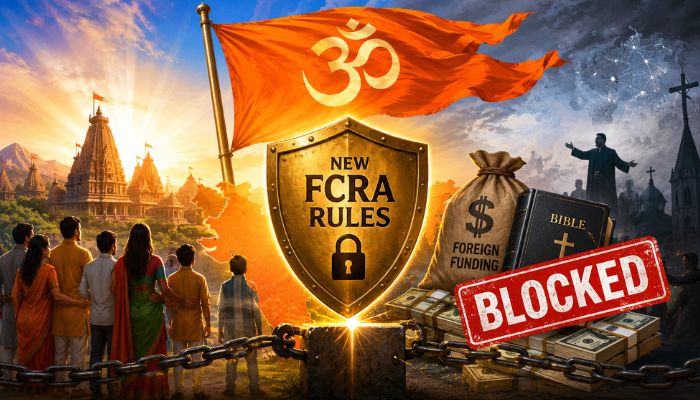
FCRA 2026 and the new legal architecture of foreign funding
The June 22, 2026 notification of the Foreign Contribution (Regulation) Amendment Rules, 2026 marks an important shift in India’s approach to foreign-funded civil society activity. The amendment does not rewrite the Foreign Contribution (Regulation) Act, 2010 itself. Instead, it modifies the Foreign Contribution (Regulation) Rules, 2011, the delegated regulatory framework through which registration, prior permission, renewal, disclosure, activity classification, and utilisation of foreign contribution are administered.
This distinction matters. A change to the parent Act requires the ordinary legislative process in Parliament. A change to the Rules can be notified by the Union Ministry of Home Affairs under the authority already granted by the Act, subject to the broader constitutional and statutory checks that apply to delegated legislation. The result is a legally significant but procedurally different reform: Parliament has not yet amended the FCRA Act through this notification, but the executive has tightened the operational rules governing how foreign money may enter and be used in India.
The practical impact is substantial. Organisations seeking FCRA registration or prior permission must now define their objectives with far greater precision, disclose more information about their functioning, identify the real source of routed donations, and operate within expressly specified purposes and geographical areas. For a country where charitable work, religious activity, educational service, tribal welfare, cultural preservation, and ideological mobilisation often intersect in complex ways, this is not a minor administrative adjustment. It is a structural attempt to convert ambiguity into accountability.
The most debated element is the explicit exclusion of proselytisation from several religious-purpose categories. This does not prohibit all faith-based service, nor does it deny the legitimacy of worship, scripture preservation, religious education, pilgrim support, community kitchens, devotional music, satsangs, discourses, meditation retreats, or documentation of indigenous and tribal traditions. Instead, it draws a legal boundary: foreign contribution may support declared religious and cultural activities, but it cannot be used under those headings as a vehicle for conversion-oriented mobilisation.
From a Dharmic civilisational perspective, the issue is not theological insecurity. Hindu, Buddhist, Jain, and Sikh traditions have historically accommodated debate, reform, renunciation, devotion, philosophical plurality, and multiple paths of practice. The concern arises when vulnerable communities, especially economically distressed rural and tribal populations, become the object of externally funded campaigns that combine welfare dependency with religious persuasion. The new FCRA framework seeks to protect voluntary belief while discouraging financial inducement, institutional opacity, and foreign-directed cultural intervention.
Why the earlier framework created regulatory ambiguity
The 2011 Rules allowed associations to seek registration under broad categories such as social, religious, cultural, economic, and educational programmes. These categories reflected the language of the FCRA Act, but their breadth also created interpretive difficulty. A single organisation could describe its work as educational, welfare-oriented, cultural, or religious while conducting field activities that were far more ideological or conversion-oriented than its formal paperwork suggested.
For regulators, this produced a reactive enforcement model. The government could suspend or cancel a registration after receiving intelligence inputs, audit findings, or evidence of diversion. Yet the rulebook itself did not always require the same degree of advance clarity about purpose, geography, donor source, public messaging, and field activity. This meant enforcement often depended on case-by-case investigation after foreign funds had already been received and deployed.
Such ambiguity is especially consequential in areas where social service and religious outreach overlap. Schools, health camps, disaster relief, child welfare programmes, hostels, skill centres, and tribal development initiatives can perform legitimate public service. At the same time, they can also become instruments of cultural pressure if financial dependence, identity erosion, or targeted religious messaging is built into the programme design. The regulatory challenge is to permit charity while preventing concealed proselytisation funded from abroad.
The 2026 Rules respond by shifting the compliance burden to the entry point. Instead of allowing loosely framed objectives and then investigating misuse later, the amended framework requires organisations to commit to precise purposes at the application stage. This is a major change in administrative philosophy. It treats foreign contribution not merely as private philanthropy, but as a regulated flow of money with potential social, cultural, political, and national-security implications.
The new Schedule and the demand for precise objectives
One of the central reforms is the introduction of a government-notified Schedule of permissible activities. Organisations can no longer rely on vague self-description alone. They must select objectives from defined categories and identify the states or Union Territories where they will operate. These details are expected to appear in the registration certificate itself, thereby giving both the regulator and the public a clearer basis for evaluating compliance.
The Schedule covers five broad domains: social, religious, cultural, economic, and educational. This reflects continuity with the parent FCRA framework, but the new system adds specificity within those domains. The purpose is not to eliminate civil society activity. It is to make the declared activity auditable. If an organisation says it is receiving foreign contribution for pilgrim amenities, scripture preservation, cultural documentation, or educational service, the funds must be traceable to that declared activity rather than diverted into an undisclosed campaign.
Under the religious category, the listed activities include construction, renovation, and maintenance of places of worship such as temples, mosques, churches, gurudwaras, monasteries, synagogues, and other religious sites. The framework also recognises preservation, printing, translation, digitisation, and study of sacred scriptures and commentaries. In addition, it permits pilgrim amenities such as drinking water, sanitation, shelter, dharamshalas, langars, annadan, and community kitchens.
This is important because the Rules do not treat religious life as illegitimate. They acknowledge that faith communities require institutions, texts, learning, music, rituals, food service, shelter, and heritage preservation. In the Dharmic context, such activities are not peripheral. A gurudwara langar, a Jain pathshala, a Buddhist monastery library, a Hindu temple annadanam, or the preservation of oral tribal traditions can all be expressions of living community life. The legal concern begins when these activities are converted into instruments for proselytisation using foreign funds.
The phrase “excluding proselytisation” therefore becomes the crucial limiting condition. It separates protected and permissible religious-cultural activity from externally financed conversion activity. In practical terms, an organisation may support preservation of a faith tradition, but it cannot use that category as a cover for persuading communities to abandon their inherited traditions through inducement, pressure, dependency, or organised targeting.
Protection of indigenous and tribal faith practices
The treatment of indigenous and tribal faith practices deserves particular attention. Many tribal communities in Bharat preserve sacred geographies, ancestor traditions, seasonal rites, ecological ethics, oral epics, local deities, and community ceremonies that do not always fit neatly into modern institutional categories. These traditions have often been vulnerable not because they lack depth, but because they lack the bureaucratic language and institutional infrastructure used by modern NGOs.
The amended Rules recognise documentation, maintenance, preservation, and rejuvenation of indigenous and tribal faith practices as permissible religious activities, while excluding proselytisation. This is a significant civilisational distinction. It allows communities to preserve their own inherited practices without turning preservation work into an entry point for conversion. In that sense, the Rules support cultural continuity rather than religious competition.
For many families in rural Bharat, cultural identity is not an abstract theory. It is carried through festivals, food, marriage customs, sacred groves, local temples, village deities, songs, oral histories, and rites for ancestors. When these practices weaken under economic distress or external pressure, the loss is not merely religious. It affects memory, kinship, language, ecological knowledge, and community confidence. A regulatory framework that distinguishes preservation from proselytisation therefore has direct social relevance.
This approach also aligns with the broader goal of unity among Dharmic traditions. Hinduism, Buddhism, Jainism, and Sikhism have different theological vocabularies and institutional histories, yet they share a civilisational respect for sadhana, self-discipline, ethical conduct, reverence for teachers, compassion, restraint, and the possibility of multiple spiritual paths. A legal rule that protects communities from funded conversion pressure can strengthen inter-Dharmic solidarity without denying lawful religious freedom to any citizen.
Foreign staff, key functionaries, and real control
Another major change concerns foreign nationals in key organisational roles. Associations with foreign nationals, other than persons of Indian origin, as key functionaries will ordinarily not be considered for FCRA registration or prior permission. The government may still allow exceptions in specific cases, but the default rule now reflects a sharper concern: foreign-funded activity in India should not be effectively controlled by foreign personnel operating through Indian legal structures.
The Rules also expand the meaning of “key functionary.” The term now includes directors, partners, trustees, the Karta of a Hindu Undivided Family, office-bearers, and any person responsible for management or control. This prevents a narrow reading of responsibility. It is no longer sufficient for formal office-holders to claim that real decisions were made elsewhere. Regulatory accountability follows actual control, not merely the name printed on a letterhead.
This is technically important because many compliance failures occur through layered control. A legally Indian association may have Indian trustees, but programme strategy, donor conditions, campaign design, communications, and field priorities may be shaped by persons or institutions outside the country. By widening the definition of key functionary, the Rules attempt to make hidden command structures harder to maintain.
Donor transparency and social media disclosure

The amended framework also strengthens transparency around both money and messaging. Organisations applying for registration must disclose details of their social media accounts. This is not a cosmetic requirement. In the present age, ideological mobilisation often occurs through digital platforms as much as through physical meetings. Social media accounts can reveal whether an organisation’s public communication matches its declared FCRA purpose.
The Rules also require disclosure of the ultimate donor when funds are routed through intermediary remittance vehicles or Donor Advised Funds. This addresses a major transparency gap. Foreign contribution can be obscured when money passes through layers of institutional giving, philanthropic vehicles, or advisory funds. Requiring the original source helps regulators distinguish ordinary charity from coordinated influence operations, ideological funding networks, or campaigns designed to conceal donor intent.
In policy terms, this is a move from formal compliance to substantive compliance. Formal compliance asks whether money arrived through a recorded channel. Substantive compliance asks who supplied the money, why it was supplied, how it was used, and whether the use matched the declared purpose. That shift is essential in a world where civil society funding can be philanthropic, humanitarian, political, religious, reputational, or strategic, depending on the donor and programme design.
Renewal, utilisation, and dormant licences
The 2026 Rules also introduce sharper utilisation standards. For renewal, organisations must show that they have spent at least ₹10 lakh of foreign contribution on their selected activities over the previous two financial years. This requirement is designed to discourage dormant or inactive organisations from holding FCRA permissions without meaningful declared activity.
For organisations operating under prior permission, subsequent instalments of foreign funds may be linked to utilisation of at least 75 per cent of the previous tranche, subject to verification. This reduces the risk of funds accumulating without transparent programme execution. It also gives the regulator a measurable standard: money should move from donor to declared activity, not remain parked, layered, or repurposed without scrutiny.
Existing registered organisations have been given one year to update their declared purposes and operational areas. This transitional period is important because the Rules do not merely affect new applicants. They require the existing FCRA ecosystem to align with the new Schedule. Every organisation must now translate broad claims into defined commitments.
The Rules also provide for additional application details and fees where extra states or purposes are added. Annual returns are expected to include a detailed activity report along with financial statements. Organisations must also declare books or articles published, reflecting the continuing FCRA restriction on news and current affairs production or broadcast by prohibited categories. These details may appear administrative, but together they create a more complete audit trail.
The pending FCRA Amendment Bill, 2026
The Rules should also be understood alongside the Foreign Contribution (Regulation) Amendment Bill, 2026, introduced in the Lok Sabha on March 25, 2026. Unlike the June 22 Rules notification, the Bill proposes changes to the parent FCRA Act itself. Its central feature is a revised framework for handling foreign contribution and assets when an organisation’s registration is cancelled, surrendered, not renewed, denied renewal, or otherwise ceases.
Under the proposed Bill, foreign contribution and assets created wholly or partly from foreign contribution may vest provisionally in a Designated Authority notified by the central government. The Authority would supervise and maintain such assets. If registration is later renewed, restored, or freshly granted, unutilised contribution and assets may be returned. If registration is not restored within the prescribed period, or if the organisation becomes defunct, the vesting may become permanent and the assets may be used for public purposes or transferred to government agencies.
This proposal addresses a difficult enforcement problem. When an organisation loses FCRA status, the question is not only what happens to future donations. The harder question is what happens to land, buildings, schools, hospitals, hostels, equipment, and other assets created over many years using foreign contribution. Without a clear legal mechanism, such assets can sit in uncertainty while operations continue indirectly. The Bill attempts to close that gap by creating an institutional process for supervision, use, transfer, or disposal.
The Bill also specifies duties for persons and key functionaries whose assets are vested, including access to accounts and records, restrictions on transfer, and maintenance of assets under the Authority’s supervision. It provides an appeal route to the District Judge within 90 days. This is important because strong enforcement powers must be accompanied by procedural remedies. A serious regulatory state requires both accountability and due process.
Religious freedom and national self-determination
The deeper debate around FCRA 2026 concerns the balance between religious freedom and national self-determination. Article 25 of the Constitution protects freedom of conscience and the right freely to profess, practise, and propagate religion, subject to public order, morality, health, and other constitutional provisions. That constitutional guarantee belongs to citizens and persons, not to unlimited foreign financing networks. The regulation of foreign contribution does not abolish religious freedom; it governs the external funding channels through which organisations operate.
This distinction is often missed. A person may hold, discuss, debate, or change religious belief through genuine conviction. A community may conduct worship, education, service, and philosophical exchange. But a sovereign democracy is entitled to ask whether foreign money is being used to reshape vulnerable communities through inducement, opacity, or organised cultural pressure. The new Rules operate in that space: they regulate funded institutional activity rather than private conscience.
For Dharmic communities, the reform carries emotional weight because the issue is not merely legal. Many communities have lived through a long experience of cultural misdescription, where their practices were labelled primitive, superstitious, or incomplete by external actors who arrived with money, schools, medical aid, and a theology of replacement. The new framework signals that service to the poor must not become a transaction in which dignity, ancestry, and inherited worship are quietly placed on the bargaining table.
At the same time, the law must be applied with care. Genuine humanitarian work should not be obstructed merely because it is faith-inspired. India’s plural society includes many religious institutions that run hospitals, schools, shelters, disaster relief programmes, and community kitchens in good faith. The legitimacy of FCRA 2026 will depend on even-handed enforcement, transparent reasoning, and a clear distinction between service and coercive or inducement-based proselytisation.
A Dharmic reading of the reform
A Dharmic reading of the new FCRA Rules does not require hostility to any community. It requires clarity about power. Foreign-funded institutions can possess money, professional staff, media capacity, legal teams, educational networks, and international legitimacy far beyond that of a local village, tribal family, small temple trust, monastery, gurudwara committee, Jain sangh, or traditional learning centre. When such asymmetry is directed toward conversion, the result is not a free encounter between ideas. It is an unequal social process shaped by material leverage.
The 2026 Rules attempt to reduce that imbalance. They do so by demanding precise objectives, identifying operational geography, requiring donor transparency, limiting foreign control, expanding accountability for key functionaries, linking renewal to real utilisation, and excluding proselytisation from specified religious categories. These mechanisms are technical, but their combined effect is civilisational: they affirm that Bharat’s communities are not passive fields for externally funded religious competition.
The reform also encourages responsible philanthropy. Foreign donors who genuinely wish to support drinking water, sanitation, education, disaster relief, heritage preservation, community kitchens, scripture digitisation, pilgrim facilities, tribal cultural documentation, or ethical social service can still do so through lawful channels. What changes is the expectation of transparency. Donor intent, organisational purpose, field area, and actual use must now align more closely.
Conclusion: accountability without erasing pluralism
The Foreign Contribution (Regulation) Amendment Rules, 2026 represent one of the most consequential refinements of India’s foreign funding regime in recent years. They do not end charity, religious service, cultural preservation, or educational work. They require such work to be declared with specificity, funded with transparency, and conducted without using protected categories as a cover for proselytisation.
The reform is especially significant for Dharmic traditions because it recognises the vulnerability of indigenous, tribal, rural, and economically weaker communities to externally financed identity transformation. By protecting preservation while excluding conversion activity, the Rules create a more defensible boundary between spiritual freedom and funded religious targeting.
The enduring test will be implementation. If applied fairly, the new FCRA framework can strengthen national sovereignty, protect cultural continuity, and preserve space for genuine service across all faiths. It can also help Hindu, Buddhist, Jain, Sikh, tribal, and other indigenous traditions sustain their own institutions with dignity, without being displaced by opaque foreign-funded campaigns. In that sense, FCRA 2026 is not merely a compliance update. It is a statement that compassion, charity, and cultural respect must travel together.
Inspired by this post on Hindu Post.








Leave a Reply
You must be logged in to post a comment.