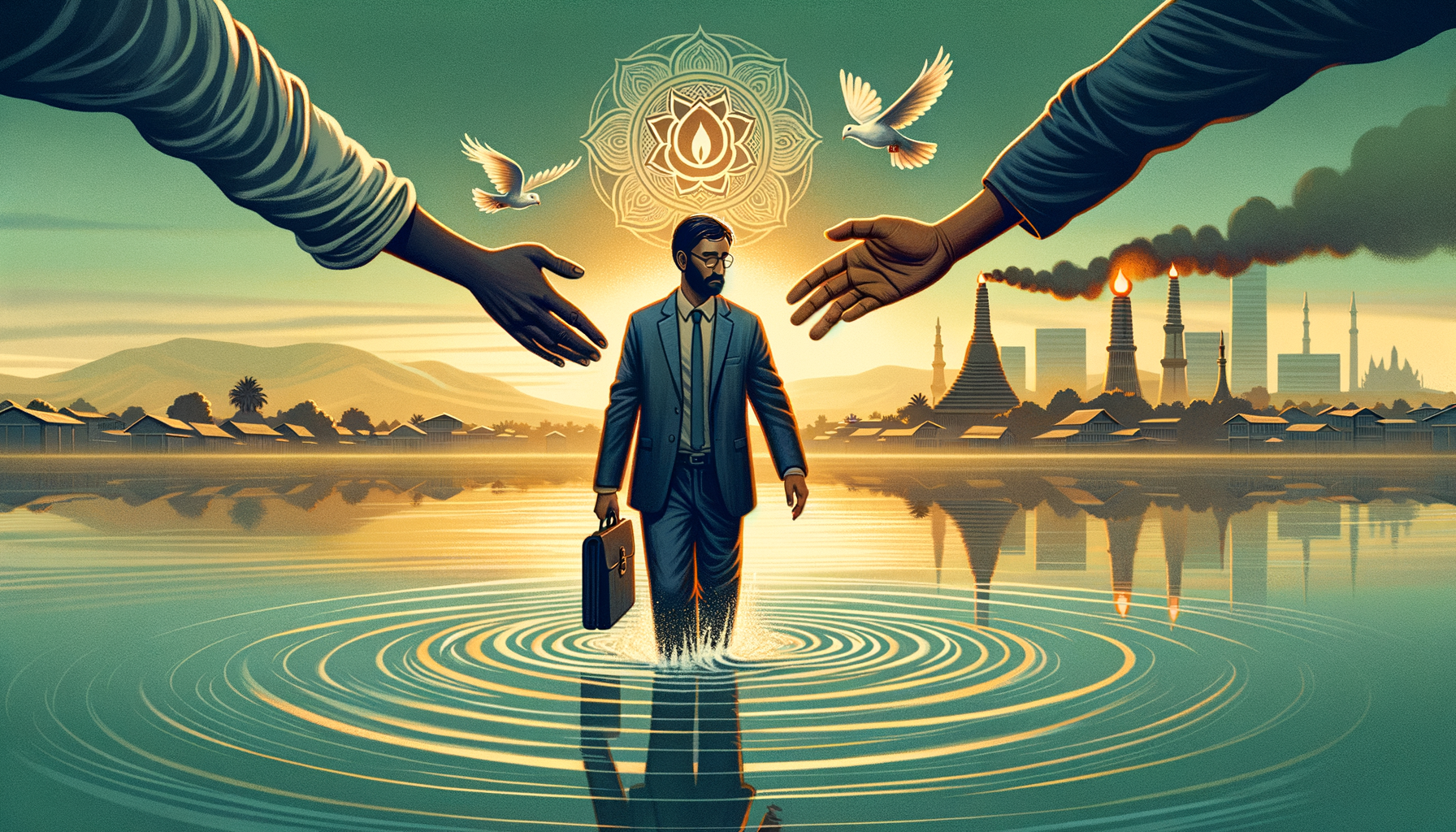
Reports from Bangladesh on January 2, 2026 describe a brutal assault on a Hindu businessman, identified locally as Khokon Chandra Das, who was stabbed and then set on fire. Demonstrating extraordinary presence of mind, he escaped immediate death by leaping into a nearby pond, an act that likely saved his life. Community sources indicate this was the fourth such targeted attack against a member of the Hindu minority within a two-week period, intensifying public concern about the safety of religious minorities and the broader climate of communal harmony.
According to local accounts, the sequence of violence—stabbing followed by an attempt at immolation—underscores an alarming escalation in method and intent. Emergency responders and residents reportedly assisted in transporting the injured victim for medical care, while law enforcement has been urged to conduct a swift, transparent, and credible investigation. Ensuring due process and accountability remains central to restoring public confidence and deterring further violence.
The pattern of repeated incidents in a short timeframe has amplified calls from civil society organizations, rights advocates, and community leaders for stronger safeguards for minority rights in Bangladesh. While comprehensive national data are needed for a fuller assessment, the recurrence of such attacks has heightened perceptions of vulnerability among Hindu minorities. It is essential that analysis remains evidence-based and focused on protection, justice, and prevention, avoiding generalizations that could inflame tensions.
Beyond the immediate facts, the human impact is profound. Families describe anxiety about daily routines, students and shopkeepers recount changes to commute and business hours, and diaspora communities follow developments with concern for relatives back home. At the same time, many also point to remarkable instances of neighbourly assistance—people of different backgrounds stepping in to help, call emergency services, and provide witness statements—reminders that social trust and solidarity can endure even under stress.
In this context, principles shared across dharmic traditions—ahimsa (non-violence), karuna (compassion), daya (empathy), and seva (service)—offer constructive pathways to reduce harm and build resilience. Hindus, Buddhists, Jains, and Sikhs alike emphasize the sanctity of life and the moral responsibility to protect the vulnerable. These values can guide community outreach, interfaith dialogue, and conflict de-escalation efforts, reinforcing unity and mutual respect in the face of fear and polarization.
Constructive responses may include: rigorous, impartial investigations; enhanced community policing and early-warning mechanisms; witness protection to encourage truthful testimony; rapid medical and psychosocial support for survivors; and formal channels for documenting incidents, such as rights hotlines and legal aid. Civil society can convene interfaith roundtables and youth-led harmony initiatives, while educators and media professionals can prioritize accuracy, context, and ethical reporting to avoid sensationalism.
For policymakers, clear benchmarks for minority protection—aligned with constitutional guarantees and international human rights standards—can help translate concern into measurable progress. Transparent updates from authorities, collaboration with local communities, and targeted safety measures in high-risk areas are practical steps toward deterrence and trust-building. Ultimately, safeguarding minority rights strengthens the rule of law and benefits society as a whole.
The survival of Khokon Chandra Das, despite grave injuries, stands as both a testament to human resilience and a stark warning about escalating risks. The immediate priority is justice and comprehensive care for the survivor; the larger imperative is sustained commitment to communal harmony and the protection of all minorities in Bangladesh. A shared ethic of non-violence and dignity—rooted in the dharmic traditions and embraced by the broader civic community—offers the surest path forward.
Inspired by this post on Struggle for Hindu Existence.