Gurukula’s Interfaith Week: Cultivating Respect, Curiosity, and Devotion in Young Hearts

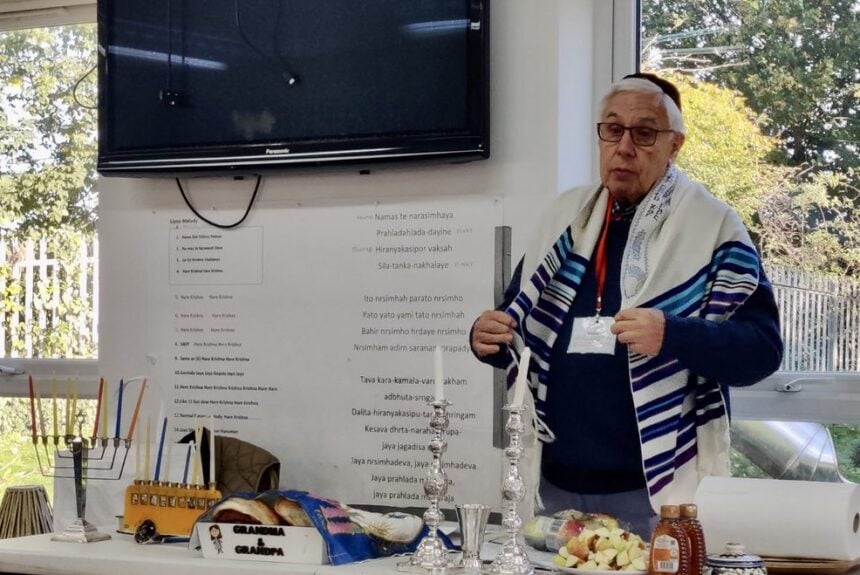
In a bright classroom, a guest wearing a striped tallit explains Jewish ritual items—silver Shabbat candlesticks, a hanukkiah, food and texts—during Gurukula’s Interfaith Week session.

National Interfaith Week at Gurukula – The Hare Krishna Primary School unfolded as a structured, values-based learning experience that strengthened respect, empathy, and unity. Grounded in Vaishnava principles and an ISKCON-inspired ethos, the programme encouraged students to engage with spiritual diversity while reaffirming their own devotional foundations.

Across the school, pupils participated in age-appropriate activities that included reflective discussions, guided inquiry, and thoughtfully arranged visits. These learning moments fostered interfaith dialogue, encouraged curiosity about traditions beyond one’s own, and highlighted shared ethical commitments such as compassion, service, and truthfulness.

The educational approach emphasized the unity of dharmic traditionsHinduism, Buddhism, Jainism, and Sikhismwhile maintaining a respectful openness to wider faith perspectives. By exploring common values and diverse expressions of devotion, students recognized how spiritual paths can converge on principles of harmony, nonviolence, and mutual dignity.

Teachers observed that students articulated their insights with growing confidence, often noting the comfort of discovering similarities across belief systems. Many reported feeling more connected to their own practice through exposure to othersan outcome consistent with experiential learning and social-emotional development goals in holistic education.

Carefully facilitated classroom conversations promoted critical thinking without controversy, inviting pupils to compare rituals, symbols, and narratives in a balanced, age-appropriate manner. This method helped them refine their understanding of religious diversity while cultivating gratitude for the guidance of the guru, the importance of seva, and the joy of kirtan and remembrance.

As a community initiative, Interfaith Week reinforced the school’s commitment to respectful dialogue, ethical citizenship, and spiritual inclusivity. The experience affirmed that when curiosity is guided by compassion and devotion, children can engage the wider world with humility and confidenceembodying unity in diversity and carrying forward a culture of harmonious coexistence.


Inspired by this post on Dandavats.


Graphic with an orange DONATE button and heart icons on a dark mandala background. Overlay text asks to support dharma-renaissance.org in reviving and sharing dharmic wisdom. Cultural Insights, Personal Reflections.

FAQs

What was the purpose of Gurukula’s Interfaith Week?

National Interfaith Week at Gurukula was designed as a structured, values-based learning experience that strengthened respect, empathy, and unity. It encouraged pupils to engage with spiritual diversity while remaining grounded in Vaishnava principles and their own devotional foundations.

Which traditions did students explore during the programme?

The programme emphasized the unity of dharmic traditions, including Hinduism, Buddhism, Jainism, and Sikhism, while also maintaining respectful openness to wider faith perspectives. The featured classroom image also shows a visiting presenter sharing Jewish traditions through ritual items and discussion.

How did Gurukula make interfaith learning age-appropriate?

Pupils participated in reflective discussions, guided inquiry, and thoughtfully arranged visits. Classroom conversations invited students to compare rituals, symbols, and narratives in a balanced way that promoted critical thinking without controversy.

What values were highlighted across different faith traditions?

Students explored shared ethical commitments such as compassion, service, truthfulness, harmony, nonviolence, and mutual dignity. The article connects these values with gratitude for the guru, the importance of seva, and the joy of kirtan and remembrance.

What outcomes did teachers observe from Interfaith Week?

Teachers observed that students expressed their insights with growing confidence and often felt comfort in discovering similarities across belief systems. Many students also reported feeling more connected to their own practice through exposure to others.

How did the initiative support social-emotional learning?

The week fostered empathy, respectful dialogue, ethical citizenship, and spiritual inclusivity. By guiding curiosity with compassion and devotion, the programme helped children engage the wider world with humility and confidence.