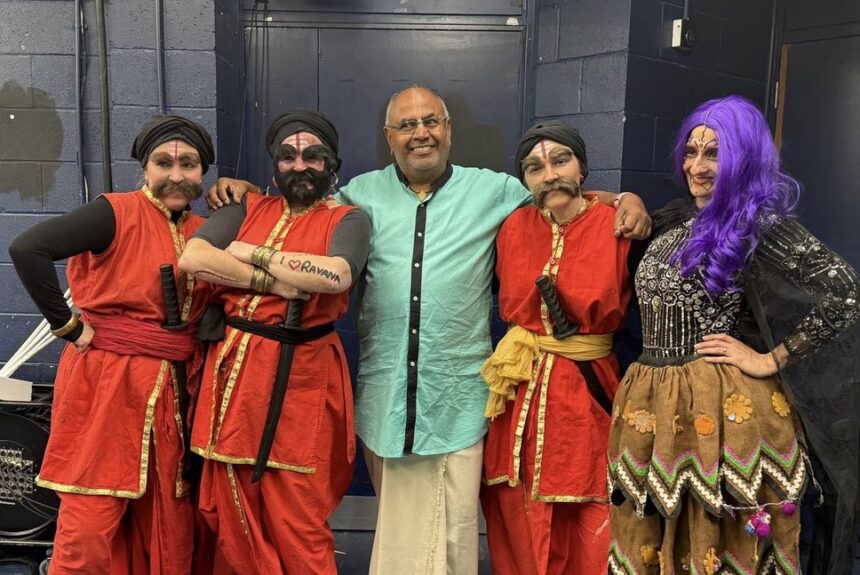
A Diwali-themed cultural gathering in Basingstoke brought together the local devotee community and participants from Bhaktivedanta Manor for an evening centered on the epic Ramayan. Hosted in the arts faculty at Queen Mary’s College, the program featured the Bhaktivedanta Players, who continued their 40th anniversary celebrations with a special staging of the narrative. The event combined scholarship, performance, and community participation, reflecting the enduring relevance of Hindu festivals in the diaspora.
The Ramayan performance drew attention to core themes of dharma, courage, devotion, and compassion through carefully curated scenes and thoughtful dramatic pacing. Without relying on spectacle, the production emphasized character, moral choices, and the power of service, enabling audiences of diverse ages to connect with Rama, Sita, Lakshmana, and Hanuman in a meaningful way. Many attendees noted how the clarity of storytelling made foundational ideas accessible to children while still offering depth for adults.
Collaboration between devotees from Basingstoke and Bhaktivedanta Manor underscored a shared commitment to cultural heritage. Marking four decades of the Bhaktivedanta Players’ contribution to community arts, the evening affirmed how theatre can sustain tradition, educate younger generations, and foster intergenerational dialogue. In this sense, the program functioned as both celebration and pedagogy, strengthening local bonds through a living portrayal of classical literature.
In keeping with the unifying spirit of Diwali, the event highlighted values that resonate across dharmic traditionsHinduism, Buddhism, Jainism, and Sikhismsuch as ethical living, nonviolence, seva, and communal harmony. By foregrounding these shared principles, the staging encouraged a sense of unity in diversity and affirmed cultural inclusivity. This approach aligns with broader community aims to nurture respectful understanding among related spiritual paths.
Audience responses reflected quiet pride and renewed belonging. Families described the performance as a reminder of home and heritage; students observed that the epic’s moral clarity offered practical guidance for contemporary life. Teachers and community leaders emphasized that accessible cultural programmingespecially during Diwalistrengthens social cohesion while encouraging deeper study of India’s epic literature.
For Basingstoke, hosting the Ramayan at Queen Mary’s College signaled the town’s growing role as a site for high-quality community events anchored in Cultural Heritage and Cultural Traditions. By situating a timeless story within a modern educational setting, the collaboration demonstrated how classical narratives can thrive in new contexts while retaining their ethical and aesthetic power. The result was an evening that honored the festival’s lightthrough learning, fellowship, and shared cultural memory.
Inspired by this post on Dandavats.