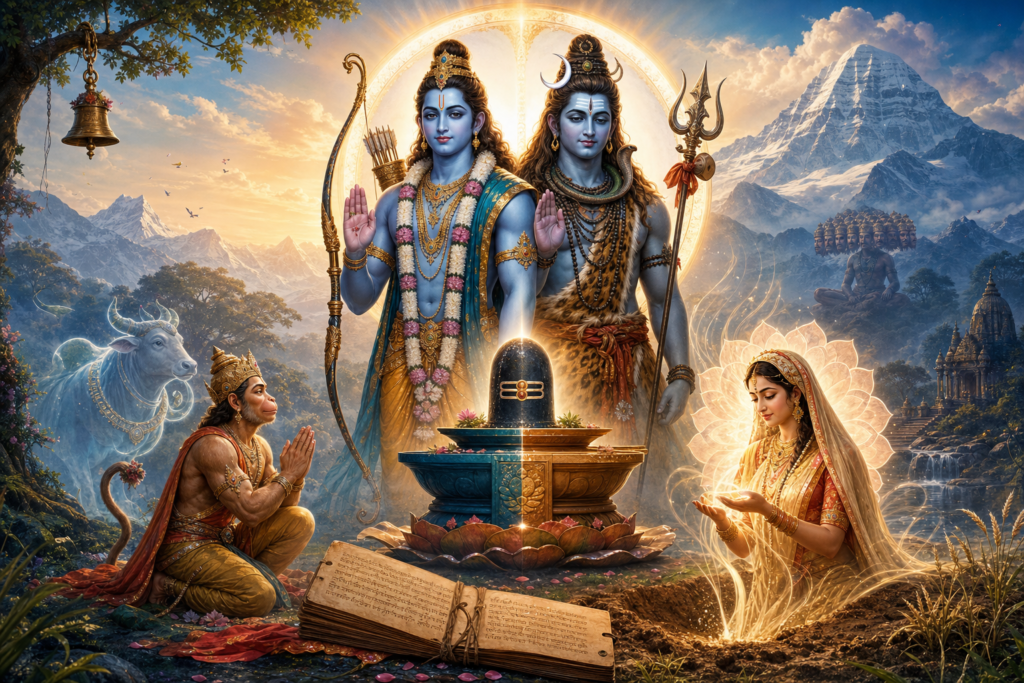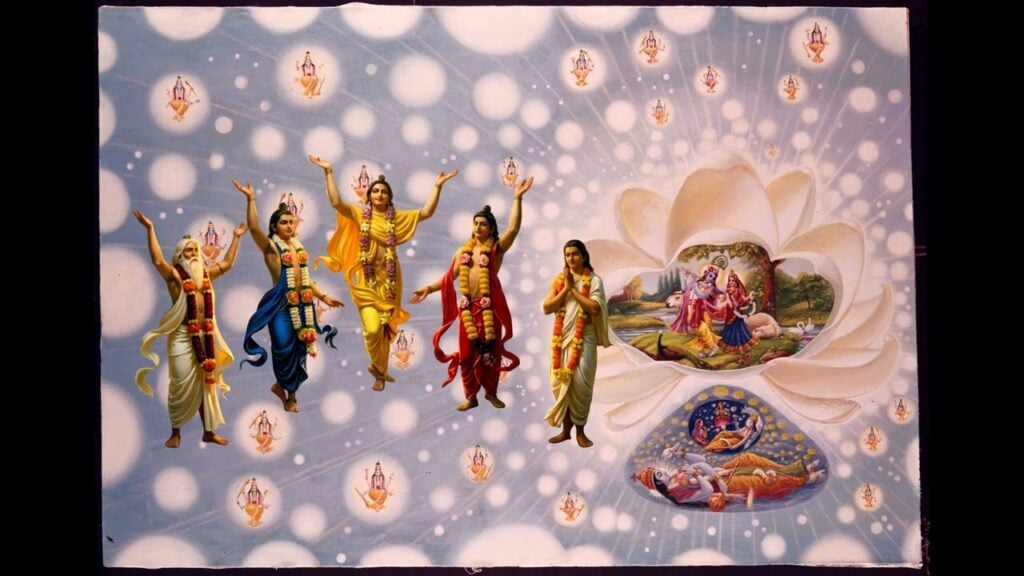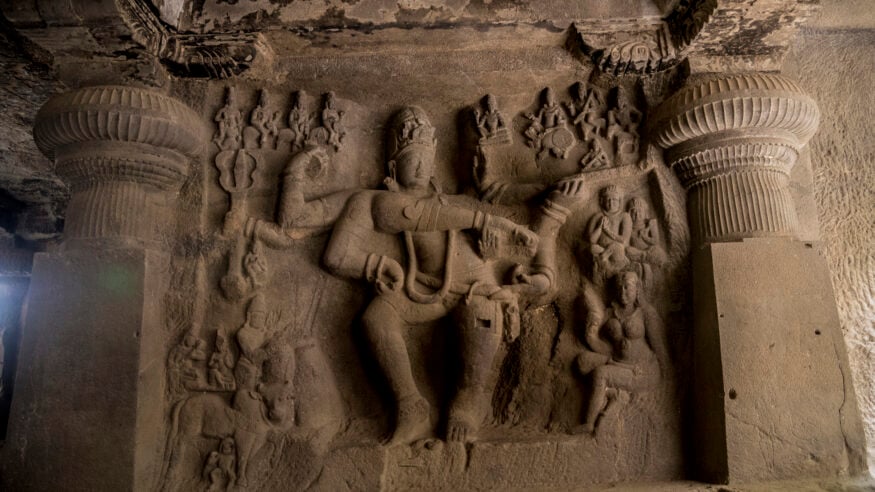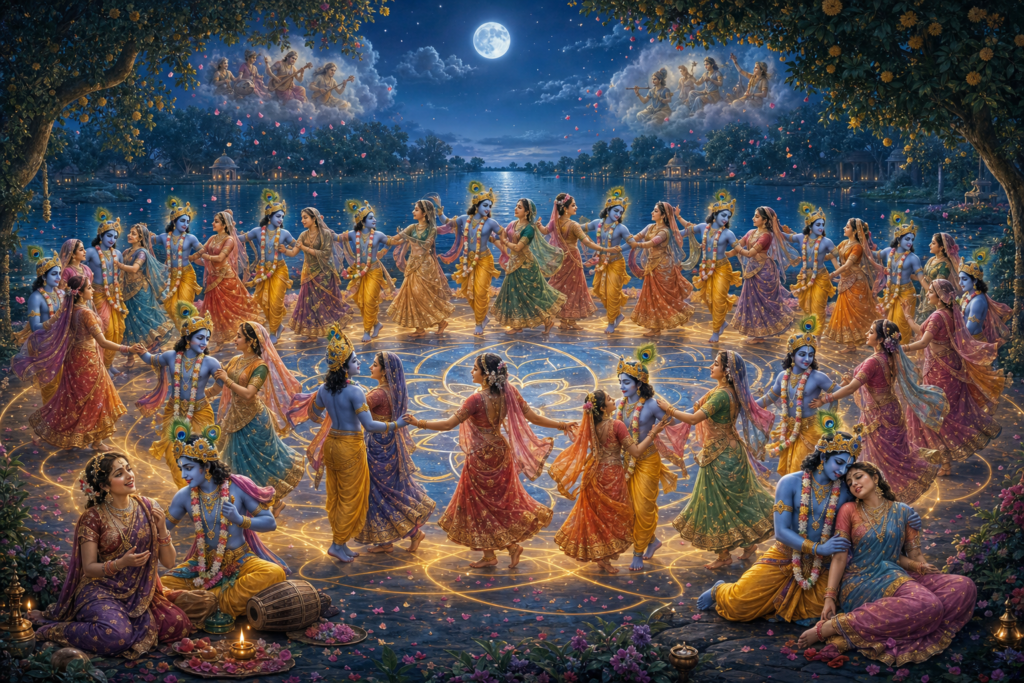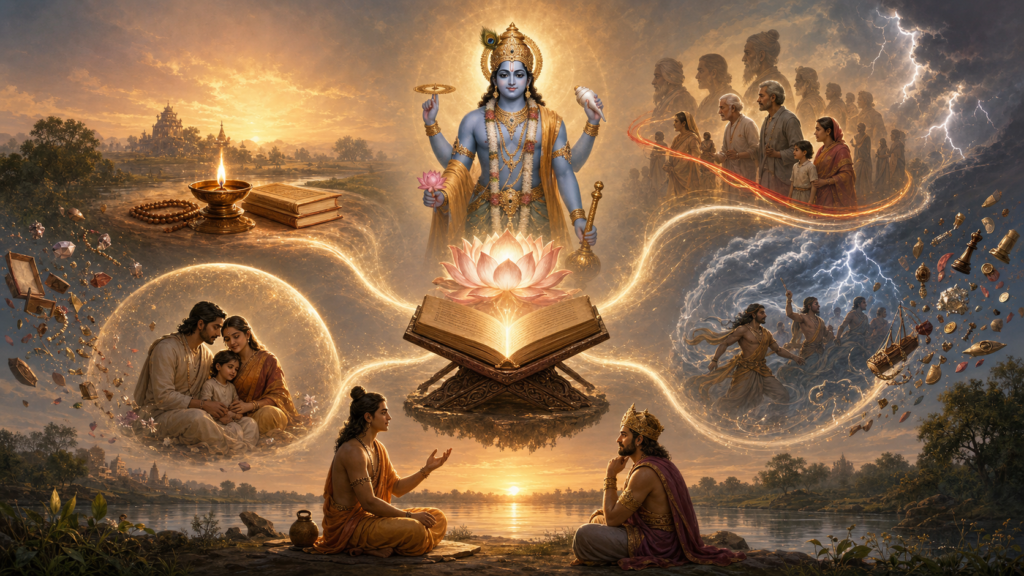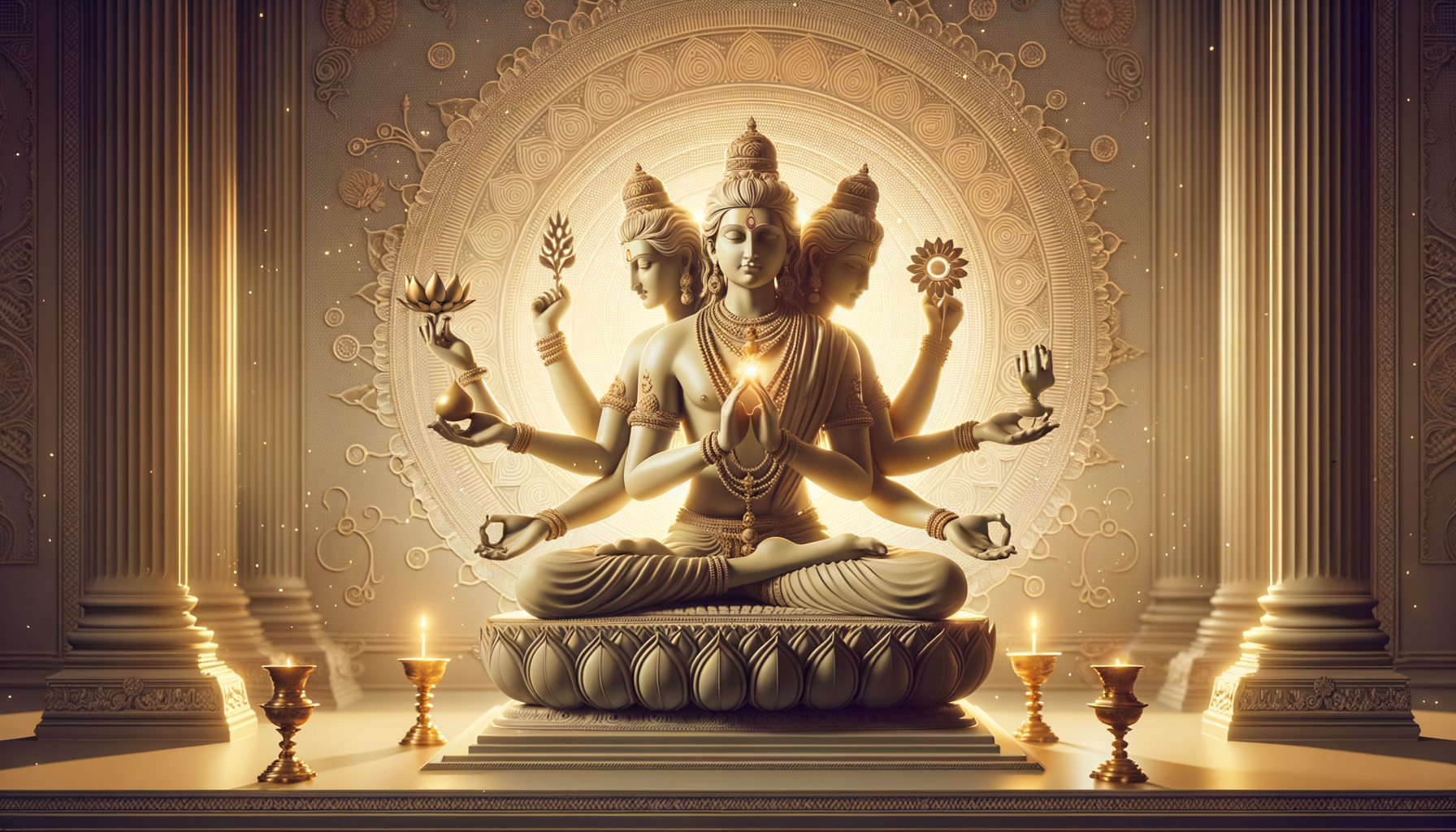
In Hindu iconography, the depiction of deities with four hands signifies far more than aesthetic grandeur. It is a precise visual philosophy: the divine extends guidance across every dimension of human life. Each hand gestures toward one of the Purusharthasthe foundational aims of human existence in Hindu philosophydharma (righteousness), artha (wealth and capability), kama (pleasures and aesthetic fulfillment), and moksha (liberation). By placing these four goals in one sacred image, the tradition communicates balance, integration, and the transcendence of human limitations.
The Purusharthas operate as a holistic framework for human flourishing. Dharma anchors ethical action and social responsibility; artha supports material stewardship and right livelihood; kama celebrates refined desire, beauty, and relational joy; moksha points to inner freedom and spiritual realization. Read together, they caution against extremity: ethics without sustenance becomes fragile, wealth without values corrodes, pleasure without wisdom disperses, and liberation without compassion detaches from life’s duties.
Four hands, therefore, are not merely a count but a symbol of completeness. Deities such as Vishnu, Lakshmi, Ganesha, and forms of Devi are commonly portrayed with four arms to signal their capacity to uphold cosmic order while nurturing human aspirations. Multiplicity of arms conveys a power unconfined by ordinary human limits, assuring devotees that guidance is available for moral clarity, material well-being, emotional fulfillment, and spiritual ascentall at once.
Iconographic attributes often deepen this teaching, though specific mappings vary by region and tradition. For example, a lotus may evoke prosperity and purity related to artha, the abhaya mudra affirms the ethical protection of dharma, a fruit or sweet can suggest wholesome joy aligned with kama, and a scripture, chakra, or jñana mudra may point to moksha. These are illustrative rather than prescriptive, reinforcing the principle that the four goals are harmonizednever isolatedin lived practice.
In devotional life, many practitioners experience a quiet reassurance before a four-armed murti, as if the image itself holds a mirror to the full spectrum of human needs. During temple darshan or home worship, contemplation on each hand becomes a simple yet profound reflection: Is conduct aligned with dharma? Are resources cultivated and shared wisely as artha? Are desires uplifted by gratitude and restraint for kama? Is the inner compass turning toward freedom through moksha? Such contemplation makes the symbolism personally resonant and emotionally grounding.
This integrative vision also nurtures unity among dharmic traditions. While the Purusharthas are articulated within Hindu philosophy, their spirit resonates broadly: ethical living (dharma/dhamma), responsible livelihood (artha), cultivation of refined joy (kama in its elevated sense), and liberation from ignorance and suffering (moksha, nirvana, kevala, mukti) find meaningful echoes across Hinduism, Buddhism, Jainism, and Sikhism. Recognizing these shared aspirations strengthens mutual respect and deepens the sense of a common civilizational ethos.
A simple reflective practice can make the symbolism actionable. In a quiet moment, visualize a four-handed deity. With each inward breath, invite one aimdharma, artha, kama, mokshainto awareness; with each outward breath, release what obstructs it. Allow the aims to inform one another: let dharma guide artha, let artha support kama’s refinement, and let the serenity of moksha illuminate them all. This gentle exercise translates sacred art into daily alignment.
Ultimately, the four hands of Hindu deities function as a doctrinal reminder and a compassionate promise: human life is meant to be balanced, beautiful, purposeful, and free. The Purusharthas are not competing paths but converging streams, leading seekers from ethical clarity through responsible prosperity and fulfilled relationships toward the stillness of liberation. In this way, Hindu iconography becomes a living pedagogyuniting insight and devotion, philosophy and practice, and, most importantly, fostering harmony across the dharmic family.
Inspired by this post on Hindu Blog.