Kartik Navadvipa Mandal Parikrama 2025 in Mayapur stands as a living expression of bhakti, where pilgrimage, kirtan, and seva converge across the sacred landscape of Navadvipa. Rooted in the Gaudiya Vaishnava tradition yet welcoming to all seekers, the parikrama invites participants to walk, remember, and reflect during the spiritually charged month of Kartik.
Srila Prabhupada’s guidance shapes the event’s ethos: Krishna kirtana is understood as dynamic service to the Divine—seva—rather than entertainment or a means of livelihood. Within this framework, collective singing and remembrance function as disciplined spiritual practices that deepen devotion, cultivate humility, and orient the heart toward higher purpose.
The experiential arc of the parikrama resonates with shared dharmic values that connect Hinduism, Buddhism, Jainism, and Sikhism—compassion, truth-seeking, non-violence, and self-discipline. Pilgrims often describe a quiet transformation as they move through holy sites: the steady rhythm of kirtan calming the mind, the discipline of walking focusing intention, and the spirit of service nurturing a sense of community and interfaith harmony within the broader dharmic family.
Observances in Kartik naturally encourage deepened sadhana—japa, scriptural study, lighting of lamps, and mindful reflection at sacred places. In this setting, the parikrama serves as both a journey and a laboratory of inner practice, where everyday actions—listening, chanting, walking—become instruments for cultivating devotion and clarity.
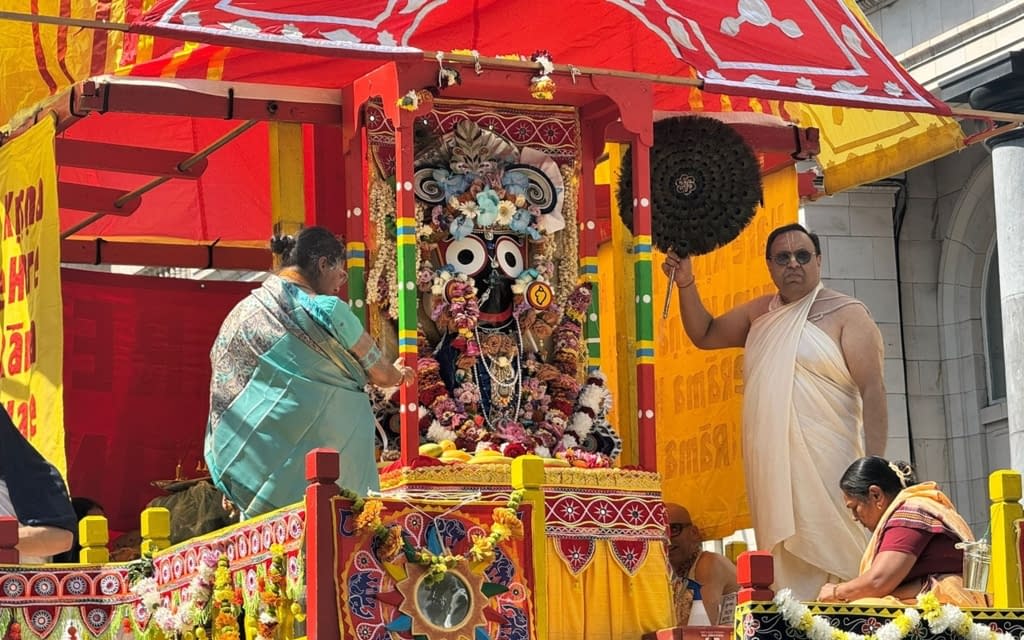
The accompanying photograph from Mayapur evokes the serene atmosphere commonly experienced during Kartik: congregational devotion, reverent movement, and an unmistakable sense of timeless presence. Such imagery underscores that Navadvipa’s sacred geography is not merely historical memory but a continuing, lived heritage.
Those considering participation will benefit from steady preparation—regular japa, study of texts such as the Bhagavad-Gita, and a spirit of respectful engagement with fellow pilgrims. Thoughtful adherence to local guidelines, simplicity in travel, and care for the environment align the external journey with the inner commitment to seva, ensuring the pilgrimage remains a sincere offering of the heart.
Inspired by this post on Dandavats.