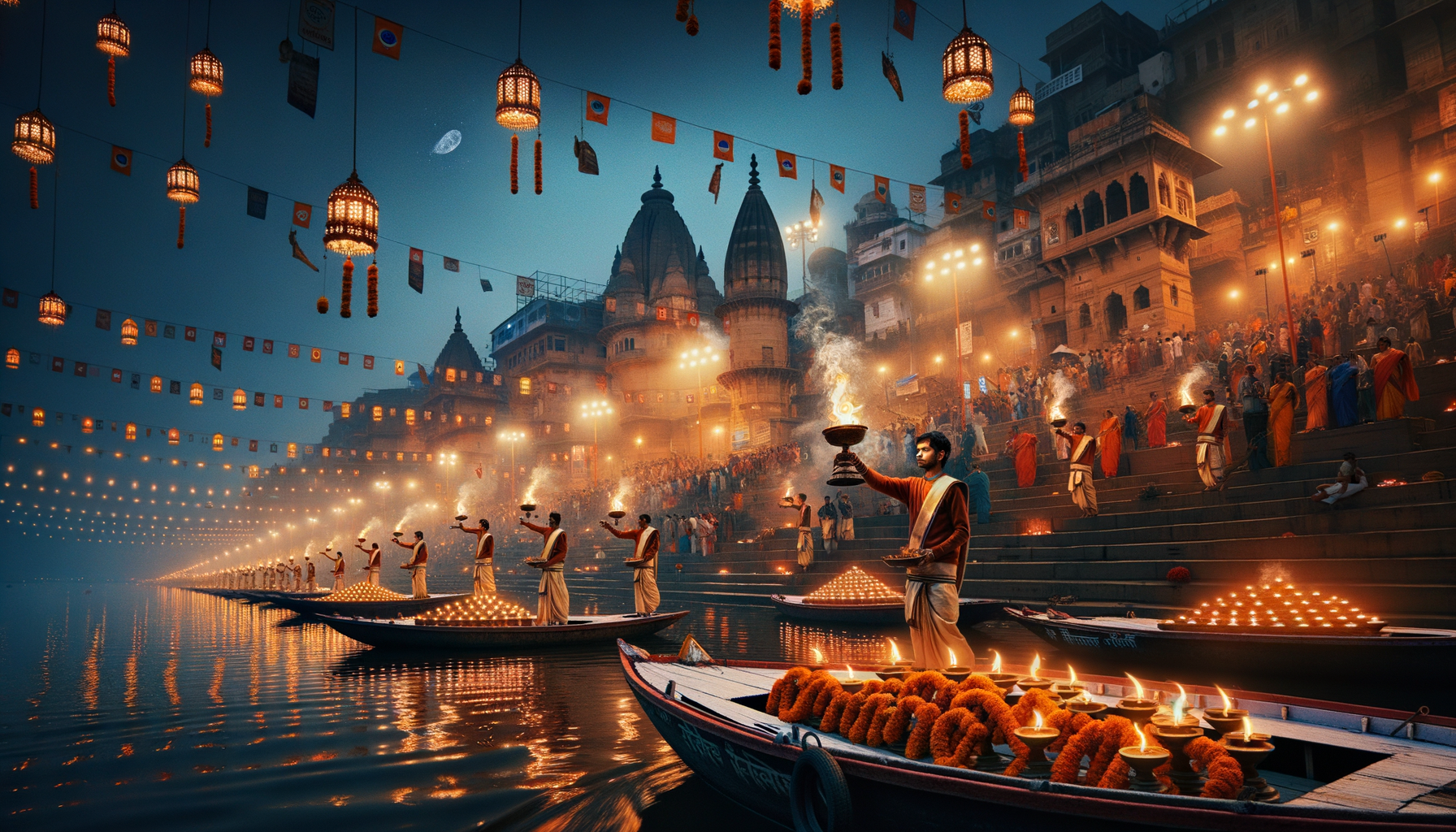
Dev Deepawali, observed on Kartik Purnimafifteen days after Diwalielevates Varanasi (Kashi) into an awe-inspiring landscape of light and devotion. While Diwali honors the victory of light over darkness on the night of Kartik Amavasya, Dev Deepawali extends that symbolism to the celestial realm, marking the moment when the devas are believed to descend to the Ganga to celebrate. In this sacred setting, the city’s 84 ghats glow with countless diyas, and the Ganga Aarti unfolds with heightened grandeur, making Varanasi a living canvas of India’s cultural heritage.
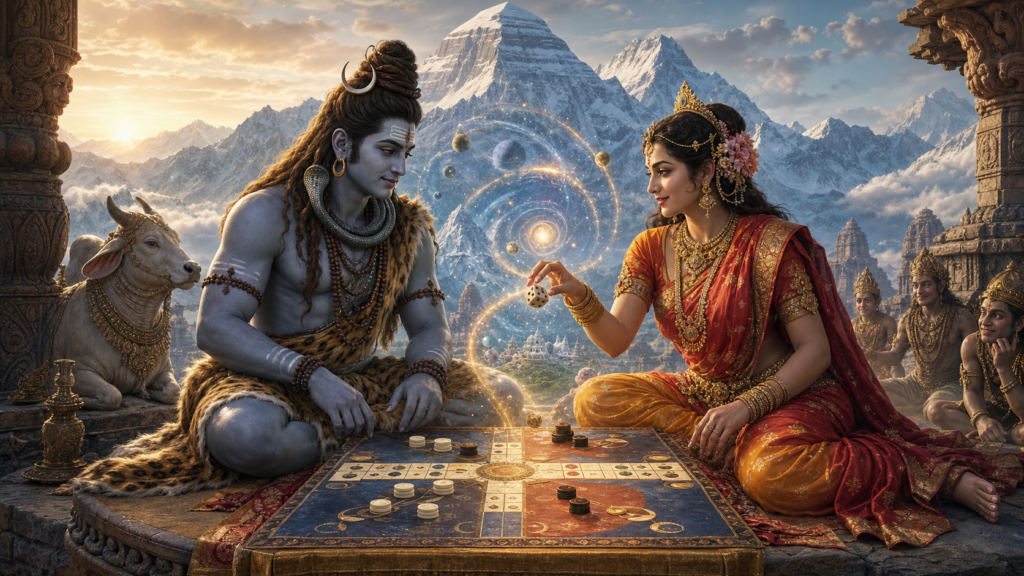
The festival’s sacred narrative is rooted in Tripurari Purnima, commemorating Shiva’s victory over Tripurasura. In traditional understanding, this triumph restores cosmic order, and the devas join in thanksgiving on earth. Dev Deepawali is thus not merely a spectacle of lamps; it is a disciplined observance that ties mythic memory to civic participation, linking metaphysical ideals with the lived rhythms of Varanasi.
Ritual sequences on Kartik Purnima begin at dawn with Kartik Snan in the Ganga, an act of purification that frames the day’s offerings. As evening arrives, Deep Daan illuminates the ghats with rows of earthen lamps, and Akash Deeplamps suspended in the night skysymbolically guide ancestral souls. The Ganga Aarti, amplified in scale and sonority, integrates Vedic mantras, conch calls, and synchronized movements of lamps, reflecting a refined liturgical choreography. Cultural programs, shobha yatras, and classical recitals add layered textures to the observance, while the soft glow of diyas along Dashashwamedh, Assi, and Panchganga ghats renders the riverfront a luminous axis of devotion.
Community stewardship is central to the festival’s continuity. Local organizations coordinate lamp placement, maintain riverfront cleanliness, and facilitate smooth movement along the ghats. Boatmen, artisans, and volunteers collectively animate the Deepotsav, balancing devotion with practical caremanaging crowds, protecting river ecology, and honoring traditional craftsmanship. These efforts underscore how intangible cultural heritage is preserved through shared responsibility and ritual discipline.
The festival’s meaning resonates across dharmic traditions. Kartik Purnima often coincides with Guru Nanak Jayanti, bringing Sikh communities into parallel remembrance, kirtan, and service. Jain communities mark the Kartik period with pilgrimages and disciplined fasts, emphasizing ahimsa and inner purification. In Buddhist contexts, seasonally proximate observances foreground merit, mindfulness, and the light of wisdom. Dev Deepawali in Varanasi thus models spiritual unityhonoring distinct lineages while celebrating shared values of illumination, gratitude, and ethical living.
For those planning to witness Dev Deepawali, an understanding of the day’s cadence enhances the experience: sacred baths at first light, steady preparations through the afternoon, sunset Deep Daan, and the expansive Ganga Aarti shortly thereafter. Key vantage points include Dashashwamedh Ghat for the principal Aarti and Assi Ghat for cultural performances; Panchganga and Rajghat offer contemplative perspectives on the illuminated riverfront. Respectful conductmodest attire, mindful photography, crowd awareness, and care for the river’s ecologysustains the sanctity of the occasion.
Beyond its visual magnificence, Dev Deepawali serves as a pedagogical text of living tradition: a disciplined festival that fuses theology (Shiva’s cosmic victory), liturgy (Aarti and Deep Daan), and social ethics (seva, stewardship, and communal harmony). Its keywordsDev Deepawali Varanasi, Kartik Purnima, Tripurari Purnima, Ganga Aarti, Kashi pilgrimage, Hindu festivaldescribe not merely a destination but an enduring civilizational practice. In honoring light as knowledge and compassion, Varanasi offers a shared invitation to renewal across Hindu, Buddhist, Jain, and Sikh communities.
In sum, Dev Deepawali is Varanasi’s profound articulation of spiritual unity and cultural continuity. The festival’s luminous banks, disciplined ritual, and inclusive ethos present a singular experience: a night when Kashi’s ghats seem to mirror the heavens, and devotion becomes a bridge between memory and the present, between diverse paths and a common aspiration toward light.
Inspired by this post on Hindu Blog.