
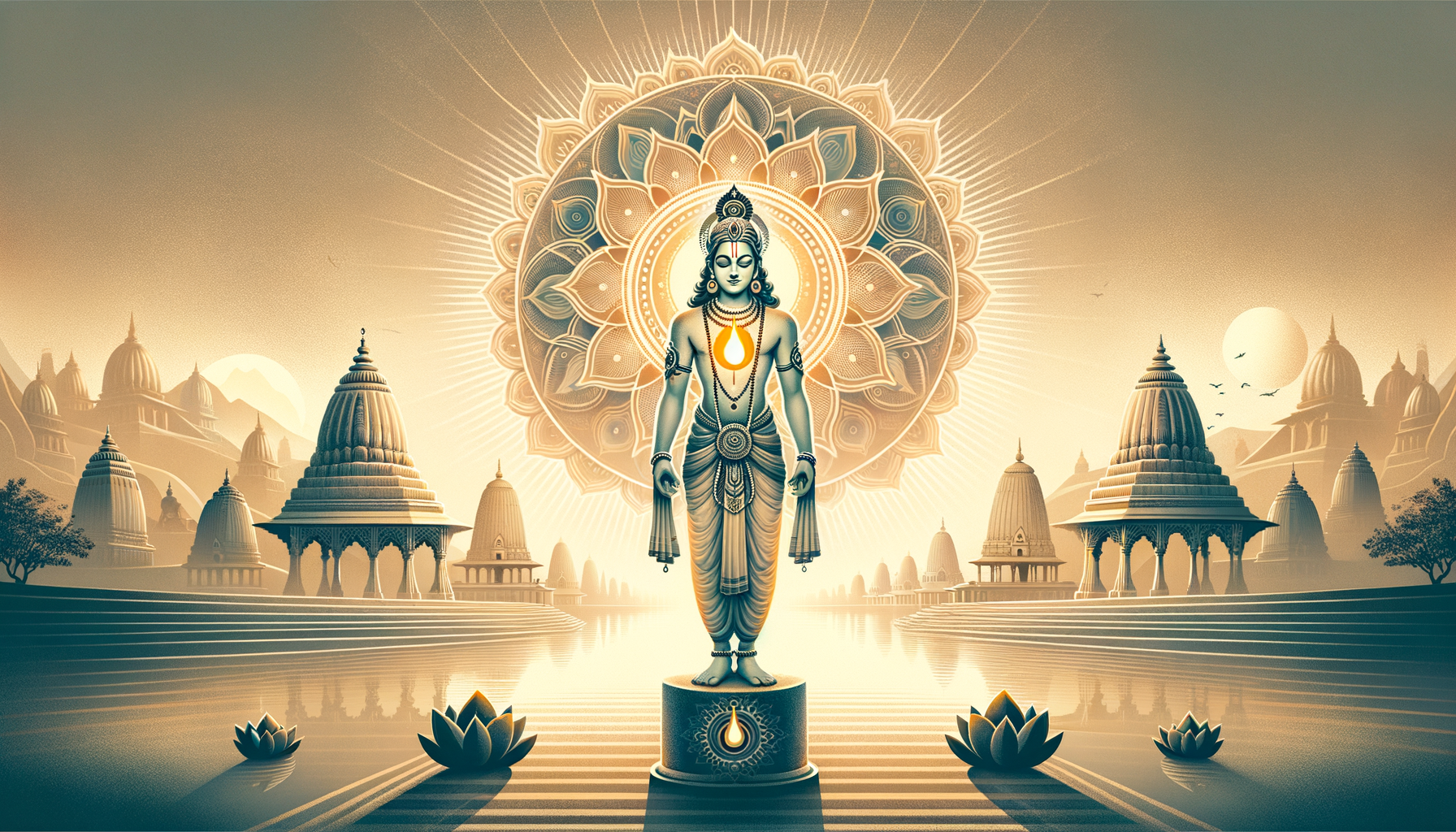
On the sacred banks of the Bhimarathi in Pandharpur, Bhagavan Vitthal stands as a living axis of devotion for countless pilgrims. The Padma Purana, particularly in the Uttara Khanda, employs the epithet “Bindu Madhava” for Vishnu, and by extension illuminates Vitthal’s divine identity. Understanding why this name is invoked for Vitthal opens a doorway into the language of the Puranas, the unity of Vishnu’s manifestations, and the shared sacred geography that binds Pandharpur and Kashi.
Etymologically, “Bindu” means a drop or point, a concentrated locus of sacred energy, while “Madhava” is a widely attested name of Vishnu and Krishna. In the Padma Purana’s descriptions of Kashi, the name Bindu Madhava marks an ancient Vishnu shrine associated with a sanctifying tirtha. Puranic literature often deploys such epithets not as location-locked labels but as theological indicatorsnames that highlight aspects of the same Supreme Being across distinct kshetras. In this light, the usage of Bindu Madhava for Vitthal emphasizes that the deity of Pandharpur is none other than Vishnu-Krishna, accessible through different sacred portals.
Traditions in Vaishnavism, and particularly the Varkari sampradaya, consistently identify Vitthal with Krishna. The Padma Purana’s idiom mirrors this living faith: Vitthal embodies the same compassionate presence that devotees encounter as Bindu Madhava in Kashi. The fluidity of divine names across Puranas thus functions as a unifying grammardevotees may approach the Lord as Vitthal in Pandharpur or as Bindu Madhava in Kashi, yet the devotional relationship remains continuous and undivided.
The geography of Pandharpur itself resonates with the symbolism of “bindu.” The Bhimarathi’s crescent-like bendrevered as the Chandrabhagaevokes the image of a sacred drop cradled by the river. In devotional memory and regional lore, this natural form becomes an emblem of condensed grace, harmonizing with the “bindu” motif embedded in the name Bindu Madhava. Such consonance between name, form, and place strengthens the theological bridge between Pandharpur and Kashi.
Pilgrimage practice reinforces this bridge. Many pilgrims who have experienced darshan in Pandharpur during Ashadhi Ekadashi describe a felt continuity when later bowing before Bindu Madhava in Kashi. Their accounts speak to an interior recognitionbhakti deepens not by accumulating different gods but by recognizing one Divine across diverse images, rituals, and tirthas. The Padma Purana’s language supports precisely this recognition by employing shared epithets for the One Vishnu manifest at multiple shrines.
From an academic perspective, the Puranic habit of cross-referencing epithets reflects a sophisticated theology of presence: the Lord’s essence remains constant while names, forms, and local narratives adapt to regional histories and living practice. This is not conflation but continuity. Just as commentarial traditions emphasize abhedanon-differencebetween Vishnu’s manifestations, devotees experience Vitthal and Bindu Madhava as two doors opening into one sanctum of grace.
This understanding also nurtures unity across dharmic pathways. The virtues celebrated around Pandharpurseva, compassion, humility, and communityresonate with values cherished in Hinduism, Buddhism, Jainism, and Sikhism. The Puranic lexicon, by affirming one Divine through multiple names and places, encourages respect for diverse practices while honoring a shared quest for liberation and ethical living. In contemporary terms, such recognition strengthens social harmony and invites seekers from varied traditions to find common ground in service and inner transformation.
Ultimately, the Padma Purana’s reference to Bhagavan Vitthal as Bindu Madhava is both scriptural and experiential. Scripturally, it signals that the Lord in Pandharpur is Vishnu-Krishna, known by a venerable name attested in Kashi. Experientially, it validates the pilgrim’s intuition that devotion is seamless across temples and geographies. In naming Vitthal as Bindu Madhava, the Purana offers a concise theology of unity: one Lord, many doorseach inviting the devotee into the same boundless compassion.
Inspired by this post on Hindu Blog.










