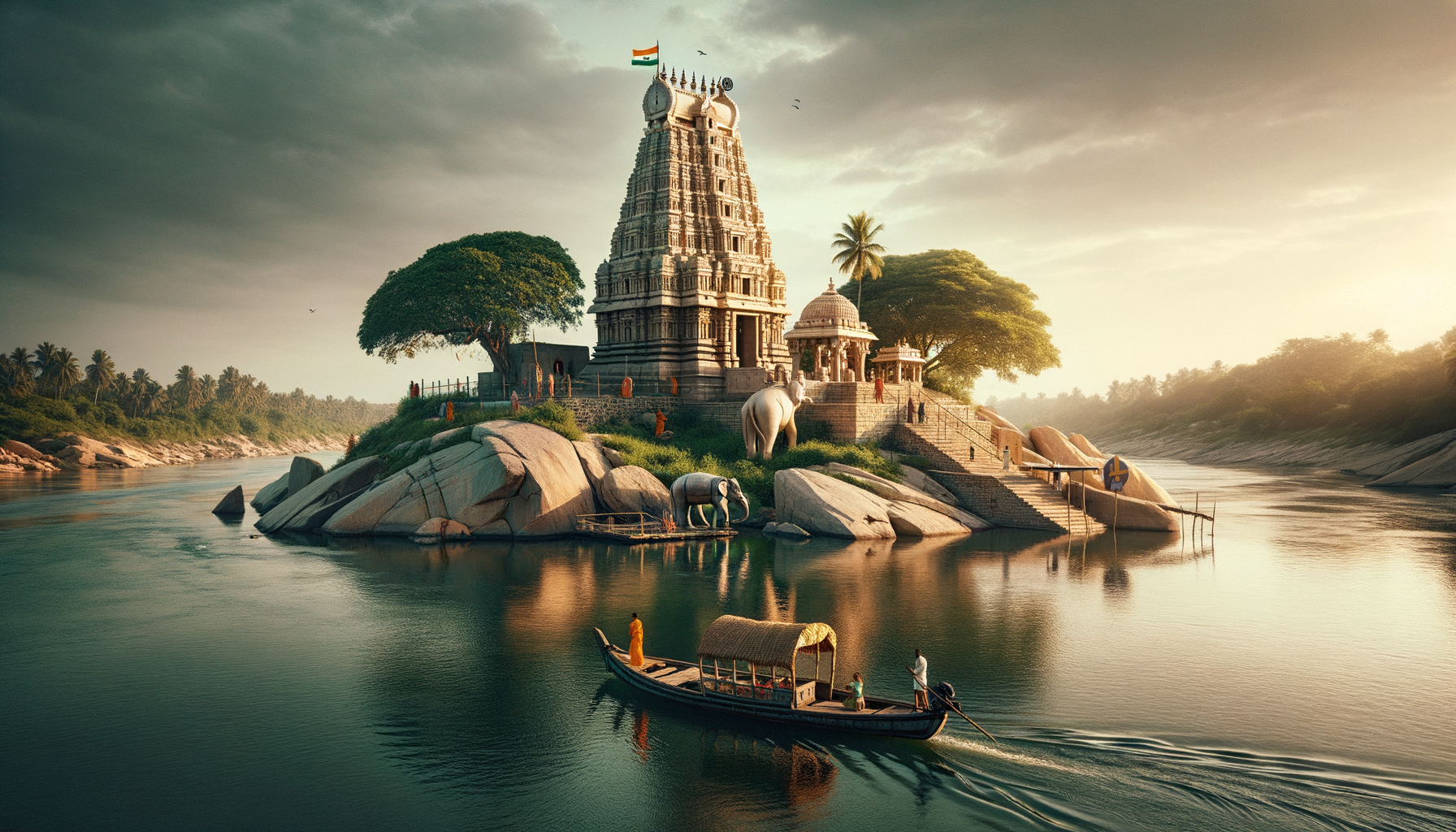
Pattiseema Veerabhadra Swamy Temple ranks among the renowned Shiva temples in Andhra Pradesh. Situated near Rajahmundry in West Godavari, this Pancha Kashi Kshetram occupies a striking hillock that rises from the midstream of the Godavari River, merging sacred geography with a serene riverine landscape.
Locally known as Pattiseema, and also referred to as Pattasadri, Pattisa, or Pattisachalam, the site is celebrated for both natural beauty and devotional significance. As an island temple, it is commonly reached by boat when river conditions permit, offering expansive views, a gentle river breeze, and a contemplative atmosphere that enriches pilgrimage.
The shrine venerates Veerabhadra, a fierce and protective manifestation of Shiva, inviting reflection on courage, dharma, and renewal. Regarded in regional tradition as a Pancha Kashi Kshetram, the temple holds a special place in local pilgrimage circuits, drawing devotees who associate the site with the spiritual merit of river-centric worship in the Godavari basin.
Visitors frequently describe the experience as quietly elevating: the confluence of water, stone, and sacred sound fosters a composed mind and a receptive heart. The setting naturally encourages unity across dharmic traditionsHinduism, Buddhism, Jainism, and Sikhismthrough shared values of inner discipline, compassion, and reverence for life. The temple’s ambiance supports meditation, study, and respectful dialogue that affirm spiritual common ground.
For practical orientation, the most comfortable period is typically the cooler months, including Karthika masam, when devotional activity in Andhra Pradesh intensifies. Boat services, launching from ghats in the Rajahmundry–West Godavari region, depend on seasonal water levels and safety advisories; timings and access are best confirmed locally. Carrying essentials such as water, sun protection, and modest attire ensures a smooth and respectful visit.
Bringing together landscape and liturgy, Pattiseema Veerabhadra Swamy Temple offers a rare island pilgrimage on the Godavari River. Its proximity to Rajahmundry makes it an enriching day trip for those exploring Shiva traditions in Andhra Pradesh, as well as for students of sacred geography seeking a living example of river-centered worship and inter-dharmic harmony.
Inspired by this post on Hindu Pad.