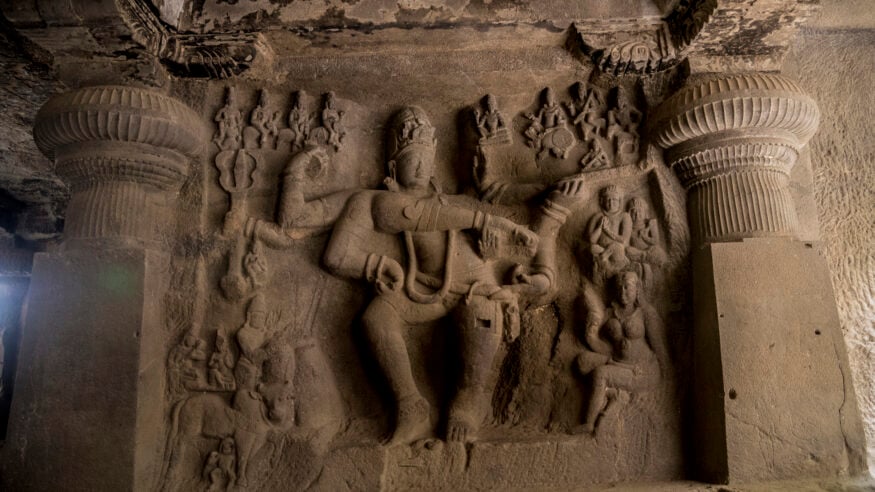
A program held within the scenic forest of Harihara Kshetra unfolded in a setting of quietude and natural beauty, where the leafy canopy and soft forest light cultivated a contemplative atmosphere. The site’s sacred characterassociated with the harmonizing principle of Hari and Harainvited attentive reflection, situating the experience within the broader continuum of Hindu pilgrimage and sacred geography.
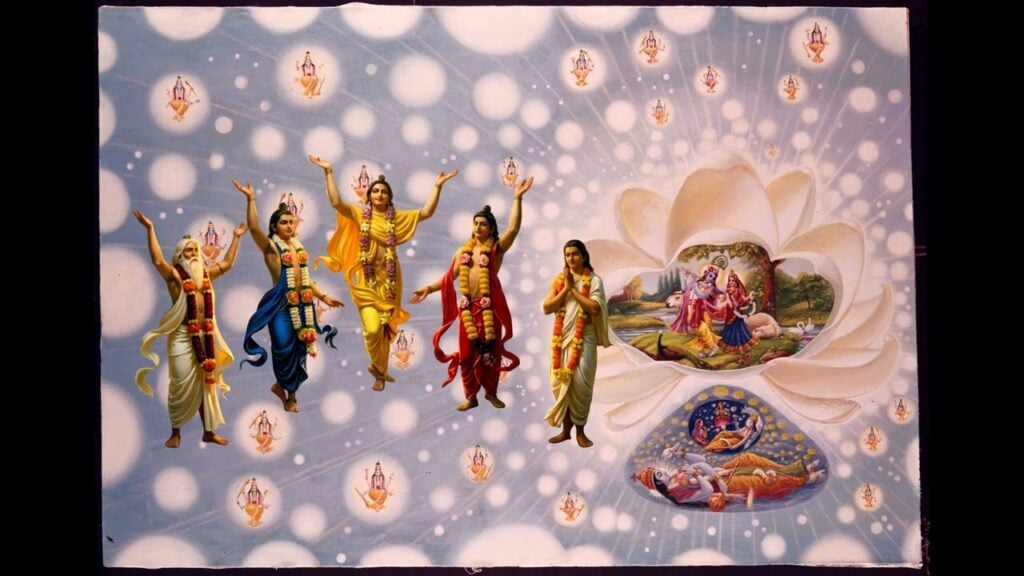
Following the gathering, the group proceeded to nearby Nrsimha Palli, traditionally revered as the place where Lord Nrsimhadeva washed His hands after slaying the demon Hiranyakasipu. According to Vaishnava tradition, a self-manifested (svayambhu) deity of Lord Nrsimhadeva, revered as dating to the Satya-yuga, is worshipped there. This living heritage exemplifies how local devotion, historical memory, and ritual practice converge in a single sacred site.
Participants listened to enlivening katha that illuminated the ethical and theological dimensions of the narrative, emphasizing themes of protection, justice, and compassion. The subsequent kirtan created a shared sonic space in which devotional chanting fostered both personal introspection and social cohesion, reflecting core features of the Bhakti Tradition and reinforcing the unifying power of collective worship.
Harihara Kshetra’s symbolismHari (Vishnu) and Hara (Shiva) in harmonyoffers a compelling model for unity in diversity across dharmic traditions. The values highlighted through the visit, including courage, compassion, service, and ahimsa, resonate with shared ideals in Hinduism, Buddhism, Jainism, and Sikhism. Such convergence underscores how sacred narratives and ritual practices can nurture inter-traditional respect and constructive dialogue.
As a node in India’s sacred geography, Nrsimha Palli sustains a continuous lineage of worship while inviting contemporary seekers to engage with enduring questions about duty, protection of the vulnerable, and moral clarity. The day’s experienceswhich combined environmental serenity, historical consciousness, and devotional practicedemonstrated how place-based spirituality can deepen understanding and solidarity within and across communities.
Shared accounts of the visit, including reflections by Indradyumna Swami, highlight the integrative character of the pilgrimage: a balanced synthesis of study (katha), practice (kirtan), and presence in a sanctified landscape. In this synthesis, participants found a meaningful bridge between personal transformation and communal harmonyan outcome that aligns with the inclusive ethos of Sanatana Dharma and the wider dharmic family.
Inspired by this post on Dandavats.