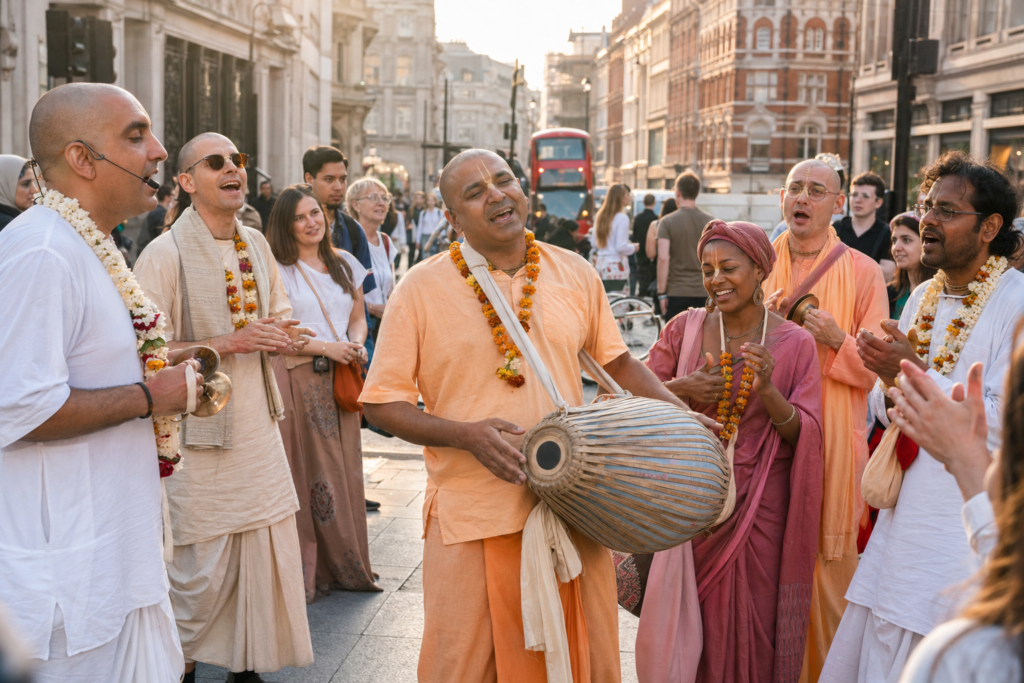
This reflection analyzes SB 1.8.31 (Srimad Bhagavatam) as presented by H.G. Devakinandan Prabhu at ISKCON Vrindavan (21.10.2025), focusing on the classical theme of divine bewilderment. The passage illuminates a paradox central to bhakti: the Supreme Lord remains sovereign in all circumstances while voluntarily becoming intimate and approachable“a plaything” in the presence of a pure devotee. This dialectic of transcendence and tenderness is a hallmark of Vaishnava theology and a key to understanding the emotional depth of devotion in the Bhagavata tradition.
Within the narrative logic of Srimad Bhagavatam, the Lord’s pastimes both reveal and conceal divinity. They bewilder those who rely solely on material reasoning and yet inspire those who engage through devotion. SB 1.8.31 underscores that the Lord’s supremacy does not diminish when He accepts a subordinate role out of affection; rather, it is an expression of complete freedom. Theologically, this frames a “majesty-and-intimacy” paradox wherein absolute power coexists with relational vulnerability, deepening the devotee’s gratitude and reverence.
The pure devotee’s loveunmixed with personal agendareshapes ordinary notions of power. In bhakti, affection and service open a space where sovereignty is expressed as compassion, protection, and intimate reciprocity. The Lord’s willingness to be guided by a devotee’s love communicates a profound principle: divine greatness is not threatened by closeness; it is perfected by it. This perspective harmonizes descriptions of the Lord’s līlā as simultaneously awe-inspiring and heart-softening.
For practitioners, this insight offers practical guidance. Devotional discipline (sādhanā) grounded in humility, remembrance, and service cultivates the inner readiness to perceive grace within daily life. Many find that moments of awe arise precisely when relinquishing control, aligning with the Bhagavatam’s emphasis on dependence upon divine will. Such engagement fosters emotional resilience, ethical clarity, and a steady orientation toward compassionoutcomes valued across Dharmic paths.
In the spirit of Dharmic unity, this paradox of transcendence and intimacy resonates beyond a single lineage. Buddhism’s emphasis on karuṇā, Jainism’s ahiṁsā and self-mastery, and Sikhism’s seva and humility each affirm that genuine spiritual maturity blends strength with tenderness. While doctrinal frameworks differ, the shared aspiration toward compassion, ethical living, and surrender of ego supports a respectful, plural vision of spiritual progress that honors Hinduism, Buddhism, Jainism, and Sikhism alike.
Contemplating SB 1.8.31 thus becomes a transformative exercise: it clarifies how the Supreme Lord’s sovereignty embraces closeness, how love reframes power, and how devotion integrates knowledge, emotion, and practice. Approached in this way, the verse offers both rigorous theological insight and accessible guidance for daily life, nurturing unity across Dharmic traditions and deepening appreciation for Sri Krishna’s pastimes in the broader landscape of Indian spiritual heritage.
Inspired by this post on Dandavats.