
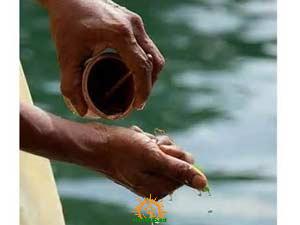
Aadi Amavasai 2026 at a glance. Wednesday, 12 August 2026, is observed as Aadi Amavasai in the Tamil tradition and Karkidaka Vavu Bali in Kerala. It is a major occasion for Pitru Tharpana, ancestral remembrance, and family rites performed with water, sesame, prayers, and gratitude. The date is also identified as 12 August 2026 by the Incredible India account of Karkidaka Vavu Bali, which cites Kerala Tourism as its source.
One lunar event, several regional names. The same Amavasya is called Shravan Amavasya in North Indian purnimanta calendars, Ashada Amavasya or Ashadha Amavasya in amanta calendars, Aadi Amavasai in the Tamil solar calendar, and Karkidaka Vavu in the Malayalam calendar. These names do not indicate competing dates. They reflect different systems for naming lunar and solar months within the broad diversity of Hindu calendar traditions.
In a purnimanta calendar, a lunar month concludes with Purnima, placing this Krishna Paksha Amavasya within Shravana. In an amanta calendar, the month concludes with Amavasya, making it the final tithi of Ashadha. Tamil and Malayalam usage instead highlights the solar months of Aadi and Karkidakam. Understanding this distinction prevents a common mistake: assuming that Shravan Amavasya and Ashada Amavasya must fall on different days.
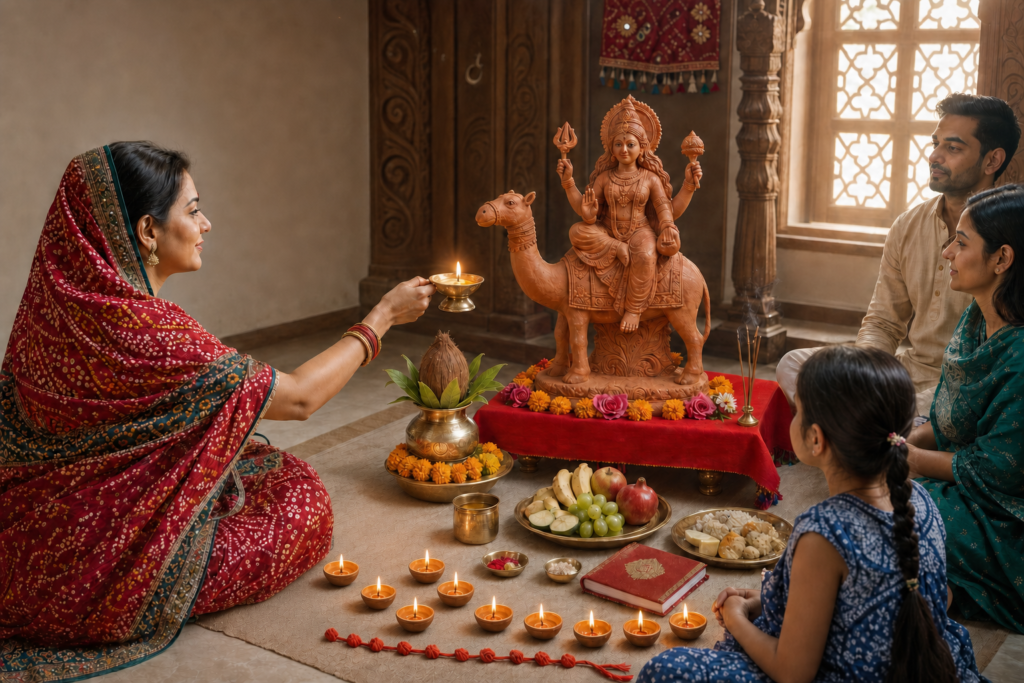
Why the observance matters. Pitru Tharpana expresses Pitru Rina, the inherited obligation of gratitude toward parents, grandparents, and earlier generations. Within Hindu theological traditions, offerings made on Amavasya are believed to nourish or satisfy the Pitrs and support their peace. At the human level, the rite also preserves names, relationships, family memory, and an ethic of gratitude. Its importance therefore extends beyond a single ceremonial action: it connects present responsibilities with the lives that made the present generation possible.
The technical panchanga for Chennai. A representative Chennai calculation for 12 August 2026 gives sunrise at approximately 05:56, Amavasya until 23:06, Pushya Nakshatra until 07:59, and Ashlesha Nakshatra thereafter. Vyatipata Yoga continues until 15:26, followed by Variyana. Chatushpada Karana lasts until 12:27, Nagava continues until the end of Amavasya at 23:06, and Kinstughna follows. The weekday is Budhawara, or Wednesday.
These fields are not decorative additions to a sankalpa. A tithi represents each 12-degree interval in the angular separation of the Moon and Sun. A karana is half a tithi, corresponding to six degrees of separation. A nakshatra divides the ecliptic into segments of 13 degrees and 20 minutes, while a traditional yoga is calculated from the combined nirayana longitudes of the Sun and Moon. Vara identifies the weekday within a sunrise-based ritual day.
Location changes the usable wording. The astronomical instant of a tithi transition is global, but its civil date, clock time, sunrise relationship, and ritual assignment vary by longitude, latitude, time zone, and daylight-saving rules. Panchanga publishers may also differ slightly because of ayanamsha, ephemeris, and rounding conventions. The Chennai values are therefore a reference for India, not a universal timetable for every city.
The date is especially secure for India because Amavasya prevails at sunrise and remains active through most of 12 August. The nakshatra, however, changes early in the morning. A practitioner beginning before the Chennai transition uses Pushya in the relevant sankalpa field, whereas one beginning later uses Ashlesha. The actual moment of sankalpa—not merely the calendar date—determines the correct field.
What a sankalpa does. Sankalpa is a formal declaration that locates a ritual in time, place, lineage, and purpose. It converts a general intention into a specifically situated act. Depending on sampradaya, an extended formula may identify the cosmic age, geographical region, samvatsara, ayana, ritu, month, paksha, tithi, weekday, nakshatra, yoga, karana, performer, gotra, and intended rite. Shorter household forms retain only the elements prescribed by that family or teacher.
The formula moves from the universal to the personal. Cosmic and calendrical coordinates establish when the act occurs; geographical terms establish where it occurs; gotra and family details establish who undertakes it; and the concluding verb states what will be performed. The word karishye, for example, makes the declaration active by expressing the resolve to perform the rite.
Text preserved from the supplied material. The surviving 2026 wording begins exactly as follows: Parabhava nama samvathsare, Dakshinayane, Greeshma rithou, Kadaka mase, Krishna […] Because the supplied passage ends in the middle of the paksha clause, immediately after Krishna, it cannot responsibly be treated as a complete recitation by itself.
Source-aligned 2026 working framework. For a Chennai-area rite begun before the early-morning nakshatra transition, the inherited transliteration pattern may be organized as follows: Parabhava nama samvathsare, Dakshinayane, Greeshma rithou, Kadaka mase, Krishna pakshe, adhya Amavasyam punya thidhou, Budha vasara yukthayam, Pushya Nakshatra yukthayam, Shubhayoga, ShubhaKarana evam guna viseshena, visishtayam asyam Amavasyam punya thidhou, …… amavasya punyakale, darsa sradham, thilatharpana roopena adhya karishye.
This is a source-aligned transliteration framework, not a claim that every Vedic shakha, regional school, or family must use identical spelling and syntax. A complete inherited sankalpa may contain additional opening cosmological and geographical clauses, the performer’s details, gotra, purpose, and lineage-specific statements. Those elements should be retained exactly as taught rather than replaced by a generic online version.
The nakshatra correction is essential. Under the Chennai reference calculation, Pushya Nakshatra yukthayam applies only while Pushya remains current, approximately until 07:59. A sankalpa begun after that transition uses Ashlesha Nakshatra yukthayam. A person performing at or very near the transition should consult a local panchanga with minutes or seconds instead of relying on a rounded website display.
Yoga and karana require the same care. The generic expressions Shubhayoga and ShubhaKarana reproduce the style of the supplied source. A technically explicit lineage may instead name the yoga and karana actually prevailing at the moment. For Chennai, that could involve Vyatipata or Variyana Yoga and Chatushpada or Nagava Karana, depending on the time. A practitioner should not combine generic and explicit forms arbitrarily; the family’s established recitation takes priority.
Meaning of the calendrical clauses. Parabhava nama samvathsare identifies the named year Parabhava in the sixty-year cycle. Dakshinayane places the observance in Dakshinayana, the southern course of the Sun in traditional reckoning. Greeshma rithou names the season according to the source-aligned convention. Kadaka mase identifies the solar Karka or Kadaka month, associated regionally with Aadi and Karkidakam.
Krishna pakshe locates the rite in the waning half of the lunar month. Amavasyam punya thidhou identifies the sacred Amavasya tithi. Budha vasara yukthayam identifies Wednesday, although some traditions employ another established Sanskrit synonym for the weekday. The nakshatra clause names the lunar mansion prevailing when the resolve is formally made.
Meaning of the intention clause. The concluding words amavasya punyakale, darsa sradham, thilatharpana roopena adhya karishye declare that, during the sacred period of Amavasya, the prescribed Darsha Shraddha is being undertaken in the form of sesame-water offerings. The declaration should match the rite actually being performed; it should not name an elaborate Shraddha when the practitioner is following a different or abbreviated household observance.
Why Parabhava must not be replaced by an old year name. The sixty-year samvatsara cycle changes annually around the traditional new year, not on 1 January. The 12 August 2026 observance falls in Parabhava for the relevant South Indian reckoning. Copying a 2025 version would incorrectly retain Viswavasu. Vikram, Shaka, regional, and Jovian year labels may appear together in detailed calendars, but they belong to different systems and should not be mixed without understanding their function.
Why Greeshma and Varsha can both appear in calendars. The supplied sankalpa uses Greeshma rithou, while some modern panchanga displays classify the date under a drik or solar-season label of Varsha. This difference arises from the convention used to map seasons to lunar or solar months. It is not resolved by silently substituting one term for another. The term prescribed by the practitioner’s panchanga, Veda shakha, or family tradition should be followed.
Kadaka, Aadi, Ashadha, and Shravana are compatible coordinates. Kadaka mase refers to a solar-month coordinate, whereas Ashadha and Shravana are lunar-month names produced by amanta and purnimanta systems. Aadi and Karkidakam are regional solar-month names. A technically complete explanation therefore preserves all these labels without forcing them into a single calendar model.
Tharpana, Shraddha, and Bali are related but not identical. Tarpana or Tharpana generally denotes libations offered for satisfaction or honour, commonly using water and sesame. Shraddha is a broader category of ancestral rite grounded in reverence and may include invocations, offerings, feeding, and other prescribed acts. In Karkidaka Vavu Bali, bali commonly refers to symbolic food offerings for ancestors. Regional practice may bring all three together, but the terms should not be treated as exact synonyms.
Lineage is the primary ritual authority. Procedures differ among Smarta, Vaishnava, Shaiva, Vaidika, temple, community, and household traditions. Direction of seating, hand positions, arrangement of darbha, placement of the sacred thread, number of libations, eligible ancestral generations, and concluding actions can all vary. A family purohita, acharya, temple priest, or inherited manual should therefore govern the performance.
Commonly prepared materials. A simple Pitru Tharpana arrangement may include clean water, black sesame seeds, darbha or kusha grass, a clean vessel, a smaller pouring vessel or spoon, a plate or basin to receive water, and a clean cloth. A Vavu Bali procedure may additionally use cooked rice, a banana leaf, and locally prescribed herbs such as cheroola. Pinda, food, flowers, or other substances should be added only when required by the relevant tradition.
A practitioner benefits from preparing nonmaterial information with equal care. The local panchanga should be checked for the intended starting time. Gotra, ancestral names, relationships, and paternal or maternal lines should be written clearly in advance. Any uncertainty about eligibility, recent bereavement rules, annual Shraddha, or overlapping family observances should be resolved before the ceremony begins.
Preparation of person and place. Traditional observance generally begins after bathing and wearing clean, simple clothing. The place should be physically clean, calm, and suitable for handling water. Achamana, pranayama, purification, and preliminary worship may precede the sankalpa when prescribed. These preliminaries should be performed in their inherited order rather than reconstructed from unrelated ritual manuals.
The sankalpa precedes the offering sequence. The practitioner formally states the correct time, place, identity, and purpose before beginning the ancestral invocations. The subsequent offerings are then made in the number, direction, and manner taught by the lineage. A generic instruction to face a particular direction or use a particular hand gesture cannot replace those details, because their application changes with the rite and tradition.
Ancestral identity should be handled accurately. Gotra, personal names, and relationships are ritual identifiers, not decorative additions. Names should not be guessed or copied from an example. When names or gotra are unknown, an authorized general formula may be available within the tradition. A qualified guide can supply that formula while ensuring that forgotten or unnamed ancestors are remembered respectfully.
Paternal and maternal ancestors may be included through different sequences or formulas. Some traditions specify three generations, while others include broader categories of relatives, teachers, or departed beings in supplementary offerings. No universal online list can determine those inclusions for every family. The governing household practice should be documented so that future generations do not have to reconstruct it from fragments.
Completion is part of the rite. After the prescribed libations or bali, the practitioner completes the concluding prayers, releases or disposes of the offerings as instructed, cleans the place, and observes any related food or conduct rules. Dakshina, feeding, or charity may form part of some traditions. These actions are meaningful when they arise from the ritual discipline itself, not from commercial pressure or promotional requests.
Home, temple, riverbank, and seashore observances. Kerala’s Vavu Bali traditions are prominently associated with temple grounds, rivers, and beaches, including centres such as Aluva, Thiruvallam, Thirunavaya, and Thirunelli. The official cultural account also recognizes performance at home. A household unable to travel should therefore seek a locally authorized home procedure instead of assuming that a distant pilgrimage site is mandatory.
Participation is regionally diverse. Kerala’s public observances include men, women, and children as participants in ancestral remembrance. Specific Vedic recitations and procedural roles, however, remain subject to family and sampradaya rules. Blanket claims that either universally include or universally exclude a class of participants obscure the documented diversity of Hindu practice.
Food and charity require context. Some families prepare a prescribed meal, offer food symbolically, feed invited persons, or give useful items in charity. Others perform only tila-tarpana. Dietary rules and recipients vary by tradition. The central discipline is intentional remembrance carried out according to dharma, without waste, display, coercion, or claims that a costly ceremony is the only valid expression of gratitude.
Environmental and physical safety. Only biodegradable substances permitted by local rules should enter a river, sea, or lake. Plastic packets, synthetic cloth, metal foil, photographs, and nonbiodegradable decorations should never be immersed. Participants at crowded ghats and beaches should follow barriers, weather advisories, lifeguard instructions, temple arrangements, and local law. Reverence for ancestors is strengthened, not weakened, by care for living communities and natural ecosystems.
Diaspora practitioners need a local calendar. The Indian date cannot be transferred mechanically to Toronto, London, Seattle, Singapore, or another city. Amavasya may begin or end on a different civil date, and the sunrise tithi can change the observance day. The nakshatra and weekday wording must also describe the local moment. A nearby temple calendar or a panchanga calculated for the exact city should be consulted before the sankalpa is finalized.
The solar eclipse on 12 August 2026. An astronomical total solar eclipse also occurs on this date. NASA places totality across Greenland, Iceland, northern Russia, the Atlantic, Spain, and a small part of Portugal, with partial visibility across portions of Europe, Africa, and North America. It is not visible from Chennai. Diaspora communities in visibility zones should obtain location-specific guidance about eclipse-related ritual rules rather than applying an Indian assumption.
Common errors to prevent. The most frequent problems include reusing Viswavasu from a 2025 text instead of Parabhava; retaining Guru vasara from a Thursday version instead of the Wednesday field; saying Pushya after the nakshatra has changed to Ashlesha; treating Shravan and Ashadha as two different Amavasyas; applying Chennai timings abroad; copying another family’s gotra or ancestral names; and treating an incomplete internet excerpt as a complete ritual manual.
Pronunciation and transliteration. Roman spellings such as Tharpana, Tarpana, Tharpanam, samvathsare, samvatsare, Greeshma, and Grishma may represent related Sanskrit terms through different regional conventions. A spelling variation should not be corrected casually when it belongs to an inherited recitation. Learning pronunciation from a competent teacher or trusted temple recording is more reliable than inferring sound from English letters alone.
The emotional dimension remains important. When a family recalls a grandparent while pouring water and sesame, an abstract calendar becomes a lived act of memory. The rite can give grief a disciplined form and remind younger participants that family history includes sacrifice, affection, error, and responsibility. Such personal meaning does not require exaggerated promises. Traditional theological claims can be honoured while the psychological experience is described with intellectual care.
A shared Dharmic ethic without erasing differences. This observance belongs to particular Hindu ritual traditions, and it should be presented on its own terms. Its underlying values of gratitude, continuity, non-waste, remembrance, and compassionate responsibility can nevertheless support respectful dialogue among Hindu, Buddhist, Jain, and Sikh communities. Unity is strengthened when traditions recognize shared ethical concerns while preserving distinct scriptures, teachers, and ceremonies.
Is 12 August 2026 definitely Aadi Amavasai in India? Yes. The date is Wednesday, 12 August 2026, and the Amavasya tithi prevails at sunrise in the Chennai reference calculation. The same day is observed as Karkidaka Vavu Bali in Kerala and appears under Shravan or Ashada terminology according to the lunar calendar system being followed.
What is the best time for Pitru Tharpana? There is no responsible universal clock time for every lineage and location. In Chennai, Amavasya continues until approximately 23:06, but ritual traditions may prescribe a morning period, a particular ancestral kala, or a temple schedule. The relevant local rule should be applied within the tithi rather than replaced by a generic auspicious-muhurat table intended for weddings or new ventures.
Can the printed mantra be recited unchanged anywhere? No. The year, place, weekday, nakshatra, yoga, karana, personal identity, gotra, and purpose must correspond to the actual performance. Even within Chennai, the nakshatra changes during the morning. The printed framework is most useful as an annotated guide for checking a lineage-approved sankalpa, not as a universal substitute for it.
What if ancestral names are unavailable? Names should never be invented. Many traditions provide formulas for unknown, forgotten, or broadly remembered ancestors, but their wording varies. A practitioner can preserve the intention of gratitude while obtaining the correct formula from a family elder, purohita, acharya, or temple. Keeping a written family record afterward is itself a valuable act of cultural preservation.
Verification and sources. The inherited transliteration pattern was taken from the supplied HinduPad source page. The 2026 date and Kerala cultural context were cross-checked against the Incredible India listing sourced to Kerala Tourism, while the Chennai tithi and panchanga fields were checked against the location-specific daily panchanga cited above. NASA and the Chennai eclipse-visibility page support the eclipse clarification. Calendar sources establish astronomical and calendrical data; lineage-specific ritual decisions remain with qualified traditional guidance.
Final perspective. Aadi Amavasai on 12 August 2026 is best approached with both devotion and precision. Correct remembrance depends on more than copying a mantra: it requires the right local panchanga, the actual time of performance, accurate family information, fidelity to sampradaya, and responsible treatment of offerings. When these elements are brought together, Pitru Tharpana becomes a disciplined expression of gratitude that links ancestry, family memory, sacred time, and ethical responsibility.
Inspired by this post on Hindu Pad.





Leave a Reply
You must be logged in to post a comment.