
A new legal phase in the Dhar Bhojshala dispute
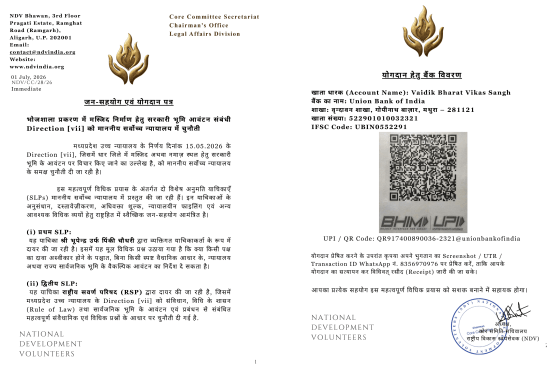
New Delhi, July 11, 2026: The long-running dispute concerning the Bhojshala complex in Dhar, Madhya Pradesh, has entered another significant phase. According to the source report, National Development Volunteers, also known as Rashtriya Vikas Swayamsevak, intends to approach the Supreme Court of India through a Special Leave Petition, or SLP. The proposed challenge concerns the Madhya Pradesh High Court’s observation that the state government may consider an application for alternative land in Dhar district for the construction of a mosque or place of prayer. The report further states that the initiative has received support from the Dwarka Shankaracharya, Swami Sadanand Saraswati.
The announcement has been presented through the forceful slogan, “No Legal Land for an Illegal Mosque.” That phrase expresses the campaigners’ position, but it should not be confused with the precise language or complete legal effect of the High Court judgment. The court did not order the immediate transfer of a particular plot, identify any government land, approve a building plan, or establish a mosque through judicial decree. It stated only that an application, if submitted by the Muslim side or a duly constituted Waqf body, could be considered by the Madhya Pradesh government in accordance with law.
What the Madhya Pradesh High Court actually decided
On May 15, 2026, the Indore Bench of the Madhya Pradesh High Court delivered a common judgment in a group of petitions concerning worship, prayer, conservation and administration at the Bhojshala–Kamal Maula complex. The bench comprised Justice Vijay Kumar Shukla and Justice Alok Awasthi. In its operative directions, the court held that the disputed area had been a protected monument under the relevant archaeological law since March 18, 1904. It further held that the religious character of the disputed area was that of Bhojshala with a temple dedicated to Goddess Vagdevi, or Saraswati.
The High Court quashed the relevant portion of the Archaeological Survey of India order dated April 7, 2003, which had restricted Hindu worship to specified occasions while permitting members of the Muslim community to offer Friday namaz at the complex. It directed the Government of India and the ASI to decide the future administrative framework for the Bhojshala temple and its associated Sanskrit-learning tradition. The ASI was instructed to retain overall supervisory control over preservation, conservation and the regulation of religious access under the Ancient Monuments and Archaeological Sites and Remains Act, 1958.
The court also permitted the Union government to consider representations seeking the return of the image identified by Hindu petitioners as the Pratima of Goddess Saraswati from a museum in London and its re-establishment at Bhojshala. A Jain petitioner had advanced a competing identification of an image as Ambika and sought recognition of the complex as Jain heritage. That petition was dismissed, although the judgment discussed the historical interaction among Hindu and Jain traditions. A careful civilizational approach can recognize those deep connections while continuing to respect Jainism as a distinct Dharmic tradition with its own institutions, doctrines and sacred inheritance.
The direction now facing a proposed challenge appears in paragraph 211(vii) of the High Court judgment. It says that, to secure the religious rights of the Muslim community and achieve justice between the parties, the state government may consider an application for suitable and permanent land in Dhar district for a mosque, prayer space and associated facilities. The wording is permissive rather than mandatory: the government “may consider” an application, and any consideration must occur “in accordance with law.”
Why Bhojshala carries exceptional historical importance
Bhojshala is associated with Raja Bhoj of the Paramara dynasty, who ruled in the eleventh century and is remembered as a major patron of Sanskrit scholarship, philosophy, grammar, astronomy, architecture and the arts. Hindu petitioners describe the site as a centre of learning established under his patronage and dedicated to Vagdevi Saraswati, the deity of knowledge. The name itself joins “Bhoj,” referring to Raja Bhoj, with “shala,” denoting a hall or place of learning. For many devotees, the controversy therefore concerns more than possession of a medieval building; it touches the memory of an educational institution, a sacred landscape and the cultural continuity of Dhar.
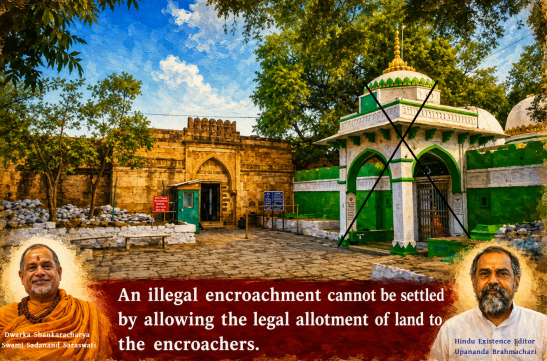
Members of the Muslim community have historically identified the complex with the Kamal Maula Mosque and the memory of the Sufi figure Kamaluddin Chishti. That community relied on records of prayer, administrative recognition and the shared-access arrangement maintained under the 2003 ASI order. The High Court rejected the claim that the disputed area possessed the legal and religious character of a mosque from its inception, but the Muslim parties have contested that conclusion and have already approached the Supreme Court against the principal judgment.
This distinction matters. The Muslim side’s SLP challenges the finding that Bhojshala is a temple and the termination of Friday namaz at the protected complex. The proposed National Development Volunteers petition, as described in the July 11 report, would move in the opposite direction: it would contest the separate observation allowing the state to consider alternative land for a mosque. The Supreme Court could hear the issues together, tag one matter with another, or examine them separately depending on the pleadings, parties and reliefs requested.
The archaeological record examined by the court
The High Court relied substantially on a multidisciplinary ASI investigation conducted under judicial supervision. The resulting material was presented in ten volumes and included structural descriptions, archaeology, epigraphy, scientific analysis, photographic records and videography. The survey used methods such as ground-penetrating radar, GPS mapping, architectural documentation, stratigraphic examination and compositional analysis. The site and its surrounding area were divided into grids so that structural components, trenches, artefacts and architectural fragments could be catalogued systematically.
According to the findings accepted by the High Court, the existing structure incorporated material from an earlier and larger Paramara-period structure. The judgment referred to sculptures and fragments depicting deities, animals, mythological figures and temple motifs; numerous pillars and pilasters; and more than 150 Sanskrit and Prakrit inscriptions. It also noted grammatical material and literary inscriptions consistent with a centre of Sanskrit learning. On that combined evidentiary basis, the court concluded that the present monument had been constructed over, and partly from, a pre-existing temple and educational complex associated with Saraswati worship.
The Muslim parties questioned the neutrality, methodology and interpretation of the survey. Their objections included allegations of selective treatment of evidence and disagreement over the historical meaning of architectural reuse. The High Court rejected those objections, noting the presence of nominated representatives during the investigation and the participation of a multidisciplinary technical team. The Supreme Court, however, is not automatically bound to accept every historical or legal inference drawn by the High Court. It may examine whether the evidentiary conclusions were legally sustainable, whether the proper standard of review was applied and whether the final reliefs followed from the record.
What an SLP under Article 136 means
A Special Leave Petition is not an ordinary appeal available as an automatic right. Article 136 of the Constitution gives the Supreme Court an exceptional and discretionary power to grant special leave against a judgment, decree, determination, sentence or order of a court or tribunal. A petitioner must first persuade the Supreme Court that the matter raises a substantial injustice, a serious legal error, an important constitutional question or another exceptional reason for intervention. If leave is granted, the SLP is converted into an appeal and the merits are considered more fully.
If National Development Volunteers was not a formal party before the High Court, it may also have to seek the Supreme Court’s permission to challenge the relevant direction and demonstrate a sufficient legal interest in the controversy. Public advocacy, religious concern or institutional support may explain why an organization wishes to litigate, but maintainability still depends on established procedural principles. The court may examine whether the organization is an aggrieved party, whether its objection is premature, whether an actual land-allotment decision exists and whether the proposed issue is already represented by parties to the connected proceedings.
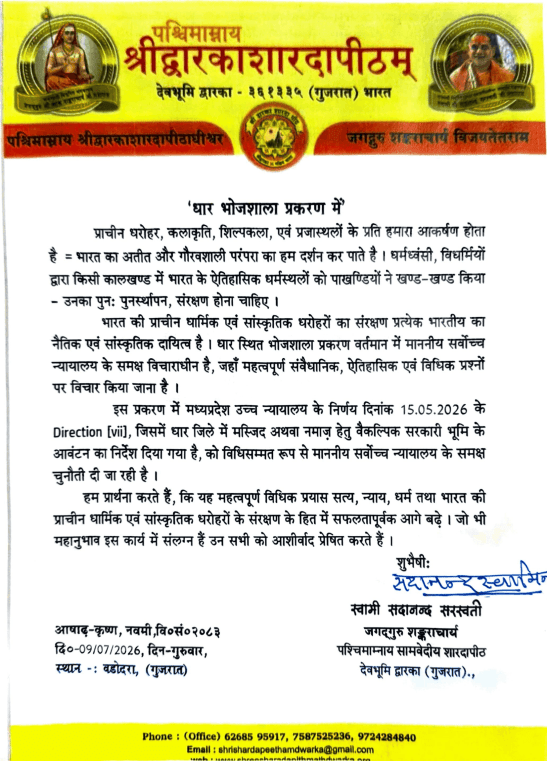
The distinction between an announced SLP and a registered case is equally important. An intention to file does not establish that the petition has been lodged, scrutinized by the Supreme Court Registry, assigned a diary number, listed before a bench or admitted for hearing. Until those steps occur, claims about the petition’s exact grounds, respondents and requested remedies should be treated as a statement of intended legal action rather than a completed judicial development.
The likely legal challenge to the alternative-land observation
The proposed challengers may argue that the High Court granted a benefit that was not necessary to determine the religious character or management of the protected monument. They may contend that the Muslim parties’ claims concerning Bhojshala were dismissed and that a direction concerning new government land fell outside the central dispute. Another possible argument is that judicial sympathy cannot substitute for the statutory process governing public land, municipal planning, religious endowments, Waqf administration and the allocation of state resources.
A related issue concerns the language of “complete justice.” Article 142 expressly grants the Supreme Court power to pass orders necessary for doing complete justice in a matter before it. High Courts possess broad remedial authority under Article 226, but they do not exercise Article 142 itself. An SLP could therefore ask whether paragraph 211(vii) was a permissible exercise of Article 226 jurisdiction, an advisory observation leaving the executive free to act, or an unsupported extension of relief beyond the issues requiring adjudication.
The opposing response would emphasize that the direction imposes no compulsory allotment. It preserves executive discretion, requires compliance with law and seeks to reduce the practical consequences of ending a longstanding prayer arrangement. On this interpretation, the High Court did not create a legal entitlement to state land. It merely clarified that the state was not barred from considering a lawful application. Because no site has yet been allotted, the Supreme Court could regard a challenge as premature or conclude that any future executive decision should be contested separately on its own facts.
Why the phrase “illegal mosque” requires legal precision
The slogan “No Legal Land for an Illegal Mosque” combines two legally distinct questions. The first concerns the historical and religious character of the protected Bhojshala complex. The High Court decided that question in favour of its character as a Saraswati temple and rejected the claim of mosque status over the disputed land. The second question concerns whether a different mosque could lawfully be constructed on another plot that might later be allotted, leased, purchased or otherwise obtained in accordance with applicable law.
A judicial finding against mosque rights at one disputed monument does not automatically make every future mosque in Dhar illegal. A new structure on separately acquired and legally approved land would have to be assessed under land-allotment rules, development controls, municipal permissions, environmental requirements, public-order considerations and constitutional standards. Conversely, no religious organization can demand public land merely by invoking faith. The legality of any future allotment would depend on transparent authority, a valid public purpose, equal treatment and compliance with governing policy.
This precision does not diminish the seriousness of the Hindu petitioners’ victory or the emotional meaning of Bhojshala. It protects that victory from being blurred by a broader claim that the judgment itself did not make. In a constitutional system, exact language matters because slogans mobilize public feeling while courts decide defined rights, statutory powers and enforceable remedies.
Articles 14, 25, 26 and 27: the constitutional balance
Article 25 protects freedom of conscience and the right freely to profess, practise and propagate religion, subject to public order, morality, health and other constitutional provisions. Article 26 protects specified rights of religious denominations, again subject to public order, morality and health. These provisions can protect worship and institutional autonomy, but they do not ordinarily guarantee a right to receive a particular parcel of government land. Any claimed entitlement must arise from a valid law, policy, grant or independently established property right.
Article 14 requires equality before the law and guards against arbitrary state action. If the Madhya Pradesh government eventually considers an application, it would need to apply objective criteria and explain the legal authority for its decision. Comparable organizations should not be treated differently without a rational basis. The value of public land, the method of allotment, local planning needs, public safety and the availability of alternative sites would all be relevant to an administrative assessment.
Article 27 states that no person can be compelled to pay taxes whose proceeds are specifically appropriated for promoting or maintaining a particular religion or religious denomination. Its application to land grants is not automatic, and Indian constitutional law distinguishes the promotion of a particular faith from regulation, heritage protection and measures serving a broader secular purpose. Nevertheless, a heavily subsidized or preferential allotment could invite scrutiny regarding public purpose, financial transparency, equality and the limits of state support for religious institutions.
Heritage law remains separate from the land question
Bhojshala’s status as a centrally protected monument places its conservation under the Ancient Monuments and Archaeological Sites and Remains Act, 1958. That statutory status concerns the preservation and regulated use of the historic complex. It does not itself determine how unrelated state land elsewhere in Dhar district should be allocated. The Supreme Court may therefore separate the heritage dispute from the executive land question, even if both arose from the same judgment.
The Places of Worship (Special Provisions) Act, 1991, may also remain part of the broader litigation. The High Court treated Bhojshala’s protected-monument status as relevant to the statutory framework and proceeded to determine its religious character through historical, archaeological and constitutional analysis. The Muslim side may challenge that reasoning, while Hindu parties are likely to defend the protected-monument exception and the evidentiary conclusions. The Supreme Court’s treatment of this issue could influence other disputes involving layered sacred sites, although each case must still be decided on its own record and statutory status.
The role of the Dwarka Shankaracharya
The reported support of Swami Sadanand Saraswati, the Shankaracharya of Dwarka Sharda Peeth, adds spiritual and institutional significance to the proposed challenge. A Shankaracharya’s intervention can shape public understanding of heritage, temple dignity and the responsibilities of the state toward sacred institutions. That support, however, is distinct from the formal status of a litigant. The Supreme Court will decide the controversy through pleadings, evidence, precedent and constitutional doctrine rather than the religious standing of those supporting either side.
Dharmic unity is best served when Hindu, Buddhist, Jain and Sikh communities protect one another’s heritage without erasing their distinct histories or allowing a dispute to become hostility toward ordinary citizens of another faith. Bhojshala’s association with Saraswati, Sanskrit learning and Paramara-era culture deserves rigorous preservation. At the same time, disagreement over a site or a government policy should remain directed toward institutions, evidence and law rather than entire communities.
Possible outcomes in the Supreme Court
The Supreme Court could dismiss the proposed SLP at the preliminary stage if it finds no exceptional ground for interference. It could issue notice and seek responses without staying paragraph 211(vii). It could stay or modify the alternative-land observation, clarify that it creates no enforceable right, or remove it while leaving the remainder of the High Court judgment intact. If special leave is granted, the question would proceed as a civil appeal and could be heard with the Muslim side’s challenge to the principal Bhojshala findings.
The court could also preserve the High Court’s permissive language while declaring that every future land decision remains open to independent judicial review. Another possibility is a broader examination of the High Court’s historical findings, the 2003 ASI arrangement, the 2024 archaeological investigation, the Places of Worship Act, religious freedom and the limits of judicial remedies under Article 226. The eventual scope will depend on which petitions are admitted and how the Supreme Court frames the questions of law.
What should be watched next
The most reliable indicators will be the Supreme Court diary number, the names and legal standing of the petitioners, the specific paragraph challenged, the relief requested and any order issued after listing. It will also be important to determine whether the Madhya Pradesh government has received a formal land application, whether any site has been identified and which statutory or policy framework would govern its consideration. Until such documents appear, reports of an “allotment” should be distinguished from the High Court’s conditional permission to consider a future request.
The Dhar Bhojshala dispute shows why heritage litigation carries such emotional force. Sacred places embody memory, interrupted traditions, family narratives and the hope that historical evidence will finally receive institutional recognition. Yet durable justice requires more than an emotionally powerful phrase. It requires careful separation of historical character, worship rights, monument conservation, public-land policy and the equal application of constitutional law.
The proposed SLP may therefore become an important test of how far a High Court can go when attempting to balance the consequences of a decisive heritage ruling. It may also clarify whether paragraph 211(vii) is a legally reviewable benefit, a non-binding humanitarian observation or merely a statement preserving powers the state already possesses. Whatever the outcome, the strongest resolution will be one that protects Bhojshala’s archaeological and spiritual integrity, respects the independence of Dharmic traditions, applies public law consistently and keeps communal peace firmly within the framework of constitutional justice.
Inspired by this post on Struggle for Hindu Existence.


Leave a Reply
You must be logged in to post a comment.