
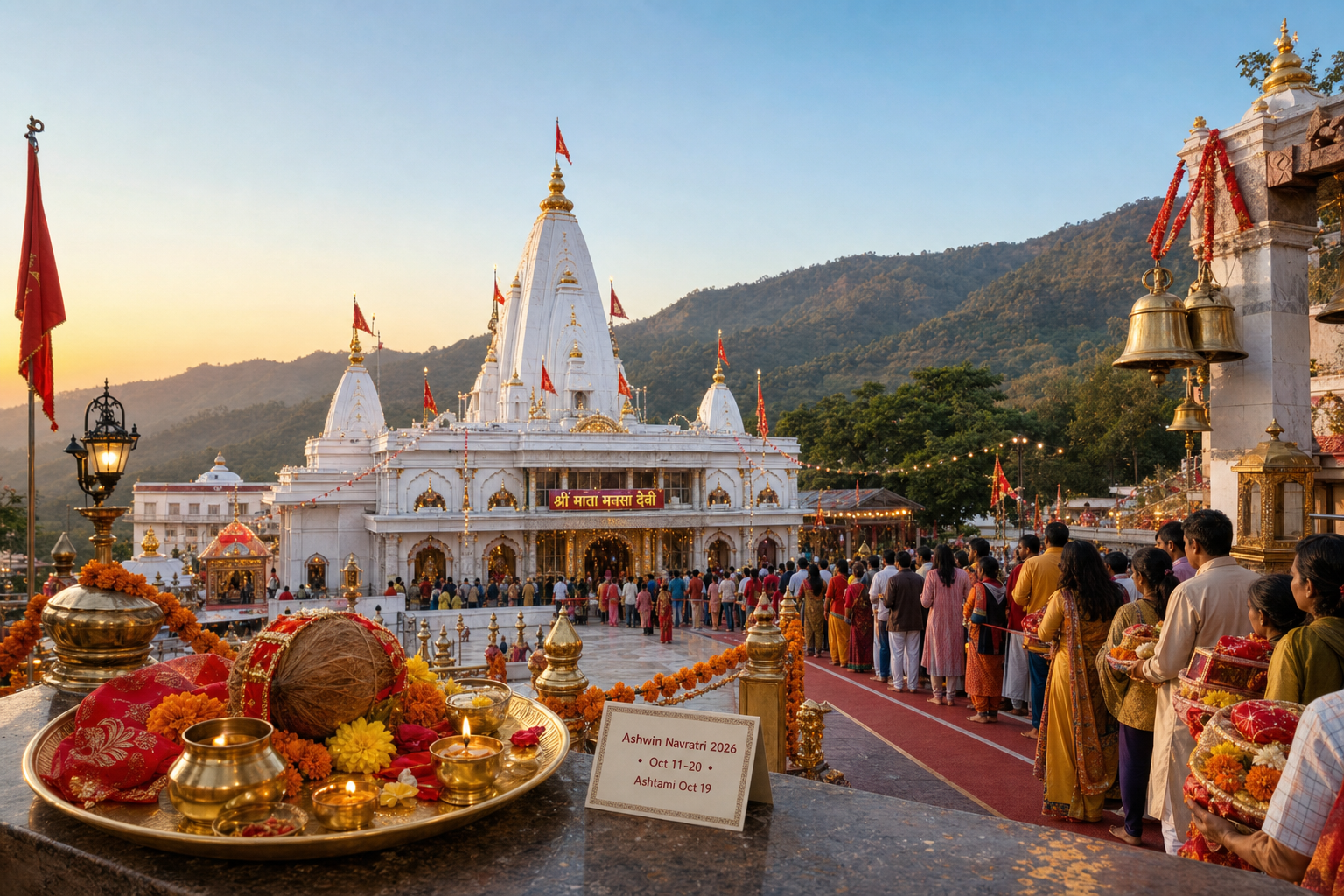
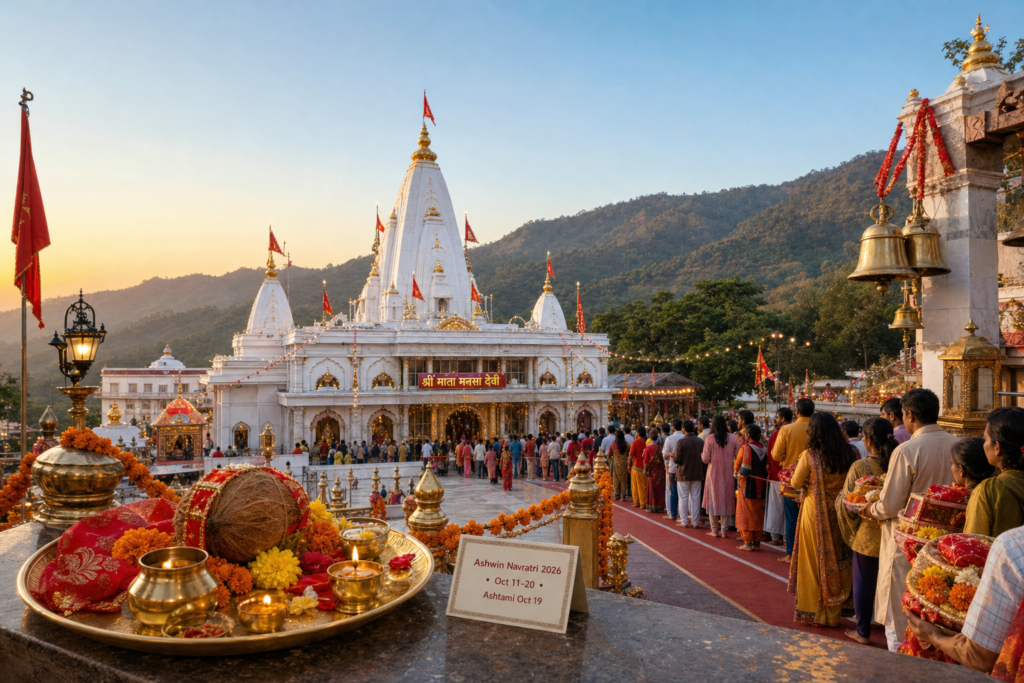
Mela Manasadevi 2026 refers to the Navratri fair observed at Shri Mata Mansa Devi Temple in Panchkula, Haryana, one of North India’s important Shakti pilgrimage centres. The shrine becomes especially significant during the two principal Navratri observances of the year: Chaitra Navratri in spring and Ashwin or Shardiya Navratri in autumn. These melas are not merely seasonal gatherings; they are structured devotional, cultural, and administrative events that bring together worship, fasting, public service, crowd management, regional heritage, and the living continuity of Hindu temple traditions.
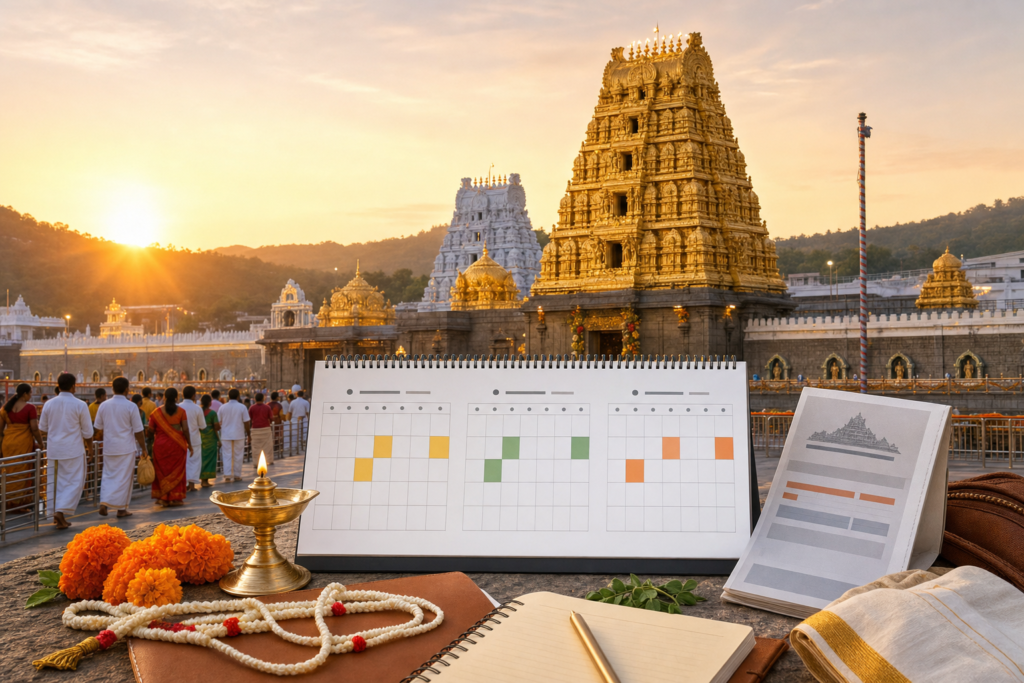
For the 2026 calendar cycle, the Ashwin Navratri Mela is listed from October 11 to October 20, 2026, with Ashtami on October 19, 2026. The next Vasant or Chaitra Navratri Mela in the recurring sequence is listed from April 7 to April 15, 2027. Separately, the Shri Mata Mansa Devi Shrine Board notice board also listed the Chaitra Navratra Mela 2026 from March 19 to March 27, 2026, which is important for readers comparing annual Panchang-based dates with local shrine notices. Because Navratri follows the Hindu lunisolar calendar, dates may vary slightly by regional Panchang, local observance, and temple-specific administrative announcements.
Shri Mata Mansa Devi Temple is located in the Mansa Devi Complex at Panchkula, near Chandigarh, on the lower slopes of the Shivalik range. The shrine is dedicated to Mata Mansa Devi, revered as a form of Shakti, the divine feminine power. The name “Mansa” is traditionally associated with fulfilment of sincere wishes, and this gives the pilgrimage an intimate emotional quality. Devotees often arrive with personal prayers: health, family welfare, relief from anxiety, gratitude after a fulfilled vow, or the quiet desire to begin again with inner strength.
The historical identity of the temple is also significant. The present main shrine is associated with Maharaja Gopal Singh of Manimajra and is generally dated to the early nineteenth century, around 1811 to 1815. The nearby Patiala Temple, situated close to the main shrine, was constructed in 1840 under the patronage of Maharaja Karam Singh of Patiala. Together, these temples show how regional kingship, Shakti worship, sacred geography, and public devotion shaped the religious landscape around Panchkula and the Chandigarh region.
The Navratri Mela at Mansa Devi is held twice every year, in Chaitra Month and Ashwin Month. Chaitra Navratri is associated with spring, renewal, and the beginning of the Hindu New Year in many regional calendars. Ashwin Navratri, also called Shardiya Navratri, is the autumnal celebration of Devi worship and is widely observed across India through Durga Puja, Garba, Golu, Ramlila, Kanya Puja, fasting, bhajans, and temple darshan. At Panchkula, both forms of Navratri take the shape of a large devotional fair under the supervision of the Shrine Board.
The term “mela” is important because it indicates more than a ritual date. A mela is a public sacred gathering in which worship, movement, food, security, service, commerce, accommodation, transport, and community participation all converge. At Mela Manasadevi, the devotee’s journey is therefore both inward and outward. Inwardly, the nine nights of Navratri invite discipline, prayer, restraint, and reflection. Outwardly, the fair requires coordinated arrangements for lakhs of visitors who come for darshan during a concentrated period.
During Navratri, the temple complex traditionally remains open for extended darshan, with special attention to the heavy footfall on the seventh and eighth days. The source tradition notes that on the seventh and eighth day of Navratras, the temples of the Shrine Complex may close only briefly at night for cleaning and maintenance, while for the rest of the Navratri period darshan timings are generally maintained in a broad morning-to-night window. The official temple timings outside special mela arrangements list summer opening from 4 AM to 10 PM and winter opening from 5 AM to 9 PM, with bhog and aarti timings separately observed. Pilgrims should still verify the latest local notice before travelling, because mela schedules can change for safety and crowd management.
Ashtami holds special significance in the Navratri cycle. It is the eighth lunar day and is widely associated with Durga Ashtami, Mahashtami, Kanya Puja, and intensified Devi worship. At Mansa Devi, Ashtami typically draws a larger number of devotees because many families observe fasting, offer prayers, and complete vows on this day. In the 2026 Ashwin Mela listing, Ashtami falls on October 19, 2026, making it one of the most important dates for planning darshan.
The devotional meaning of Mela Manasadevi rests on the broader philosophy of Shakti. In Hindu thought, Shakti is not only a goddess to be worshipped but also the dynamic energy through which life, courage, protection, creativity, and transformation become possible. Navratri’s nine-night structure gives this theology a practical rhythm. Each day becomes a disciplined return to the sacred feminine, whether through mantra, fasting, seva, silence, music, scripture recitation, or simple darshan with folded hands.
The temple’s own devotional refrain captures this mood: || “Yaa Devi sarva bhuteshu Mansa devi rupane sanssthitha” || || “Namastasyei namastasyei namastasyei namastasyei Namo Namah” ||. The phrase places the goddess within all beings and invites repeated reverence. In a public mela setting, this idea becomes socially visible. The elderly, children, families, volunteers, priests, police personnel, sanitation workers, shopkeepers, and pilgrims all become part of the shared sacred atmosphere.
From an administrative perspective, Mela Manasadevi is a notable example of temple governance during high-volume pilgrimage. The Shrine Board makes arrangements for temporary accommodation, durries, blankets, toilets, dispensaries, police posts, and regulated movement of devotees. Duty Magistrates and nodal officers are appointed during the mela to support orderly conduct. These details may appear logistical, but in a pilgrimage setting they are inseparable from dharma, because dignified darshan depends on cleanliness, safety, accessibility, and public order.
The Panchkula shrine has also adapted to contemporary pilgrimage needs. Official information highlights online services such as darshan tokens, chola booking, prasad, accommodation-related facilities, and contact channels. Recent reports have described the use of technology for footfall monitoring and crowd management during major devotional periods. This shift reflects a wider pattern in Indian temple administration: ancient worship continues, but the systems supporting devotees increasingly use modern planning, digital access, sanitation protocols, and data-based crowd control.
For devotees planning to attend the 2026 Ashwin Navratri Mela, the practical approach is to treat October 11 to October 20, 2026 as the main fair window and October 19, 2026 as the key Ashtami date. Those intending to visit on Ashtami, Saptami, Navami, or the opening day should expect heavier crowds. Early arrival, minimal baggage, comfortable footwear, water discipline, and attention to official queue instructions can greatly improve the pilgrimage experience. Families travelling with children, senior citizens, or persons with disabilities should check the Shrine Board’s latest advisories before departure.
The location of Panchkula makes the shrine accessible from Chandigarh, Kalka, and nearby parts of Haryana, Punjab, Himachal Pradesh, and Delhi NCR. Chandigarh is the major nearby rail and air hub, while Panchkula is connected by road. The temple’s proximity to the urban Chandigarh-Panchkula region gives it a distinctive character: it is both a traditional Shakti shrine and a highly visited urban pilgrimage centre. This combination explains why the mela requires careful coordination between religious authorities and civil administration.
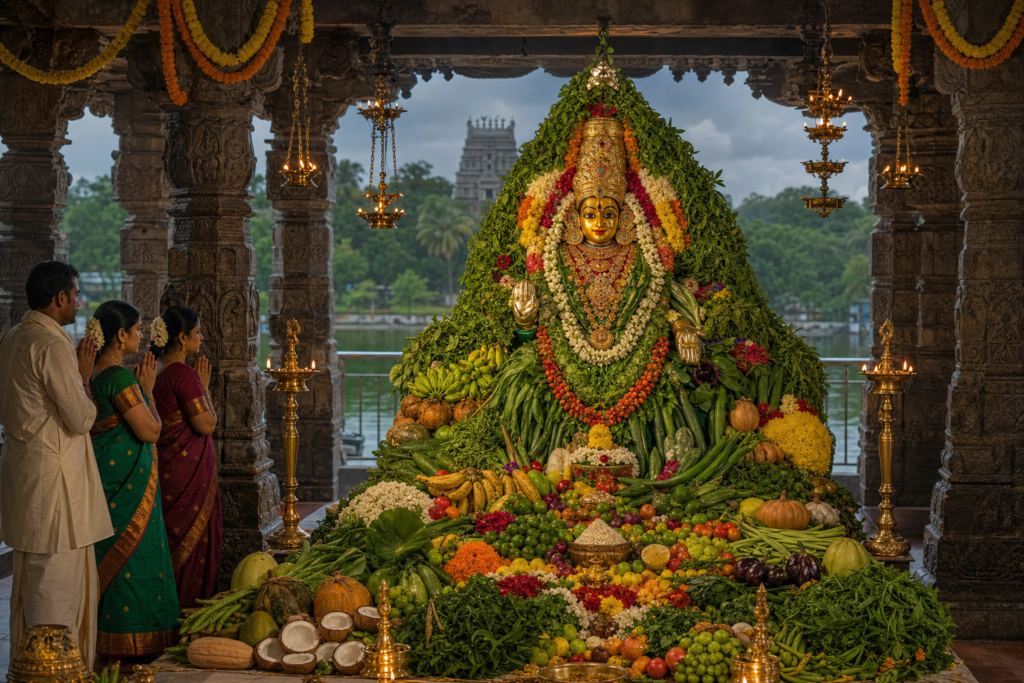
The fair also belongs to the wider cultural world of North Indian Navratri. Some devotees come after observing vrat at home; some participate in bhajans and jagran; some offer coconut, flowers, chunari, or chola according to family custom; some perform Kanya Puja during Ashtami or Navami; and many simply stand in the queue for darshan as an act of surrender. These practices differ by family, region, sampradaya, and personal vow, yet the shared centre remains reverence for Devi.
This diversity is one of the strengths of Hindu festival culture. Mela Manasadevi does not reduce devotion to a single form. It allows mantra, image worship, fasting, music, seva, family vows, pilgrimage, silence, and community gathering to coexist. Such an inclusive model is important for the broader unity of dharmic traditions. Hinduism, Buddhism, Jainism, and Sikhism have distinct theologies and practices, yet they share deep civilizational respect for pilgrimage, discipline, compassion, sacred memory, self-restraint, and service to the community.
The emotional power of Mela Manasadevi lies in this combination of personal prayer and collective rhythm. A devotee may arrive with a private burden, but the fair places that burden within a larger field of shared faith. The sound of bells, the movement of queues, the fragrance of flowers, the sight of families waiting patiently, and the discipline of volunteers all create an atmosphere in which devotion becomes tangible. Academic descriptions can explain the structure of the mela, but the lived experience is often remembered through small moments of stillness amid the crowd.
For readers interested in temple history, the Mansa Devi complex also demonstrates how sacred places survive through institutional renewal. After older patterns of patronage changed, the Haryana government established the Shri Mata Mansa Devi Shrine Board through legislation in 1991 to improve administration, infrastructure, and preservation. The Board’s role shows how modern legal and administrative frameworks can support traditional religious institutions when the focus remains on devotee welfare, heritage protection, and transparent management.
For readers interested in ritual studies, the mela offers a useful case of calendar-based sacred time. Navratri is not fixed by the Gregorian calendar; it follows tithi calculations within the Hindu lunisolar system. This is why Chaitra and Ashwin Navratri dates shift each year. It is also why devotees should rely on a current Panchang and the official temple notice for exact timings, especially for Ashtami, Navami, aarti, bhog, special darshan, and any temporary changes made during crowd-sensitive periods.
For readers interested in cultural heritage, Mela Manasadevi shows how a temple fair preserves intangible traditions. The mela transmits songs, family vows, food customs, gendered forms of worship such as Kanya Puja, intergenerational travel, and local memories of the goddess. Children who accompany parents and grandparents do not merely visit a monument; they absorb a living grammar of reverence, patience, offering, and gratitude. This is how cultural continuity often works: not through formal instruction alone, but through repeated participation.
At the same time, responsible pilgrimage remains essential. Devotees should avoid littering, respect queue discipline, follow security instructions, use designated facilities, and support the comfort of elderly and vulnerable visitors. A sacred fair becomes truly dharmic when devotion is expressed not only before the deity but also in conduct toward fellow pilgrims. Cleanliness, restraint, patience, and courtesy are practical forms of worship during a crowded mela.
Mela Manasadevi 2026 therefore deserves attention as both a calendar event and a cultural institution. Its dates help devotees plan travel; its history connects the shrine to Panchkula’s sacred geography; its rituals express Shakti worship; and its administrative arrangements demonstrate the scale of modern Hindu pilgrimage. Above all, the mela reminds devotees that Navratri is a disciplined celebration of strength, compassion, renewal, and the divine presence that sustains life.
In summary, the principal 2026 focus for upcoming pilgrims is the Ashwin Navratri Mela from October 11 to October 20, 2026, with Ashtami on October 19, 2026. The next Vasant Navratri Mela in the sequence is listed for April 7 to April 15, 2027. Those planning darshan should verify final timings through the Shrine Board close to the travel date, because temple schedules during Navratri can be adjusted for safety, sanitation, aarti, bhog, and crowd flow. With preparation and reverence, the journey to Mata Mansa Devi can become both a meaningful pilgrimage and a powerful encounter with India’s living Shakti tradition.
Inspired by this post on Hindu Pad.

Leave a Reply
You must be logged in to post a comment.