
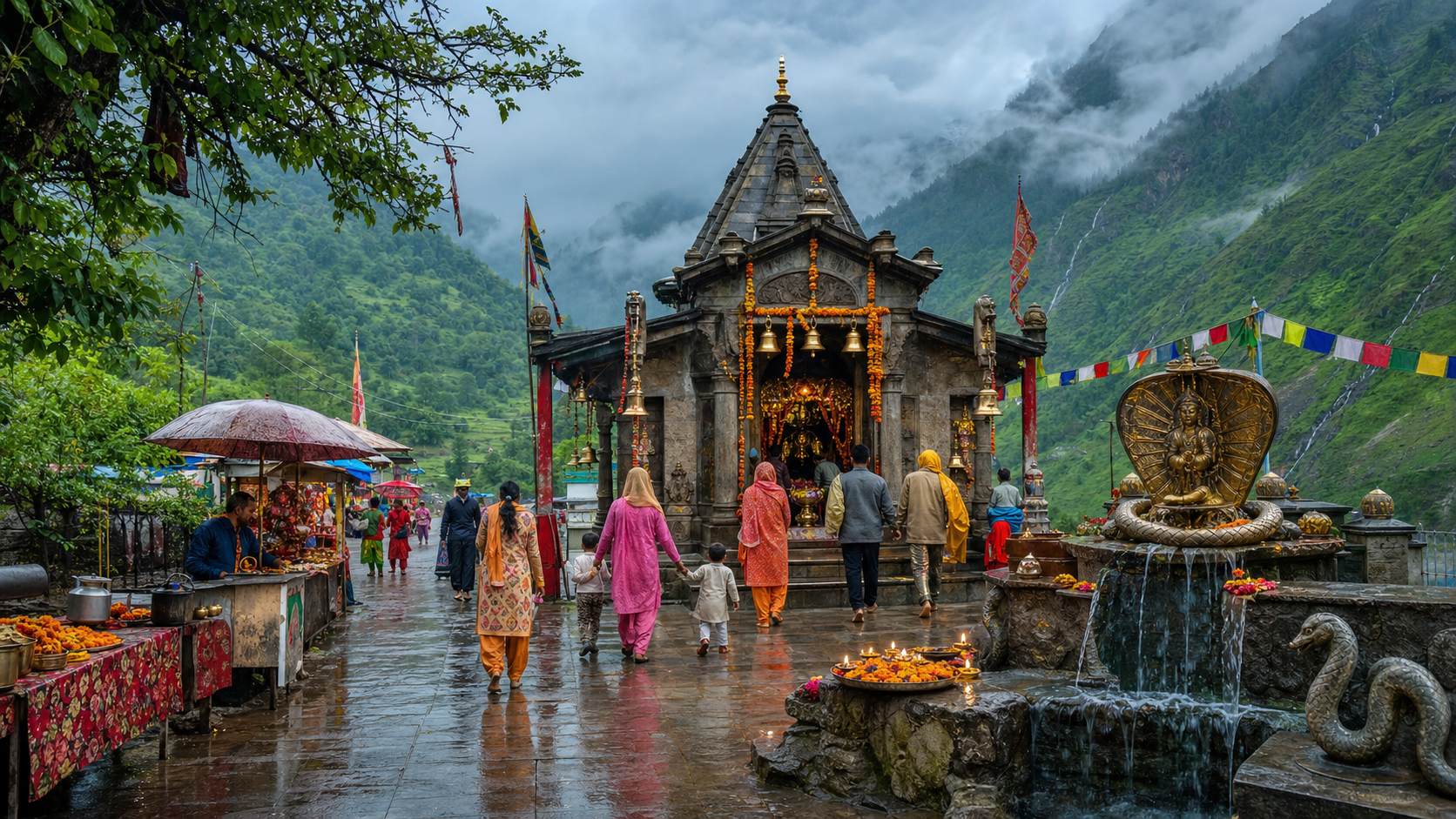
Mela Nagni 2026, also known as the Nurpur Nagni Mata Temple Fair, is scheduled to begin on August 1, 2026. The fair is associated with the Nagni Mata Temple near Nurpur in Himachal Pradesh and is traditionally observed on Saturdays during the sacred monsoon months of Shravan Month and Bhadrapad Month in the Hindu calendar.
In the cultural landscape of Himachal Pradesh, fairs are not merely seasonal gatherings. They are living institutions where pilgrimage, local economy, oral memory, music, family devotion, and regional identity meet in one public space. Mela Nagni belongs to this older Himalayan pattern, where the temple fair becomes both a religious observance and a community archive.
The shrine is generally described as being located about 6 km from Nurpur town, near the Bhadwar and Kandwal area on the Pathankot-Kullu highway. This location is important because Nurpur sits close to cultural routes connecting Himachal Pradesh, Punjab, and Jammu and Kashmir. As a result, the fair is not confined to one district identity; it draws devotees, traders, families, and visitors from a wider north Indian region.
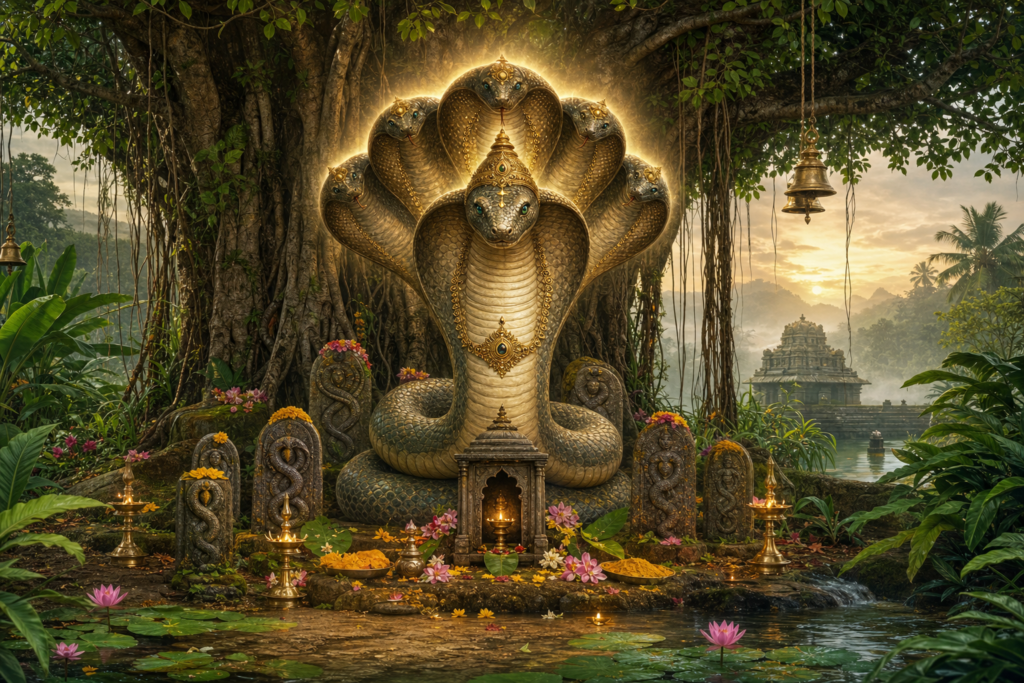
The central deity of the fair is Nagni Mata, a local manifestation of the sacred feminine associated with serpent symbolism. In Indic religious vocabulary, the serpent is not treated only as an object of fear. It is also a sign of protection, fertility, subterranean water, ancestral memory, yogic energy, and ecological balance. The worship of Nagni Mata therefore belongs to a broader sacred geography in which nature, danger, healing, and devotion are interpreted together.
The timing of Mela Nagni is especially meaningful. Shravan Month and Bhadrapad Month fall during the monsoon season, when the hills are green, water sources become active, and agrarian life is closely tied to rainfall. In many Hindu traditions, Shravan is marked by heightened temple worship, vrata, pilgrimage, and offerings. Bhadrapad continues that devotional rhythm through fairs, local goddess traditions, Ganesh Chaturthi, Krishna-related observances, and regional festivals.
For 2026, the first Saturday observance is identified as August 1. Since the fair is traditionally linked with Saturdays in Shravan and Bhadrapad, visitors may expect the fair atmosphere to continue on later Saturdays of the season as well. However, final arrangements, traffic management, temple timings, and crowd instructions should be checked with local temple authorities or the district administration before travel, because weather and local decisions can affect the exact public schedule.
A notable feature of the Nagni Mata Temple tradition is the belief that water emerges from beneath the temple near the place where the idol of Naagni Maata is situated. Devotees also speak of the use of temple water and Mitti in relation to snakebite. This belief should be understood as part of the temple’s devotional and cultural tradition, not as a substitute for emergency medical care. In any case of snakebite, immediate hospital treatment and anti-venom guidance from trained medical professionals remain essential.
This careful distinction matters because a responsible account of sacred tradition must honor faith without weakening public health. Devotional practices often give emotional courage to families in moments of fear, but modern medicine saves lives in acute poisoning. A mature dharmic approach can hold both truths together: reverence for the deity and urgent respect for medical science.
The fair’s social energy is created by the movement of people. Families arrive with offerings, elders carry memories of earlier visits, children experience the brightness of a hill fair, and local vendors participate in a seasonal economy shaped by pilgrimage. The temple courtyard and surrounding roads become a temporary civic space where devotion is visible through waiting, walking, sharing food, lighting lamps, and offering prayers.
From an academic perspective, Mela Nagni can be studied through at least four lenses: ritual practice, sacred ecology, regional economy, and collective memory. Ritual practice includes the worship of Nagni Mata and the Saturday observances. Sacred ecology includes the symbolic importance of water, serpents, monsoon, and earth. Regional economy includes transport, food stalls, small trade, and hospitality. Collective memory includes stories of protection, healing, and family vows passed across generations.
The serpent symbolism at Nagni Mata also connects the fair to the wider Indic tradition of Naga reverence. Naga Panchami, Nag Chaturthi, and other regional serpent observances show that serpent worship has multiple local forms across India. In some places the emphasis is on protection from snakebite; in others it is on fertility, rainfall, agricultural well-being, or the protection of water bodies. Mela Nagni fits into this diverse pattern while retaining its own Nurpur identity.
The theme of dharmic unity can be seen in this symbolism. Hindu traditions preserve many forms of Naga worship. Buddhist literature and art also remember Naga figures as protectors in sacred narratives. Jain tradition includes the revered image of Dharanendra associated with Bhagavan Parshvanatha. Sikh communities of the Punjab-Himachal region may not share the same ritual theology, but the wider regional culture values seva, protection, and reverence for life. Such points of contact show how dharmic traditions can remain distinct while sharing ethical and cultural ground.
The temple fair therefore should not be reduced to superstition or spectacle. It is better understood as a layered institution of Himalayan Hindu culture. It carries local theology, seasonal timing, environmental symbolism, and a form of social care. People come not only to ask for blessings but also to participate in a community rhythm that has meaning beyond individual prayer.
The monsoon setting deepens the emotional atmosphere of the fair. Hill roads, wet soil, flowing water, and cloud-covered slopes create a sensory environment that differs from urban temple visits. Pilgrims often remember such journeys through small details: the sound of bells through rain, the smell of incense mixed with damp earth, the waiting lines, the tea stalls, and the shared feeling that a sacred journey has to be completed with patience.
For local communities, Mela Nagni also performs an important economic function. Seasonal fairs create opportunities for small vendors, transport workers, food sellers, flower sellers, and households that serve visitors. In hill regions, where livelihoods are often seasonal and geographically constrained, a temple fair can support micro-economies while reinforcing local identity.
The fair is also a site of informal education. Younger generations learn how elders approach a deity, how offerings are prepared, why a particular day matters, how to behave in a temple crowd, and how local legends are narrated. This transmission is rarely formal, but it is powerful. It keeps Hindu cultural traditions alive through participation rather than instruction alone.
Visitors planning to attend Mela Nagni 2026 should treat the journey as both pilgrimage and hill travel. August and September can bring heavy rain in Himachal Pradesh, so road conditions, landslide advisories, parking arrangements, and local weather updates should be checked before departure. Footwear, rain protection, drinking water, essential medicines, and patience with traffic are practical necessities rather than optional comforts.
Since the temple is close to the Pathankot-Kullu route, many visitors may approach from Pathankot, Nurpur, Kangra-side towns, or nearby areas of Punjab and Jammu. Public transport and private vehicles may both be used, but fair days can create congestion near the temple approach. Early travel is usually preferable, especially for families with children or elderly devotees.
Temple etiquette remains central to the experience. Devotees should avoid pushing in queues, respect local instructions, keep the premises clean, and refrain from treating sacred spaces as picnic grounds. Offerings should be simple, environmentally responsible, and consistent with temple practice. Plastic waste is especially harmful in hill regions, where drainage, soil stability, and water quality are closely connected.
The ecological dimension of Nagni Mata worship deserves special attention. Serpent reverence can become a reminder that snakes are part of the natural order and should not be harmed out of panic. In agricultural and forest-edge communities, snake encounters are a real concern, but ecological literacy is also necessary. Protecting habitat, keeping surroundings clean, using safe lighting, and seeking trained help in snake encounters are practical extensions of reverence for life.
In this sense, Mela Nagni has contemporary relevance. It can help communities speak about faith, health, environment, and safety in one integrated language. The older ritual vocabulary of protection can be joined with modern awareness about snakebite first aid, emergency response, and conservation. Such integration strengthens tradition rather than weakening it.
The fair also illustrates the distinctive nature of Himachal Pradesh temple culture. Unlike many large urban festivals, Himalayan fairs often remain tied to specific landscapes and local deities. The sacred is not abstracted from place. A hill, spring, road, village, courtyard, or seasonal route becomes part of the religious experience. Nagni Mata Temple reflects this place-centered spirituality.
The emotional appeal of Mela Nagni lies in its balance of intimacy and scale. Thousands may gather, yet many devotees experience the visit as deeply personal. Some arrive with gratitude, some with anxiety, some with family vows, and some with curiosity about a tradition they have heard about from elders. The fair allows these different motivations to coexist without forcing a single interpretation on all participants.
Academically, this is one of the strengths of Hindu festival culture. It permits layered participation. A person may come for darshan, another for family continuity, another for cultural observation, and another for local trade. The fair remains coherent because the temple provides the sacred center around which these varied activities are organized.
The earlier interruption of temple fairs during the pandemic years also adds a modern historical layer to Mela Nagni. When temples and public gatherings were restricted, communities lost not only ritual access but also seasonal rhythms of belonging. The return of such fairs therefore carries emotional weight. It signals restoration, continuity, and the resilience of local religious life.
For readers interested in Hindu festivals, Mela Nagni 2026 offers a valuable case study. It is not only a date on the calendar. It is a convergence of Devi worship, Naga symbolism, monsoon pilgrimage, Himachal Pradesh culture, regional mobility, and public devotion. Its importance lies precisely in this combination of the local and the civilizational.
For devotees, the essential message remains simple: the visit to Nagni Mata is an act of reverence, humility, and trust. For scholars and cultural observers, the fair shows how religious traditions preserve ecological memory and social cohesion. For the wider dharmic community, it is a reminder that diverse practices can enrich a shared civilizational fabric when approached with respect.
Mela Nagni 2026 begins on August 1 with the promise of another monsoon season shaped by devotion. The fair stands as one of Himachal Pradesh’s meaningful temple gatherings, rooted in the living worship of Nagni Mata and sustained by generations of pilgrims. Its enduring relevance lies in the way it brings together faith, family, place, and responsibility in a single sacred journey.
Inspired by this post on Hindu Pad.




Leave a Reply
You must be logged in to post a comment.