
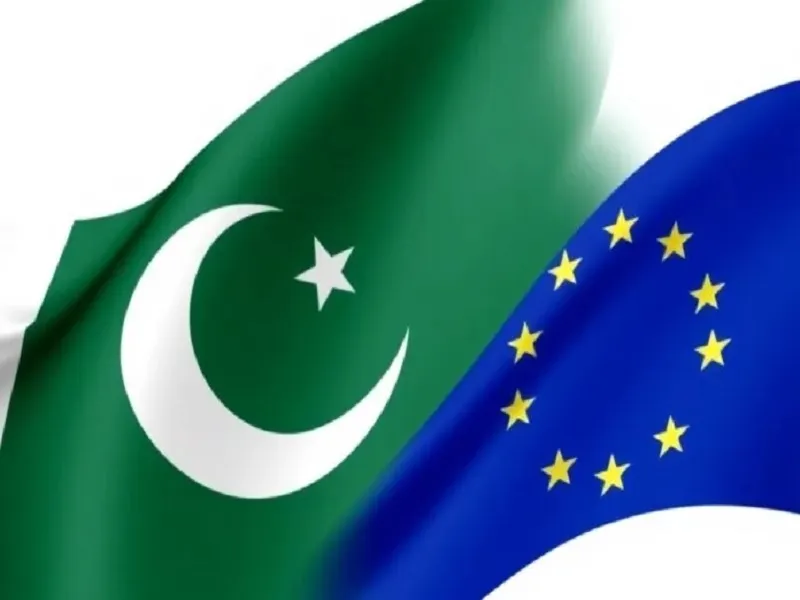
Dr. Subrahmanyam Jaishankar’s remarks in Finland in June 2026 cut through a familiar diplomatic fog with unusual directness. At a discussion on India’s relations with Russia, the External Affairs Minister argued that European criticism of Bharat’s energy and defence choices cannot be separated from Europe’s own record of arming countries whose military systems have been used against India. The point was not merely rhetorical. It raised a deeper question about strategic autonomy, selective morality, arms transfers, and the security pressures that India has faced for decades.
Jaishankar’s central formulation was blunt: “No European country has been attacked with Indian weapons. I wish I could say that for Europe weapons vis-a-vis India. Europe sells weapons, which are used to attack India. Not just now but for many years. We Indians have never done anything to endanger Europe. I think that’s a reasonable point.” Reported during his Finland engagement and discussed widely in Indian media, the statement placed the European critique of India’s Russia policy within a broader history of Western defence exports to Pakistan.
The context matters. Since the Russia-Ukraine war began in February 2022, India has faced sustained Western pressure over its continued purchase of Russian oil and its long-standing defence relationship with Moscow. New Delhi has repeatedly defended its position on the grounds of cost, availability, legacy military platforms, and national interest. India’s argument is that a large developing country with over a billion people cannot outsource energy security or national defence decisions to external moral pressure, especially when that pressure comes from states with their own geopolitical exceptions.
India’s Russia relationship is also not a sudden wartime improvisation. It emerged from decades of military cooperation, technology transfers, spare-parts dependence, and diplomatic alignment during periods when many Western capitals were either ambivalent toward India’s security concerns or actively supportive of Pakistan. A technical reading of India’s defence posture shows why the issue cannot be reduced to a simple purchasing preference. Legacy aircraft, air defence systems, tanks, submarines, missiles, and maintenance chains create long-term dependencies. Shifting away from a supplier base in national defence is not comparable to changing a commercial vendor.
This is where the arms-transfer debate becomes important. The Stockholm International Peace Research Institute, through its Arms Transfers Database, tracks deliveries of major conventional weapons and uses trend-indicator values to compare the volume of transfers across time. SIPRI data is not a perfect measure of money paid, battlefield impact, or political intent, but it is one of the most widely used open-source tools for understanding international arms flows. The figures cited in the original discussion suggest that Pakistan continued to receive military equipment from European suppliers during the 2021-2025 period, including shares of Dutch and Swedish exports.
On paper, such percentages may look modest when compared with the much larger historical role of the United States, China, and other suppliers in Pakistan’s military modernization. In practice, however, even limited defence transfers can carry strategic consequences. Military capability is cumulative. Sensors, radar systems, naval platforms, aircraft components, artillery, electronics, training systems, and support infrastructure can strengthen a country’s wider military posture even when no single shipment appears decisive in isolation.
For India, this issue is not abstract. Pakistan has been involved in multiple conventional and sub-conventional conflicts with India since 1947. The pattern includes wars, border crises, terrorist attacks, proxy militancy, and repeated escalatory cycles. In that setting, foreign military support to Pakistan is viewed in New Delhi not only as normal defence commerce but also as an intervention into the regional balance of power. Every imported system that improves Pakistan’s operational confidence can shape the risks faced by Indian soldiers, civilians, pilgrims, tourists, and border communities.
The emotional weight of this debate is most visible after terrorist attacks. The 2025 Pahalgam attack, which Indian authorities attributed to Pakistan-linked terrorist networks, renewed the sense that India’s neighbourhood security concerns are often acknowledged rhetorically but not always respected materially. When European states speak of counterterrorism while expanding defence or security cooperation with Pakistan, Indian observers see a contradiction. The concern is not a rejection of diplomacy with Pakistan; it is a demand that such engagement should not strengthen structures that India associates with cross-border terrorism.
Jaishankar’s earlier message to Polish Foreign Minister Radoslaw Sikorski fits this pattern. Indian reports noted that he urged Poland to show zero tolerance for terrorism and avoid actions that could fuel terrorist infrastructure in India’s neighbourhood. That statement was not simply a bilateral complaint. It reflected a broader Indian expectation that European partners should align their defence and diplomatic choices with their declared counterterrorism principles.
The strategic frustration becomes sharper because many of the same European countries are seeking closer ties with India. They view Bharat as a major market, a democratic partner, a manufacturing destination, a technology hub, and a key Indo-Pacific actor. Yet if those states continue even limited arms relationships with Pakistan while asking India to reduce dependence on Russia, they weaken their own argument. From New Delhi’s perspective, trust is built not through speeches on shared values alone but through concrete recognition of India’s security sensitivities.
The Russian comparison is central to the original argument, but it must be handled carefully. Russia’s own rapprochement with Pakistan has caused concern in India, especially as Moscow explores a more flexible regional posture. Nevertheless, India has historically treated Russia as a special strategic partner because Moscow has usually shown greater sensitivity to India’s core security concerns than many Western capitals did during the Cold War and after. Whether that pattern remains durable is a matter for continuous assessment, but it explains why Indian policymakers resist simplistic Western lectures on defence diversification.
European states may argue that arms exports are regulated, defensive in nature, commercially limited, or tied to broader regional engagement. That defence is not irrelevant. International arms trade is rarely governed by sentiment alone, and every major power has commercial and strategic interests. Yet the Indian objection is that Europe cannot claim a uniquely moral position on Russia, sovereignty, and security while ignoring how its own weapons, platforms, and defence relationships affect India’s threat environment.
This is also why the debate extends beyond Europe. United States Deputy Secretary of State Christopher Landau’s 2026 remarks in India, reported in the context of trade discussions, suggested that Washington did not intend to repeat what it saw as earlier mistakes made with China. The implication was that the United States wants partnership with India, but not a form of economic accommodation that could later create a competitor. For many Indian analysts, such statements reinforce the suspicion that the West welcomes India’s rise only within limits defined by Western commercial and strategic comfort.
That suspicion may not capture the full complexity of Western policy, because the United States and Europe also have real reasons to deepen ties with India: supply-chain resilience, technology cooperation, maritime security, democratic convergence, and concern over China’s assertiveness. Still, perceptions matter in diplomacy. If Indian elites and citizens believe that Pakistan is being preserved as a pressure point against Bharat, then even small defence transfers acquire symbolic importance far beyond their numerical value.
A technical reading of the issue suggests three layers. The first is material capability: what weapons or systems are transferred and how they alter Pakistan’s operational capacity. The second is political signalling: whether suppliers appear indifferent to India’s concerns after terror attacks or military crises. The third is strategic trust: whether India believes European and American partners genuinely support its rise as an independent civilisational state, or only as a temporary counterweight to China.
India’s position is therefore not isolationist. It is a demand for reciprocity. Bharat has not armed European adversaries, has not endangered European territory, and has not sought to destabilize European security. Jaishankar’s quip was powerful because it converted a complex policy dispute into a simple standard: states that expect India to respect their security concerns must demonstrate equal respect for India’s.
For the wider Dharmic civilisational audience, the issue also carries a deeper lesson about self-respect without hostility. Hindu, Buddhist, Jain, and Sikh traditions all contain strong ethical currents that value restraint, responsibility, and the protection of society from harm. Strategic autonomy is not aggression; it is the political expression of the duty to safeguard people, territory, and civilisational continuity. A mature foreign policy can pursue dialogue with all sides while refusing to accept double standards that weaken national security.
The most constructive path for Europe would be consistency. If European governments want India to trust them as long-term strategic partners, they must treat India’s concerns over Pakistan-backed terrorism and military escalation as seriously as they expect India to treat European concerns over Ukraine. That does not require Europe to abandon diplomacy with Pakistan, but it does require tighter scrutiny of defence transfers, clearer end-use accountability, and an honest acknowledgement that Indian security anxieties are rooted in lived experience rather than political exaggeration.
Jaishankar’s statement ultimately matters because it challenges the hierarchy of whose security is treated as morally urgent. India is willing to engage the West, expand defence partnerships, cooperate in the Indo-Pacific, and participate in a more balanced global order. But such cooperation cannot rest on selective empathy. A credible partnership with Bharat must begin with the recognition that Indian lives, Indian borders, and Indian strategic choices deserve the same seriousness that Europe demands for itself.
Inspired by this post on Hindu Post.




Leave a Reply
You must be logged in to post a comment.