
Across Bharat, menstruation has never belonged to a single interpretive category. It has been discussed through ideas of rest, ritual discipline, fertility, protection, auspiciousness, bodily transition, and sacred power. Modern public debate often isolates one dimension, especially social restriction, and then treats it as the whole tradition. A fuller academic reading shows a more layered civilizational picture: many Hindu communities preserved customs in which menstruation was not hidden as a shameful biological event, but ritually connected with Shakti, Bhumi, fertility, renewal, and the creative force that sustains life.
The most striking example is the Ambubachi observance at Kamakhya Temple on Nilachal Hill in Guwahati, Assam. Kamakhya is one of the most important Shakti Peethas and a major centre of Shakta and Tantric worship. During Ambubachi, the temple closes for three days because Devi Kamakhya is understood to be menstruating. The closure is not treated as a breakdown in worship. It is itself the ritual statement. The deity is given rest, the sanctum remains sealed, ordinary worship pauses, and devotees wait outside in reverence.
When the temple reopens on the fourth day, the atmosphere changes from restraint to celebration. Devotees receive sacred offerings associated with the period of seclusion, especially the red cloth known in many accounts as Rakta Vastra or angavastra, and the sacred water called angodak (अंगोदक). These are received not as symbols of impurity but as prasad carrying the concentrated blessing of Devi Maa. The theological point is direct: the same biological rhythm that makes birth possible is placed within the sacred grammar of creation.
Kamakhya’s mythology deepens this symbolism. One tradition links the shrine to Devi Sati, whose body was divided by Bhagwan Vishnu’s Sudarshan Chakra as Bhagwan Shiv, overcome by grief, moved through the cosmos. At Nilachal, it is believed that the yoni of Devi Sati fell to earth, making the site a living centre of generative power. Other traditions connect the region with Kamdev, who regained his form there, and with the union of Shiv and Shakti. These narratives differ in detail, yet they converge on a shared principle: desire, fertility, embodiment, and creation are not outside Dharma; they can be sanctified when held within a sacred framework.
The ritual ecology of Ambubachi is also important. Farmers in parts of the Brahmaputra valley have traditionally avoided ploughing or disturbing the soil during this period. The earth is treated as a living mother in rest. This connection between the body of the Devi and the body of the land is not merely poetic. It reflects an older agrarian consciousness in which fertility, rainfall, soil, seed, and womanhood formed an integrated symbolic system. The pause in worship and the pause in agriculture both express restraint before creative power.
Odisha’s Raja Parba offers a parallel example. Celebrated with the onset of the monsoon, Raja Parba is associated with Bhu-Devi, the earth as mother. The term Raja is commonly connected with rajaswala, a menstruating woman. For the first three days, the earth is believed to be in her menstrual phase; agricultural work is suspended, girls and women wear new clothes, swings are hung from trees, songs are sung, and the household atmosphere becomes festive. On the concluding day, Vasumati Snana marks the ceremonial bathing of Mother Earth, after which agricultural activity resumes.
Raja Parba is especially significant because it turns rest into celebration rather than silence. The festival does not frame menstruation as a defect to be erased from public memory. Instead, it links menstruation with monsoon, abundance, youth, beauty, and future fertility. The emotional resonance of such customs is clear in village memory: swings, alta on the feet, seasonal food, songs, and family gatherings make the subject culturally visible. In this setting, menstruation is not reduced to physiology; it becomes part of a community’s seasonal and spiritual imagination.
In Kerala, Chengannur Mahadeva Kshetram preserves another rare tradition. The temple is dedicated to Mahadev, while Devi Bhagavati or Bhadrakali is worshipped with great importance. The observance known as Thripputhu centres on the deity’s menstruation. When the sign is ritually confirmed, the Devi is given rest, her sanctum is closed, and after the period of seclusion she is ceremonially bathed and restored to public worship. The ritual resembles, in symbolic form, the care given to a menstruating girl or woman within older domestic customs.
The Chengannur tradition demonstrates that menstrual symbolism was not limited to Assam or to a single Tantric context. It appears within Kerala’s temple culture, with its own liturgical procedures, hereditary ritual custodians, processional practices, and local memory. The point is not that every region followed the same custom. Rather, the presence of similar symbolic structures across different regions suggests that menstruation, fertility, and divine femininity occupied a serious place in the sacred imagination of Bharat.
Among Tulu-speaking communities of coastal Karnataka, Keddasa or Keddaso also honours Bhumi Devi. Observed during the closing days of a Tulu month, it marks the annual menstruation and rest of Mother Earth. Agricultural and earth-breaking activities are avoided; the land is not tilled, trees are not cut, wells are not dug, and the soil is left undisturbed. On the concluding day, rites of purification and renewal mark the return of normal activity. The practice reveals an ecological ethic expressed through ritual language: the earth is not merely a resource but a living presence deserving restraint.
These festivals also help explain why traditional Hindu categories cannot be mapped neatly onto modern binaries of “pure” and “impure.” Ritual separation does not always imply contempt. In many contexts, separation marks intensity, vulnerability, power, or transition. Fire is separated, temples are consecrated, initiates observe discipline, and sacred spaces are approached through rules. Menstrual customs, therefore, must be studied with attention to social experience, regional practice, scriptural vocabulary, and lived interpretation, rather than through a single universal assumption.
This does not mean every menstrual custom was experienced positively by every woman. Academic honesty requires acknowledging that some practices produced discomfort, exclusion, or stigma, especially when symbolic restraint hardened into social judgement. Yet it is equally inaccurate to erase the traditions of reverence, rest, protection, celebration, and sacred power. The historical record contains both. A serious civilizational reading must hold the complexity without flattening it into either romanticism or accusation.
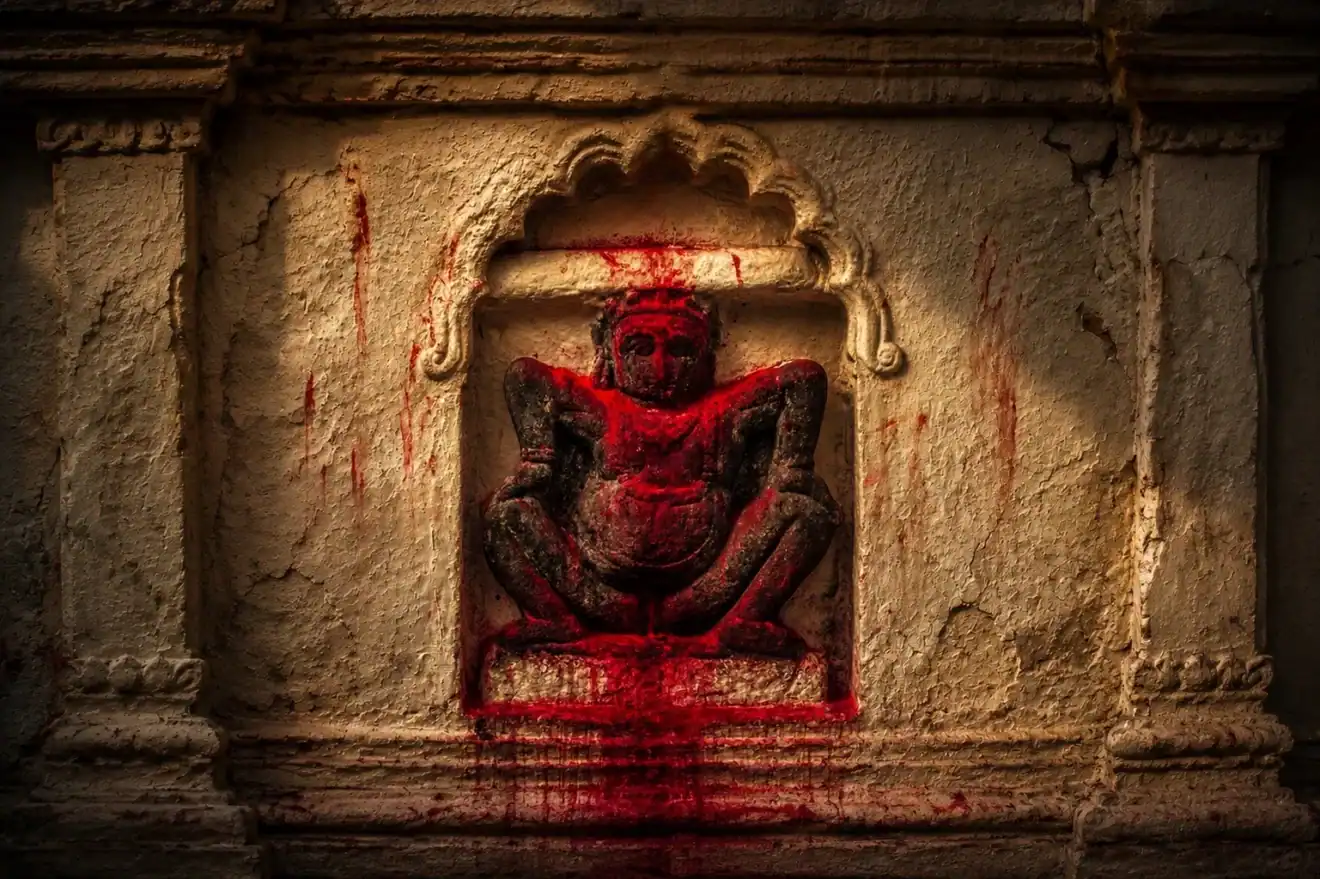
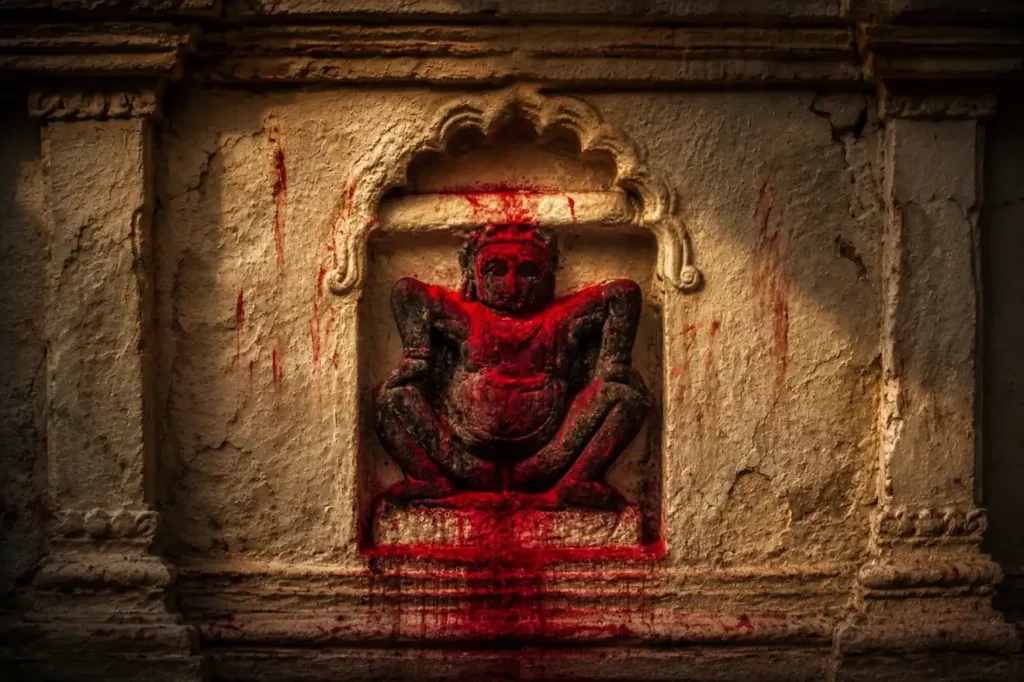
The iconography of Lajja Gauri further widens the discussion. Sculptures of this ancient Devi have been found across parts of the Deccan, including regions now associated with Karnataka, Maharashtra, Telangana, Andhra Pradesh, and Gujarat. She is often shown in a birthing posture, with a lotus or vessel replacing the head and with fertility imagery made explicit. Such art unsettles modern discomfort because it presents the generative body without apology. The image is neither vulgar nor incidental; it is a visual theology of abundance, birth, and cosmic renewal.
Rites connected with menarche also appear across regions. Assam has Tuloni Biya or Xoru Biya, Tamil Nadu has Manjal Neerattu Vizha, Andhra Pradesh and Telangana preserve customs such as Peddamanishi Pandaga, Karnataka has Ritu Kala Samskara and Ritu Shuddhi, and Kerala has Thirandukalyanam. These ceremonies differ by caste, region, family tradition, and contemporary adaptation. Yet they share a broad recognition that a girl’s first menstruation marks a transition worthy of ritual attention, blessings, clothing, food, relatives, and social acknowledgement.
From an anthropological perspective, such practices work at several levels. They teach the community how to interpret biological change. They place the girl within a network of women, elders, and kinship responsibilities. They connect fertility with ethical adulthood rather than treating it as a private embarrassment. They also reveal how ritual societies often used ceremony to absorb bodily transitions into a larger moral and spiritual order. The method may not always suit modern preferences, but its internal logic deserves careful study.
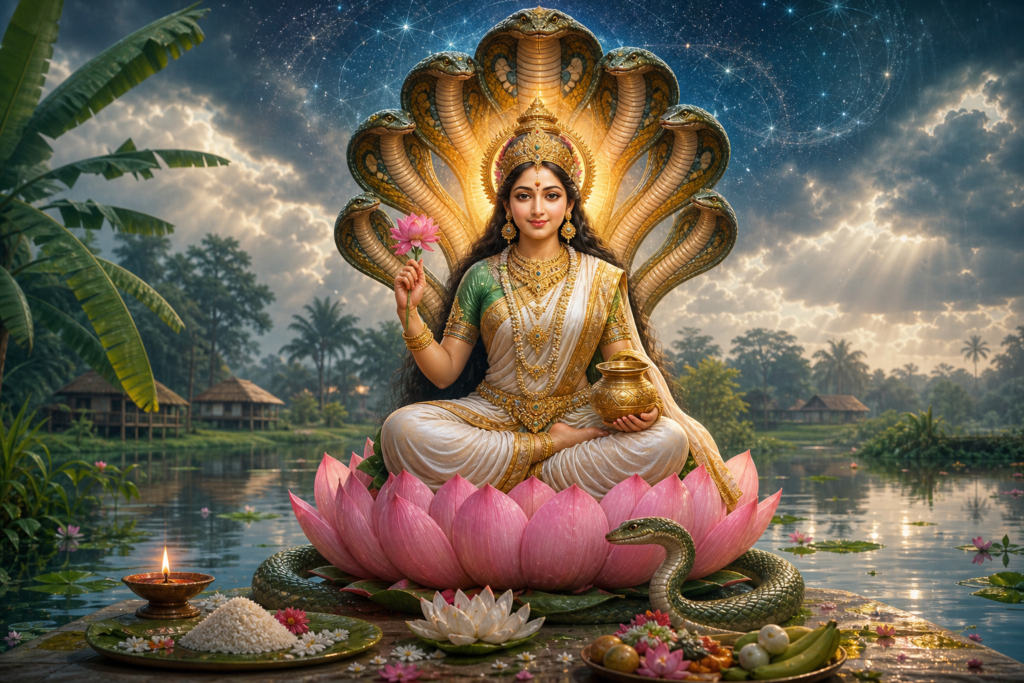
The relationship between menstruation and Shakti is central to this discussion. Shakti is not merely “female energy” in a vague modern sense. In Hindu philosophy and practice, Shakti is the dynamic power through which consciousness manifests, sustains, transforms, and withdraws the universe. When menstrual blood, earth fertility, monsoon renewal, and divine femininity are brought into ritual association, the body is not being dismissed. It is being placed inside a metaphysical vision in which matter, life, and sacred power are continuous.
This insight also supports unity among Dharmic traditions. Hinduism, Buddhism, Jainism, and Sikhism developed distinct theologies, disciplines, and social practices, yet all four traditions contain deep concern for bodily discipline, ethical conduct, reverence for life, and the refinement of human experience. A Dharmic approach to menstruation can therefore avoid both crude taboo and shallow spectacle. It can affirm dignity, health, rest, compassion, and spiritual seriousness while respecting the diversity of inherited customs.
Public health and cultural literacy need not stand opposed. Menstrual hygiene, access to safe products, medical care for pain or irregular bleeding, and education for boys and girls are essential. At the same time, cultural memory can offer a language of dignity that purely clinical discussion may not provide. When a girl learns that her cycle has been associated in many Indian traditions with Bhumi Devi, Devi Shakti, fertility, and renewal, the emotional frame changes. Biology is no longer isolated from meaning.
The challenge is to distinguish reverence from coercion. Rest should not become enforced shame. Ritual discipline should not become humiliation. Privacy should not become silence. Celebration should not become pressure. The most constructive path is to preserve the dignity-bearing elements of tradition while correcting practices that deny agency, education, health, or participation. This approach is both faithful to Dharma and responsive to contemporary realities.
The broader lesson from Kamakhya, Raja Parba, Chengannur, Keddasa, Lajja Gauri, and menarche ceremonies is that Bharat’s traditions cannot be understood through a single headline. They contain restraint and celebration, temple closure and mass pilgrimage, seclusion and community honour, ecology and theology, feminine embodiment and cosmic symbolism. Their meaning lies in the total pattern, not in one isolated rule.
In that total pattern, menstruation appears as a sacred cycle rather than a social embarrassment. The Devi rests, the earth rests, the community waits, and then life resumes with blessing. This rhythm offers a powerful corrective to both stigma and forgetfulness. It invites a more mature conversation in which menstrual dignity is not borrowed from modernity alone, but recovered from within the deep civilizational vocabulary of Dharma itself.
Source context includes the original discussion at The Dossier and publicly available descriptions of Ambubachi Mela, Raja Parba, Chengannur Mahadeva Temple, and Keddasa traditions.
Inspired by this post on Hindu Post.




Leave a Reply
You must be logged in to post a comment.