
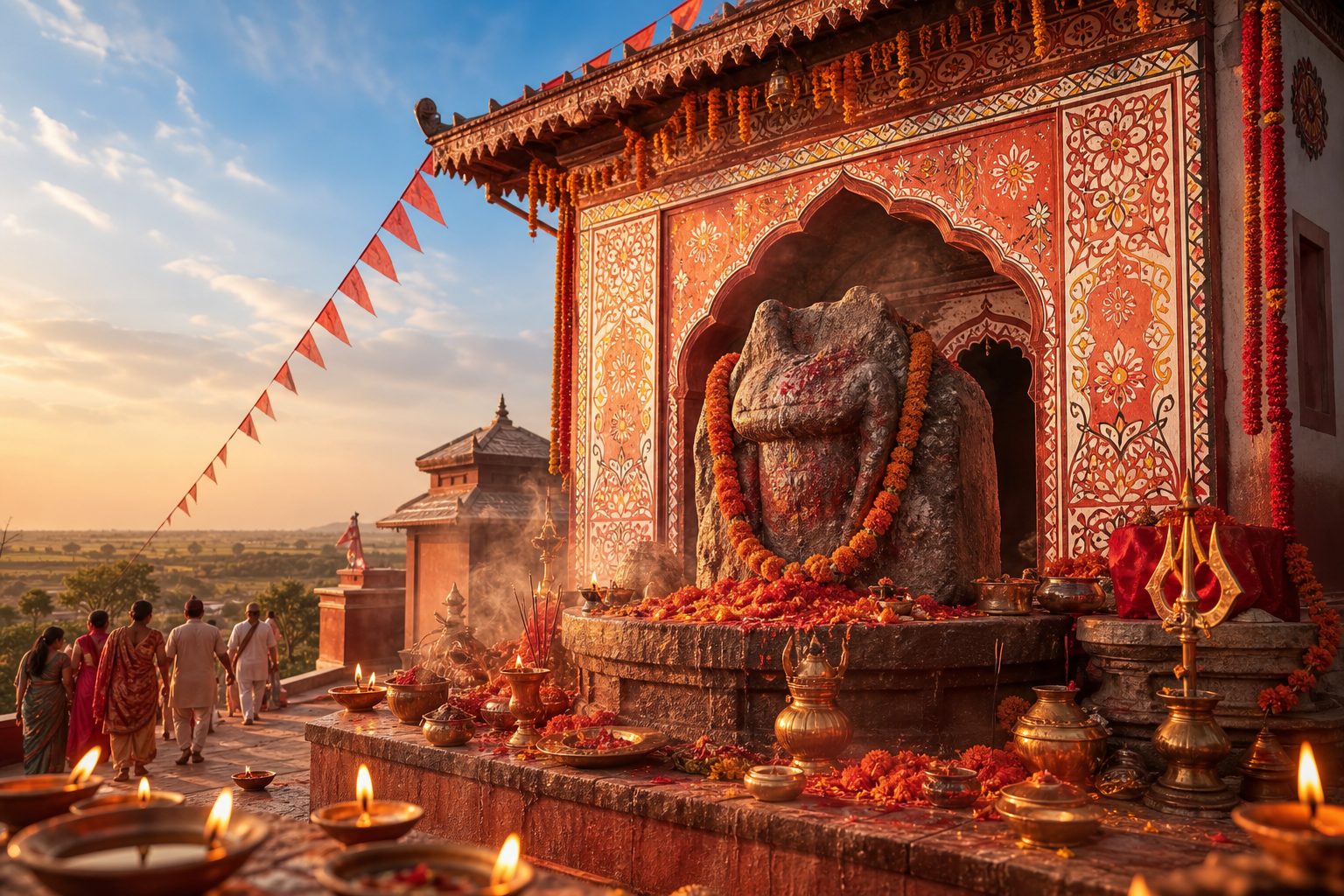
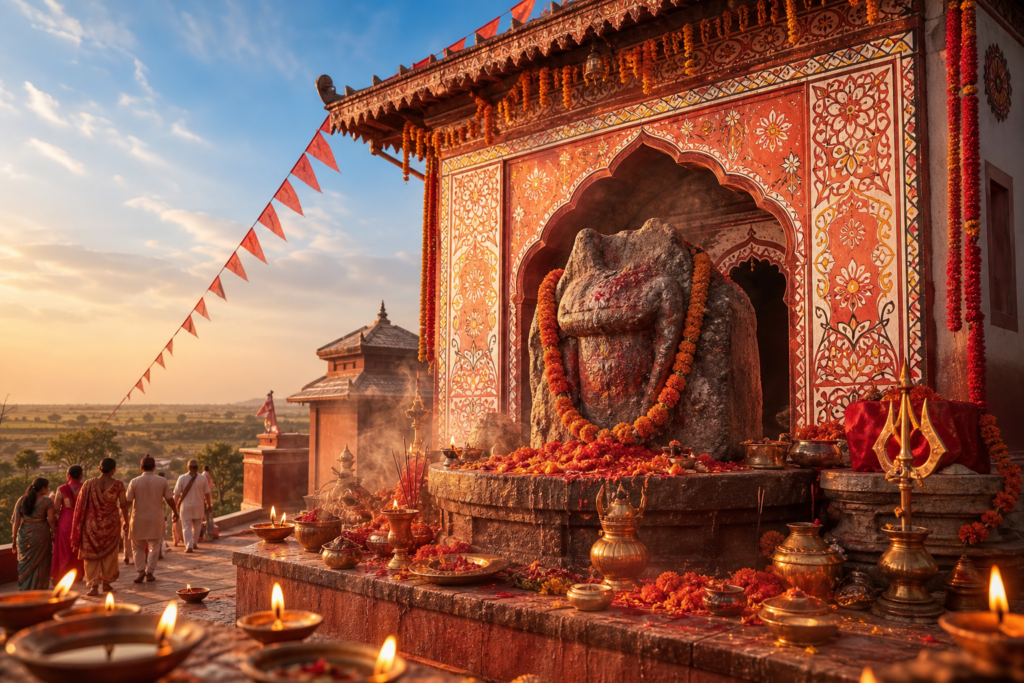
Sakhada Bhagavati Temple, also known as Chhinnamasta Bhagawati and Shakhadeswori, occupies a distinctive place in the sacred geography of eastern Nepal. Located at Sakhada in the Chhinnamasta Rural Municipality of Saptari district, near Rajbiraj and close to the Indo-Nepal border, the temple is revered as one of the most important Shakti Peetha traditions of the Madhesh region. Its sanctity rests not only on its age or its regional fame, but on the unusual theological force of its central image: a form of the Goddess remembered through the mystery of the severed head.
The phrase “when the Goddess lost her head and gained the universe” captures the temple’s deepest symbolic paradox. In ordinary language, losing one’s head suggests destruction, defeat, or loss of identity. In Shakta and Tantric thought, however, the severed head can become a sign of transcendence: the cutting away of ego, the end of narrow selfhood, and the revelation of a reality that is not confined to the physical body. Sakhada Bhagavati therefore invites a reading that is historical, ritual, philosophical, and emotional at the same time.
The temple is often associated with the goddess Chhinnamasta, one of the fierce and esoteric forms of Devi in the wider Shakta tradition. The Sanskrit name Chhinnamasta means “she whose head is severed.” In classical Tantric iconography, Chhinnamasta is not merely a terrifying deity; she is a condensed theological statement. She represents life and death, nourishment and sacrifice, destruction and renewal, self-mastery and cosmic energy. At Sakhada, this symbolism is localized within the living devotional landscape of Nepal, where textual tradition, oral memory, pilgrimage, and regional history meet.
Historically, Sakhada Bhagavati is linked with the Karnata dynasty of Mithila, especially with King Shaktisimhadeva, also remembered as Shakrasimhadeva. Traditional accounts place the establishment of the shrine in the thirteenth century, after the king withdrew from political life and came to the Saptari region. The name Sakhada is understood in local tradition as connected with Shakra or Shaktisimha, and the Goddess was remembered as Sakhreswari or Sakhada Bhagawati. This association gives the temple a historical identity rooted in the political and cultural world of medieval Mithila.
The Karnata dynasty itself is crucial to understanding the temple’s background. Nanyadeva, the founder of the Karnata line in the region, established power in Simraungadh in the late eleventh century. The dynasty became an important force in Tirhut and Mithila, shaping religious patronage, Sanskritic learning, regional administration, and temple culture. By the time of Shaktisimhadeva in the late thirteenth century, the dynasty had already become part of a larger network of Maithil, Nepali, and north Indian religious life. Sakhada Bhagavati belongs to this wider world of royal patronage and sacred geography.
Local memory preserves the idea that Shaktisimhadeva, after losing or relinquishing royal authority, entered a vanaprastha-like phase of life. The movement from kingship to renunciation is deeply meaningful in Dharmic thought. A ruler who turns toward the forest is not simply abandoning power; he is moving from temporal sovereignty toward spiritual discipline. In this context, the founding or restoration of a temple to the Goddess becomes more than a dynastic act. It becomes a gesture of surrender, a recognition that political power is temporary while Shakti, the divine energy underlying the cosmos, is enduring.
The temple’s landscape also preserves echoes of old settlement patterns. The nearby site known locally as Gadhi Gaachhi is remembered as connected with the king’s fort. Such associations between temple and fort are common in South Asian sacred history. The fort marks the world of power, defense, territory, and authority; the temple marks the world of sanctity, continuity, and divine protection. When these two stand near each other, they reveal how medieval communities understood sovereignty: a kingdom was not sustained by arms alone, but by ritual legitimacy and the blessings of the deity.
The memory of damage to the temple and its image is also part of the Sakhada tradition. Accounts connect the injury to the idol with the turbulence of the fourteenth century, particularly the military movements associated with Ghiyasuddin Tughlaq’s campaign toward Bengal and Simraungadh. Such traditions should be approached with historical care, but they remain important because they reveal how communities remember rupture. The broken or headless image did not end devotion. Instead, the altered form became the center of a deeper religious interpretation.
This transformation is the heart of Sakhada Bhagavati’s sacred mystery. A damaged murti could have been treated as a sign of loss, but the community came to recognize the Goddess through the powerful language of Chhinnamasta. The missing head became not merely an absence, but a revelation. It transformed the temple from a site of historical injury into a site of philosophical depth. The Goddess was not diminished by the loss of form; rather, the form itself opened into a wider meaning.
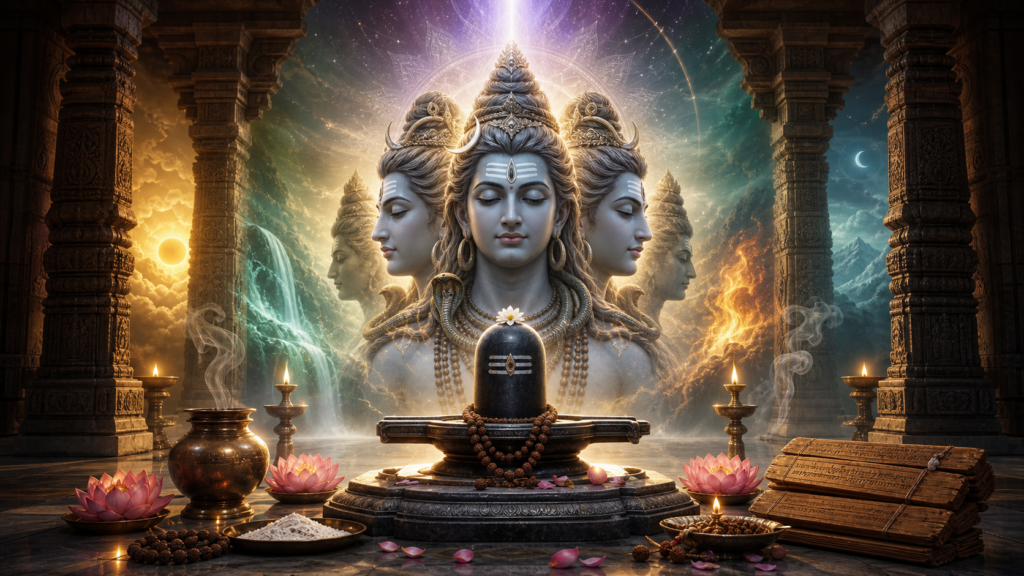
In Shakta philosophy, Devi is not only a deity among deities. She is the dynamic power of existence, the energy through which the universe appears, moves, dissolves, and renews itself. Shakti is both immanent and transcendent: present in the body, in nature, in speech, in fertility, in time, in death, and in liberation. The headless form therefore cannot be reduced to shock or violence. It points toward a metaphysical claim: consciousness is not confined to the head, and divine power is not limited by bodily completeness.
Chhinnamasta’s symbolism is often interpreted through the themes of self-sacrifice, awakening, fearlessness, and the severance of ego. The head is the seat of identity, pride, argument, memory, and self-image. To sever the head symbolically is to cut through the tyranny of the limited “I.” This does not mean hatred of the body or denial of life. Rather, it suggests a disciplined movement beyond ego-centered existence. The Goddess becomes terrifying only to the part of the human mind that clings to control.
The symbolism also has a yogic dimension. In Tantric readings, Chhinnamasta is associated with the sudden eruption of spiritual energy and with the transformation of desire into illumination. The imagery is deliberately intense because it addresses the deepest forces within embodied life: hunger, sexuality, mortality, power, fear, and compassion. Sakhada Bhagavati, when understood through this lens, is not a remote theological abstraction. She is the sacred power that confronts human beings at the points where life feels most vulnerable and most alive.
The emotional force of the temple lies in this combination of fragility and strength. A pilgrim standing before a headless form of the Goddess does not encounter polished perfection. The encounter is with a sacred presence that has passed through history, injury, memory, and reinterpretation. Such a form speaks powerfully to human experience. Lives are often marked by loss, interruption, and incompleteness; yet, through devotion and understanding, what appears broken can become a source of resilience.
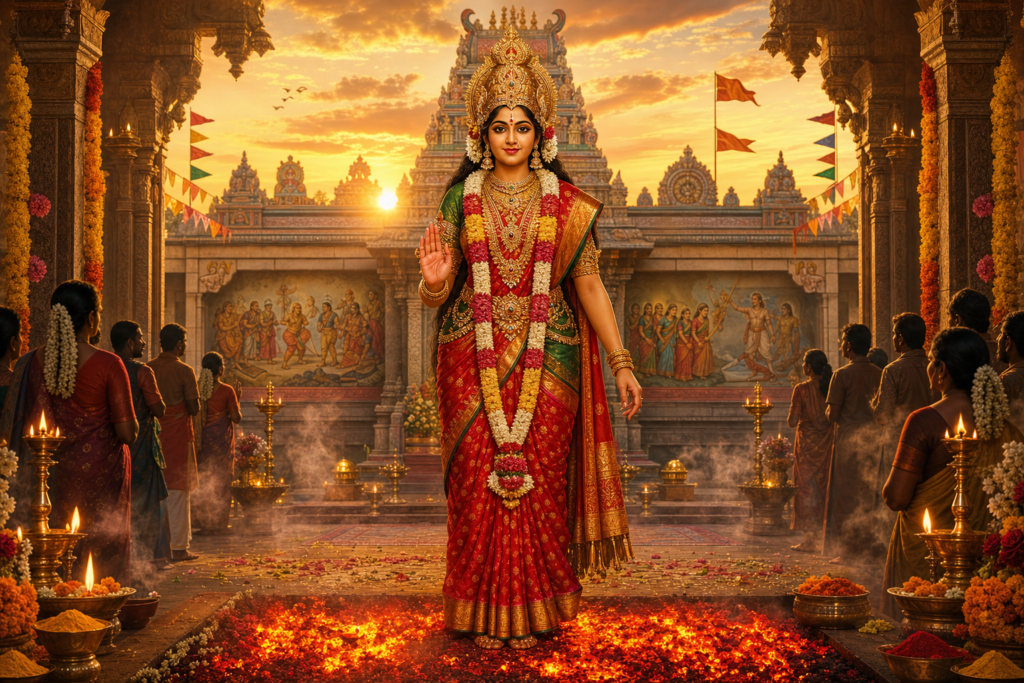
This is one reason Sakhada Bhagavati continues to attract devotees from Nepal and India, especially during Bada Dashain. Dashain, centered on the victory of the Goddess over forces of disorder, gives the temple a powerful seasonal rhythm. The festival is not only a public celebration; it is a ritual reminder that Devi restores balance where chaos has grown strong. At Sakhada, the headless Goddess becomes a uniquely intense expression of that victory, because her power is not dependent on conventional beauty or bodily wholeness.
The temple’s location in Saptari is also significant. Saptari is part of the broader Mithila cultural region, where Maithili language, ritual practice, goddess worship, and pilgrimage traditions have long interacted across the modern border between Nepal and India. The Indo-Nepal border in this region has historically been porous in cultural terms. Families, priests, pilgrims, traders, and ritual specialists have moved through this zone for generations. Sakhada Bhagavati therefore belongs not to a narrow political geography, but to a shared Dharmic civilization of the plains.
The temple’s importance should also be understood in relation to Nepal’s wider Shakta landscape. Nepal contains many powerful goddess sites, from the Bhagawati traditions of the hills to the fierce Devi shrines of Kathmandu Valley and the Terai. In this sacred network, the Goddess appears in many forms: mother, warrior, protector, granter of wishes, guardian of settlements, and Tantric power. Sakhada Bhagavati contributes a rare and profound form to this network, emphasizing the mystery of severance, sacrifice, and transcendence.
At the level of iconography, the headless form requires careful interpretation. Modern viewers can easily mistake fierce imagery for negativity. In Hindu art and Tantric symbolism, however, fierce forms are often compassionate in a radical sense. They do not comfort the ego; they liberate the devotee from fear. A peaceful deity may soothe the mind, while a fierce deity may break the illusions that keep the mind bound. Both functions belong to the same sacred universe.
This interpretive principle is important for the unity of Dharmic traditions. Hinduism, Buddhism, Jainism, and Sikhism each contain methods for overcoming ego, attachment, fear, and ignorance, though their metaphysical languages differ. The headless Goddess of Sakhada can be read in a way that respects this shared ethical and spiritual concern. Her form teaches that the small self must yield to a larger truth, that power must be disciplined, and that liberation requires a transformation of consciousness.
There are also interesting resonances between Chhinnamasta and Buddhist Tantric traditions. Scholarly discussions often note parallels between Chhinnamasta and Chinnamunda, a severed-headed form associated with Vajrayogini in Tibetan Buddhist contexts. These parallels should not be flattened into sameness, but they do show how the Himalayan and eastern Indian religious worlds exchanged symbols, practices, and theological imagination. Sakhada Bhagavati thus stands within a broader Indic and Himalayan vocabulary of fierce feminine wisdom.
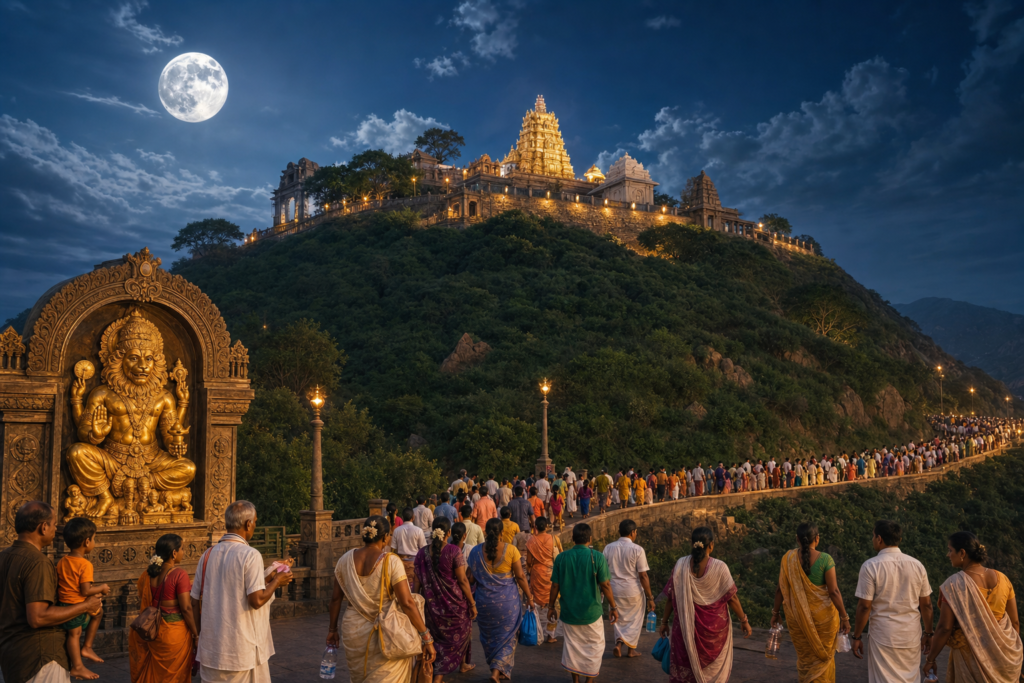
The temple’s ritual life is not merely symbolic; it is social. Pilgrimage creates community. Devotees arrive with vows, worries, gratitude, family obligations, and inherited memories. Some come for fulfillment of wishes, some for protection, some because their parents and grandparents came before them. In this way, Sakhada Bhagavati is not only an ancient site; it is a living institution. Its continuity depends on ritual repetition, oral transmission, priestly service, local guardianship, and the emotional faith of ordinary people.
Animal sacrifice has historically been associated with several Shakta temples during major festivals, including Dashain. A factual discussion of the temple should acknowledge this without sensationalism. Within Shakta contexts, sacrifice has been interpreted through ideas of offering, transformation, and the surrender of vital force. At the same time, contemporary Dharmic communities increasingly discuss ritual practice through the lenses of ahimsa, symbolic offering, local custom, and ethical reflection. The broader spiritual meaning of Sakhada Bhagavati does not depend on reducing the tradition to any single ritual act.
The temple also raises an important question about sacred art: when does damage become theology? In many traditions, a broken object is discarded. In temple culture, however, memory can transform damage into sanctity when the community recognizes divine presence through it. Sakhada Bhagavati’s headless image is therefore not simply an archaeological curiosity. It is a theological event preserved in stone, worship, and story. The community did not merely remember what happened to the image; it learned to see the Goddess through what remained.
This insight has contemporary relevance. Modern life often teaches people to hide fracture, grief, and imperfection. Sakhada Bhagavati presents a different vision. The sacred need not appear only as symmetry, softness, or completion. It may appear through rupture, intensity, and the courage to face reality without disguise. The headless Goddess is not a symbol of defeat; she is a symbol of power that survives the loss of ordinary form.
For students of Hindu philosophy, the temple offers a concentrated lesson in the relationship between form and formlessness. A murti is a form through which the formless becomes accessible to devotion. Yet the headless murti unsettles the expectation that sacred form must conform to human preference. It teaches that the divine exceeds the categories imposed upon it. The Goddess is present not because the image satisfies aesthetic expectation, but because the image has become a vessel of Shakti through consecration, memory, and worship.
For students of history, Sakhada Bhagavati shows how temples preserve layered time. The site carries memories of the Karnata dynasty, medieval Mithila, political displacement, possible invasion, local settlement, festival practice, and modern pilgrimage. These layers cannot always be separated with absolute certainty, but together they form a cultural archive. The temple is therefore both a religious site and a historical document, one that must be read through inscription, oral tradition, regional scholarship, and lived practice.
For devotees, however, the temple’s meaning is more immediate. The Goddess is approached not as a theory but as a presence. The academic mind may analyze Chhinnamasta as symbol, icon, and historical form; the devotee may experience her as mother, protector, and force of transformation. A mature understanding must allow both approaches to stand together. Dharmic tradition has long made room for philosophy and devotion, ritual and reflection, local memory and cosmic metaphysics.
The enduring power of Sakhada Bhagavati lies in this ability to hold opposites. She is local and cosmic, broken and whole, fierce and compassionate, historical and timeless. She is remembered through a missing head, yet that absence opens into a vast theology of presence. The temple near Rajbiraj is therefore not merely a destination for pilgrimage; it is a living commentary on Shakta thought and a profound reminder that the Goddess is not limited by the forms through which human beings first encounter her.
In the end, Sakhada Bhagavati teaches that sacred power often reveals itself where ordinary certainty fails. The head is lost, but consciousness expands. The image is altered, but devotion deepens. History wounds, but memory consecrates. Through this mystery, the temple continues to speak to Nepal, Mithila, and the wider Dharmic world: the Divine Mother is not diminished by rupture; she transforms rupture into revelation.
Research note: this account draws on publicly available historical and cultural references on Chhinnamasta Bhagawati Temple, Sakhada’s association with Shaktisimhadeva and the Karnata dynasty, the temple’s location near Rajbiraj in Saptari, and the broader symbolism of Chhinnamasta in Shakta and Tantric traditions, including summaries available at https://en.wikipedia.org/wiki/Chinnamasta_Bhagawati_Temple, https://en.wikipedia.org/wiki/Chhinnamasta, and https://en.wikipedia.org/wiki/Rajbiraj.
Inspired by this post on Hindu Blog.





Leave a Reply
You must be logged in to post a comment.