
The Indus Waters Treaty has again become a test of law, sovereignty, security, and development in South Asia. India’s rejection of the Hague-based Court of Arbitration’s ruling on maximum pondage at Indian hydroelectric projects is not merely a diplomatic objection to an unfavourable decision. It is a broader legal position: a treaty that prescribes a structured, sequential dispute-resolution pathway cannot be re-engineered through a parallel process simply because one party prefers a different forum.
At the centre of the dispute is the Indus Waters Treaty of 1960, signed by India and Pakistan with the World Bank playing a limited but important facilitative role. The treaty divided the Indus river system into two broad baskets. The eastern rivers, Ravi, Beas, and Sutlej, were allocated for India’s use, while the western rivers, Indus, Jhelum, and Chenab, were allocated primarily to Pakistan, subject to India’s permitted uses. Those permitted uses include non-consumptive uses such as run-of-the-river hydroelectric generation, as well as limited irrigation and other specified activities.
The legal controversy arises because India maintains that disputes under the treaty must move through a defined sequence. Technical questions, especially those involving design features of hydroelectric projects, are to be examined through the Neutral Expert mechanism when they qualify as “differences.” A Court of Arbitration becomes relevant only when the matter is a legal “dispute” or when the treaty’s prescribed conditions for arbitration are properly triggered. India’s core objection is that Pakistan and the World Bank-enabled process allowed a Court of Arbitration track to proceed in parallel with the Neutral Expert track, thereby undermining the architecture of the treaty itself.
This is why the word “sequential” matters so much. In ordinary public debate, it may sound like procedural hair-splitting. In treaty law, however, procedure is substance. If a treaty carefully separates technical determinations from legal adjudication, bypassing that order can change the balance of rights negotiated by the parties. India’s argument is that the Permanent Court of Arbitration-administered Court of Arbitration was constituted in a manner inconsistent with the Indus Waters Treaty and therefore lacks competence to bind India.
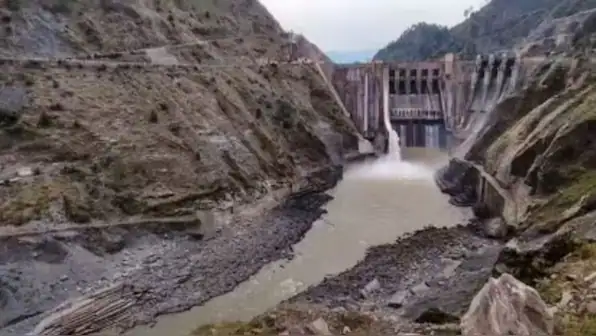
The immediate trigger was the Court of Arbitration’s ruling concerning maximum pondage at Indian hydroelectric projects on the Indus system. “Pondage” refers to the limited storage capacity used by run-of-the-river hydropower projects to regulate short-term flows for electricity generation. It is not the same as large reservoir storage for long-term diversion. For Himalayan hydropower projects, especially in Jammu and Kashmir, pondage can determine whether a project is technically efficient, economically viable, and capable of supplying power during peak demand. A ruling that restricts maximum pondage therefore carries direct consequences for India’s energy planning and regional development.
The Kishanganga and Ratle hydroelectric projects have long been central to this dispute. Pakistan has objected to aspects of their design, while India has argued that the projects fall within treaty-permitted uses. India’s position has consistently been that technical objections should be handled by a Neutral Expert, not prematurely converted into a legal arbitration process. In 2023, India supported the Neutral Expert pathway to examine technical issues. Pakistan, however, pursued the Court of Arbitration route. The resulting dual-track process created the very procedural conflict India had warned against.
The World Bank’s role is often misunderstood. The Bank is not a sovereign arbitrator with general authority to rewrite the treaty’s dispute-resolution design. Its role under the treaty is limited to certain appointment-related functions when the parties fail to agree. India’s criticism is that allowing both the Neutral Expert and Court of Arbitration tracks to move simultaneously produced an institutional contradiction. A treaty designed to prevent forum-shopping becomes vulnerable if parties can activate multiple forums over overlapping issues.
India’s Ministry of External Affairs has therefore rejected the Court of Arbitration’s competence and treated its ruling as without legal effect for India. The objection is not simply that India disagrees with the outcome. The deeper claim is jurisdictional: a body constituted contrary to the treaty cannot create binding obligations under that treaty. In legal terms, India is asserting that jurisdiction must precede judgment. A tribunal cannot first assume authority and then use that assumed authority to validate its own conclusions.
The context became even more sensitive after the Pahalgam terrorist attack, following which India placed the Indus Waters Treaty in abeyance. That step reflected a wider national-security assessment: a cooperative water arrangement cannot be insulated forever from sustained cross-border terrorism and hostile conduct. For many Indian citizens, the treaty has long carried an emotional burden. It survived wars, terror attacks, and repeated strategic crises, but the continuing expectation that India must observe restraint while facing security threats has become increasingly difficult to defend in public life.
Yet the legal issue should not be reduced to emotion alone. The central question is whether international law rewards good-faith observance or procedural manipulation. India has complied for decades with a treaty that gave Pakistan extensive access to the western rivers while preserving defined Indian rights. Those rights include development of hydropower on western rivers within treaty parameters. When Indian projects are repeatedly challenged, delayed, or subjected to expansive interpretations, the development costs are borne not by abstract governments but by communities needing power, infrastructure, employment, and flood-resilient planning.
Jammu and Kashmir is particularly important in this analysis. The region sits close to the headwaters of several western river projects, but its hydropower potential has often been constrained by the treaty’s design and by recurring objections from Pakistan. For local populations, the matter is not only geopolitical. It concerns electricity, roads, employment, public revenue, and the dignity of being able to use natural resources responsibly within India’s own territory. A technical ruling on pondage can therefore have social and economic consequences far beyond the language of arbitration.
India’s position also rests on a distinction between water as a shared natural system and water as an instrument of asymmetric pressure. Responsible statecraft requires that upper and lower riparian concerns be handled with discipline. It does not require that one state accept every legal escalation initiated by another, especially when the initiating state has used international forums to delay projects that India argues are treaty-compliant. A durable water regime depends on reciprocity, restraint, and respect for the agreed text.
The Court of Arbitration’s approach, as reported, appears to reach into matters such as project design, minimum flows, data sharing, and operational flexibility. These are not minor technical details. They influence how India designs future hydropower projects, how much short-term regulation is available for electricity generation, and how early project information may need to be shared. From India’s perspective, such expansive directions from a contested forum risk converting the treaty from a negotiated allocation of rights into an externally managed regulatory system.
This distinction is vital. The Indus Waters Treaty did not give Pakistan a veto over every Indian project on the western rivers. It gave Pakistan protections against impermissible interference and gave India defined rights to use the waters in specified ways. If every technical disagreement becomes a pathway to arbitration, the treaty’s balance shifts. India’s concern is that the procedural shortcut becomes a substantive weapon, limiting lawful Indian development even before technical facts are settled.
The Neutral Expert mechanism was designed precisely to prevent that outcome. A Neutral Expert can examine engineering questions, design parameters, hydrological assumptions, and treaty-defined technical criteria. Such a process is narrower, more specialised, and more aligned with the kind of disputes that hydropower projects often generate. Arbitration, by contrast, carries broader legal consequences. India’s insistence on the Neutral Expert pathway is therefore not an avoidance of scrutiny; it is an insistence that scrutiny occur in the correct treaty forum.
There is also a broader lesson for international relations. Treaties survive when their dispute-resolution mechanisms are predictable. If procedural safeguards are diluted, states begin to see legal institutions as political instruments rather than neutral mechanisms. That perception is dangerous in a region where water, terrorism, borders, and national identity already intersect. The Indus Waters Treaty was historically praised because it created rules even amid hostility. Those rules cannot remain credible if their internal sequence is ignored.
India’s invocation of sovereignty should therefore be understood in legal rather than rhetorical terms. Sovereignty here means the right to rely on the treaty as written, to reject a forum considered improperly constituted, and to use allocated waters for legitimate development. It does not mean reckless disregard for downstream realities. India’s case is that lawful utilisation and treaty fidelity are compatible, but only if the treaty’s mechanisms are followed in the order in which they were negotiated.
The abeyance of the treaty after the Pahalgam attack adds a security dimension that cannot be ignored. International cooperation requires a minimum foundation of trust. When terrorism and hostile action persist, public support for exceptional restraint erodes. A society that has repeatedly absorbed the costs of violence naturally asks why cooperative frameworks should remain untouched by security realities. This does not eliminate the need for legal discipline, but it explains why India’s water policy debate has moved from technical management to strategic reassessment.
For Bharat, the issue is ultimately about lawful self-respect. A civilisational state with deep traditions of restraint and coexistence is not required to confuse patience with passivity. The dharmic idea of order is not disorderly retaliation; it is the disciplined defence of rightful obligations and rightful interests. Applied to the Indus Waters Treaty, that means respecting genuine commitments while refusing institutional overreach, procedural bypassing, and interpretations that weaken legitimate national development.
A balanced assessment must acknowledge that water disputes are inherently sensitive. Pakistan’s dependence on the Indus system is real, and ecological stability in the basin matters to both countries. Climate change, glacial uncertainty, floods, droughts, and growing populations make cooperative hydrology more important, not less. However, cooperation cannot be built on unilateral litigation strategies. It must be built on treaty text, technical clarity, credible security behaviour, and mutual recognition of development rights.
The strongest argument for India’s rejection of the Hague ruling is therefore not anger but legal coherence. A Court of Arbitration whose constitution is disputed cannot be allowed to override a Neutral Expert process that India says was properly invoked. A technical difference cannot be prematurely elevated into a legal dispute for strategic advantage. A treaty cannot be preserved by weakening the very procedures that give it legitimacy.
The Indus Waters Treaty may now be entering its most consequential phase since 1960. The debate is no longer limited to river allocation. It includes terrorism, hydropower, institutional legitimacy, federal development, climate stress, and the limits of third-party facilitation. India’s stand signals that future engagement will have to respect both the letter of the treaty and the security environment in which the treaty operates.
Seen in this light, Bharat’s rejection of the Hague’s juridical leap is a defence of process as much as a defence of national interest. The question is not whether disputes should be resolved peacefully; they should. The question is whether peace is strengthened by fidelity to agreed mechanisms or weakened by procedural shortcuts. India’s answer is clear: lawful development, national security, and treaty discipline must stand together.
Inspired by this post on Hindu Post.









Leave a Reply
You must be logged in to post a comment.