
In Hindu sacred tradition, space is never treated as empty geometry alone. It is understood as a living, ordered field of meaning, guarded by divine intelligences and structured through dharma. The doctrine of the Dikpalas, the guardians of the directions, expresses this worldview with remarkable clarity. Each direction is not merely a point on a compass but a symbolic doorway into cosmic order, ritual orientation, temple architecture, and inner spiritual discipline.
The most familiar arrangement is the Ashta Dikpala system, in which eight deities preside over the cardinal and intercardinal directions. Indra is associated with the east, Agni with the southeast, Yama with the south, Nirrti with the southwest, Varuna with the west, Vayu with the northwest, Kubera with the north, and Ishana with the northeast. In expanded cosmological and ritual frameworks, two additional directions are also contemplated: the upward direction and the downward direction. It is within this broader sacred geography that Vasuki, the Naga king, becomes especially significant as a guardian connected with the depths.
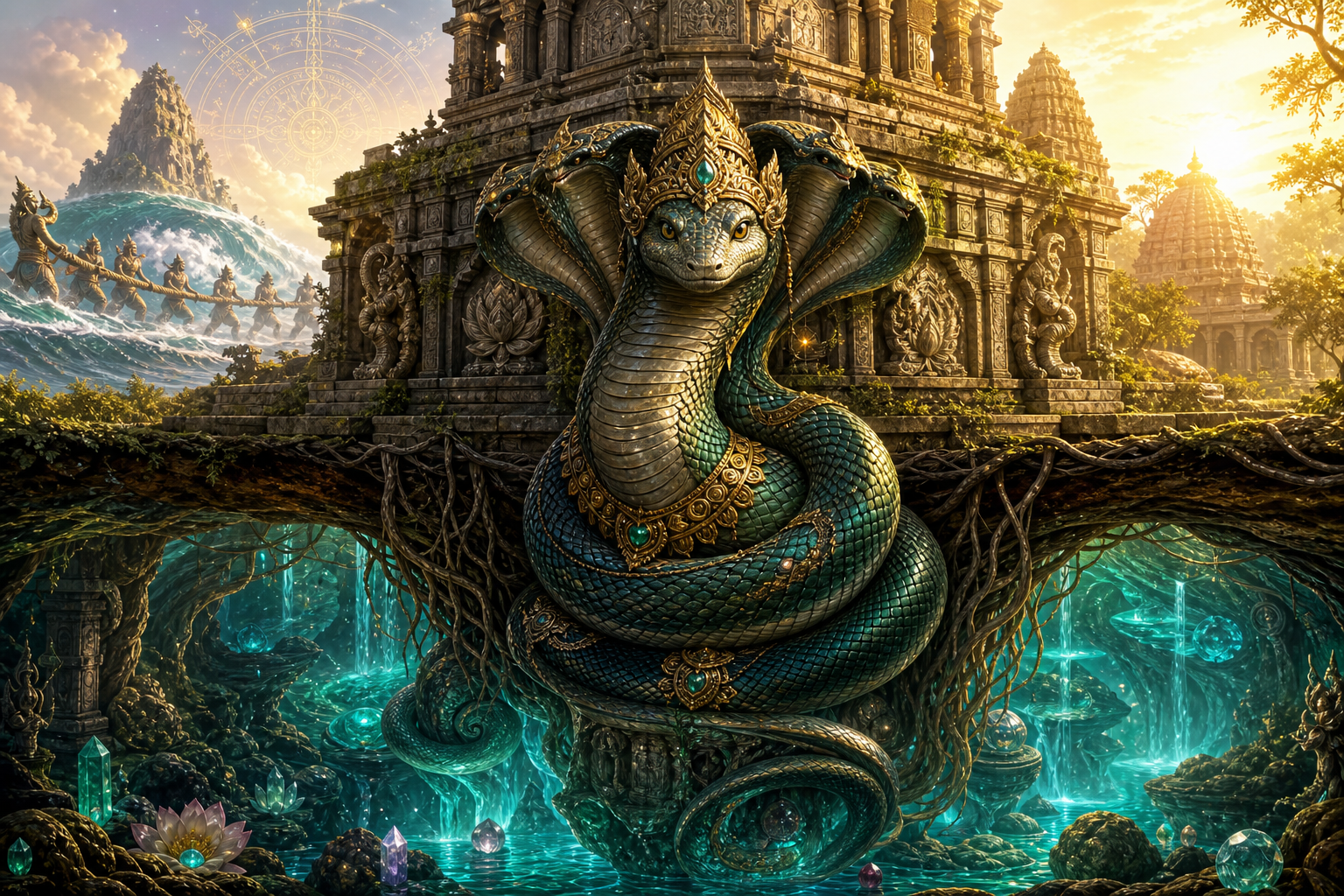
Vasuki is among the most important serpent figures in Hindu scriptures and sacred imagination. He is not merely a snake deity in a narrow sense; he represents subterranean wisdom, hidden power, endurance, restraint, and the mysterious life-force that moves beneath visible reality. In traditions that associate him with the downward direction, Vasuki becomes a Dikpala of the depths, a guardian of what lies below the earth, below ordinary perception, and below the surface of human consciousness.
The downward direction, often called adho-dik in Sanskritic thought, carries a layered meaning. Cosmologically, it points toward the underworld regions, including the Naga realms and the subterranean worlds described in Purāṇic literature. Symbolically, it refers to foundations, roots, latent energy, ancestral memory, and the hidden supports of existence. Spiritually, it reminds seekers that ascent is impossible without depth. A temple tower may rise toward the heavens, but it stands only because the earth beneath it is firm.
This is why Vasuki’s role as guardian of the depths is not negative or frightening in the simplistic sense. Hindu cosmology does not reduce the below to evil and the above to good. The vertical universe is more subtle. The heights may signify illumination, but the depths signify foundation, preservation, secrecy, and potential. The Naga world, associated with water, fertility, gems, medicine, and esoteric knowledge, often functions as a reservoir of life rather than a place of mere darkness.
Vasuki’s scriptural presence is best known through the Samudra Manthan, the churning of the ocean. In that profound Purāṇic episode, the devas and asuras use Mount Mandara as the churning rod and Vasuki as the churning rope. This imagery is technically rich and spiritually powerful. Vasuki becomes the binding force through which opposing powers cooperate, struggle, and eventually draw forth hidden treasures from the cosmic ocean. The episode suggests that transformation requires friction, discipline, and a force strong enough to hold tension without breaking.
As a Naga king, Vasuki also belongs to a wider serpent symbolism shared across many Dharmic traditions. In Hinduism, Nagas are associated with water, rain, fertility, protection, and subterranean realms. In Buddhist traditions, the Naga Mucalinda shelters the Buddha during meditation, expressing reverence for awakened wisdom. In Jain traditions too, serpent symbolism appears in connection with protection and sacred presence, most notably around Parshvanatha. Sikh tradition does not center serpent veneration in the same ritual manner, yet its emphasis on divine immanence, humility, and fearlessness allows respectful engagement with the wider symbolic vocabulary of the Indic world. Seen in this Dharmic context, Vasuki becomes a bridge into a shared civilizational language of protection, depth, and sacred responsibility.
The association between Vasuki and the downward direction also makes sense in relation to earth, water, and hidden wealth. Nagas are frequently linked with rivers, springs, lakes, rainfall, and underground treasures. These associations are not accidental. Ancient agrarian societies understood that life depends on forces concealed from view: water beneath soil, seeds beneath earth, roots beneath trees, minerals beneath mountains, and memory beneath tradition. Vasuki’s guardianship therefore points toward ecological and metaphysical humility. What sustains life is often unseen.
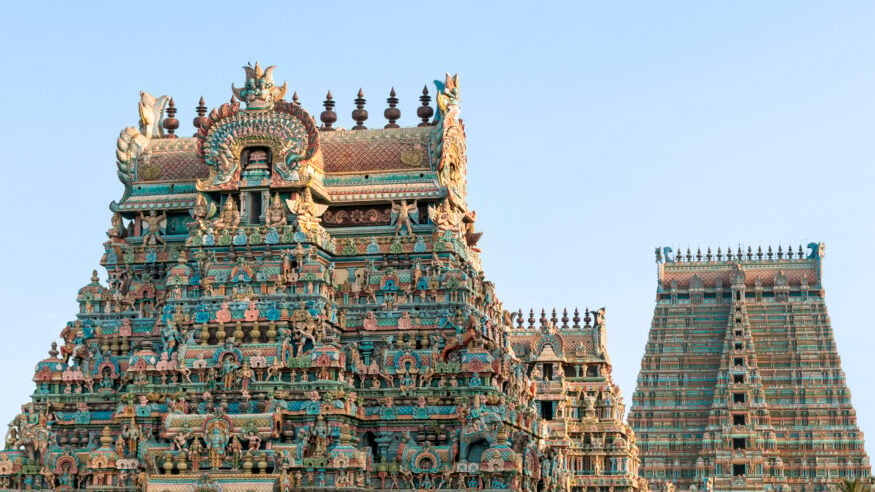
Temple architecture preserves this logic in a concrete way. Hindu temples are not random devotional buildings; they are constructed as symbolic bodies of the cosmos. Orientation, enclosure, elevation, sanctum, axis, and threshold all matter. Dikpalas appear in sculptural and architectural programs as guardians of ordered space. Even when Vasuki is not explicitly installed as a directional deity in every temple scheme, serpent imagery often appears near thresholds, water points, subterranean associations, fertility symbols, or protective zones. This reflects a deeper principle: sacred space must be guarded not only at its visible entrances but also at its roots.
It is important to note that textual and regional traditions are not uniform in every detail. Some expanded lists of directional guardians associate the downward direction with Ananta, Shesha, or other subterranean divine forms. Others connect the Naga realm broadly with the lower direction and place Vasuki within that sacred field. Rather than treating these variations as contradictions, a more accurate academic approach recognizes them as examples of Hinduism’s layered and regionalized sacred imagination. The tradition often preserves multiple symbolic mappings because each reveals a different aspect of truth.
Vasuki’s relationship with Lord Shiva further deepens his theological importance. In many devotional images, Shiva wears a serpent around his neck, and Vasuki is often identified with this sacred serpent. The image is not merely decorative. The serpent at Shiva’s throat represents mastery over fear, poison, time, death, and instinctive energy. When connected with the episode of halāhala, the poison that emerges during the churning of the ocean, the symbolism becomes even more striking. The divine does not reject danger; it contains, transforms, and holds it in balance.
This symbolic relationship also explains why Vasuki can be understood as a guardian rather than a threat. Serpents inspire caution because they belong to liminal zones: burrows, roots, forests, water edges, darkness, and silence. Yet the same qualities make them powerful protectors. They see what moves close to the ground. They guard hidden passages. They embody alertness. In sacred literature, the serpent often represents energy that must be respected, not carelessly provoked or ignorantly dismissed.
The downward direction can also be read psychologically. Human beings often prefer the visible, elevated, and celebrated parts of life: achievement, status, recognition, and intellectual clarity. Yet every person also carries hidden depths: fear, memory, instinct, grief, desire, inherited impressions, and unexamined strength. Vasuki as guardian of the depths becomes a profound metaphor for disciplined self-knowledge. To descend inward is not to fall; it is to understand the foundations from which genuine spiritual ascent becomes possible.
This interpretation aligns well with Yogic and Tantric understandings of latent energy. While Vasuki should not be simplistically equated with Kundalini, serpent symbolism naturally resonates with the idea of coiled potential. The serpent suggests compressed power, stillness before movement, and transformation through awakening. In this sense, Vasuki’s downward guardianship can be understood as the protection of latent spiritual force until it is approached with discipline, purity, and proper guidance.
There is also a moral dimension to the image. The lower direction reminds society not to despise what is foundational. Farmers, artisans, water systems, soil, forests, ancestral knowledge, and local sacred traditions often remain beneath the glamour of public life, yet they sustain civilization. Vasuki’s symbolism quietly challenges this forgetfulness. A culture that forgets its roots becomes unstable; a civilization that honors its depths remains resilient.
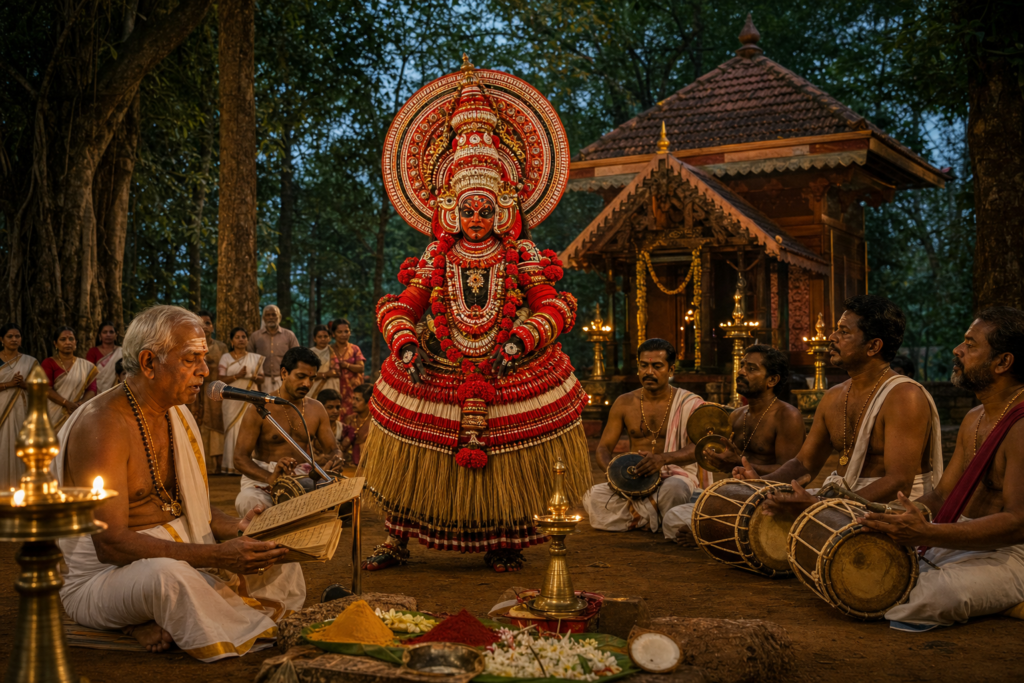
Naga worship in India reflects this reverence for life beneath the surface. Festivals such as Nag Panchami and regional observances connected with Naga Puja honor serpent beings as protectors of fertility, rainfall, land, and family well-being. These rituals should not be reduced to superstition. They preserve ecological memory, gratitude toward non-human life, and recognition that human prosperity depends on a wider web of existence. In an age of environmental disruption, this older wisdom deserves renewed attention.
Vasuki’s association with the depths also has relevance for inter-Dharmic harmony. Hindu, Buddhist, Jain, and Sikh traditions differ in theology, ritual, and philosophical emphasis, yet they share a civilizational habit of reading nature symbolically and ethically. Serpents, rivers, mountains, trees, and directions are not treated as inert objects alone; they become teachers of humility, restraint, courage, and interdependence. Vasuki’s image can therefore be approached not as a sectarian marker but as part of a broader Dharmic vocabulary of sacred ecology and disciplined awareness.
For modern readers, the figure of Vasuki offers a valuable correction to shallow ideas of spirituality. Spiritual life is not only about rising upward, seeking light, and escaping limitation. It is also about going downward into roots, duties, memory, and embodied existence. The guardian of the depths teaches that wisdom must be grounded. Without grounding, spiritual aspiration can become fragile; with grounding, it becomes steady, compassionate, and transformative.
The title “Dikpala” therefore gives Vasuki a role of cosmic responsibility. He is not simply a mythological being but a guardian of orientation. He marks the sacred below, protects the unseen, and reminds human beings that the universe is upheld by forces both visible and invisible. His presence in Hindu sacred tradition invites careful study of Naga symbolism, Purāṇic cosmology, temple architecture, ritual geography, and the spiritual psychology of depth.
Vasuki as the serpent guardian of the downward direction ultimately represents a profound theological insight: the sacred is not confined to the sky. It is present in the earth, in the waters, in the roots, in the hidden chambers of memory, and in the disciplined depths of consciousness. To honor Vasuki is to honor the unseen foundations of life. It is to recognize that dharma protects not only the heights of aspiration but also the depths from which all aspiration rises.
Inspired by this post on Hindu Blog.






Leave a Reply
You must be logged in to post a comment.