
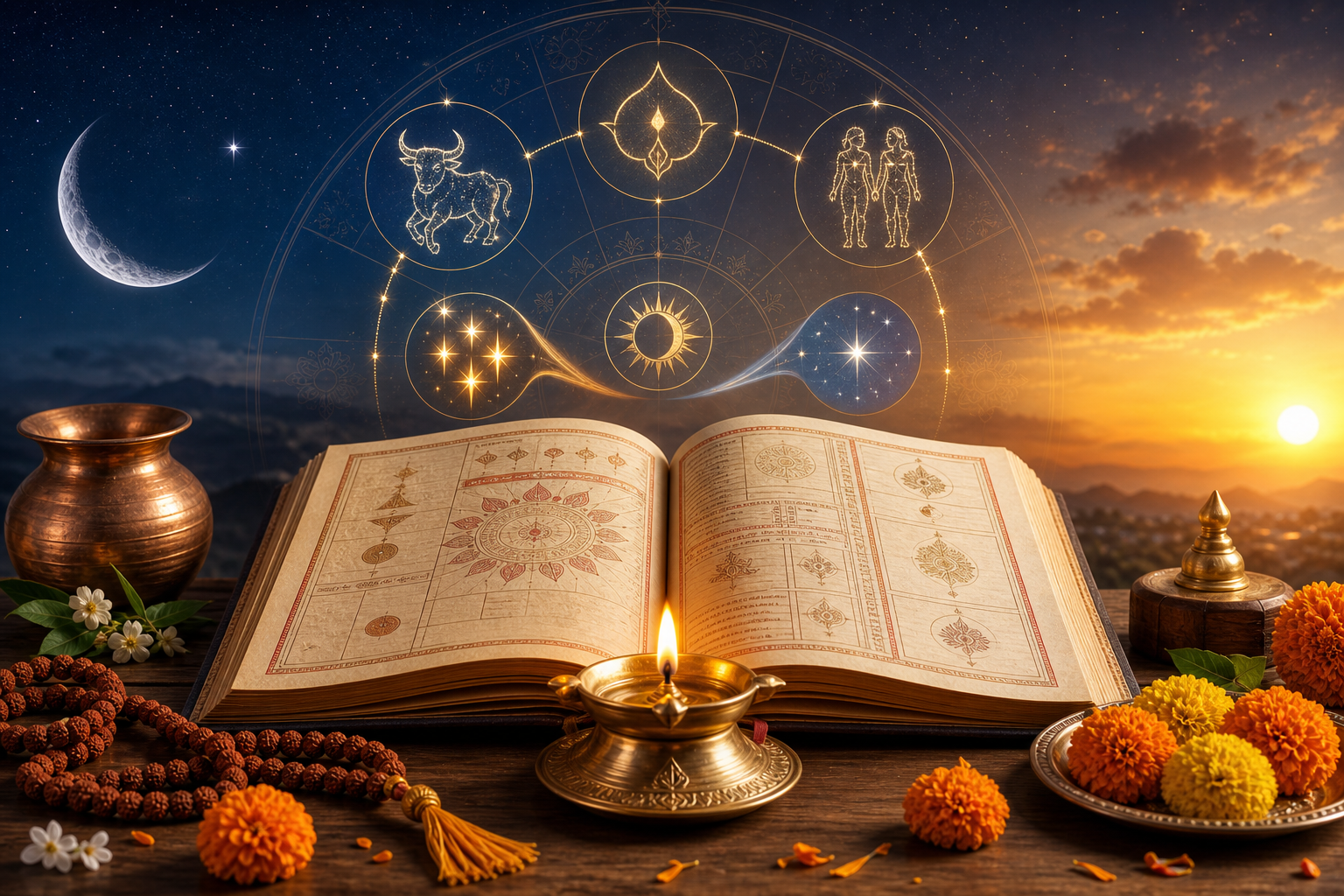
Saturday, July 11, 2026, is best understood through the discipline of Panchang, where civil time and lunar time are read together. The day falls in Krishna Paksha, the waning phase of the Moon, and the operative tithi for most practical observance after the early hours is Krishna Paksha Dwadashi, the twelfth lunar day. The supplied calendar note records Krishna Paksha Ekadashi until 1:21 AM on July 11, after which Krishna Paksha Dwadashi begins.
A Panchang entry is never merely a date label. It is a technical summary of five limbs of time: tithi, vara, nakshatra, yoga, and karana. These five factors help families, temple communities, priests, students of Jyotisha, and ordinary householders decide how to arrange worship, vrata completion, travel, study, charitable activity, and routine work with greater mindfulness.
For a New Delhi reference calculation, sunrise is around 5:31 AM and sunset is around 7:22 PM. Moonset occurs around 4:21 PM, while moonrise is after midnight at about 2:49 AM on July 12. Because Panchang timings change with location, these times should be treated as city-specific rather than universal for every region of India or the diaspora.
The central tithi is Dwadashi, continuing through the day and extending until approximately 2:04 AM on July 12 in the New Delhi reference. This makes July 11 especially relevant for those who observed the preceding Ekadashi vrata, because Dwadashi is traditionally associated with parana, the respectful and timely conclusion of the fast. In this sense, Dwadashi is not an afterthought; it is the completion of a disciplined spiritual cycle.
Technically, a tithi is calculated from the angular distance between the Sun and the Moon, with each tithi representing a 12-degree segment. Krishna Paksha Dwadashi arises in the latter part of the waning fortnight, when the Moon is moving closer toward Amavasya. This astronomical basis explains why tithi timings do not begin and end exactly at midnight like civil calendar dates.
The nakshatra on July 11, 2026, begins with Krittika and continues until about 11:03 AM, after which Rohini prevails. Krittika is traditionally associated with clarity, cutting away excess, purification, and disciplined action. Rohini is associated with growth, nourishment, beauty, and material steadiness, making the later part of the day feel more settled for constructive and sustaining activities.
The Moon is in Vrishabha Rashi, or Taurus, for the day. In classical Jyotisha language, Vrishabha gives the lunar mind a steadier and more grounded quality. The Sun is in Mithuna Rashi, or Gemini, which adds an intellectual and communicative background to the day; together, these indicators support practical planning, careful speech, and work that benefits from both patience and clarity.
The weekday is Shaniwara, Saturday, governed in traditional reckoning by Shani. This does not make the day negative; rather, it encourages restraint, responsibility, humility, and a sober view of duty. For many households, this is exactly where the emotional value of Panchang becomes visible: it gives structure to a day that might otherwise pass in haste.
Important auspicious windows include Brahma Muhurta from about 4:10 AM to 4:51 AM, Pratah Sandhya from about 4:30 AM to 5:31 AM, and Abhijit Muhurta from about 11:59 AM to 12:54 PM. Vijaya Muhurta falls around 2:45 PM to 3:40 PM, while Godhuli Muhurta is around 7:21 PM to 7:41 PM. These intervals are commonly valued for prayer, study, worship, respectful beginnings, and activities requiring inner composure.
Amrit Kalam is noted from about 8:52 AM to 10:19 AM. Tri Pushkara Yoga is present from sunrise until about 11:03 AM, and both Sarvartha Siddhi Yoga and Amrita Siddhi Yoga are observed from about 11:03 AM until the next sunrise. Such yogas are often treated as supportive for meaningful undertakings, though major samskaras and life events should still be checked through a full, location-specific muhurta analysis.
The inauspicious periods are also important because Panchang is as much about restraint as action. Rahu Kalam falls from about 8:59 AM to 10:43 AM, Yamaganda from about 2:10 PM to 3:54 PM, and Gulikai Kalam from about 5:31 AM to 7:15 AM. Dur Muhurtam appears in the early morning from about 5:31 AM to 6:26 AM and again from about 6:26 AM to 7:22 AM, while Varjyam is listed after midnight from about 1:20 AM to 2:46 AM on July 12.
The yoga for most of the day is Ganda, continuing until about 12:05 AM on July 12, followed by Vriddhi. The karana sequence includes Kaulava until about 3:45 PM, then Taitila until the end of Dwadashi around 2:04 AM on July 12, followed by Garaja as Trayodashi begins. These details are especially useful for those who study the finer grammar of daily Panchang.
In the Purnimanta lunar month system, the day falls in Ashadha, while in the Amanta system it is associated with Jyeshtha. This difference often confuses readers, but it is not a contradiction. It reflects regional calendar methods within the broader Hindu calendar tradition, showing how one civil day can be described through more than one legitimate lunar framework.
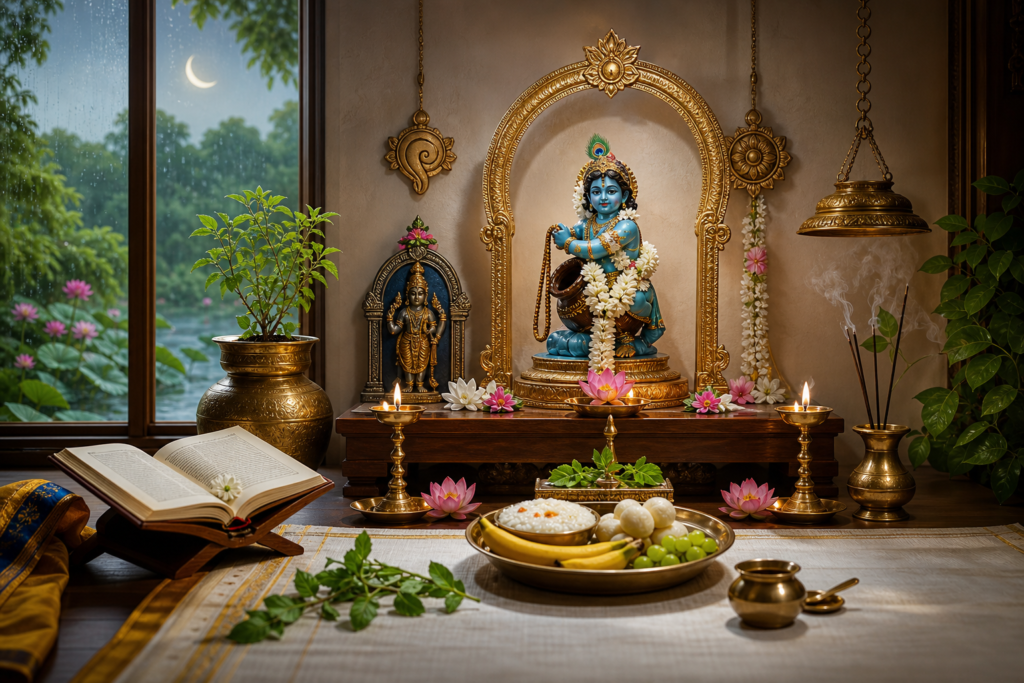
The observance connected with the previous Ekadashi is Yogini Ekadashi Parana in many Panchang traditions. The Dwadashi mood therefore carries a sense of completion, gratitude, and return to balance after restraint. A careful householder may use the day for Vishnu worship, sattvic food, charity, scriptural reading, or simply a quieter form of family life.
The broader Dharmic significance of the day lies in disciplined awareness. Hindu, Jain, Buddhist, and Sikh traditions do not use the Panchang in identical ways, yet they share a deep respect for self-restraint, ethical conduct, remembrance, and the transformation of ordinary routines into conscious living. A daily calendar becomes meaningful when it supports harmony rather than division.
For practical use, the safest approach is to read July 11 as a Dwadashi day after the early Ekadashi remnant, use the morning and midday auspicious windows for worship and constructive work, avoid Rahu Kalam for fresh undertakings, and confirm local timings before performing formal rituals. This balances respect for tradition with the precision required by Panchang calculation.
In summary, July 11, 2026, offers a thoughtful combination of Krishna Paksha Dwadashi, Krittika-to-Rohini Nakshatra, Vrishabha Moon, Shaniwara discipline, and several supportive muhurta windows. Its deeper lesson is not superstition but attentiveness: time is treated as sacred when it is approached with clarity, humility, and purposeful action.
Inspired by this post on Hindu Blog.

Leave a Reply
You must be logged in to post a comment.