

The BBC report published on June 23, 2026, under the title “We risk becoming a lost generation, say young Hindus”, raises a question that is larger than one proposed faith hub in one Cambridgeshire town. It concerns whether growing Hindu diaspora communities in the United Kingdom are being given the social and religious infrastructure necessary to transmit culture, worship, language, memory, and ethical formation to the next generation.
The immediate concern comes from Northstowe, a new town in Cambridgeshire where Hindu families say young people risk becoming disconnected from their culture and traditions because they have no local place of worship. According to the report, families who live in Northstowe may now have to travel to temples in London or Birmingham after the proposed closure of the Bharat Hindu Samaj Temple in Peterborough. For families with children, elderly relatives, work obligations, and school schedules, that is not a minor inconvenience. It can determine whether regular worship, festival participation, language exposure, and community life remain practical parts of everyday life.
Northstowe is not an ordinary village adapting slowly over centuries. It is a planned new town, designed to absorb growth and build a civic identity from the ground up. Public planning in such places cannot be reduced to roads, schools, housing estates, and shops. A town becomes liveable only when it also provides spaces for belonging: community halls, libraries, sports facilities, cultural institutions, and places of worship. For Hindu families, a temple is not merely a ritual building. It is a civilisational classroom, a cultural archive, a community kitchen, a counselling space, a language school, and a bridge between generations.
The BBC report notes that some families moved to Northstowe partly in the hope that Hindu Samaj Northstowe would win the bid to build and run the town’s first faith hub. That bid, however, went to the Northstowe Church Network. In a plural society, the success of one faith group should not require hostility toward another. Christian, Muslim, Hindu, Sikh, Jain, Buddhist, Jewish, and other communities all have legitimate needs. The deeper policy question is whether a fast-growing town with a visibly diverse population can rely on a single faith-space decision to meet complex religious needs, or whether it must plan more carefully for multiple communities from the outset.
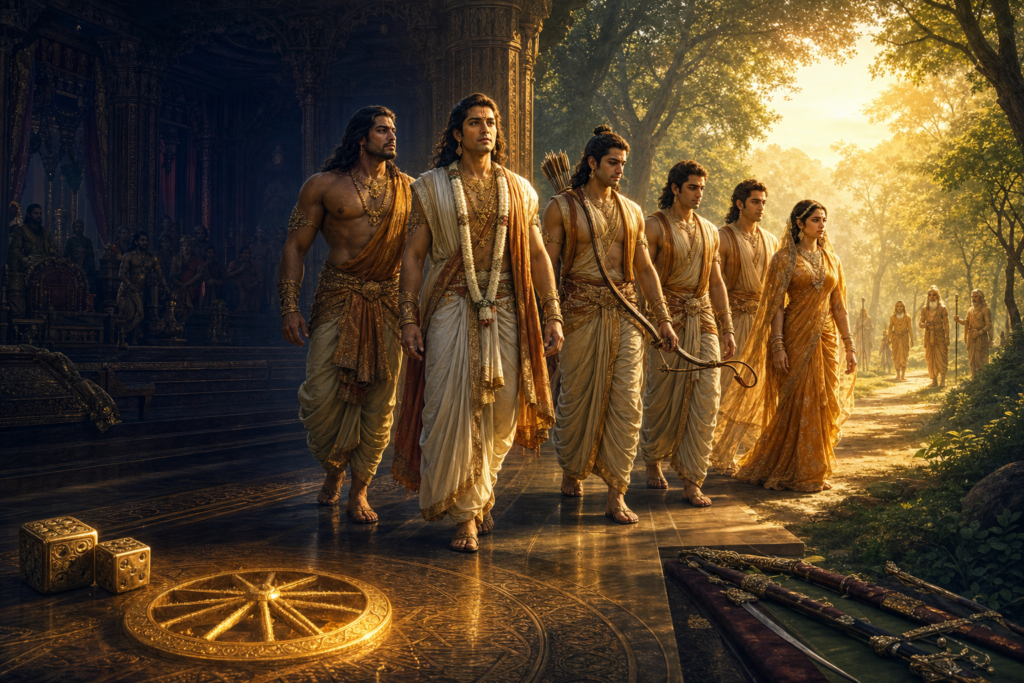
The emotional force of the phrase “lost generation” lies in the way diaspora identity is formed. Culture is rarely transmitted through lectures alone. Children absorb it by watching elders light a lamp, hearing bhajans and kirtan, joining Diwali and Navaratri celebrations, learning why prasad is shared, seeing seva performed, listening to stories from the Ramayana, Mahabharata, Puranas, and lives of saints, and discovering that Hindu Dharma is lived through family, community, ethics, worship, and reflection. When the local ecosystem for these experiences disappears, the next generation may still inherit surnames and festival photographs, but not necessarily the living texture of Hindu culture.
This concern is not unique to Hindus, and that is precisely why it deserves serious attention. Every minority community knows that continuity depends on institutions. Gurdwaras have played that role for Sikhs, Jain centres for Jains, Buddhist viharas for Buddhists, mandirs for Hindus, and churches, mosques, and synagogues for other faith communities. These institutions preserve memory while also training citizens in service, discipline, charity, and neighbourliness. In the dharmic traditions especially, worship is closely connected to self-cultivation, family duty, compassion, restraint, and reverence for diverse spiritual paths.
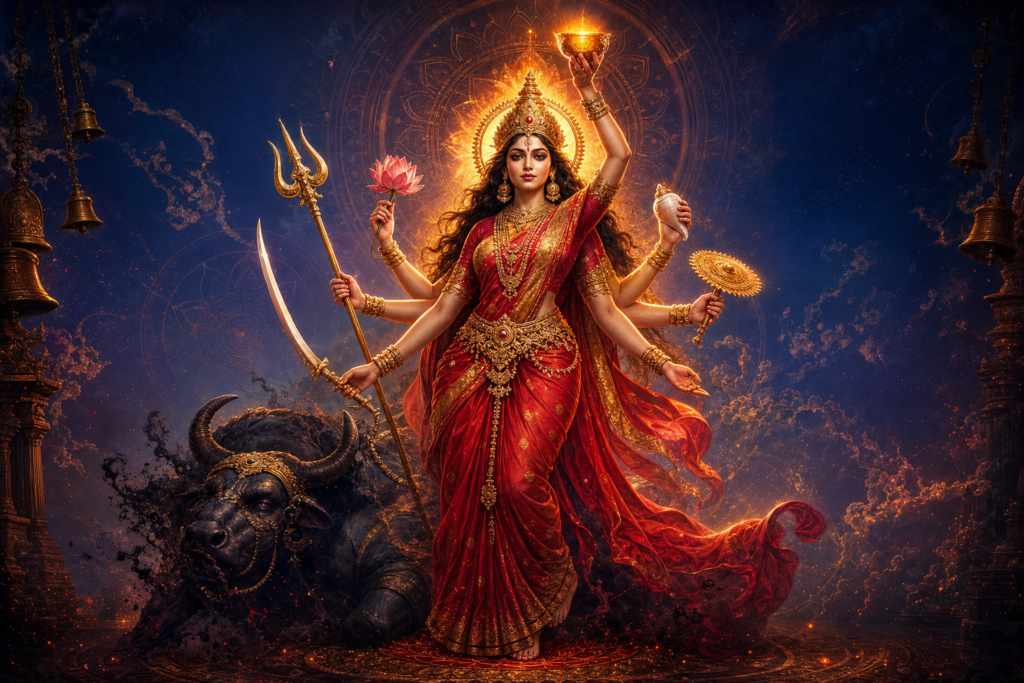
A Hindu temple abroad often carries responsibilities that exceed the conventional Western category of a “place of worship.” It supports samskaras such as namakarana, annaprasana, vidyarambham, upanayana in communities that observe it, weddings, funerary rites, and annual remembrance rituals. It creates a setting for children to ask why Ganesha is invoked before new beginnings, why the Gita remains central to ethical life, why Devi worship affirms sacred feminine power, why Rama and Krishna remain moral and devotional anchors, and why the idea of Ishta allows different families to worship different forms of the Divine without contradiction. Without a nearby temple, these lessons move from lived practice into occasional explanation.
The technical issue, therefore, is not only religious access but also community infrastructure. A town’s planning model shapes social outcomes. If housing grows faster than faith and cultural facilities, then minority communities are forced to improvise in private homes, borrowed halls, distant cities, or irregular gatherings. That weakens intergenerational transmission and can create a sense of exclusion even when no explicit exclusion is intended. Urban planning often speaks of sustainability, walkability, and community cohesion. For a multi-faith town, spiritual and cultural accessibility must be treated as part of that same civic vocabulary.
The legal and civic context also matters. In the United Kingdom, freedom of thought, conscience, and religion is protected under the Human Rights Act framework, and public bodies are expected to consider equality implications when making decisions that affect different communities. This does not mean that every group can receive every site it wants, nor does it mean that public authorities can ignore competing constraints. It does mean that decisions about faith land, community facilities, and long-term town planning should be transparent, evidence-based, and attentive to the needs of groups whose requirements may be less visible because they are newer, smaller, or less institutionally established.
For Hindu families in Northstowe, the distance to London or Birmingham is not merely a number on a map. It changes the rhythm of devotion. A local temple allows a family to attend aarti after school, join a weekend class, volunteer for a festival, bring grandparents to a familiar community, or mark a child’s milestone without turning worship into a full-day logistical exercise. A distant temple becomes something reserved for special occasions. That shift matters because traditions survive not only through grand festivals but through repetition, proximity, and ordinary habits.
The proposed closure of the Bharat Hindu Samaj Temple in Peterborough adds another layer of vulnerability. If a regional temple that served as a practical anchor becomes unavailable, then Northstowe families lose not only a future hope but also an existing support structure. This is how cultural erosion often occurs: not through a single dramatic rupture, but through the quiet accumulation of distances, closures, failed bids, postponed facilities, and the assumption that communities will somehow manage on their own.
There is also a generational distinction that must be understood with care. First-generation migrants often carry religious memory from lived experience in Bharat and other ancestral homelands. They may know the sounds of temple bells, the discipline of festival preparation, the social meaning of prasad, the importance of elders, and the layered nature of dharmic practice. Their children, however, may be growing up in British towns where Hindu identity is encountered mainly at home or during occasional travel. For them, a local mandir can make the difference between inherited identity and embodied belonging.
This does not require cultural isolation. A confident Hindu community can be deeply rooted and openly civic at the same time. Indeed, dharmic traditions have long held that different paths can coexist without demanding uniformity. The Northstowe question should therefore be approached not as a conflict between communities but as a test of whether pluralism can be designed into public life with fairness and imagination. A town that provides meaningful space for one faith tradition should also be capable of planning space for others as demographics and needs become clear.
Temple access also has measurable social value. Faith institutions organize volunteer networks, support elderly residents, provide informal mental health support, help new migrants settle, teach children discipline and cultural literacy, and create channels for interfaith cooperation. During festivals, they bring people together across class, region, language, caste, and sect. In the Hindu context, a temple may host Tamil, Gujarati, Punjabi, Bengali, Telugu, Marathi, Kannada, Odia, Hindi-speaking, and English-speaking families under one roof. That kind of institution supports integration without erasing identity.
For dharmic unity, the issue is even broader. Hindu, Buddhist, Jain, and Sikh communities may differ in theology, ritual, and historical development, yet they share civilisational concerns about cultural continuity, ethical formation, family memory, non-violence, service, self-discipline, and reverence for spiritual practice. A well-designed faith and cultural infrastructure can support cooperation among these traditions while respecting their distinct identities. When one dharmic community struggles to secure space, the lesson should be read as a warning for all communities that depend on institutions to preserve living traditions.
The phrase “lost generation” should not be dismissed as emotional exaggeration. It expresses a sociological risk: when institutions are absent, identity becomes thinner. Children may still know that they are Hindu, but they may not know how Hindu worship works, why Sanskrit mantras are recited, how regional traditions differ, what seva means, why gurus and acharyas matter, or how dharma applies to everyday moral decisions. A temple cannot solve every problem of cultural transmission, but without such institutions families must carry the entire burden alone.
The practical response should be constructive. Local authorities, developers, faith groups, and residents can examine demographic evidence, travel distances, projected population growth, and the wider religious needs of the town. Temporary access to school halls or community centres may help in the short term, but long-term planning should not leave minority communities permanently dependent on borrowed spaces. A serious approach would consider shared community facilities, dedicated worship sites, transparent allocation criteria, and phased provision as Northstowe grows.
It is equally important that the debate remain factual and civil. The concern is not that another faith community exists or organizes successfully. The concern is whether Hindu families, including children and young people, have fair and realistic access to worship and cultural formation. A plural civic order is strongest when communities do not have to compete for recognition as if one group’s spiritual needs cancel another’s. The more mature solution is to recognize that a growing town requires a layered, multi-faith infrastructure.
Northstowe’s Hindu families are therefore raising a question that reaches far beyond Cambridgeshire: can modern British planning understand temples as essential community institutions rather than optional cultural extras? If the answer is yes, then towns like Northstowe can become models of genuine pluralism. If the answer is no, then the cost will be borne quietly by children who grow up without easy access to the traditions their families hoped to preserve.
The future of Hindu culture in the diaspora will not be secured by sentiment alone. It will require institutions, land, planning recognition, volunteer labour, interfaith goodwill, and a clear understanding that worship is part of social infrastructure. The Northstowe case shows why temples matter: they are not only buildings of faith, but homes of memory, discipline, service, and continuity. For a generation trying to remain connected to Hindu Dharma while growing up in a rapidly changing Britain, that continuity is not a luxury. It is the foundation of belonging.
Inspired by this post on Hindu Post.






Leave a Reply
You must be logged in to post a comment.