
A June 22, 2026 Organiser report revisits one of the most painful chapters in recent West Bengal politics: the alleged sexual violence, intimidation, forced displacement, and institutional neglect faced by women after the 2021 Assembly election results. The testimonies discussed in the report are not merely accounts of partisan conflict. They raise deeper questions about law, state accountability, women’s safety, due process, and the moral responsibility of democratic institutions when citizens claim they were punished for political participation.
The article begins with a sentence that captures the social atmosphere in which many survivors say they were trapped: “Panite theke kumirer shonge boirita kora jay na” (One cannot afford to make an enemy of a crocodile while living in the water). In the report, this Bengali phrase is attributed to a woman police officer who allegedly discouraged a rape survivor from pursuing an FIR. The remark matters because it suggests something larger than individual cruelty. It reflects the fear that justice becomes unreachable when the accused are perceived to be politically protected and the complainant must continue living among those she accuses.
The 2021 West Bengal Assembly election was followed by widespread allegations of post-poll violence. The Trinamool Congress, led by Mamata Banerjee, returned to power, while BJP workers and supporters in several districts alleged retaliatory attacks. The TMC and its supporters have also disputed many allegations and accused opponents of politicising the violence. In such a contested environment, the burden on institutions becomes heavier, not lighter. Courts, police, medical systems, and rights bodies must separate evidence from propaganda while ensuring that survivors are neither silenced nor used as political instruments.
The legal background is significant. In 2021, the Calcutta High Court ordered CBI investigation into serious allegations such as murder and rape linked to post-poll violence, while other cases were to be examined through a special investigative mechanism. The National Human Rights Commission’s involvement and subsequent litigation showed that the controversy had moved beyond ordinary political accusation. By 2026, media reports also indicated renewed scrutiny of hundreds of 2021 post-poll violence cases, especially those involving crimes against women. This long delay is itself a form of harm, because sexual violence investigations depend on timely FIRs, medical documentation, witness protection, and freedom from intimidation.
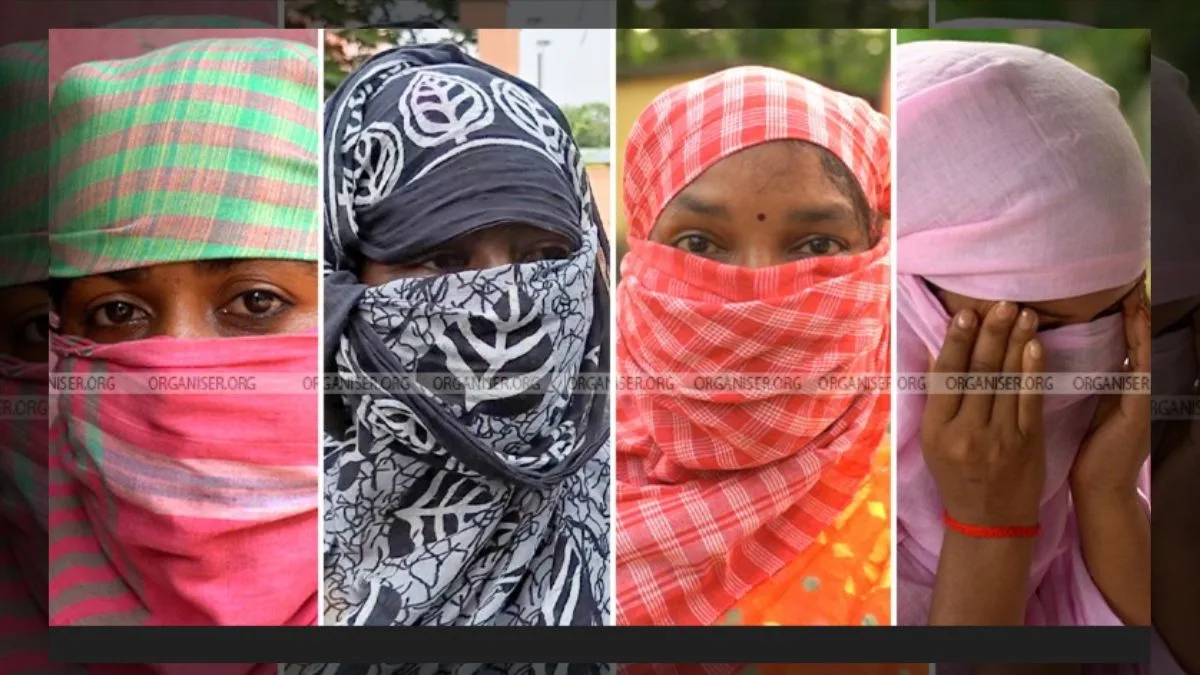
The Organiser report presents several anonymised testimonies, including those of women from Scheduled Caste and Scheduled Tribe communities. Their accounts describe a pattern: armed groups allegedly entered villages or homes, men fled in fear, women were left vulnerable, and survivors later found it difficult to register complaints or receive medical care. If these accounts are proven in court, they would indicate not isolated disorder but a coercive political environment in which women’s bodies became targets for punishing families, communities, and political choices.
One testimony concerns Reena Hansda, a name changed to protect identity. She is described as a Scheduled Tribe woman from a village where violence allegedly intensified after the results. Her account includes allegations of bombs, armed entry into the village, sexual assault by multiple men, threats against the family, denial of police registration, and inadequate hospital treatment. The most important part of her testimony is not the political label of the accused but the institutional sequence that followed: fear, silence, medical distress, and the demand that those responsible be punished through lawful process.
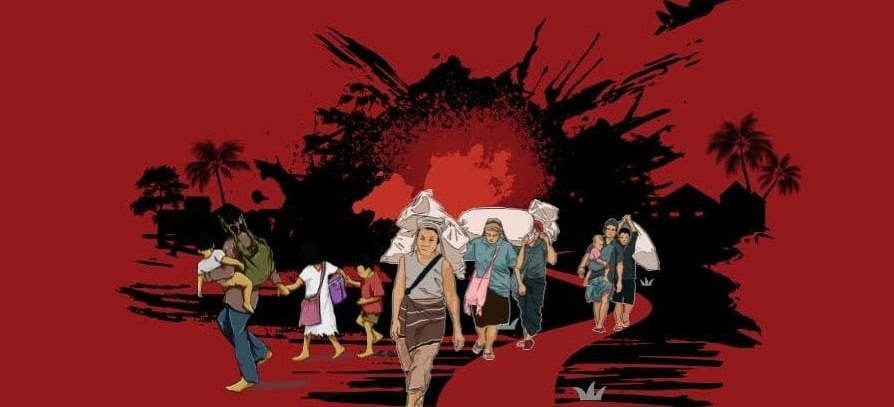
Another testimony involves Ragini Mete, also a changed name, from a Scheduled Caste background. Her family had reportedly been associated with the BJP for years. According to her account, a mob attacked the family home, beat her husband, damaged property, and forced the family to leave the village. This kind of displacement is often undercounted in discussions of political violence. A destroyed home is visible; a family that stops sleeping in its own house is easier to ignore. Yet forced displacement corrodes citizenship because it tells the victim that voting, campaigning, or even being related to a political worker may carry unbearable costs.
The account of Rituparna Roy, a specially-abled woman and former BJP Mahila Morcha functionary, is among the most disturbing in the report. She allegedly received threats before the results and later took shelter at a neighbour’s house with her children. The report says she was assaulted, sexually attacked, beaten, and threatened in the presence of her daughter, while her family struggled to obtain help. Such allegations require careful legal scrutiny, but they also require humane listening. A democracy cannot measure political violence only by deaths, injuries, and property loss; it must also account for trauma witnessed by children, neighbours, and families forced into silence.
Sharmila, another anonymised survivor, is presented as an active BJP worker who campaigned and handled social media activities. The report alleges that her father was beaten while she was sexually assaulted in another room. It further describes pressure to compromise and earlier public humiliation by local political actors. Whether every allegation results in conviction is a matter for courts, but the reported pattern deserves attention: the survivor is first attacked, then discouraged, then pressured, and finally expected to live under the shadow of those who allegedly harmed her. That cycle is precisely what survivor-centred criminal justice is meant to break.
Sexual violence in a political setting has a distinct function. It is not only an attack on an individual body; it is a message to a household, a caste group, a religious community, a polling booth network, and a village. The alleged targeting of women because they supported a political party or belonged to Hindu families must therefore be understood as both gendered violence and identity-based intimidation. At the same time, justice must never become collective blame. No religious or social community should be treated as guilty for the crimes of named individuals. Accountability must remain precise, evidence-based, and bound by law.
This distinction is essential for social harmony. The goal of justice is not revenge between communities; it is restoration of dharma in the civic sense: protection of the vulnerable, truthfulness in public life, restraint in power, and punishment of wrongdoing through legitimate institutions. Hindu, Buddhist, Jain, and Sikh traditions each contain strong ethical resources for defending dignity, rejecting cruelty, and upholding compassion without abandoning courage. A society that honours dharmic values cannot normalise the humiliation of women, the silencing of survivors, or the use of political power to deny legal remedy.
The report also highlights the role of police and doctors, which is technically crucial. In sexual assault cases, the first institutional responses often shape the entire legal outcome. If police refuse or delay an FIR, evidence weakens. If doctors fail to provide proper care and documentation, prosecution becomes harder. If witnesses are threatened, testimony collapses. If survivors are made to repeat statements under pressure, credibility is damaged. These failures do not merely inconvenience justice; they can determine whether justice becomes possible at all.
A credible response requires several steps. First, every pending complaint related to post-poll sexual violence should be reviewed by investigators independent of local political pressure. Second, survivors and witnesses need enforceable protection, safe relocation where necessary, and confidentiality. Third, medical records, prior statements, call records, local police diaries, and hospital documentation should be reconstructed wherever possible. Fourth, cases involving Scheduled Caste and Scheduled Tribe survivors must be examined with attention to applicable protections under law. Fifth, compensation cannot be treated as a substitute for prosecution; it can only support recovery while criminal accountability proceeds.
Due process must also protect the accused from trial by media. Allegations, however grave, must be tested in court. Names, political affiliations, and community identities cannot replace evidence. This is not a concession to the powerful; it is the only way convictions can withstand scrutiny and survivors can receive justice that endures. A weak investigation helps perpetrators. A partisan investigation helps propagandists. A rigorous investigation helps the truth.
The broader lesson from Bengal’s 2021 post-poll violence is that democracy does not end when votes are counted. The right to vote includes the right to return home safely after voting, the right to support a party without fear, and the right to seek justice when harmed. When women say they were attacked because of political participation, the issue becomes not only women’s safety but the credibility of electoral freedom itself. If fear determines who may campaign, speak, or live in a village, democracy becomes procedural rather than real.
Bengal has a long and complex history of political mobilisation, ideological rivalry, and street-level party organisation. That history should not be used to excuse violence as inevitable. Political culture is not destiny. It can be reformed through impartial policing, swift prosecution, transparent court monitoring, and civic leadership that refuses to glorify retaliation. The pain described by these women should become a reason to strengthen institutions, not another weapon in an endless partisan argument.
The women in these testimonies are not asking for symbolic pity. Their demand is concrete: recognition, investigation, protection, prosecution, and punishment where guilt is proven. Their stories also call for a public ethic in which the dignity of women is not negotiated according to party lines. Justice for Bengal’s daughters would not weaken democracy; it would restore faith in it. The path forward must be truthful, lawful, compassionate, and firm enough to tell every political actor that power cannot be used to violate citizens and then bury their voices.
Inspired by this post on Hindu Post.









Leave a Reply
You must be logged in to post a comment.