
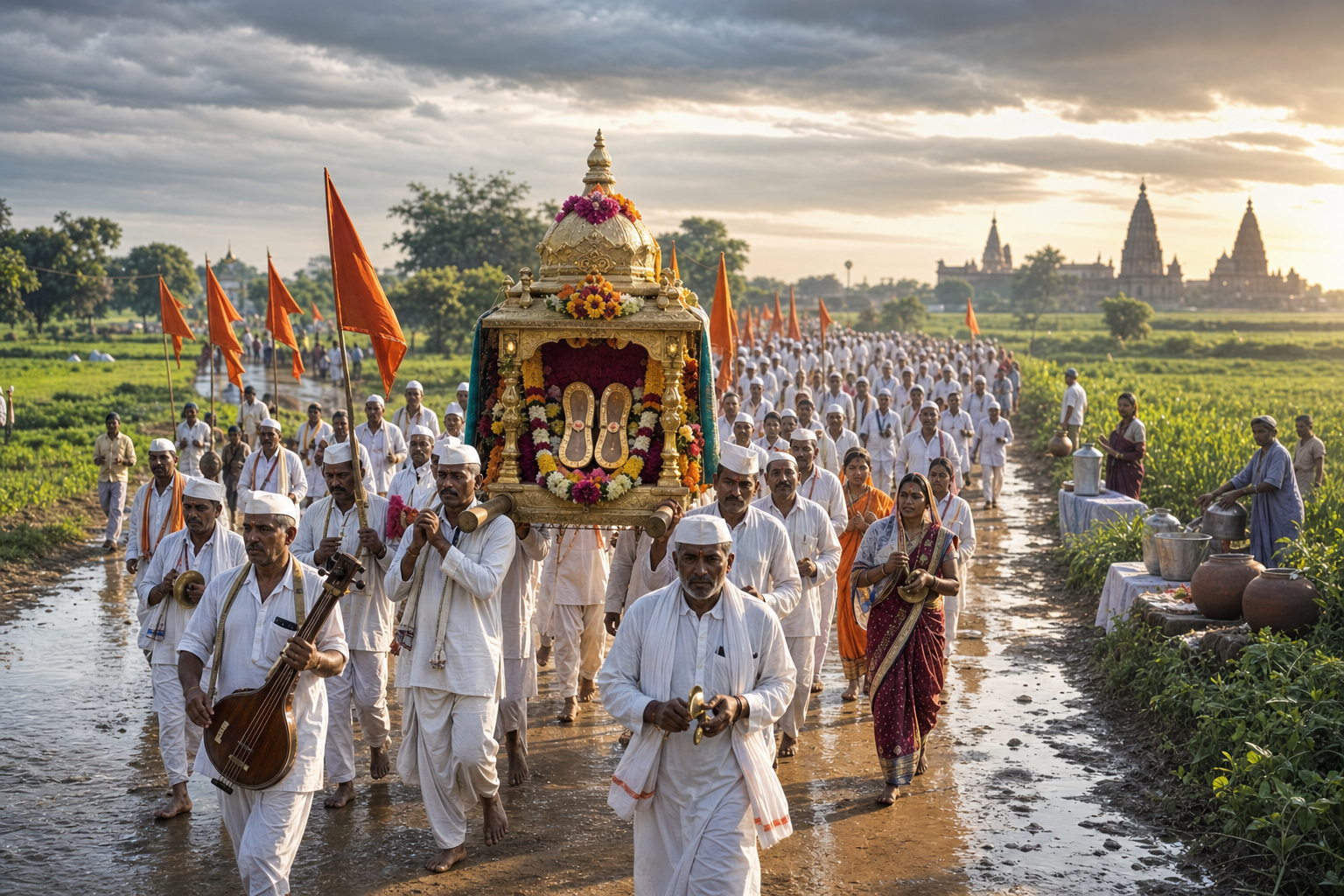
Sant Janabai Palkhi 2026 refers to the annual palanquin procession associated with Sant Janabai, the revered Marathi poet-saint of the Varkari bhakti tradition. The procession forms part of the wider Ashadhi Wari, the sacred foot-pilgrimage to Pandharpur for darshan of Vithoba and Rakhumai. In 2026, Ashadhi Ekadashi falls on 25 July, and the major Wari processions are expected to converge on Pandharpur around 24-25 July, in keeping with the established rhythm of the pilgrimage calendar.
The distinctive importance of the Sant Janabai Palkhi lies in its connection with Marathwada, especially Gangakhed in Parbhani district, traditionally remembered as the birthplace of Sant Janabai. While the more widely publicised palkhis of Sant Tukaram Maharaj and Sant Dnyaneshwar Maharaj begin from Dehu and Alandi near Pune, Sant Janabai’s palkhi carries the devotional memory of a different region into the shared spiritual field of Pandharpur. This gives the procession a special cultural identity within Maharashtra’s larger Varkari movement.
Sant Janabai occupies a deeply respected place in the history of Marathi bhakti literature. She is traditionally associated with the 13th-14th century devotional world of Sant Namdev and the Pandharpur-centered worship of Vithoba. Her abhangs are remembered for their intimacy, directness, humility, and profound spiritual equality. In her poetry, household work, service, longing, and devotion are not separate from spiritual life; they become the very field in which the divine is encountered.
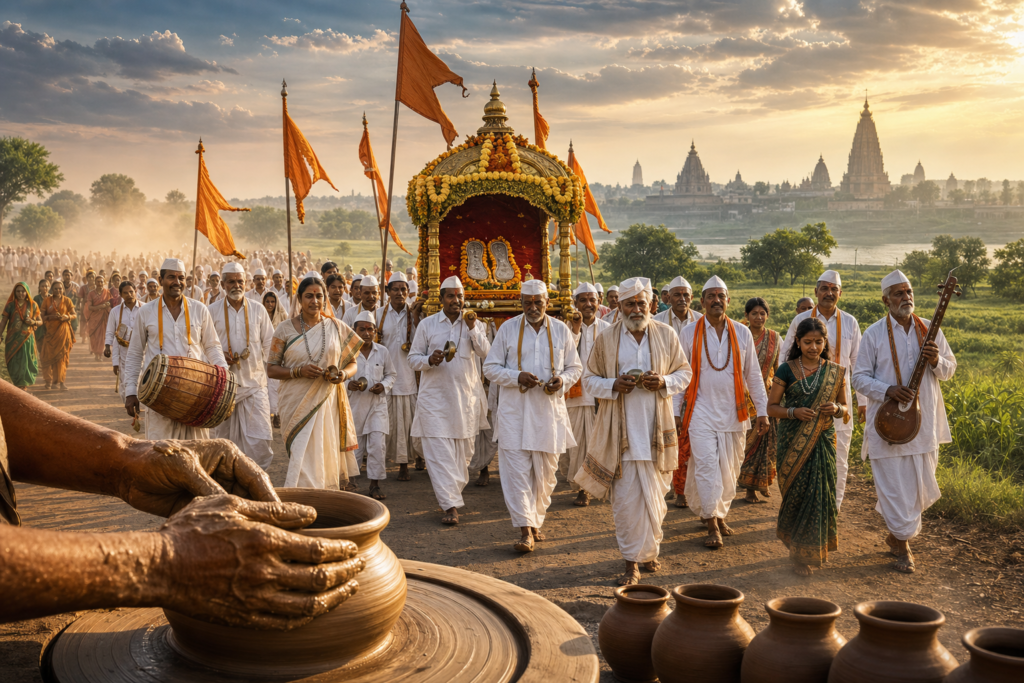
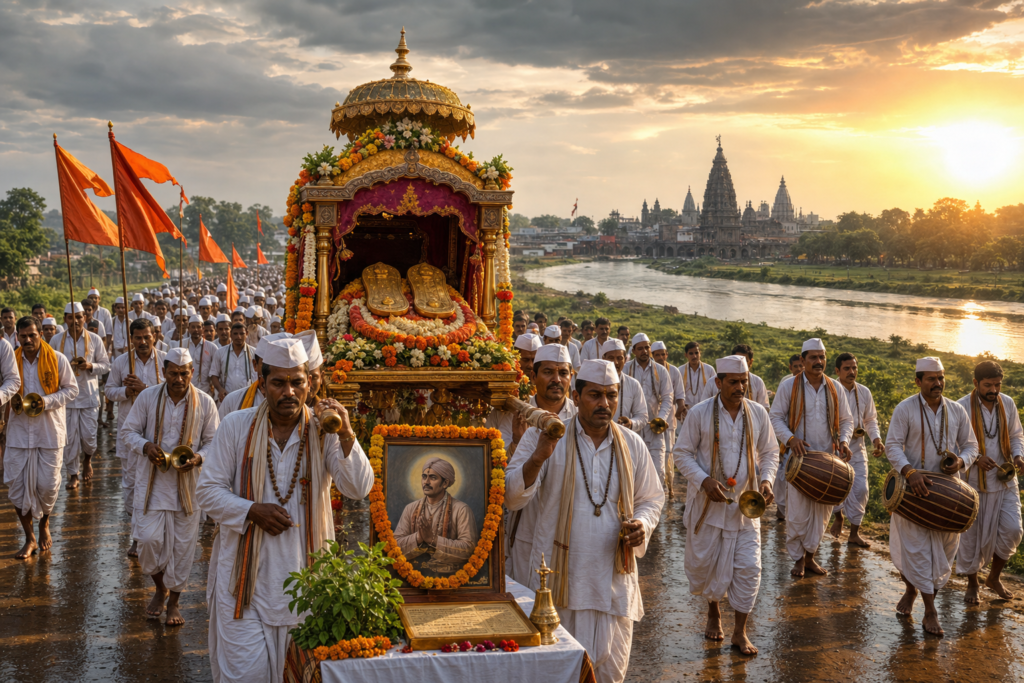
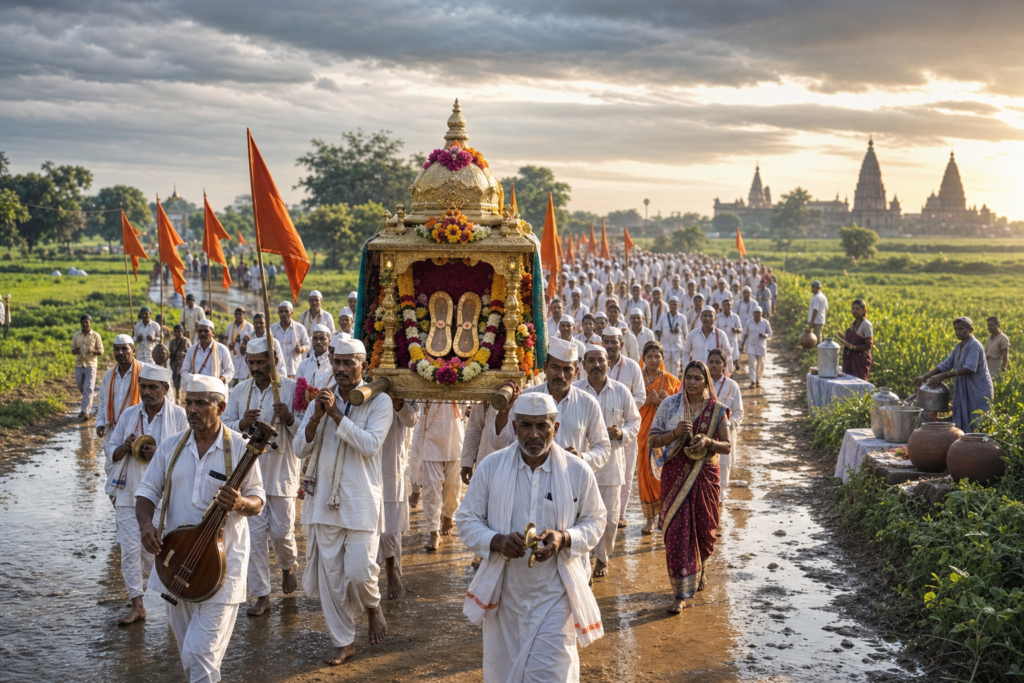
The Palkhi tradition is built around the carrying of a saint’s paduka or symbolic presence in a palanquin. Technically, the procession is not merely a moving crowd; it is a disciplined devotional system. Groups of pilgrims, known as dindis, walk in organised formations with flags, cymbals, mridanga, veena, tulsi malas, and repeated chanting of the divine name. The movement of the palkhi is governed by daily halts, worship schedules, food arrangements, rest points, local hospitality, and coordination between temple trusts, volunteers, police, health workers, and district administrations.
The Sant Janabai Palkhi 2026 should therefore be understood not only as a religious event but also as a living cultural institution. It connects Gangakhed, Parbhani, rural Marathwada, and Pandharpur through the shared grammar of bhakti, seva, discipline, and collective memory. For many devotees, the journey is emotionally powerful because it brings the saint’s life into physical motion: the words sung in abhang become footsteps on the road, and the remembrance of Vithoba becomes a public act of humility.
The Ashadhi Wari is one of India’s most remarkable examples of sustained pilgrimage culture. Its central destination is the Vithoba temple at Pandharpur, where devotees gather for Ashadhi Ekadashi, also called Devshayani Ekadashi. In 2026, the publicly reported schedule for the prominent Sant Tukaram Maharaj Palkhi indicates departure from Dehu on 7 July and arrival at Pandharpur around 24-25 July. Sant Dnyaneshwar Maharaj’s palkhi is reported to depart from Alandi on 8 July and reach Pandharpur around 24 July. Devotees following Sant Janabai Palkhi should confirm the exact 2026 stage-wise timetable with the local palkhi committee, temple authorities, and district administration because smaller regional palkhis may publish detailed routes closer to departure.
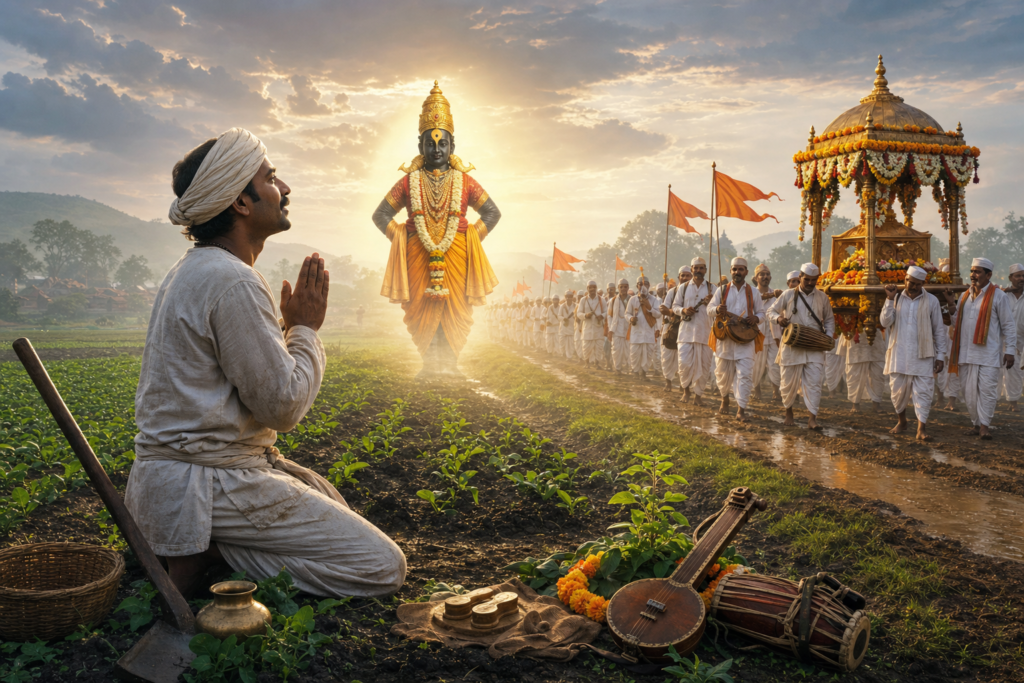
The broader Varkari tradition gives the Sant Janabai Palkhi its theological framework. Varkaris worship Vithoba, also called Vitthal or Panduranga, as the accessible divine presence standing on the brick at Pandharpur. The tradition emphasises nama-smarana, kirtan, abhang singing, fasting on Ekadashi, ethical living, compassion, humility, and the conviction that spiritual worth is not determined by birth, wealth, formal learning, or social status. This inclusive spirit is central to the continuing appeal of the Wari.
Sant Janabai’s legacy strengthens this inclusive dimension. Her remembered life is associated with service, poetry, and devotion in ordinary domestic spaces. Her abhangs often dissolve the boundary between sacred and everyday labour. Grinding grain, cleaning, cooking, and serving become acts of spiritual offering. This is one reason her palkhi speaks strongly to families, women devotees, working people, rural communities, and all those who see dharma not only in temples but also in daily responsibility.
From an academic perspective, the Sant Janabai Palkhi also preserves vernacular religious memory. The Wari is not sustained only by written texts or formal institutions; it survives through oral singing, route discipline, community hospitality, embodied walking, and intergenerational participation. Children watch elders walk, households prepare food for pilgrims, villages receive the palkhi with reverence, and devotional songs carry theological ideas in accessible Marathi. This is cultural transmission through practice.
The emotional force of the procession comes from its simplicity. A pilgrim may walk under monsoon clouds, through mud, heat, fatigue, and crowded village roads, yet the atmosphere is shaped by shared rhythm rather than individual achievement. The repeated chant of Vithoba’s name, the sound of taal and mridanga, the sight of saffron flags, and the collective bowing before the palkhi create a devotional environment where personal burdens are absorbed into a larger spiritual movement.
The Sant Janabai Palkhi is especially significant because it brings Marathwada’s devotional geography into the Pandharpur Wari. Gangakhed, situated in Parbhani district on the Godavari river belt, is part of a region that carries its own histories of saints, agrarian life, linguistic culture, and temple traditions. When the palkhi travels from this region toward Pandharpur, it symbolically unites local sacred memory with the pan-Maharashtrian devotion to Vithoba.
For pilgrims, preparation is both physical and spiritual. Walking long distances during the monsoon requires attention to health, footwear, hydration, simple food, medicines, rain protection, and respect for the dindi schedule. Equally important are the inner disciplines of patience, self-restraint, cleanliness, cooperation, and seva. The Wari works because thousands of people accept shared discipline without reducing devotion to spectacle.
Seva is one of the quiet engines of the Palkhi Sohala. Villagers, local mandals, temple committees, medical teams, police personnel, and volunteers help with meals, drinking water, sanitation, first aid, traffic control, and resting arrangements. Such service reflects the Varkari understanding that devotion to Vithoba must appear as compassion toward fellow beings. The road itself becomes a temporary community of care.
The Sant Janabai Palkhi 2026 also highlights the role of women in Hindu spiritual traditions. Sant Janabai is not remembered as a marginal figure but as a poetic and devotional voice whose compositions stand alongside the larger body of Marathi bhakti literature. Her life and memory challenge narrow assumptions about who can speak of God, who can compose sacred poetry, and where spiritual authority may arise.
Theologically, the Wari is rooted in bhakti but it also expresses a broader dharmic unity. The values visible in the procession – non-violence, humility, discipline, compassion, reverence for the guru, shared food, respect for different communities, and devotion expressed through song – resonate across Hindu, Buddhist, Jain, and Sikh ethical worlds. The Sant Janabai Palkhi can therefore be read as a model of devotional pluralism rather than sectarian isolation.
For readers planning to participate in Sant Janabai Palkhi 2026, the most practical step is to verify the official route, departure date, halts, and registration guidance from recognised local sources before travel. Since regional palkhi schedules may vary and administrative arrangements can change due to weather, crowd management, or road conditions, pilgrims should rely on current announcements from the palkhi organisers, local temple authorities, and Parbhani or Solapur district administration.
Those unable to walk the full distance may still participate meaningfully by joining a short stretch, offering seva at a halt, attending kirtan, reading Sant Janabai’s abhangs, observing Ashadhi Ekadashi vrat, or supporting pilgrims with food, water, medical assistance, and clean facilities. The essence of the Wari is not measured only by distance walked; it is measured by the sincerity with which the devotee turns toward Vithoba and serves others.
The 2026 Sant Janabai Palkhi is therefore more than a calendar event. It is a moving archive of Marathi bhakti, a regional expression of Marathwada’s sacred heritage, and a living reminder that devotion can be sung, walked, served, and shared. As the palkhi moves toward Pandharpur, it carries not only the memory of Sant Janabai but also the enduring promise of the Wari: that the divine is accessible to all who walk with humility, love, and remembrance.
Inspired by this post on Hindu Pad.




Leave a Reply
You must be logged in to post a comment.