
On Thursday, July 1, 2026, according to the Hindu calendar (Panchang), the lunar date (tithi) is Krishna Paksha Pratipada until 06:25 AM IST; thereafter it transitions to Krishna Paksha Dwitiya. The day falls in the sacred month of Ashadha in most regional calendars. This comprehensive daily Panchang outlines the tithi transition, the meaning of Krishna Paksha, guidance on Shubh Muhurat and Rahu Kaal, and ways to align observances across the Dharmic traditions of Hinduism, Buddhism, Jainism, and Sikhism.
Thursday (Guru-vara) is traditionally dedicated to Guru/Brihaspati and to Vishnu and the Guru principle in many sampradayas. Communities commonly emphasize satvik vows, study of scriptures, dana, and service to teachers and elders on Guru-vara, recognizing the shared reverence for teacher-guided wisdom across Dharmic paths.
Tithi detail: Krishna Paksha Pratipada (waning Moon, first lunar day) prevails until 06:25 AM IST on July 1, 2026. From 06:25 AM IST onward, Krishna Paksha Dwitiya (second lunar day) is in effect. In ritual practice, the tithi prevailing at sunrise often guides vratas and sankalpa; where a tithi ends shortly after sunrise, observances may follow regional smriti and temple traditions.
Month context: In both the Purnimanta (North Indian) and Amanta (South Indian) systems, the fortnight belongs to Ashadha for this date in most regions. Regional almanacs may label the month differently for local reasons (for example, intercalary months), but for July 1, 2026 the consensus is Ashadha Krishna Paksha.
Technical note on tithi: A tithi is defined by the elongation (angular separation) between the Moon and the Sun increasing by successive steps of 12°. When the elongation crosses 12°, 24°, 36°, and so on, the lunar day changes (Pratipada, Dwitiya, Tritiya…). The 06:25 AM IST transition indicates the elongation crossed a 12° boundary at that instant for the India time zone; at other longitudes the clock time of change differs.
Nakshatra and Chandra Rashi: The nakshatra is the 13°20′ sector of the ecliptic occupied by the Moon; the Chandra Rashi is the 30° zodiacal sign containing the Moon. Because both depend on the Moon’s position at a specific locale and time (commonly sunrise for the daily Panchang), precise values vary by location. Practitioners are advised to consult the local Panchang for the nakshatra and rashi at sunrise in their city on July 1, 2026.
Yoga and Karana: Yoga is computed from the sum of the ecliptic longitudes of the Sun and Moon, categorized into 27 yogas with distinct ritual effects. Karana is half a tithi (six-degree elongation) and cycles through fixed and repeating segments used to refine muhurta. For location-specific muhurta selection, both yoga and karana should be matched to the intended activity and regional sampradaya.
Shubh Muhurat guidance: Abhijit Muhurat centers on local solar noon and extends roughly 24 minutes on either side; it is generally auspicious for many undertakings except those explicitly proscribed by family or temple tradition. Beyond Abhijit, daylight is divided into fifteen muhurtas and eight equal parts for Rahu Kaal, Yamaganda, and Gulika computations, which help identify inauspicious intervals to avoid.
Rahu Kaal on Thursdays occupies the sixth of the eight equal daytime segments. To compute it, determine local sunrise and sunset, divide the daylight duration by eight, and take the interval from 5/8 to 6/8 of the day after sunrise. For example, if sunrise is at 06:00 and sunset at 18:00 (a 12-hour day), Rahu Kaal on Thursday is approximately 13:30–15:00. Activities such as starting long journeys, signing contracts, and initiating new ventures are traditionally avoided during Rahu Kaal.
Yamaganda and Gulika on Thursdays: Yamaganda is the first daylight segment on Thursdays; with a 06:00–18:00 day it runs about 06:00–07:30. Gulika on Thursdays is the seventh segment; in the same 12-hour example it is about 15:00–16:30. As with Rahu Kaal, scale these intervals proportionally to your local sunrise and sunset.
Good-time selection (general): Favorable windows are typically those free of Rahu Kaal, Yamaganda, and Gulika, aligned with a benefic yoga and a compatible karana, and, where possible, within Abhijit Muhurat or under a benefic nakshatra for the task (for example, Rohini, Uttara Phalguni, Hasta for beginnings; Anuradha for partnerships). Aligning decisions with the day’s Krishna Paksha—symbolically a phase for reflection, consolidation, and inward practice—can enhance steadiness.
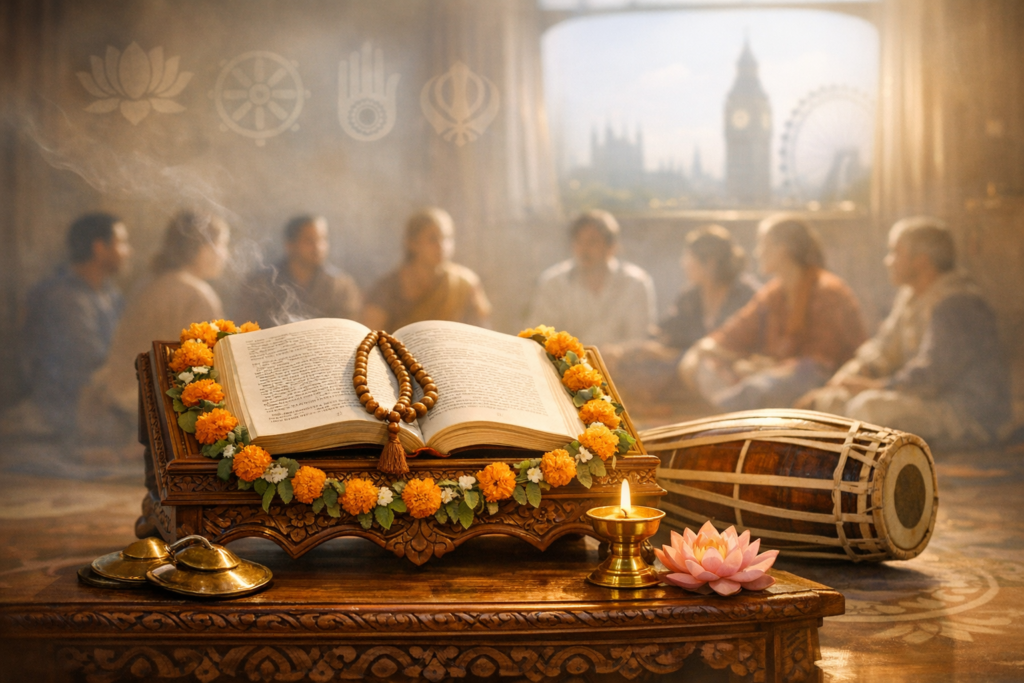
Shared Dharmic perspective: While the Panchang is a core instrument of Hindu calendrics, allied practices resonate across Buddhism, Jainism, and Sikhism through a common esteem for discipline, truthfulness, seva, and reverence for teachers. Many Buddhist communities mark uposatha around lunar phases; Jains calibrate vratas with tithis; Sikhs uphold Gurmat and seva that harmonize with auspicious discipline. Observances undertaken on Guru-vara—study, meditation, japa, charity, and service—thus support unity across Dharmic lineages.
Practical observances for Thursday, July 1, 2026: morning worship and study before 06:25 AM IST fall under Krishna Paksha Pratipada; after that, Dwitiya-specific sankalpas apply in regions observing by current tithi. Offerings to one’s Guru, annadana, quiet meditation during the waning Moon, and reading of texts such as the Bhagavad-Gita or Dhammapada are commonly practiced. Those planning samskaras or business milestones are advised to consult a regional Panchang or a qualified muhurta expert for precise yoga–karana matching.
Data reliability and regional variation: The Pratipada-to-Dwitiya change at 06:25 AM is given for India Standard Time in most regions; outside India, the clock time of the tithi change may shift to the previous or next civil day. Because Panchang determinations are sunrise-based and location-sensitive, city-specific almanacs should be preferred for decisive rites.
Key takeaway: July 1, 2026 is a Guru-vara in Ashadha with Krishna Paksha Pratipada until 06:25 AM IST, followed by Dwitiya; plan important acts outside Rahu Kaal, Yamaganda, and Gulika, and, where feasible, near Abhijit Muhurat. Anchoring the day in gratitude to the Guru, mindful seva, and shared Dharmic values brings the auspicious spirit of the Panchang to life.
Inspired by this post on Hindu Blog.

Leave a Reply
You must be logged in to post a comment.