
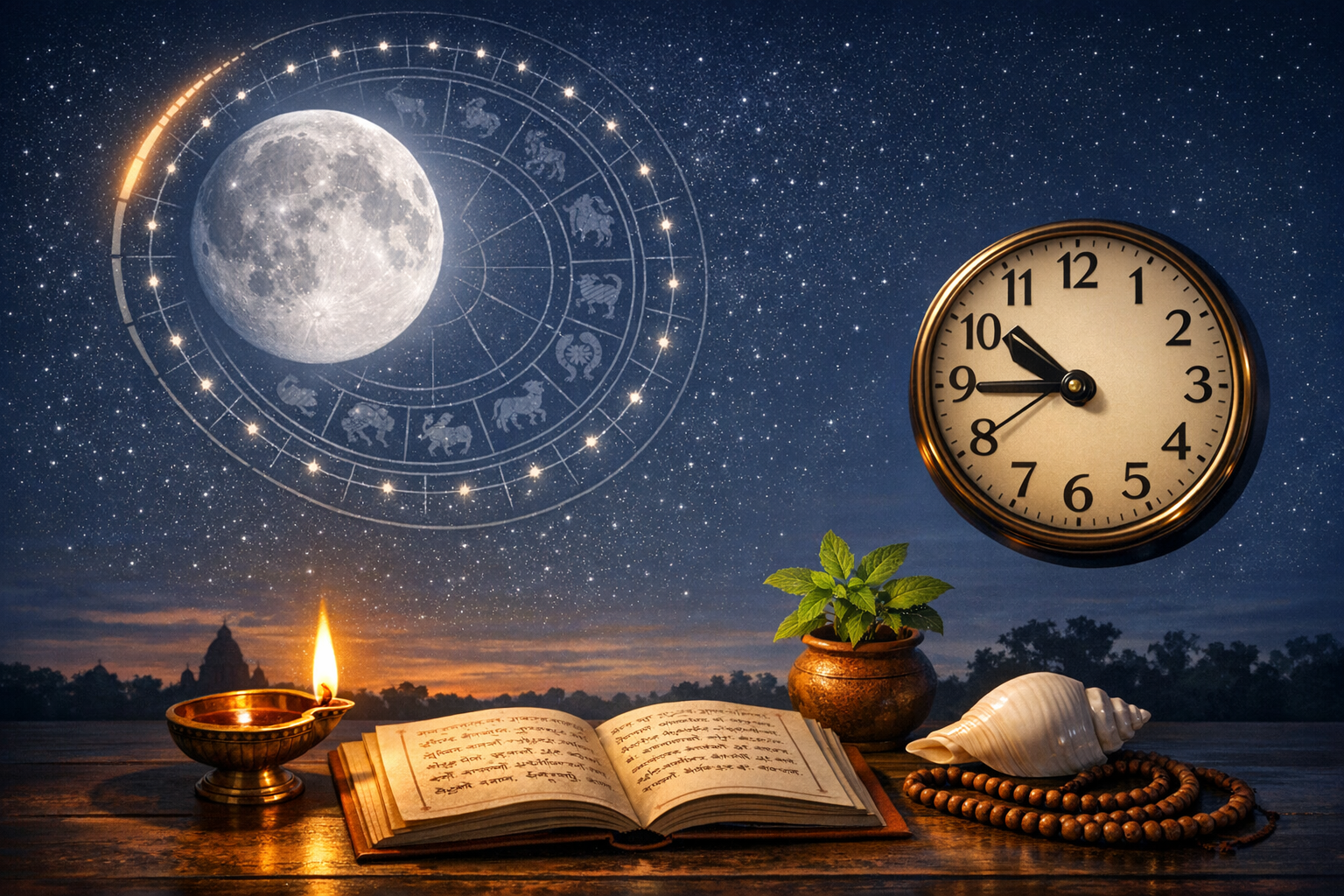
Friday, June 26, 2026, in the Hindu calendar (Panchang) is observed as Shukla Paksha Dwadashi, the twelfth lunar day of the waxing Moon, across most regions. Shukla Paksha Dwadashi tithi remains in effect until 10:45 PM on June 26, after which Shukla Paksha Trayodashi, the thirteenth lunar day, commences.
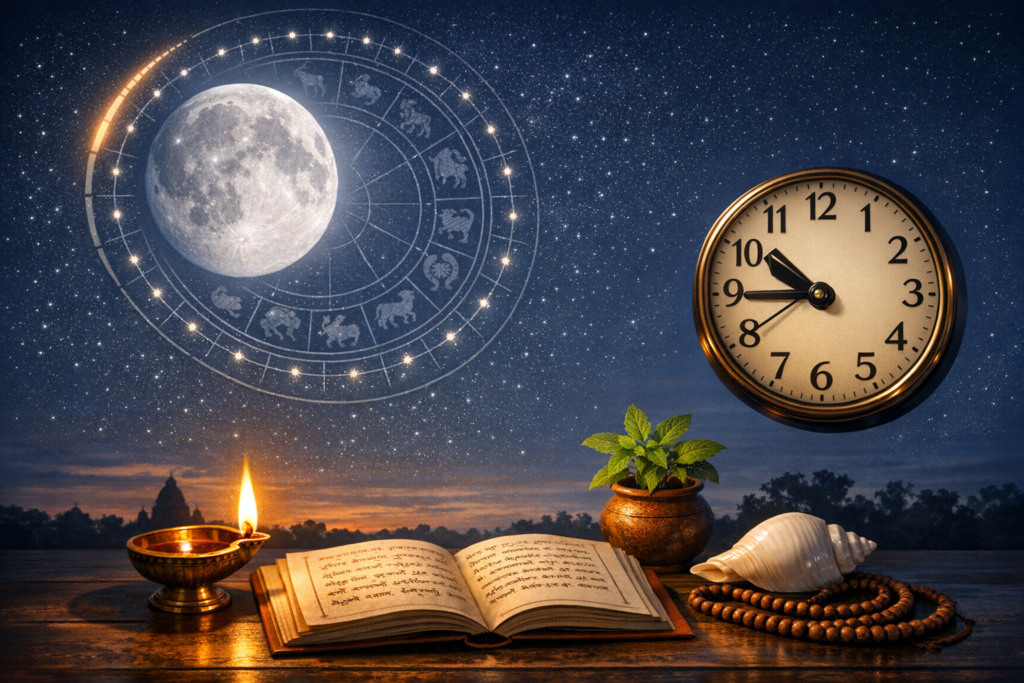
Within the Panchang framework, a tithi is defined by the angular separation between the Moon and the Sun, advancing in steps of 12 degrees; each such step constitutes one tithi. Shukla Paksha denotes the waxing phase from Amavasya (New Moon) to Purnima (Full Moon). Consequently, Dwadashi and Trayodashi fall near the culmination of the waxing fortnight and are traditionally associated with heightened sattva, devotion, and preparatory practices leading up to Purnima.
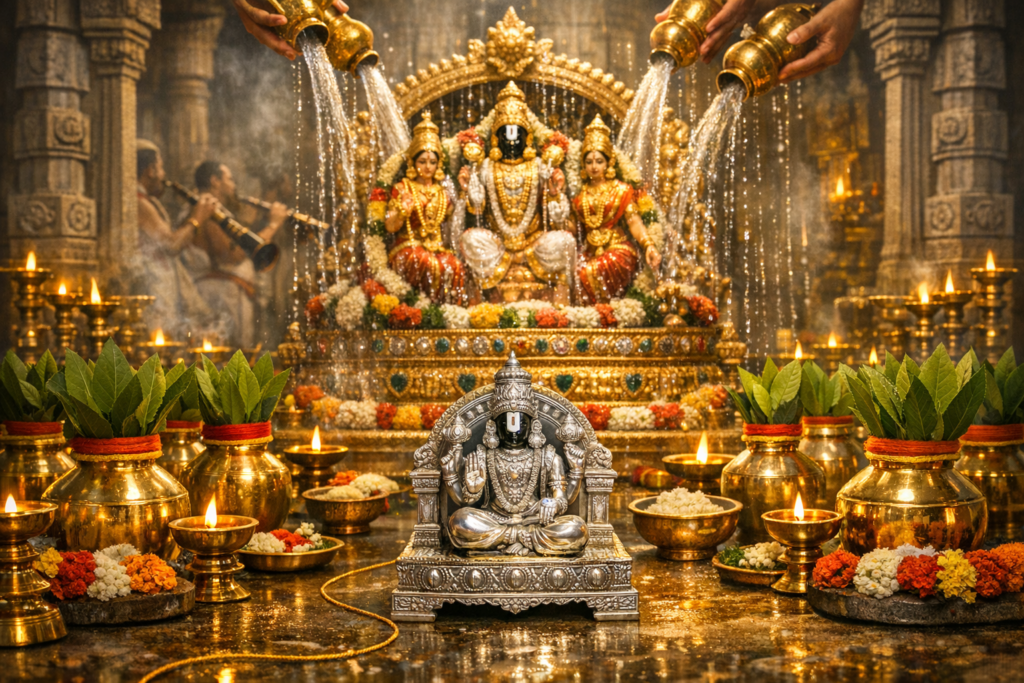
Practical implications on this date include the customary Dwadashi parana (breaking of the Ekadashi fast) for observants who observed Ekadashi the previous day, as guided by parana windows in the local Panchang. Vaishnava and Smarta traditions often emphasize simple, saatvik meals, Tulasi worship, and Vishnu archana on Dwadashi. Such observances aim to consolidate the benefits of Ekadashi vrata and are compatible with broader dharmic disciplines centered on self-restraint, mindfulness, and gratitude.
Because Shukla Paksha Trayodashi begins only at 10:45 PM, the evening Pradosh Kaal (around local sunset) still falls under Dwadashi in most regions. As a result, the Shukla Pradosh Vrata—traditionally kept when Trayodashi overlaps with Pradosh Kaal—would not apply to this civil date in locations where Trayodashi has not yet begun by sunset. Instead, devotees should verify the following date for Pradosh observance, ensuring Trayodashi prevails during their local Pradosh Kaal.
Determining the day’s Nakshatra and Chandra Rashi requires the Moon’s precise position for the locality. Nakshatra segments the ecliptic into 27 equal parts of 13°20′, while the Moon’s zodiacal sign (Chandra Rashi) reflects the broader lunar placement among the twelve rashis. Because the Moon’s ingress times vary by time zone, consult a reliable ephemeris or a region-specific Panchang to confirm the Nakshatra and Rashi operative during your planned activity windows on June 26, 2026.
Regarding auspicious timings (Shubh Muhurat), general orientation is helpful when exact locality-based calculations are not at hand. Brahma Muhurta—approximately 1 hour 36 minutes before sunrise—is widely favored for japa, dhyana, and scriptural contemplation. Abhijit Muhurat, centered around local midday, is considered neutral to auspicious for many endeavors when no specific muhurta is available; however, this window should be checked against daily doshas (e.g., Rahu Kaal) before use. For precision, practitioners are advised to reconcile these guidelines with their local Panchang or trusted muhurta software that factors longitude, latitude, and daylight length.
Rahu Kaal, Yamaganda, and Gulika Kaal are traditionally avoided for initiating important undertakings. Their exact spans depend on the local sunrise and sunset times. A practical method is to divide the daylight period (sunrise to sunset) into eight equal parts and map weekday-specific segments. On Friday, Rahu Kaal corresponds to the third segment of the daylight span. As an illustrative example only (assuming a 6:00 AM sunrise and 12-hour day), Rahu Kaal would approximate 10:30 AM–12:00 PM; real timings must be recalculated for actual sunrise and day length at the observer’s location. The same proportional method yields Yamaganda and Gulika Kaal for the day.
Month naming and regional variations should also be considered. Indian almanacs follow either the Amanta (month ending on Amavasya) or Purnimanta (month ending on Purnima) convention. Consequently, the civil month designation around late June may appear as Jyeshtha or Ashadha depending on regional practice. Despite different naming conventions, the operative tithi, Nakshatra, and muhurta principles remain consistent.
For household and community planning, Shukla Paksha Dwadashi is conducive to charity, annadana, study of dharma granthas, and temple visits. Activities demanding precise election—such as samskaras, legal signings, and major financial commitments—benefit from a locally computed Shubh Muhurat that explicitly avoids Rahu Kaal, Yamaganda, and Gulika Kaal and accounts for the day’s Nakshatra, Chandra Rashi, and tara bala. This disciplined approach brings calm clarity, especially when coordinating family schedules across cities and time zones.
Lunar timekeeping and observance—articulated here through Tithi, Nakshatra, and Rashi—provide a common civilizational language across dharmic traditions. Hindu, Buddhist, and Jain communities have long aligned contemplation, fasting, and dana with lunar markers, while Sikh practice preserves remembrance of Puranmashi and Masya in various historical contexts despite the modern Nanakshahi solar framework. Approaching June 26, 2026 through this shared lens encourages mutual respect, reinforces unity, and highlights the Indian subcontinent’s enduring commitment to harmony in diversity.
In summary: Friday, June 26, 2026 features Shukla Paksha Dwadashi until 10:45 PM, transitioning thereafter to Shukla Paksha Trayodashi. Dwadashi suits devotional consolidation and parana where applicable; Pradosh Vrata is not kept on this date in regions where Trayodashi does not overlap Pradosh Kaal. Use locality-specific Panchang data to finalize Nakshatra, Chandra Rashi, and exact Shubh Muhurat, and to proportion Rahu Kaal and other cautionary spans from sunrise and sunset. This rigor ensures both spiritual alignment and practical success.
Inspired by this post on Hindu Blog.




Leave a Reply
You must be logged in to post a comment.