
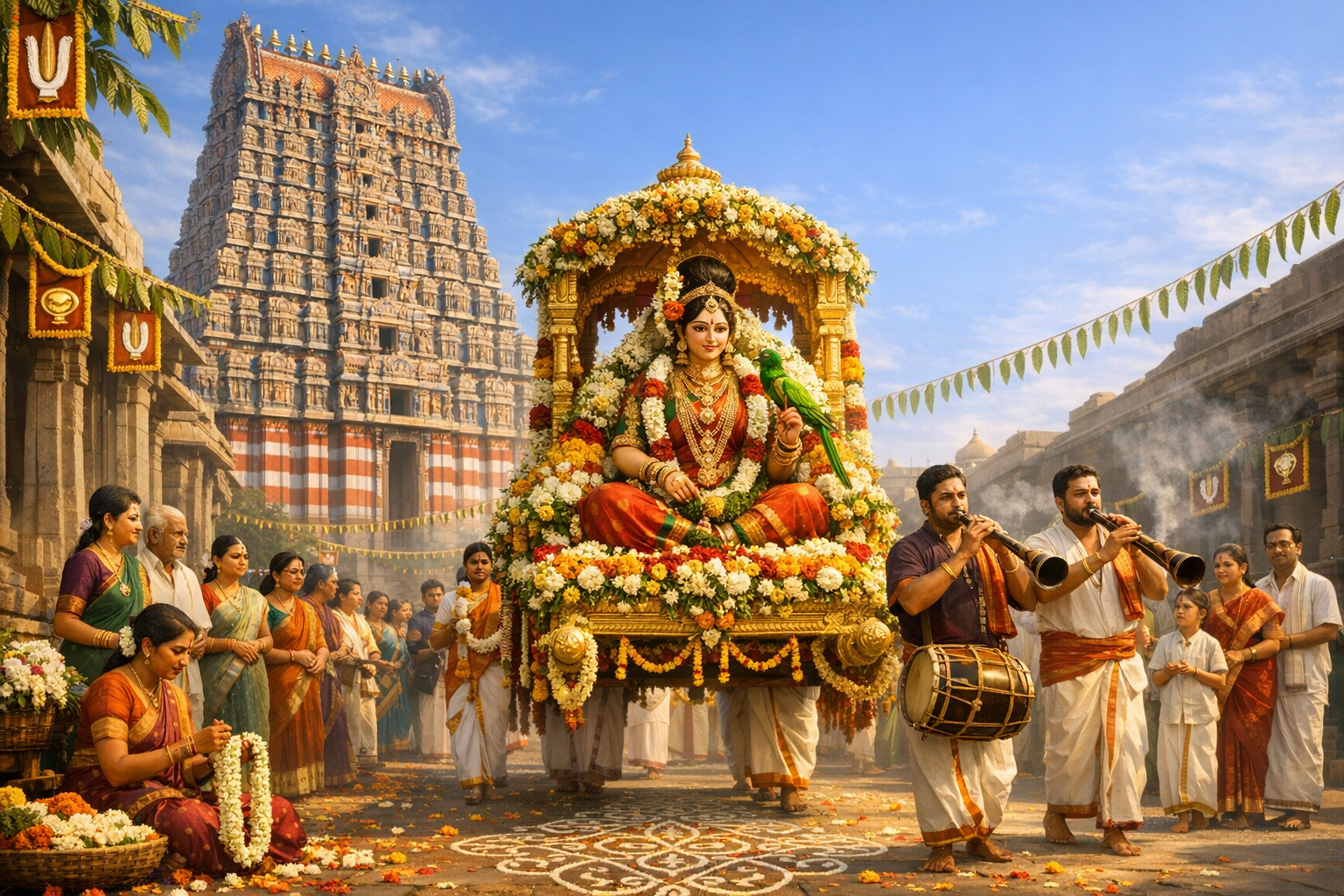
Aadi Pooram, also known as Thiruvādipōram or Andal Jayanthi, is the annual celebration of the birth star (Pooram/Purva Phalguni) of Andal at the Srivilliputhur Andal Temple in Tamil Nadu. In 2026, Aadi Pooram fell on 14 August, drawing thousands of devotees to Srivilliputhur and inspiring parallel observances across the global Tamil diaspora. The festival is both a meticulously structured Vaishnava liturgical event and a living expression of Tamil cultural heritage, devotion (bhakti), and temple-centered community life.
Andal—revered as the only woman among the twelve Alvars of the Sri Vaishnava tradition—is celebrated as the composer of the Tiruppāvai and the Nācciyār Tirumozhi. Her poetry blends theological clarity with personal longing for union with Sriman Narayana, forming a cornerstone of South Indian bhakti aesthetics. Aadi Pooram honors her birth star, integrates liturgical recitations from her works, and foregrounds her unique place in the devotional canon as “Sūḍik-koḍutta Nācciyār,” the goddess who first wore the garlands before offering them to Perumal.
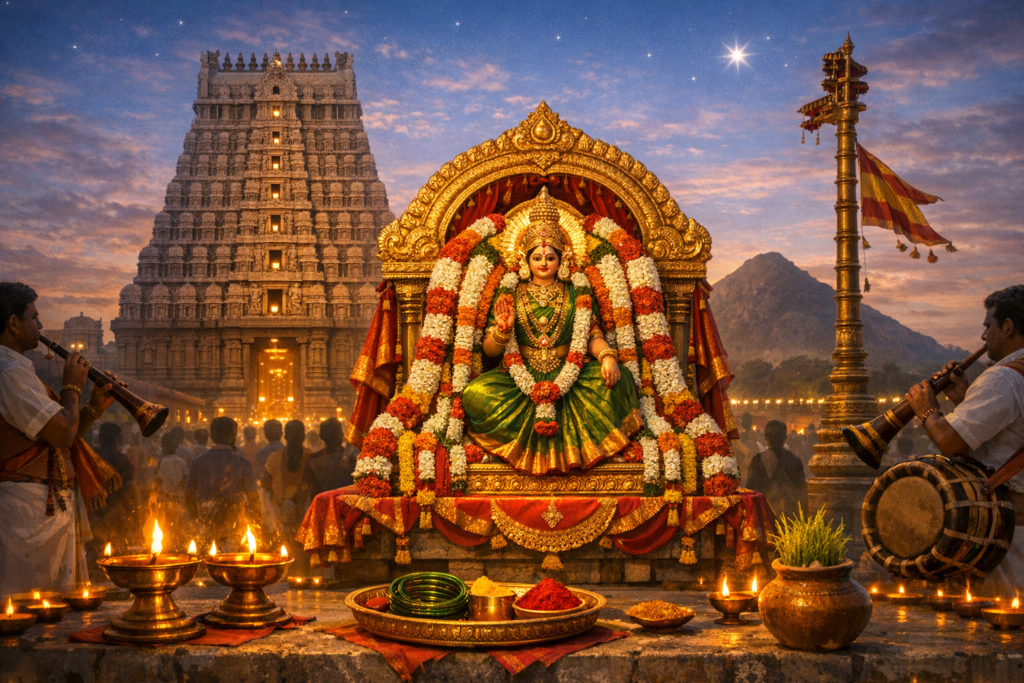
Srivilliputhur Andal Temple—part of the famed Divya Desam circuit—is an architectural and spiritual landmark. Its towering rajagopuram is an iconic symbol of Tamil Nadu, while the temple complex integrates shrines for Andal (Nācciyār) and Rangamannar. The site functions as a living archive of Srivaishnava ritual, music, and recitation traditions, especially during Aadi Pooram when temple streets and mandapas become stages for processions, veda-parayanam, Divya Prabandham chanting, and flower-rich alankarams (decorations).
Calendar-wise, Aadi is the Tamil solar month commencing with the Sun’s ingress into sidereal Cancer (Karka), typically mid-July to mid-August. Aadi Pooram is fixed by the Pooram (Purva Phalguni) nakshatra prevailing within this month. Because nakshatra observance is time-zone dependent, temple authorities determine the date locally; thus, while 2026 observance in Srivilliputhur occurred on 14 August, dates in overseas temples may have varied by a day due to astronomical timing differences.
Aadi Pooram at Srivilliputhur is usually preceded by preparatory rites such as sankalpa, purificatory homas, and special alankara planning, culminating in the nakshatra day’s peak observances. The festival’s structure is both liturgical—anchored in Sri Vaishnava agamic protocol—and communal, with coordinated service by archakas, paricharakas, musicians (nādasvaram and tavil), flower artisans, and volunteer groups who manage crowd flow and prasad distribution.
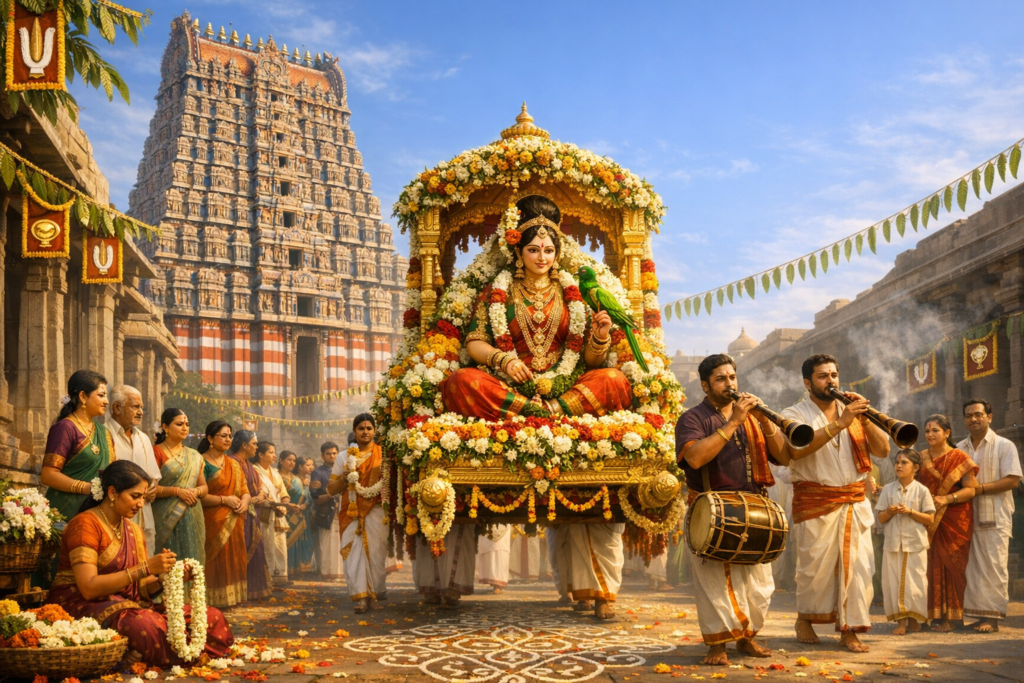
On the nakshatra day, Andal receives vishesha tirumanjanam (sacred ablution) and a series of alankarams, including the much-loved Andal Kondai iconography. The Kondai (the distinctive bun of hair) is emphasized through floral and jeweled styling, while customary attributes—the parrot (śuka), fresh garlands, tulasi, and anklets—complete the iconographic grammar that expresses Andal’s identity as both poet-saint and divine bride.
Processions along the temple’s mada veedhis (outer streets) set a rhythmic cadence to the day. Devotees describe a multisensory immersion: jasmine and tulasi fragrances, the sonorous call of nādasvaram cutting through mid-morning light, the collective recitation of Andal’s verses, and the sight of intricate kolam designs adorning thresholds. Children and elders alike join, illustrating how the festival transmits practice and memory across generations.
Many temples mark Aadi Pooram with Andal–Ranganathar Thirukalyanam (divine wedding). At Srivilliputhur, the bridal symbolism is woven through garland traditions, bridal ornaments, and prabandham passages that evoke Andal’s bridal mysticism. While the exact scheduling of kalyanam may vary by temple, the theological center is consistent: Andal’s bridal union with Sriman Narayana embodies the soul’s ultimate longing for the Divine.
A distinctive trans-temple connection animates Aadi Pooram: garlands from Srivilliputhur—particularly associated with Andal as Sūḍik-koḍutta Nācciyār—are ceremonially sent to major Vaishnava centers. In longstanding custom, these malas reach Srirangam for Panguni Uttiram (the divine wedding of Sri Ranganathar) and Tirumala-Tirupati for Garuda Seva during Brahmotsavam, signifying an interlinked devotional economy of flowers, vows, and shared heritage across Divya Desams.
Recitation of the Divya Prabandham is central. During Aadi Pooram, passages from Nācciyār Tirumozhi that voice Andal’s vows, pleas, and bridal resolve are emphasized, while Tiruppāvai’s theological simplicity and universal accessibility nurture collective singing. The melodics of Tamil prabandham, paired with temple acoustics and traditional instruments, produce a devotional atmosphere that many visitors describe as both aesthetically refined and emotionally immediate.
Iconographically, Andal’s parrot (often denoting a messenger of love and wisdom), alongside the Andal Kondai, bridal ornaments, and layered garlands, encode a complete spiritual semiotics. These features articulate a theology of love-as-knowledge: Andal’s yearning is not merely emotional; it is epistemic—pointing to bhakti as a valid path to knowing the Divine, complementing the scriptural and philosophical itineraries of the Sri Vaishnava tradition.
Aadi Pooram also resonates with the broader cultural fabric of Aadi Velli (Aadi Fridays), when many Tamil households and temples honor the divine feminine through special pūjas and fasts. The month’s rituals foreground women’s participation—garland weaving, kolam creation, and singing—underscoring Andal’s enduring role as inspiration for devotion, artistry, and community stewardship.
In keeping with the dharmic emphasis on harmony, Aadi Pooram’s veneration of the Divine Feminine echoes shared values across Hinduism, Buddhism, Jainism, and Sikhism—compassion, austerity, wisdom, and service. The figure of Andal, while uniquely situated within Sri Vaishnavism, symbolizes virtues that Dharmic traditions uphold collectively, strengthening a civilizational ethos of mutual respect and spiritual plurality.
Practical guidance benefits first-time pilgrims. Srivilliputhur lies in Virudhunagar district, Tamil Nadu; nearest airport: Madurai (about 80–90 km, traffic-dependent). Srivilliputhur has a railway station with regional connectivity. Festival days see early-morning queues; modest attire, leaving footwear outside, and refraining from photography in restricted zones are standard expectations. Families often plan darshan during mid-morning or late evening to balance crowds with ritual visibility.
Temple management typically staggers darshan around major rituals: tirumanjanam and alankaram in the morning, processions later in the day, and prabandham recitation blocks interspersed. Devotees often recommend carrying water, maintaining a respectful distance from utsava murtis during processions, and listening for volunteer guidance near turns and bottlenecks on the mada veedhis. Those with elders or young children benefit from pre-identifying shaded waiting areas.
A simple, effective festival-day plan includes arriving before dawn, prioritizing the morning vishesha darshan, pausing for Divya Prabandham recitations, and returning for the evening procession. Many visitors relate that re-entering the temple after the primary rush offers a quieter, more contemplative experience—ideal for personal prayer and unobstructed viewing of the Andal Kondai alankaram.
Environmental sensitivity is increasingly integrated into temple festivals. Responsible pilgrims avoid single-use plastics, use designated waste bins, support local flower vendors who practice sustainable sourcing, and respect traffic diversions implemented for pedestrian safety. Such measures align with dharmic stewardship and ensure that the sensory richness of Aadi Pooram—flowers, music, and sacred space—remains intact for future generations.
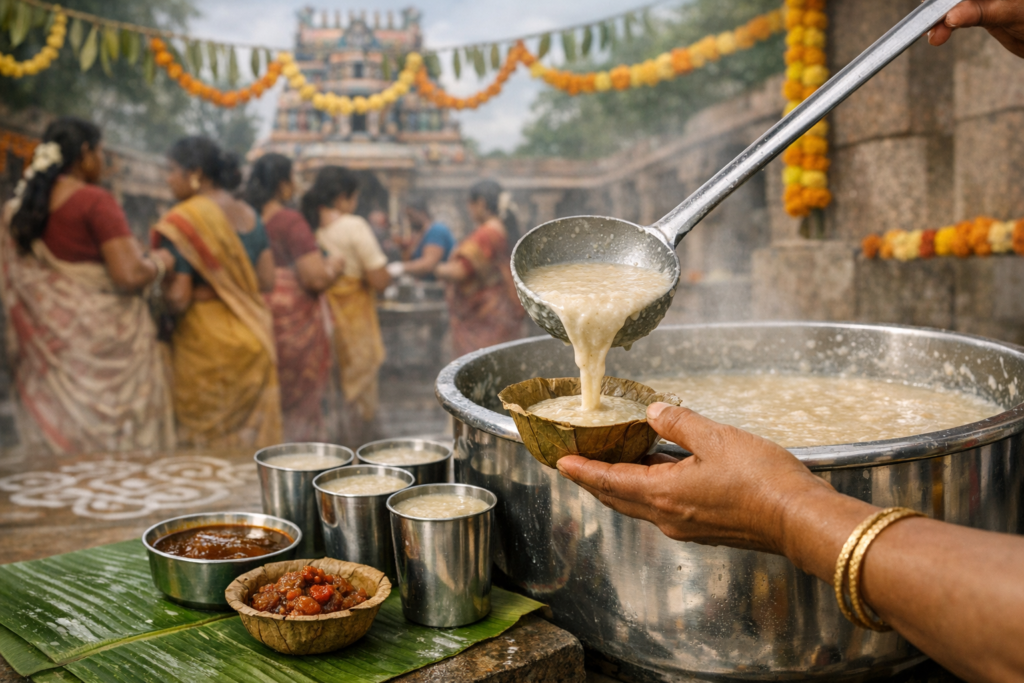
The festival’s cultural economy is robust. Aadi Pooram sustains livelihoods for garland-makers, traditional musicians, kolam artists, and small-scale food producers. The famed Srivilliputhur paalkova, handcrafted floral malas, and locally woven textiles often see heightened demand, illustrating how temple festivals serve as platforms for intangible cultural heritage and artisanal skill transmission.
For the global Tamil community, temple calendars outside India align Aadi Pooram to local nakshatra timings, which can shift observance by a day. Community organizers frequently publish nakshatra windows and encourage participation in collective chanting of Tiruppāvai and Nācciyār Tirumozhi. Families describe these gatherings as emotionally resonant: the fragrance of jasmine, the cadence of Tamil hymns, and the icons of Andal recreate a sense of home across oceans.
Variations exist across Sri Vaishnava temples in the precise sequence of events, the timing of Thirukalyanam, and the scope of processions. Such diversity reflects the living nature of agamic traditions and regional customs. What remains constant is the central theological motif: Andal’s bridal mysticism as a pathway to union with Sriman Narayana, expressed through flowers, song, and shared service.
Ultimately, Aadi Pooram 2026 at Srivilliputhur affirmed Andal’s continuing presence in Tamil religious life: as poet-saint, as divine bride, and as an abiding wellspring of bhakti. The festival’s calendar logic, ritual choreography, iconography, and community participation form an integrated sacred ecosystem—one that binds Srivilliputhur to Srirangam, Tirumala, and Tamil temples worldwide through garlands, hymns, and the steady rhythms of devotion.
Inspired by this post on Hindu Pad.






Leave a Reply
You must be logged in to post a comment.