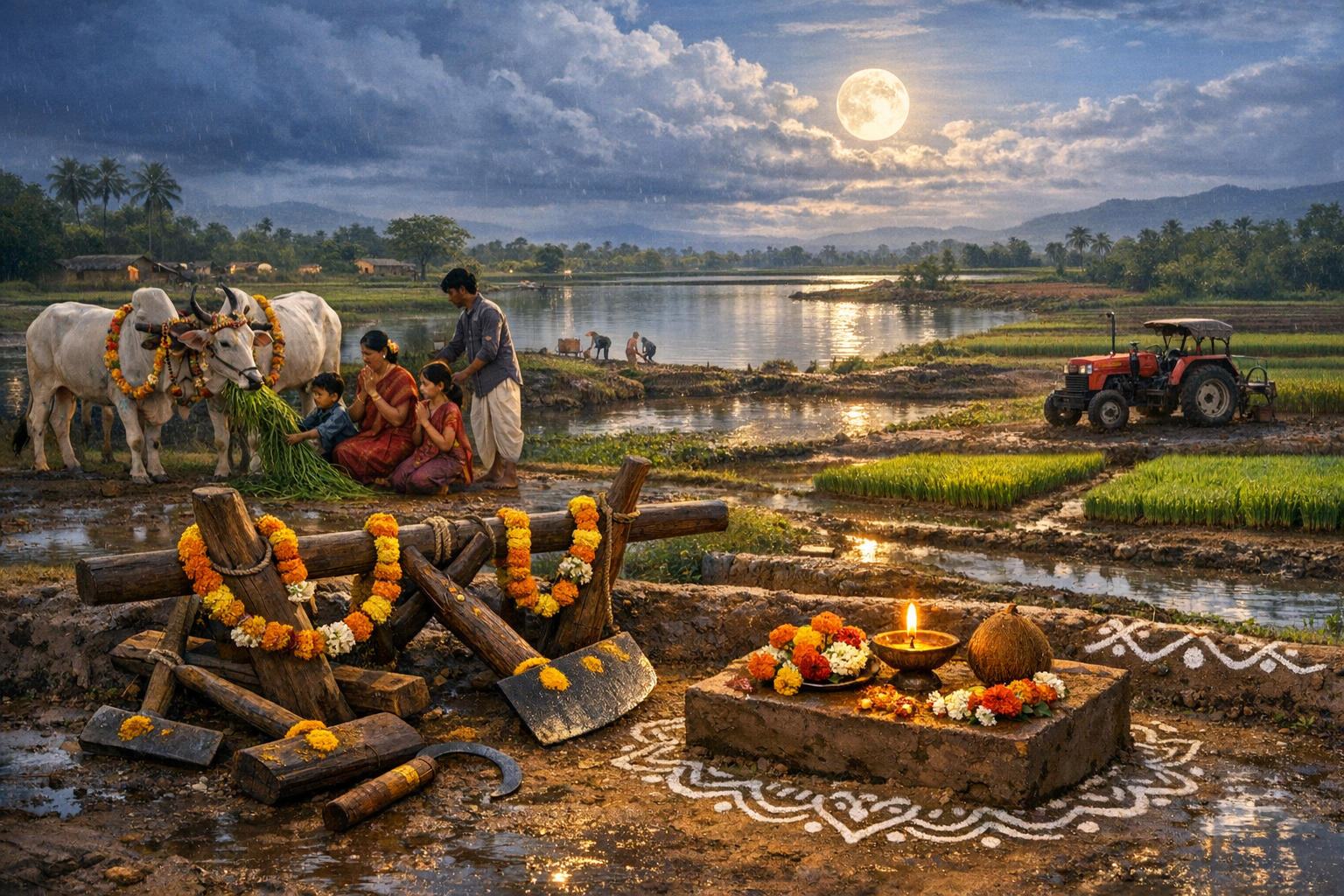
Eruvaka Purnima 2026, also known locally as Eruvaka Punnami, is observed across Andhra Pradesh and Telangana on 29 June 2026, aligning with Jyeshta masam Purnima (the full moon day of Jyeshta). Rooted in agrarian life and seasonal wisdom, this farmers’ festival marks the symbolic recommencement of field work as the southwest monsoon gathers strength over South India. With prayers for timely rains, community welfare, and a bountiful kharif season, the celebration blends ritual sanctity, ecological sensitivity, and intergenerational knowledge.
The term “Eruvaka” is associated in Telugu with ploughing and the agricultural cycle, while “Purnima/Punnami” denotes the full moon. Together they encapsulate a seasonal pivot: the transition from summer heat to the rain-led sowing window. In many villages, Eruvaka Punnami is the day when cattle, ploughs, and tools are consecrated; when fields are offered reverential salutations; and when the first furrow or seed-sowing is planned if soil moisture and rainfall make it prudent.
Calendrically, Eruvaka Purnima is tied to the lunar tithi of Purnima in Jyeshta masam as followed in the Amanta tradition prevalent in Andhra Pradesh and Telangana. In 2026, this occurs on Monday, 29 June. Since local sunrise, moonrise, and tithi boundaries vary by place, communities typically consult a regional panchang for the precise observance window, ensuring that puja and sankalpa are anchored to correct local timings.
The festival’s seasonal logic is compelling. Around late June, early monsoon pulses begin to revive tank-fed irrigation networks (cheruvu systems), recharge soils, and moderate temperatures. Eruvaka Purnima, placed at this climatic threshold, functions as an agro-ritual compass: it urges preparedness, prudent sowing decisions, and community alignment on activities like field bunding, desilting of tanks, and seed selection that will shape the kharif crop’s fate.
While muhurta can differ across districts, families generally prefer to complete sankalpa and puja after sunrise and before commencing fieldwork, or at an auspicious evening hour associated with moonrise. Central to the day’s practice is a harmonization of three frames: panchang-guided auspiciousness, agrometeorological readiness (soil moisture, rainfall outlook), and household or village custom.
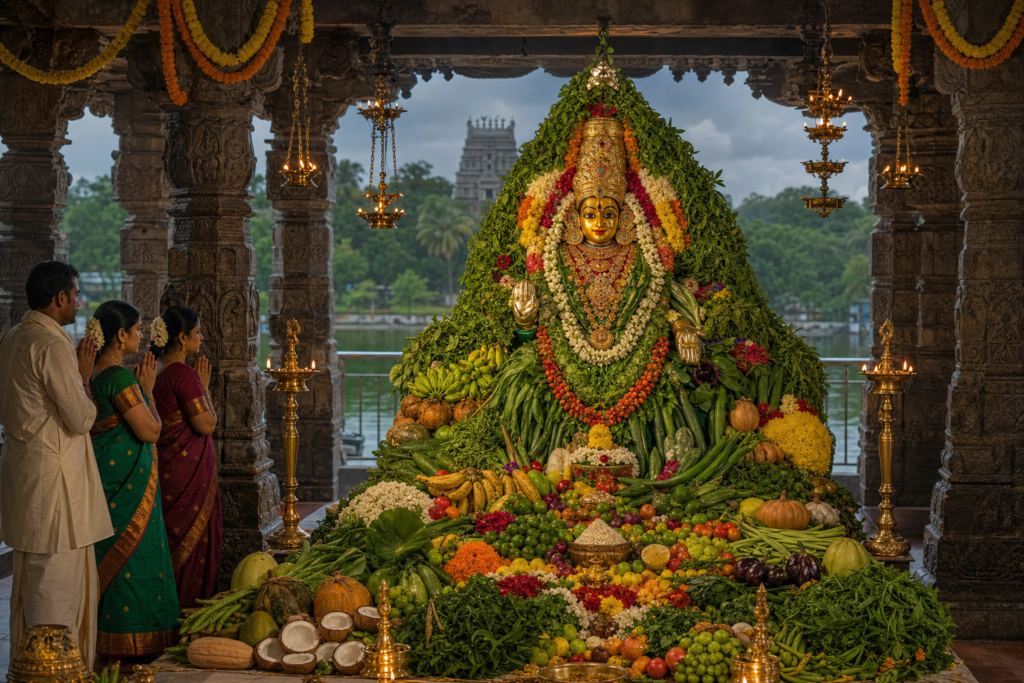
Ritually, the sequence often unfolds as follows. A simple purification (achamana) and sankalpa invokes blessings for the household, cattle, implements, and fields. Ganesha puja removes obstacles; Navagraha and Kuladevata prayers are offered as per family tradition. Gratitude is then expressed to Bhoomi Devi (Earth), seeking forgiveness for tillage-related disturbance and praying for fertility, resilience, and protection from pestilence, drought, and flood.
Bhoomi puja, sometimes performed at the field’s edge, sanctifies the soil. Offerings such as turmeric, kumkum, akshata (unbroken rice), flowers, and milk are placed on a small altar or at a prepared spot on the bund. Simple mantras from the Prithvi Sukta or family-learnt verses are recited, emphasizing humility, reciprocity with nature, and responsibility toward land and water.
Go puja (worship of cattle) reflects the festival’s pastoral heart. Cows and bullocks are bathed, their horns may be gently decorated, and they are offered fresh fodder and sweets as prasada. The welfare of draught animals is foregrounded with attention to rest, clean water, veterinary care, and humane yoking practicesreinforcing ahimsa-centered animal stewardship even amid the rigors of farm work.
Tool consecration is another defining rite. Ploughs, yokes, hoes, sickles, and modern implements alike are cleaned, anointed with turmeric-sandal paste, and garlanded. This ritual reframes technologytraditional or contemporaryas a sacred means to sustain families and society, and not merely as instruments of extraction.
Many families observe an ankurarpanam (symbolic germination), placing select seedsoften paddy, millets, or pulseson moist soil for pre-germination or for a small ritual bed. This anticipates the sowing cycle and fosters discussions about varietal choice, seed saving, and climate-adapted agriculture. Conversations with elders at this time often revive local proverbs and rain indicators rooted in long-term observation.
Eruvaka Purnima is also a cultural moment. Children decorate courtyard thresholds, elders recount agricultural lore, and neighbors share prasada such as pulihora, daddojanam, and payasam. In some areas, folk songs resonate with gratitude for rain-clouds, cattle, and fertile black and red loamsturning the day into a village commons of memory and practice.
Its ethos resonates across the broader dharmic spectrum. Hindu households emphasize reverence for Bhoomi Devi and the interdependence of all life. Buddhist values of mindful livelihood and compassion toward sentient beings echo in the day’s restraint and gratitude. Jain principles of ahimsa inform care for soil organisms, seeds, and animals, encouraging minimal harm in cultivation. Sikh practice of Ardas and the spirit of “Sarbat da Bhala” (welfare of all) naturally align with communal prayers for good rains, fair yields, and just distribution. Though rites differ, the shared dharmic centerreverence for nature, non-violence, and serviceshines through.
There are regional nuances across Andhra and Telangana. Coastal belts may coordinate Eruvaka observances with paddy nursery preparations and tank management, while Rayalaseema and Telangana tracts may emphasize rainfed millets and pulses, soil and moisture conservation, and timely field operations synchronized with local rainfall onsets. In all cases, festival intention and field pragmatism meet.
The festival naturally encourages sustainable agriculture. Families discuss contour bunding, mulching, and tank and channel maintenance; reaffirm crop rotations; and consider integrated nutrient and pest management strategies. With climate variability heightening rainfall uncertainty, Eruvaka Purnima becomes an occasion to evaluate drought-tolerant varieties, diversify into millets (jowar, bajra, ragi), and plan staggered sowing to reduce risk.
Seed sovereignty is a quiet but vital subtext. Exchanging community-saved seeds, documenting germination rates, and retaining hardy local lines for buffer plots all feature in Eruvaka conversations. Farmers note storage hygiene, seed-borne disease checks, and pre-sowing treatments, linking ritual attention to practical biosecurity.
Water ethics take center stage. Households revisit tank desilting efforts, assess well recharge, and recommit to equitable water-sharing norms. The day’s prayers translate into checklists: repair field channels, close breaches in bunds, and prevent runoff lossessafeguarding livelihoods while respecting the village ecological commons.
The festival’s calendar position allows agro-advisory planning. Families consult panchang for auspiciousness and regional meteorological outlooks for operational decisions, synchronizing land preparation, nursery raising, fertilizer procurement, and labor mobilization. Eruvaka Purnima thus acts as a scheduling anchor that honors both tradition and science.
Animal health is explicitly foregrounded. Balanced feed, vaccination schedules, deworming, hoof care, and shaded rest areas are integrated into post-puja routines. When bullock traction is used, humane yoking, weight limits, and rest-water cycles are observed; where tractors are used, safety checks and maintenance are ritualized through the day’s consecration of implements.
Urban and diaspora families adapt Eruvaka Punnami meaningfully. Balcony planters and community gardens become the “field,” a small bhoomi puja honors potted soil, and seeds of herbs or millets are sown as a vow to live sustainably. Many households donate farm tools or support watershed efforts in native villages, turning devotion into grounded impact.
Foodways reflect seasonality and labor needs. Simple, cooling, and nutritious offeringscurd rice, lemon rice, seasonal vegetables, and millet-based dishessupport field readiness. Prasada-sharing reinforces social bonds, especially where cooperative labor arrangements help smallholders manage peak workloads.
Documentation strengthens heritage continuity. Families record rainfall on Eruvaka, note sowing dates, and archive local sayings about cloud forms, wind direction, or the “smell of first rain” as weather cues. These living archives enrich village memory and can inform agricultural extension efforts with culturally legible knowledge.
For 2026 specifically, a practical checklist aligns tradition with fieldwork. Confirm Purnima tithi for 29 June via a local panchang; prepare puja items (turmeric, kumkum, flowers, akshata, lamps); clean and set aside tools for consecration; plan a short bhoomi puja at the field edge; ensure cattle grooming and health checks; assess soil moisture before sowing; and schedule community cleanup of tank inlets and bunds before the next rainfall pulse.
In essence, Eruvaka Purnima 2026 in Andhra Pradesh and Telangana is a holistic festival of gratitude, readiness, and community. It dignifies agricultural labor, places ethical care for land and cattle at the center, and unites diverse dharmic sensibilities around a common aspiration: good rains, secure harvests, and shared prosperity. By combining panchang-guided observance with sound agronomic planning, families translate devotion into resilienceensuring that the monsoon’s promise becomes a season of well-being for all.
Inspired by this post on Hindu Pad.