A public programme in Pune became the focal point of a heated public conversation after rationalist activist Shyam Manav made critical remarks concerning aspects of Hindu Dharma, revered saints, and ritual traditions. The episode, amplified by social media circulation, reignited long-standing debates in Maharashtra and India about where to draw principled lines between constitutionally protected critique, responsible public discourse, and the duty to uphold dignity and social harmony around deeply held beliefs.
The present analysis approaches the incident through a dharmic-unity lensforegrounding shared values across Hinduism, Buddhism, Jainism, and Sikhismwhile situating the controversy within India’s legal framework on speech, the region’s intellectual history of reform and devotion, and practical pathways to de-escalate tensions. The objective is not to litigate specific words spoken on stage but to clarify governing principles that can reduce hurt, prevent polarization, and enable meaningful engagement between rationalist critique and religious reverence.
Shyam Manav is widely recognized in Maharashtra’s public sphere as a rationalist voice associated with anti-superstition campaigns. Supporters view such activism as necessary to expose exploitative practices; detractors argue that rhetoric occasionally generalizes about Hindu saints and traditions in ways that many devotees experience as dismissive or demeaning. The Pune programme brought these tensions into sharp relief, with interlocutors from multiple communities calling simultaneously for intellectual freedom and for greater sensitivity to spiritual identities, ritual life, and collective memory.
Public reaction to the programme reflected a familiar pattern in contemporary India: one group defended the speaker’s right to critique ideas and practices; another underscored the civic and emotional harms when revered figures and traditions are caricatured. For many devotees, Hindu saints are not merely historical personalities but living sources of ethical formation, community cohesion, and hope. When the symbolic universe that sustains those bonds is undermined, the impact is not theoreticalit is felt as social alienation and injury to dignity. These reactions, in turn, intensify polarization and make reasoned dialogue harder just when it is needed most.
Maharashtra’s intellectual history provides important context. The region has cultivated a profound devotional lineageexemplified by the Warkari Sampradaya and saints such as Sant Dnyaneshwar and Sant Tukaramwhile also hosting reformist and rationalist currents that challenge exploitative or unscientific claims. The co-presence of bhakti and critique has historically generated vibrant public reasoning. However, sustaining that equilibrium requires a civic ethic: contest ideas rigorously without ridiculing the persons, communities, and sacred lineages that give those ideas life and meaning.
India’s constitutional framework helps to articulate this ethic in legal terms. Article 19(1)(a) guarantees freedom of speech and expression, while Article 19(2) permits reasonable restrictions on grounds such as public order, decency, and morality, as well as defamation and incitement-related harms. The Indian Penal Code operationalizes these limits: Section 295 addresses injury or defilement to places of worship; Section 295A penalizes deliberate and malicious acts intended to outrage religious feelings; Section 153A concerns promoting enmity between groups; and Section 298 addresses words deliberately intended to wound religious feelings. Together, these provisions do not prohibit critique of religion per se; they constrain forms of expression that cross into malicious provocation, group hostility, or targeted denigration.
Courts have elaborated these contours. In Ramji Lal Modi v. State of U.P. (1957), the Supreme Court upheld the constitutionality of Section 295A, emphasizing the requirement of deliberate and malicious intent. In Shreya Singhal v. Union of India (2015), the Court narrowed vague restrictions on online speech by protecting advocacy and discussion while allowing the State to regulate direct incitement. In Amish Devgan v. Union of India (2020), the Court clarified that context, audience, and cumulative effect matter in assessing whether speech amounts to hate or public mischief. Applied to controversies such as the Pune programme, these principles counsel careful attention to intent, wording, setting, and foreseeable impactrather than blanket approvals or prohibitions.
Maharashtra’s reform trajectory includes the Maharashtra Prevention and Eradication of Human Sacrifice and Other Inhuman, Evil and Aghori Practices and Black Magic Act (2013). Its moral center is victim protection: targeting exploitative, harmful, or fraudulent acts while preserving legitimate religious freedoms. The statute’s spirit provides a pragmatic guide for public discourse as well. Critique aimed at preventing concrete harm is qualitatively distinct from rhetoric that generalizes about a civilization’s saints, scriptures, or living traditions in ways that cause gratuitous offense and degrade deliberation.
Dharmic philosophies themselves offer resources to navigate contestation without contempt. Anekantavada in Jainism commends many-sidedness in truth-seeking; Ahimsa calls for non-harm in thought, word, and deed; and within Hindu thought, the idea of Ishta recognizes diverse spiritual dispositions and pathways. These principles can sustain robust criticism of specific claims or practices while preserving the dignity of persons and communities. They also underwrite a wider ethos of Religious tolerance in Hinduism and across dharmic traditionsan ethos that values debate as an instrument of collective refinement rather than as a performative spectacle.
A practical distinction helps align free speech with social harmony: critique that is specific, evidence-based, and framed to minimize personal humiliation can serve the public interest; speech that relies on sweeping generalizations, ridicule of venerated figures, or imputations of collective inferiority predictably escalates harm and invites legal scrutiny under provisions such as Section 295A and 153A. Precision, restraint, and charity in argument are not merely moral preferences; they are risk mitigations in a legally plural, religiously diverse democracy.
Contemporary media dynamics compound these risks. Short-form video, clipped context, and outrage incentives create an attention market that rewards rhetorical escalation over nuance. Responsibility thus resides not only with speakers but also with organizers, media intermediaries, and audiences. Event conveners in Pune and beyond can publish a code of discourse that distinguishes between challenging ideas and disparaging identities, protects the rights of speakers and listeners, and outlines response protocols if boundaries are crossed.
Constructive engagement between rationalist and faith communities is possible and desirable. Dialogues that pair scientific method and peer-reviewed evidence with practitioners who can explicate scriptural hermeneutics, historical context, and lived experience often discover common ground: opposition to fraud, commitment to the vulnerable, and shared ethical priorities around compassion, truthfulness, and justice. Multi-stakeholder panelsbringing together Hindu, Buddhist, Jain, and Sikh scholars alongside scientists, jurists, and civil society leadersmodel how disagreement can coexist with mutual respect.
Educational settings can further reduce friction by teaching critical thinking alongside cultural literacy. Courses in Comparative Religions that include dharmic hermeneutics, Indian intellectual history, and the philosophy of science help students discern between legitimate skepticism and cultural derision. Such literacy tends to recalibrate public incentives away from performative takedowns and toward inquiry that is rigorous, empathetic, and socially responsible.
Administratively, public authorities tasked with event permissions and crowd management can adopt a proportionate, viewpoint-neutral protocol: clear communication of rules, rapid de-escalation channels, and due process if complaints allege violations under Sections 295A or 153A. The goal is to prevent breakdowns in public order while avoiding the chilling of lawful discourse. Transparency in any subsequent inquiry builds trust across constituenciessupporters of free speech and defenders of devotional dignity alike.
From a heritage perspective, Hindu saints and traditions in Maharashtra are pillars of intangible cultural heritage, sustaining social welfare networks, ecological ethics, music, poetry, and pilgrimage economies. Any critical engagement with this living tapestry benefits from a hermeneutic of respect: read before judging, contextualize before concluding, and invite practitioners to interpret their own symbols. This posture honors what communities hold sacred without placing ideas beyond examination.
Several discourse guidelines can reduce harm while preserving candor. First, specify the practice or claim being questioned and avoid civilizational generalizations. Second, separate allegations of exploitation from value judgments about an entire faith or its saints. Third, assess foreseeable audience impact, especially where intergroup tensions are salient. Fourth, anchor claims in verifiable evidence and declare epistemic limits openly. Fifth, when error is shown, correct the record promptly and publicly. These norms reflect a dharmic commitment to Satya (truth) and Ahimsa (non-harm) in speech.
Community organizations can complement these norms with dialogue infrastructure: pre-event briefings that clarify objectives; designated response teams empowered to intervene if rhetoric escalates; and post-event reconciliation circles where participants process concerns and agree on next steps. Such mechanisms translate valuesdignity, many-sidedness, restraintinto predictable practices that build institutional memory and civic resilience.
For journalists and digital platforms covering incidents like the Pune programme, harm-aware reporting is vital. Headlines should avoid inflaming tensions; excerpts must preserve context; and coverage should solicit perspectives from scholars of Hindu Dharma and from rationalist voices committed to ethical critique. When misinformation circulates, timely corrections serve the public interest and reduce the probability of retaliatory escalation.
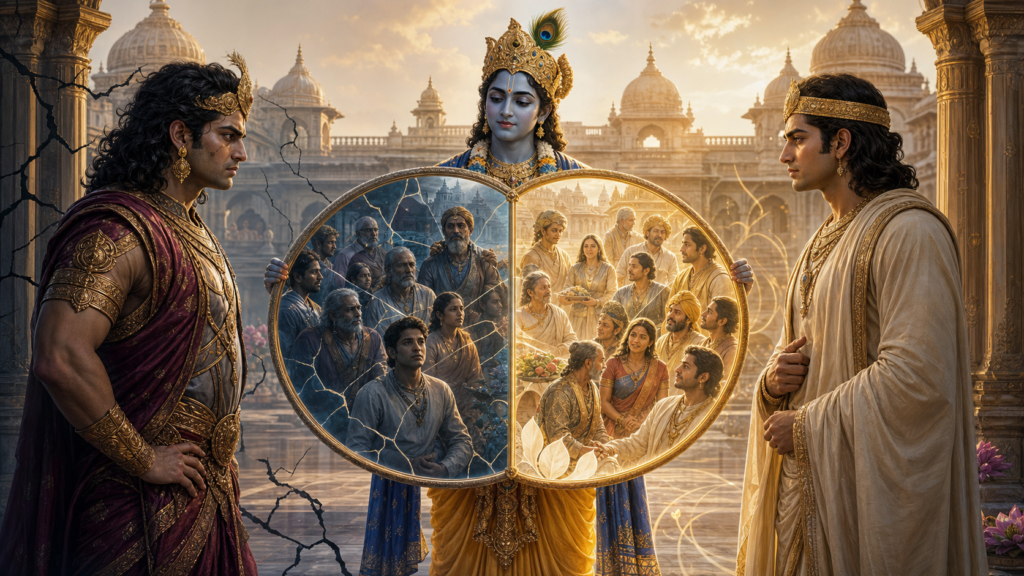
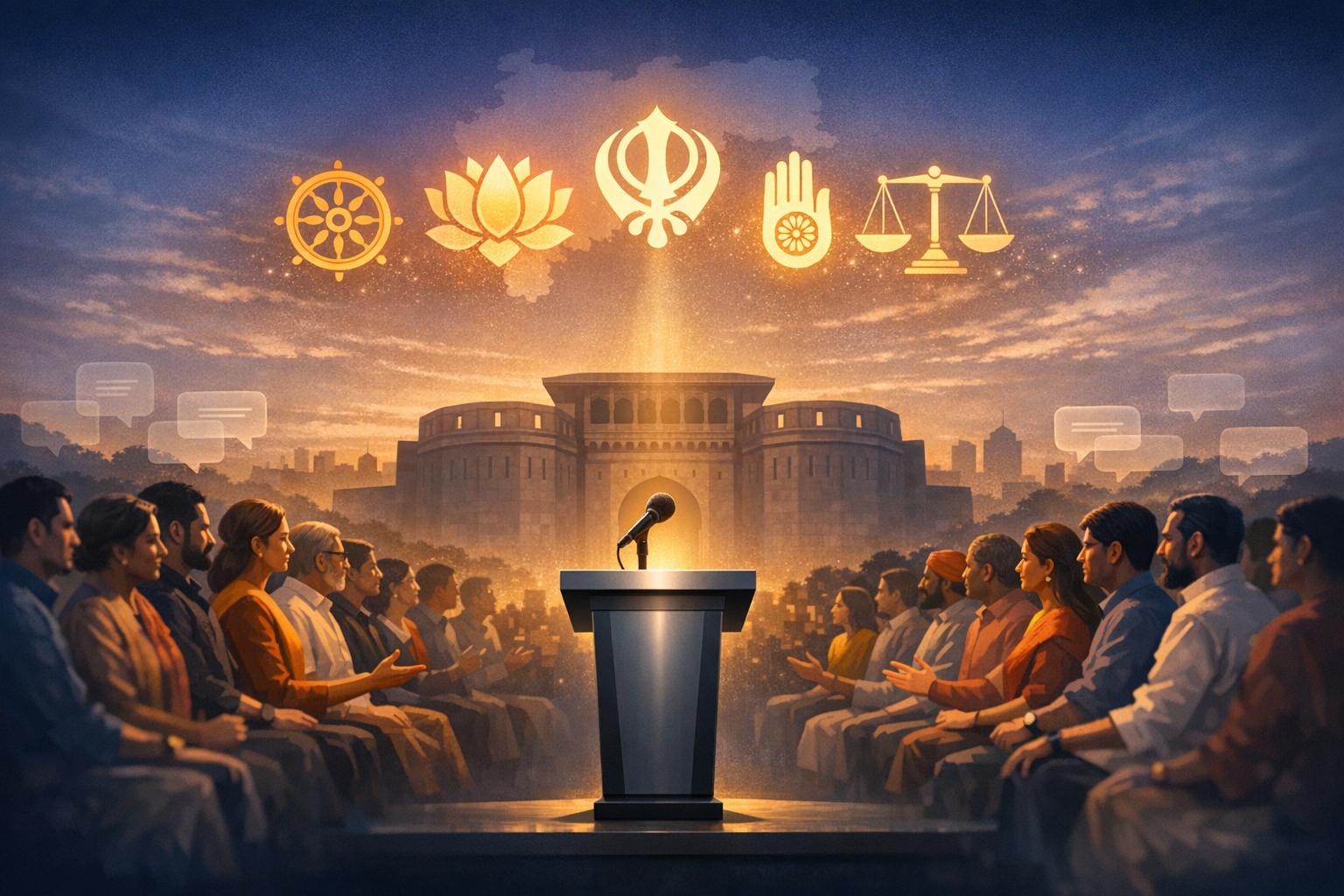
The dharmic-unity objective adds a further imperative: safeguard relational bridges across Hinduism, Buddhism, Jainism, and Sikhism by foregrounding shared commitments to compassion, self-restraint, and non-violence. Public disagreements should not be permitted to metastasize into group-based suspicion. Instead, inter-tradition solidarity can focus on common civic goods: protecting vulnerable communities, opposing exploitative practices, and strengthening constitutional morality in plural settings.
Ultimately, robust freedom of expression and deep reverence for sacred traditions need not be antagonists. When critique is precise and humaneand when devotion is confident enough to welcome questions without perceiving annihilationsociety gains epistemically and ethically. The Pune controversy underscores how easily that balance can slip, but also how recoverable it is when legal principles, cultural literacy, and dharmic virtues are brought to bear together.
In future engagements, speakers, organizers, authorities, and media across Pune and Maharashtra can model a higher standard: debate hard questions; condemn exploitation; and honor the living heritage of saints and traditions that sustain meaning for millions. This is both sound constitutionalism and sound dharmaan alignment that advances social harmony while keeping India’s plural public sphere intellectually alive.
Inspired by this post on Hindu Jagruti Samiti.