Accounts of Lord Nrisimhadeva’s boundless mercy at ISKCON Mayapur occupy a notable place in contemporary Vaishnava discourse and broader studies of Hindu pilgrimage. A widely shared testimony from Kolkata demonstrates how, within this theological understanding, compassion can reach beyond formal devotional identity and touch any sincere seeker who approaches with humility and resolve.
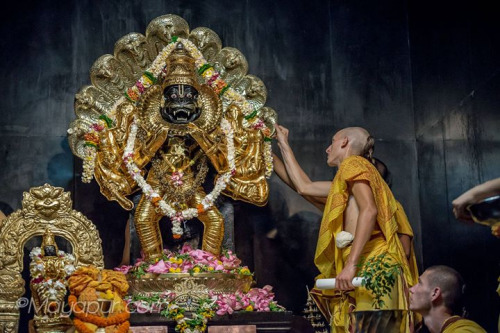
In Vaishnavism, Lord Nrisimhadeva (often identified with Lord Narasimha, a manifestation of Vishnu) embodies protective grace—an assurance that dharma is safeguarded and the vulnerable are defended. At Mayapur, the Deity is venerated as Jagrata Nrisimhadeva (the ever wakeful guardian), a title reflecting an enduring belief that the Lord’s watchful care is immediate and personal. Pilgrims and residents alike, including the global ISKCON (International Society For Krishna Consciousness) community, regularly attest to transformative experiences arising from vows (vrata), nama-sankirtana (sacred name recitation), and heartfelt supplication.
One illustrative case concerns a Kolkata couple, Ashok Ghosh and his wife, Shila Ghosh, who had been married for twelve years and were enduring the emotional weight of childlessness. Like many in similar circumstances, they had explored medical treatments and culturally familiar remedies, including amulets. Amid this uncertainty, they received guidance to seek shelter at ISKCON Mayapur and to approach Lord Nrisimhadeva with a deliberate, vow-based discipline.
On Nrisimha Caturdasi in 2006, the couple traveled to Mayapur, observed a vrata with seriousness and care, and presented sincere offerings, pledging themselves to an inner posture of surrender. Their practice centered on reverent prayer, repentance, and a renewed commitment to ethical living, all of which are consistently emphasized across Hindu ritual texts as essential to the efficacy of vows, pilgrimage, and mantra.
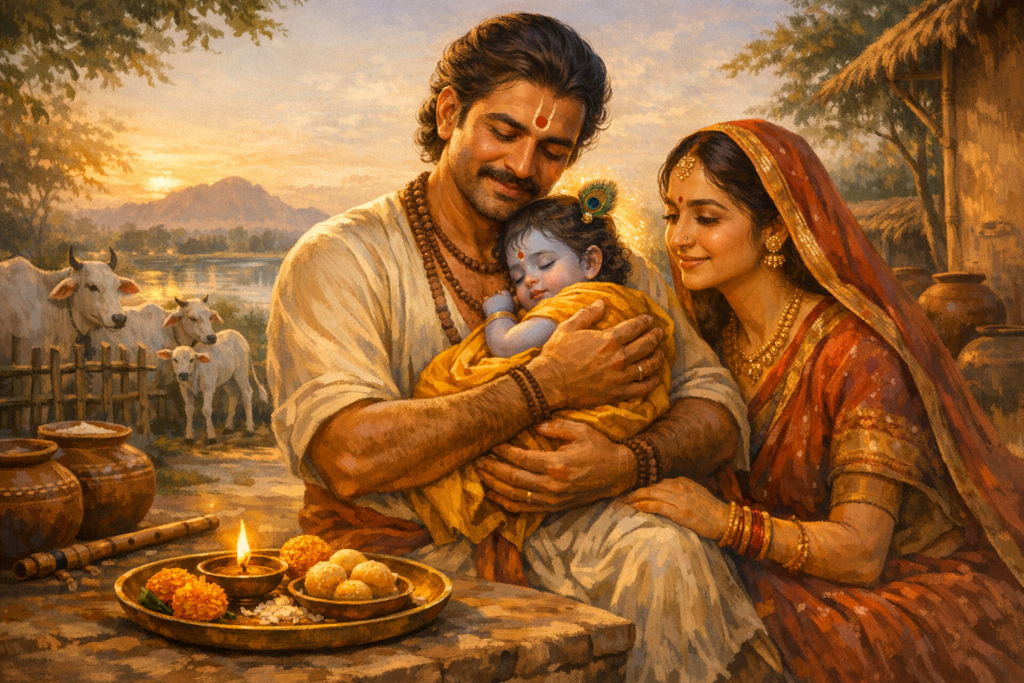
Within a year, they welcomed a child and publicly attributed this joyous turn to Lord Nrisimhadeva’s blessings received at Mayapur. From a research perspective, such accounts are best understood as sincere, first-person testimonies within a living tradition. In Vaishnava theology, they are interpreted as evidence that divine grace (krpa) can arise even when devotional practice is newly embraced or previously minimal—underscoring the principle that mercy is not confined to longstanding practitioners alone.
Doctrinally, this inclusive notion of grace aligns with well-known themes in bhakti literature: the Lord’s compassion is described as causeless, available to one who surrenders or even inadvertently utters the holy name. The Vaishnava idea of ajnata-sukriti (spiritual merit accrued sometimes without full awareness) and the potency of nama—even when spoken with incomplete understanding—are frequently cited to explain why transformative outcomes can follow a single, heartfelt appeal. The narrative arc of such testimonies is thus framed less as supernatural spectacle and more as theologically coherent within the bhakti tradition.
Historically, couples seeking progeny often turned to putrakameshthi yajna, a Vedic rite referenced in classical sources and temple traditions. While such sacrificial rituals are elaborate and rarely performed today, their intent—inviting divine auspiciousness through disciplined practice—finds a widely accessible counterpart in the present era through vrata, nama-sankirtana, and pilgrimage. Vaishnava exegesis notes that, across the four yugas, the mode of spiritual striving becomes progressively simplified, culminating in Kali Yuga’s emphasis on the holy name as the most effective and compassionate means.
In this light, the guidance attributed to Lord Caitanya and carried worldwide by A. C Bhaktivedanta Swami Prabhupada highlights nama-sankirtana as the epoch-appropriate dharma: the accessible, egalitarian practice suited to contemporary conditions. This teaching does not negate medical counsel or practical efforts; rather, it complements them by offering psychological resilience, moral clarity, and communal support—benefits well documented in studies of religious coping and ritual efficacy in the social sciences.
HARE KRSNA HARE KRSHNA KRSHNA KRSHNA HARE HARE
HARE RAMA HARE RAMA RAMA RAMA HARE HARE
The unifying ethos of dharmic traditions reinforces this inclusive vision. Hinduism’s nama-sankirtana resonates with Sikhism’s Naam Simran, Jainism’s reverence for the Namokar Mantra, and Buddhism’s varied practices of mindful recitation and refuge—each affirming that remembrance, ethical intent, and compassion can catalyze inner transformation. Framed this way, the Mayapur testimony is not a claim of sectarian exclusivity but an invitation to recognize shared values—devotion, self-discipline, service, and the healing power of sacred remembrance—across Hindu, Buddhist, Jain, and Sikh paths.
Practically, approaching a vrata or pilgrimage involves three interlocking disciplines: sincere intention (sankalpa), ethical alignment (dharma-consistent conduct, charity, and truthfulness), and consistent recitation (japa or kirtan). When pursued respectfully alongside appropriate medical advice and family support, such practices can offer a balanced pathway that addresses both the emotional strain of adversity and the spiritual yearning for meaning and connection.
The Kolkata couple’s experience, situated within the larger narrative of Lord Nrisimhadeva’s worship at ISKCON Mayapur, illustrates an enduring principle in the bhakti tradition: grace is understood to exceed boundaries, reaching anyone who turns toward the sacred with humble trust. By situating classical rites in a modern frame—where mantra, pilgrimage, and ethical living are readily accessible—the tradition underscores a hopeful, unifying message for contemporary seekers: compassion meets sincerity, and the path of the holy name remains open to all.
Inspired by this post on Dandavats.