Dakshinagni occupies a central place in the architecture of Vedic fire ritual and household sacrality. Recognized as one of the three indispensable sacred fires that an ahitagni (one who has established and maintains the Vedic fires) upholds, it is situated to the south within the sacrificial enclosure. The term itself, derived from dakshina (south) and agni (fire), succinctly encodes both its directional placement and ritual identity. Within the long continuum of śrauta and gṛhya practice, Dakshinagni functions as an essential node in the daily, seasonal, and life‑cycle rhythm of yajña and domestic sacrality.
Classical sources frequently identify Dakshinagni with the anvāhāryapacana (also encountered as anvāhāryapacana-agni), the fire over which the after‑offering or ritual food is prepared for the officiating priests and householders. The equivalence of Dakshinagni and anvāhāryapacana is widely attested across śrauta traditions, even as procedural details vary by school. Its position to the south is not merely geographic; it is a liturgical sign that integrates directionality, function, and cosmology within a single ritual grammar.
The triad of firesgarhapatya in the west, āhavanīya in the east, and Dakshinagni (anvāhāryapacana) in the southcreates a complete ritual field. Garhapatya, the household’s perennial fire, is the source from which the other two are kindled; āhavanīya is the receiving hearth for oblations to the deities; and Dakshinagni supports the cooking of ritual portions and ancillary operations. Together, these fires constitute a living system in which offering (ishti), transformation (pāka), remembrance (smṛti of ancestors), and disciplined continuity (anvaya) are harmonized.
Becoming an ahitagni (through agnyādheya, the establishment of the fires) initiates a lifelong vow. The household that undertakes this discipline tends the three fires daily and uses them for rites ranging from the agnihotra (twice‑daily milk offering) to larger śrauta sacrifices. In this covenantal ecology, Dakshinagni is continuously maintained in complement with garhapatya and āhavanīya, each fire drawing legitimacy and life from the others through meticulously observed transfer and rekindling protocols.
In the daily cycle, the agnihotra centers the householder’s morning and evening rhythm. From garhapatya, embers kindle āhavanīya for divine oblations; Dakshinagni is engaged to prepare the prescribed ritual foods and to manage specific sacrificial by‑products according to the textual rules of purity (śuddhi) and separation (maryādā). This integrated workflow is a hallmark of Vedic ritual engineering: each fire has a specialized role, yet all three act in concert to complete the sacrificial circuit.
The functional profile of Dakshinagni is anchored in two domains: first, culinary responsibilities associated with sacrificial fare (anvāhārya) destined for the ritual community; second, the careful handling of residues and secondary processes in conformity with śrauta prescriptions. Its identity is thus pragmatic and symbolic: pragmatic in facilitating cooking and heat‑work distinct from the āhavanīya’s offering space; symbolic in sustaining an axis of memory and reciprocity within the household and its priestly network.
Symbolically, the south bears an ancestral valence in much of Vedic and post‑Vedic thought, often linked with the pitṛs (ancestors) and, by extension, with Yama in later layers of tradition. Many brāhmaṇa and sūtra discussions align the three fires with domains of the cosmosfrequently mapping garhapatya to earth (pṛthivī), āhavanīya to the luminous realm (dyu), and Dakshinagni to the intermediary or ancestral sphere. Through this interpretive lens, Dakshinagni becomes a ritual locus for remembrance, gratitude, and ethical continuity across generations.
The hearth geometry of Dakshinagni varies across schools, though it is often described as semi‑lunar or D‑shaped and consistently demarcated to the south of garhapatya. Construction employs approved woods for fuel (samidh), paridhi logs to frame the fire, and darbha (kuśa) grass for sanctification, alongside vessels such as juhū, sruva, and sruk for measured offerings. Water designated as prāṇītā safeguards transitions between acts, while ash and ember management are governed by strict purity protocols that preserve both safety and sanctity.
Śrauta and gṛhya literatureacross schools such as Āpastamba, Baudhāyana, and Kātyāyanapreserve nuanced differences in Dakshinagni’s setup and use. While the core equivalence with anvāhāryapacana is broadly maintained, particulars of placement, shape, and sequencing may shift in accordance with lineage norms. Brāhmaṇa texts provide cosmological rationales for these layouts, whereas sūtras codify the operational steps, ensuring that the southern fire’s culinary and auxiliary roles never overlap with the āhavanīya’s oblation‑only sanctum.
Life‑cycle ritual dynamics also engage Dakshinagni. When households relocate, procedures exist for transferring embers from garhapatya to re‑establish the triad, thereby preserving ritual continuity (anārambha of a new, unrelated fire) and the accumulated merit of the vow. In larger soma‑centric rites, Dakshinagni’s tasks scale to meet the expanded culinary and logistical demands of the ritual community, without compromising the boundaries that distinguish devotional offering from ritual preparation.
Historically, the full traiṣṭhāgni discipline has waned in prevalence yet remains vibrant in pockets where śrauta practice is actively maintained. Contemporary exemplarsfrom occasional soma sacrifices to enduring domestic agnihotra lineagesdemonstrate that Dakshinagni’s role is neither vestigial nor purely antiquarian; it continues to animate a living pedagogy of precision, restraint, and reverence. Even where only a single homa or havan fire is used today, awareness of the triadic logic enriches understanding and praxis.
From an ethical perspective, Dakshinagni embodies a discipline of attention that transforms ordinary acts of heating and cooking into sacred labor. It institutionalizes care for sequence, space, and community, reminding practitioners that yajña is a social, ecological, and spiritual covenant. Many householders describe a felt continuity with elders and teachers when the southern fire is tended, suggesting that Dakshinagni mediates not only heat and food, but also belonging, gratitude, and intergenerational wisdom.
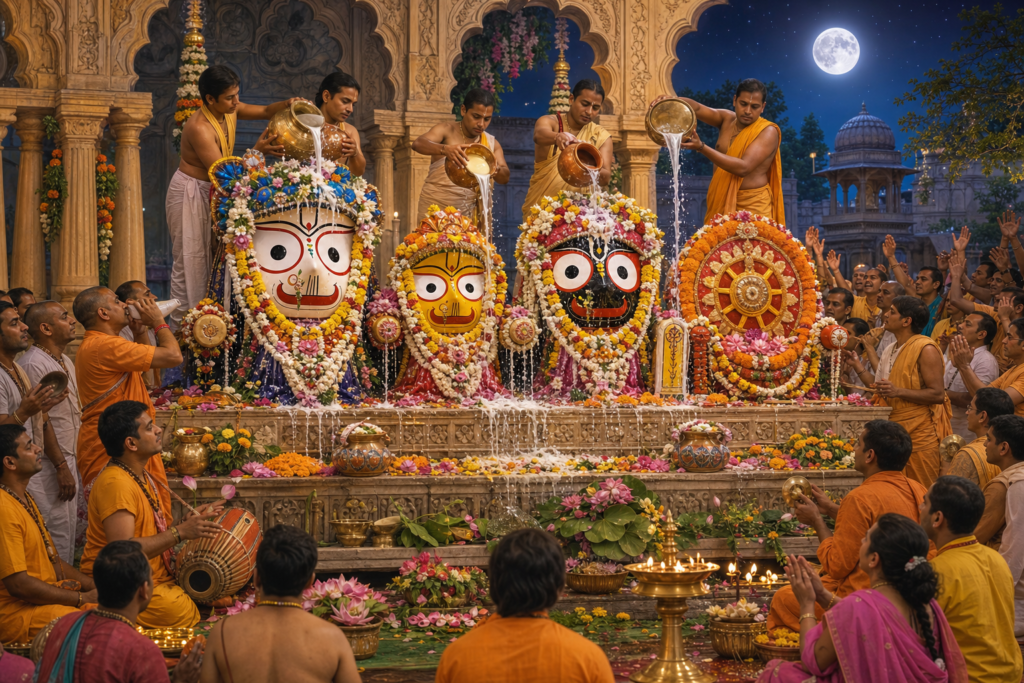
Across the broader Dharmic familyHinduism, Buddhism, Jainism, and Sikhismthe luminous motif of fire and light carries convergent meanings of knowledge, discipline, and compassion. While Dakshinagni is specific to Vedic ritual frameworks, its ethos resonates with the shared reverence for mindful practice: Buddhist lamp offerings that symbolize awakening, Jain Diwali lamps honoring the nirvāṇa of Mahāvīra, and Sikh jyot that signifies the radiance of the Guru’s wisdom. Read in this inclusive key, Dakshinagni stands not as a boundary marker, but as a bridge that highlights a common commitment to ethical action, remembrance, and inner illumination.
Technical language surrounding Dakshinagni rewards careful reading. Terms such as agnyādheya (establishing the fires), ahitagni (one who maintains them), agnihotra (daily offerings), ishti (oblations), and anvāhāryapacana (the southern cooking fire) map the operational flow of the ritual. Directionality (east–west–south), altar geometry, and the segregation of functions together ensure that the integrity of offering, preparation, and remembrance is never blurred.
Ultimately, Dakshinagni integrates the domestic and the cosmic. It anchors a household in a wider moral universe in which gratitude to ancestors, hospitality to the living, and offerings to the divine are held within one coherent rite of attention. In honoring the south, the practitioner honors memory; in tending the flame, the practitioner tends community; and in learning its procedures, the practitioner learns a science of sacred order that speaks across the Dharmic traditions.
Inspired by this post on Hindu Blog.