A recent medical evaluation identified secondary cancer in a swollen cervical lymph node. Choosing candor over concealment serves two aims: to replace anxiety with understanding and to document a journey that may span months or years. Although the word “cancer” can trigger fear, a diagnosis is not inherently a death sentence; outcomes vary widely by cancer type, stage, and response to therapy. In the United States, the lifetime risk of developing cancer remains substantialapproximately one in two men and about two in five womenmaking this experience unfortunately common, yet also widely survivable with timely, evidence‑based care and strong social support.
Transparency also creates space to weave scientific clarity with Spirituality, ensuring that Dharma, Meditation, Yoga, and Bhakti nurture emotional steadiness while clinicians address the biology. This integrative stance honors both the precision of modern oncology and the interior strength cultivated by Sanatana Dharma’s contemplative disciplines. The aim is not to sensationalize illness, but to learn in a way that offers practical guidance, compassionate perspective, and unity across dharmic traditions.
Clinically, “secondary cancer in a lymph node” indicates malignant cells have migrated from a primary site elsewhere (metastasis), or the possibility of a lymphoid malignancy (lymphoma) with distinct behavior. In the neck, common sources for metastatic disease include the oropharynx, nasopharynx, oral cavity, larynx, thyroid, and skin (including melanoma), while distant primaries are less frequent. Because treatment pathways differ markedlysurgery, radiotherapy, chemotherapy, immunotherapy, and targeted agents are used in distinct combinationsthe immediate goal is diagnostic precision.
Evidence‑based diagnostic workups typically combine high‑resolution imaging with tissue confirmation. Contrast‑enhanced CT or MRI of the neck helps map nodal involvement and adjacent structures. PET‑CT can identify metabolically active occult primaries and detect additional disease sites, improving initial staging. Endoscopic evaluation of the upper aerodigestive tract with directed biopsies is often performed when head‑and‑neck mucosa is suspected. When feasible, core needle or excisional biopsy confirms histology and enables immunohistochemistry to distinguish squamous cell carcinoma, thyroid carcinoma, salivary neoplasms, melanoma, or lymphoma.
PET‑CT merits particular attention: it surveys the body from skull base to mid‑thigh, highlighting hypermetabolic foci that warrant biopsy correlation. Its strengths lie in staging and in guiding targeted sampling; its limitations include potential false positives from inflammation or infection and false negatives in very small lesions. Used judiciously within a multidisciplinary framework, PET‑CT can materially influence management decisions while avoiding overreach.
Pathology frequently targets biomarkers that shape prognosis and therapy. For suspected oropharyngeal primaries, p16 immunostaining (a surrogate for HPV involvement) delineates a biologically favorable subset associated with better outcomes. EBV‑encoded RNA testing informs nasopharyngeal carcinoma assessment. In thyroid‑derived disease, thyroglobulin expression or PAX8 positivity helps confirm lineage. For lymphoma, flow cytometry, cytogenetics, and cell‑of‑origin classification drive specialized regimens fundamentally different from carcinoma protocols. Together, histology and biomarkers integrate into TNM staging and individualized treatment planning.
Management is most effective when coordinated by a multidisciplinary tumor board including surgical, medical, and radiation oncology, radiology, pathology, speech‑language pathology, and nutrition. Standard‑of‑care options may include selective neck dissection, intensity‑modulated radiotherapy, concurrent chemotherapy (e.g., cisplatin‑based for appropriate squamous histologies), immunotherapy (PD‑1/PD‑L1 inhibitors in defined settings), and targeted therapy (e.g., EGFR inhibitors) where indicated. For head‑and‑neck squamous cell carcinoma with nodal metastasis from an unknown primary, strategies can include neck dissection combined with radiotherapy to high‑risk mucosal sites, with systemic therapy based on stage and performance status.
Supportive care is not an afterthought; it is integral to outcomes and quality of life. Swallowing therapy can mitigate dysphagia; dental care reduces osteoradionecrosis risk; lymphedema therapy, nutrition optimization, and early rehabilitation preserve function. Psycho‑oncology, peer support, and structured stress‑reduction are evidence‑informed interventions that reduce distress, enhance adherence, and improve day‑to‑day well‑being.
Integrative practices from Holistic Health can complement (but should not replace) conventional oncology. Gentle Yoga, Pranayama, and Meditation reduce anxiety and fatigue; mindfulness‑based interventions support sleep and mood; moderate physical activity (as medically cleared) counters deconditioning; and whole‑food dietary patterns tailored by oncology nutritionists sustain body weight and treatment tolerance. The ethos is pragmatic: combine what modern medicine does best with safe, supportive practices that align with personal meaning and values.
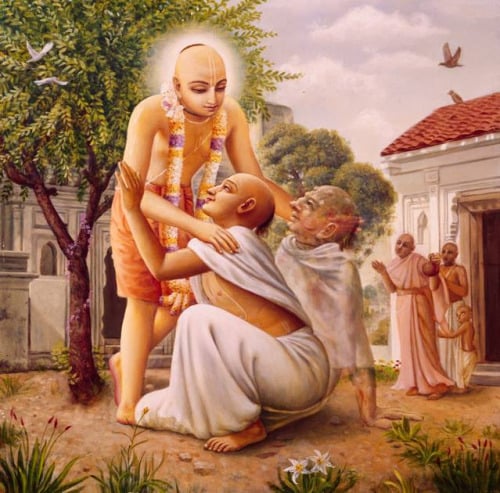
Against this medical backdrop, a devotional and philosophical reframing emerges: perceiving the diagnosis as “Krishna’s Embrace.” Rather than denial, this language of Bhakti voices Acceptance and surrender (śaranāgati) to a higher wisdom while still engaging fully in prescribed duty (dharma) and evidence‑based care. Teachings resonant with the Bhagavad Gita emphasize steady action without attachment to outcomes, a stance that converts fear into purposeful focus and transforms waiting rooms into spaces of Japa, Nama‑smarana, and quiet courage.
Unity across the dharmic traditions enriches this orientation. In Buddhism, maranasati (contemplation of mortality) tempers fear and cultivates compassion for all who suffer. Jain reflections on aparigraha (non‑attachment) and inner equanimity reduce the grip of clinging without diminishing care for the body. Sikh wisdom invites alignment with Hukam and the resilient optimism of chardi kala, blending remembrance (Naam Simran) with tireless Seva. These complementary paths converge on the same practical medicine for the mind: clarity, compassion, discipline, and hope.
Socially, the word “cancer” can elicit shock, widened eyes, and tighter hugs. That heightened tendernesswhile born of concernreveals an everyday truth: human connection heals, regardless of prognosis. Gratitude practice makes this palpable, turning each embrace into a reminder to honor one another, not occasionally, but habitually. Even light‑hearted remarks at home about “attracting love” through illness hint at an abiding lesson: appreciation need not wait for crises.
Psychologically, the diagnosis becomes a structured inquiry: Who is the self that suffersmerely biography and body, or the atman that witnesses experience (sakshi‑bhava)? Which attachments cloud judgment, and which forms of Devotion deepen courage? How firm is faith when outcomes are uncertain? How intimate is the relationship with the holy name, and how ready is the heart to prioritize Seva and the welfare of others? These questions do not demand immediate answers; they invite a daily practice that steadies the hand and softens the heart.
Death contemplation, far from morbid, often produces clarity about living. Priorities sort themselves: time is budgeted for family, friendship, and Service; attention shifts from compulsive striving to meaningful contribution; and spiritual disciplines are elevated from aspiration to routine. In this light, “it’s all good” is not naïveté; it is a disciplined stancemeeting reality as it is, while orienting every remaining hour toward growth, generosity, and God‑centered remembrance of Krishna.
Navigating uncertainty benefits from a practical framework. Build a care team that communicates well; seek a second opinion when decisions are consequential; ask about clinical trials where appropriate; and plan for supports such as transportation, nutrition, and rehabilitation. Evaluate information sources carefully, favoring peer‑reviewed guidance and consensus statements over unverified claims. Integrative stepsMeditation, Yoga, breathing practices, and community supportcan accompany treatment without undermining it.
Ultimately, perceiving illness as “Krishna’s Embrace” harnesses devotional strength without abdicating medical responsibility. Acceptance here is active, not passive: follow the science, protect function, nourish relationships, and root the mind in Dharma. Whether framed through the Bhagavad Gita’s call to steady action, Buddhism’s mindful compassion, Jain non‑attachment, or Sikh chardi kala, the shared dharmic destination is the samelucid courage, expansive love, and a life that serves others, come what may.
Inspired by this post on Dandavats.