Varaha Jayanti, also known as Lord Varaha Swamy Jayanthi, commemorates the divine appearance of Varaha, the third avatara in the Dashavatara of Vishnu. In 2026, most regional Hindu calendars place Varaha Jayanti on September 13. The festival venerates Vishnu’s manifestation as the cosmic boar who restores Bhudevi (Earth) and re-establishes dharma, offering a profound theological, ecological, and cultural message that resonates across India and among global Hindu communities.
In the Hindu calendar, Varaha Jayanti is widely observed on Bhadrapada Shukla Dwadashi (often called Varaha Dwadashi). Given time-zone and panchang differences, local muhurta, tithi start-end times, and vrata guidelines can vary by region and sampradaya. For 2026, September 13 aligns with the observance for most locations in India, though devotees are advised to confirm Dwadashi and parana windows with a trusted regional panchang or temple advisory.
The narrative of Varaha Avatar, preserved in the Puranas (notably the Bhagavata Purana, Vishnu Purana, and Varaha Purana), centers on the asura Hiranyaksha, who submerges Earth in the cosmic ocean. Vishnu manifests as Varaha—boar-headed and human-bodied—dives into the primordial waters, defeats the asura, and gently lifts Earth on His tusks. This act of restoration symbolizes the triumph of order over chaos, affirming Vishnu’s role as the sustainer who safeguards cosmic balance and the integrity of creation.
The theological core of Varaha Jayanti emphasizes the sanctity of Earth as Bhudevi and the imperative of dharmic stewardship. In Vaishnava traditions, this avatara is celebrated not merely as mythic intervention but as an enduring ideal that guides ethical living, ecological reverence, and service to society. The festival thus integrates metaphysical insight with practical duty, connecting household devotion, temple worship, and community welfare under the broader arc of dharma.
Varaha’s iconography is rich and precise. The deity is depicted with the boar’s head signifying fearless resolve and the human form indicating conscious compassion. In four-armed forms, Varaha may hold the shankha (conch), chakra (discus), gada (mace), and padma (lotus), while elevating Earth on the tusks in the presence of Bhudevi. Puranic and temple traditions distinguish forms like Shveta Varaha (white) and Krishna Varaha (dark), each reflecting different aspects of cosmic protection and grace.
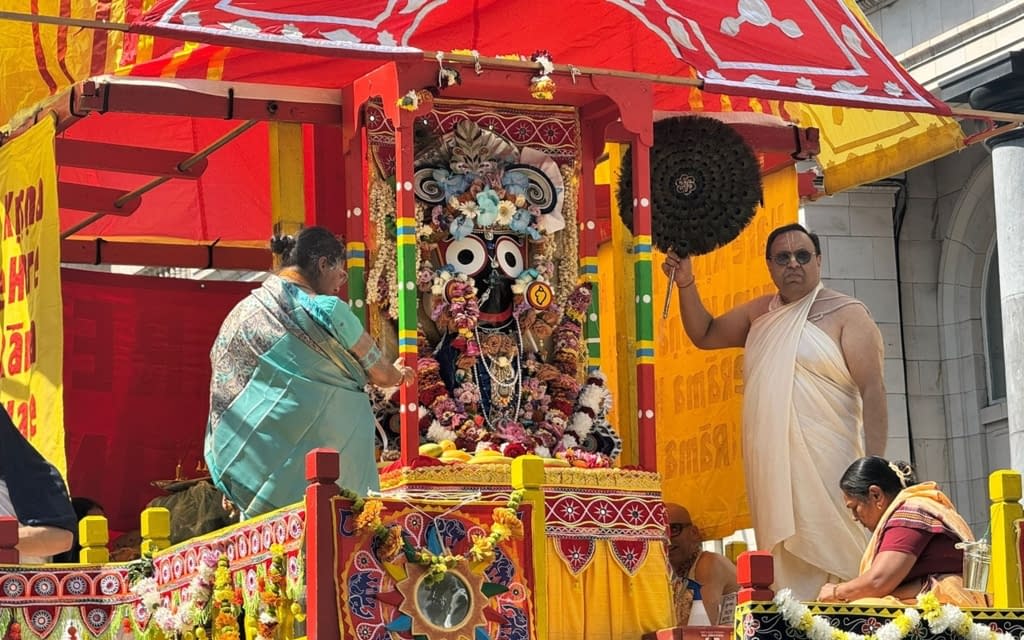
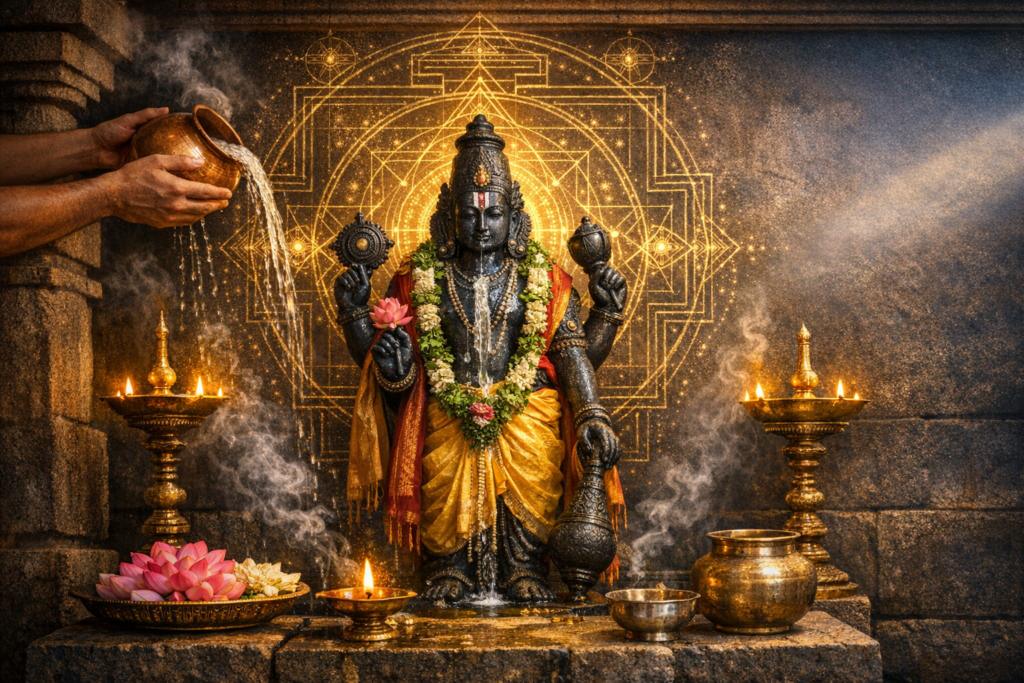
Ritual observance typically begins with an early-morning snana, a clean sacred space, and a sankalpa to honor Sri Varaha Swamy. Many households perform panchopachara or shodashopachara puja, offer tulasi leaves, incense, lamps, flowers, naivedya, and conclude with aarti. Devotees read selected passages from the Bhagavata Purana or Varaha Purana and meditate on the image of Varaha lifting Earth, internalizing the vow to protect and serve creation with humility and strength.
Fasting (vrata) on Varaha Jayanti is embraced in multiple ways. Some observe a nirjala or phalahara fast, while others follow a saatvik one-meal discipline. Vaishnava traditions generally recommend breaking the fast (parana) within the Dwadashi tithi as guided by one’s sampradaya calendar. Charity (anna-dana), offering grains or essentials, and acts of ecological service—such as tree planting or water-body cleanliness—are strongly encouraged as living expressions of devotion.
Recitation and japa on this day commonly include Vishnu Sahasranama and classic Vaishnava stotras. Many devotees also chant universal mantras such as “Om Namo Narayanaya,” “Om Namo Bhagavate Vasudevaya,” and, where transmitted by one’s lineage, “Om Namo Bhagavate Varahaya.” As mantra and stotra traditions can be sampradaya-specific, guidance from one’s family parampara or local temple is recommended to ensure both accuracy and devotional continuity.
Varaha Jayanti carries a distinctive temple geography that anchors devotion in history and art. At Tirumala, the Adi Varaha Swamy shrine near Swami Pushkarini holds special sanctity; many pilgrims traditionally have darshan here before visiting Sri Venkateswara. The Sri Varaha Lakshmi Narasimha Swamy Temple at Simhachalam (Andhra Pradesh) preserves a unique Varaha-Narasimha form and observes the day with elaborate rituals. In Karnataka, the Bhu Varaha Swamy Temple at Kallahalli near Mysuru is a renowned kshetra. The Khajuraho Varaha shrine and the monumental Gupta-era Varaha relief at Udayagiri further attest to the avatara’s deep art-historical presence.
Regional observances reveal a shared devotional grammar with graceful local variations. In Andhra Pradesh and Telangana, special abhishekam and alankaram to Varaha or Varaha-Narasimha murtis are complemented by annadanam. Karnataka kshetras emphasize the bhakti of Bhu Varaha, while North and Central India’s classical reliefs and shrines highlight a long art-historical engagement with the avatara’s symbolism. Across these contexts, the central theme remains Varaha’s pledge to uphold dharma and protect Earth.
Beyond ritual, the festival’s ethical horizon embraces an ecological sankalpa. Varaha’s rescue of Earth invites reflection on environmental responsibility, from mindful consumption to conservation. This resonates with the wider dharmic family’s reverence for nature. Sikh tradition poignantly affirms, “pavan guru pani pita, mata dharat mahat,” honoring air, water, and the Earth’s motherhood. Buddhist compassion and Jain ahimsa likewise nurture a culture of care for all living beings. In this spirit, Varaha Jayanti provides an inclusive moment to recognize shared values across Hinduism, Buddhism, Jainism, and Sikhism.
For many families, Varaha Jayanti is associated with deeply felt memories—temple visits, the fragrance of tulasi and camphor, elders narrating how the divine boar lifted Earth from the depths, and the sense of wonder that follows. Such retellings cultivate resilience and a duty-bound optimism in younger generations, presenting dharma not as abstraction but as a lived path of courage, compassion, and restorative action.
Those planning specific puja timings in 2026 can follow a simple, reliable approach. First, confirm the Dwadashi tithi start and end with a vetted regional panchang. Next, align home rituals with the temple or sampradaya guidelines in the locality. Finally, complete the vrata parana within the prescribed Dwadashi window. This method balances precision with tradition, ensuring devotion is both faithful to scripture and attuned to local praxis.
Students of scripture may explore Varaha-related passages in the Bhagavata Purana (notably in the Third Skandha), Vishnu Purana, and Varaha Purana for a source-critical understanding of the avatara’s theology. Art and architectural studies of Udayagiri’s Gupta relief and Khajuraho’s Varaha shrine illuminate how theology, ritual, and aesthetics have historically converged to express Varaha’s protective and restorative attributes.
As a festival of restoration and guardianship, Varaha Jayanti 2026 is both a devotional landmark and a call to collective responsibility. By honoring Lord Varaha Swamy with disciplined worship, community service, and ecological commitment, devotees align with the avatara’s defining act—lifting the world out of peril and returning it to harmony. In that alignment lies the enduring promise of Varaha Jayanti: devotion that safeguards Earth, dignifies life, and strengthens unity across the dharmic traditions.
Inspired by this post on Hindu Pad.