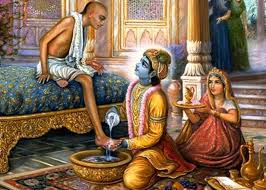
Akshaya Tritiya—also known as Akha Teej—is revered across Bharata and the global diaspora as an inherently auspicious day for new beginnings, compassionate giving, and sustained spiritual resolve. Observed annually on the third tithi (Tritiya) of the bright fortnight (Shukla Paksha) in the Vaishakh month, it is traditionally counted among the Sade-Teen Muhurat, the “three-and-a-half” most favorable windows in the Hindu calendar, requiring minimal muhurta selection.
Etymologically, “Akshaya” in Sanskrit signifies the inexhaustible—what does not diminish—while “Tritiya” denotes the third lunar day. The festival’s central intention is to anchor actions that yield akshaya punya (enduring merit) and sustainable prosperity aligned with dharma, rather than short-lived gains.
Calendrically, Vaishakh is reckoned in two principal ways—Purnimanta (month ending with the full moon, common in North India) and Amanta (month ending with the new moon, common in much of South India). Despite this difference, communities converge on the Shukla Paksha Tritiya for Akshaya Tritiya. In diaspora settings, time-zone shifts can move the civil date; the normative rule is to observe the day on which Tritiya prevails at local sunrise.
From a panchang perspective, a tithi is defined by the relative angular separation between the Sun and Moon, each tithi spanning 12 degrees. Shukla Tritiya commences when the separation crosses 24 degrees and concludes at 36 degrees after the new moon. Because tithi boundaries do not align with civil midnights, observance can differ by geography, occasionally straddling two consecutive Gregorian dates in various regions.
Jyotisha interprets the festival’s natural auspiciousness through an astral lens: Akshaya Tritiya often coincides with the Sun’s transit in Mesha (Aries) and the Moon’s presence in Vrishabha (Taurus), their exaltation signs, frequently under Rohini Nakshatra. This configuration is read as a universal shubha conducive to initiating dharmic work, learning, and philanthropy without elaborate muhurta calculations.
Within the Sade-Teen Muhurat framework, Akshaya Tritiya joins Vijayadashami and Gudi Padwa/Ugadi as nitya-shubha periods. Accordingly, weddings, Griha Pravesh, daana, and new ventures are often undertaken on this day without the need for intricate muhurta selection, though some still consult Choghadiya or Tarabalam for additional confidence and local custom.
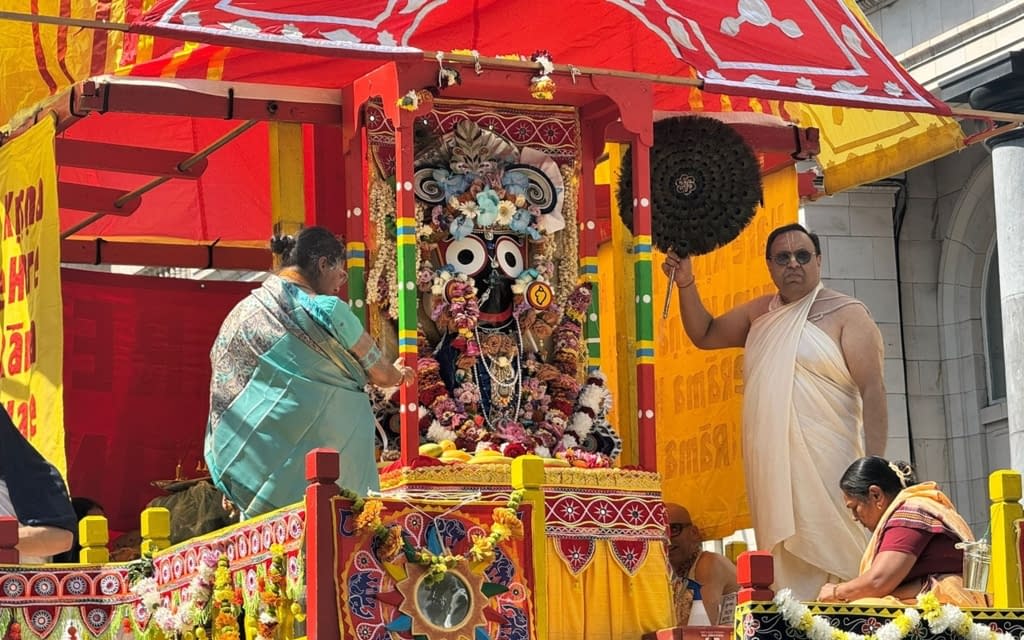
Regionally, the day is widely known as Akha Teej in Rajasthan and Gujarat. In Odisha, it inaugurates Ratha Anukula, the ceremonial commencement of chariot construction for the Jagannath Rath Yatra, and marks the opening of the Chandan Yatra. Across peninsular India, many sampradayas also honor Parashurama Jayanti on this date, infusing the observance with reflections on kshatra-dharma yoked to righteousness.
Puranic and itihasa narratives enrich the festival’s ethos with themes of inexhaustible grace: traditions describe Veda Vyasa initiating the Mahabharata dictation to Ganesha, divine favor upon the Pandavas through the Akshaya Patra motif, and Kubera receiving prosperity under Lakshmi’s glance. Across textual lineages and regions, these associations converge on a single ethic—sustained virtue over momentary accumulation.
Where Parashurama Jayanti is observed on Akshaya Tritiya, communities recall that strength must be governed by dharma and directed to service. This message harmonizes with the day’s larger vocation: to begin undertakings that benefit many, and to sustain them.
Dharmic unity finds a vivid expression as Jain communities commemorate the compassionate exchange between King Shreyans and Rishabhanatha (Ādinātha), when the latter accepted ikṣu-rasa (sugarcane juice) and affirmed a culture of correct giving. Many Jains conclude Varshi Tap (Varshitap) on Akha Teej, breaking the fast with sugarcane juice. The leitmotif—right intention, right action, and enduring merit—resonates across Hindu daana, Buddhist dāna, and Sikh seva, reinforcing a shared civilizational grammar.
Social practices mirror this unity: households customarily undertake annadana, go-seva, and support for education or healthcare. In many towns, mass weddings are scheduled to reduce cost barriers while honoring the day’s nitya-shubha. Families often open new account books, begin small savings plans, or acquire modest gold as a durable asset, mindful that “akshaya” points to virtue-guided prosperity rather than consumption.
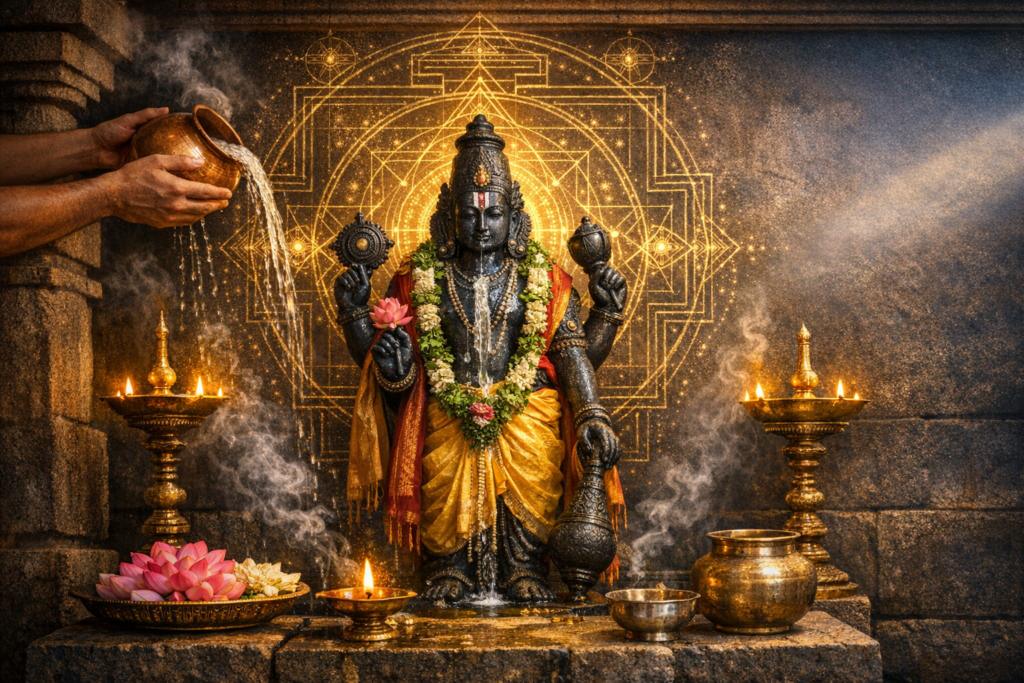
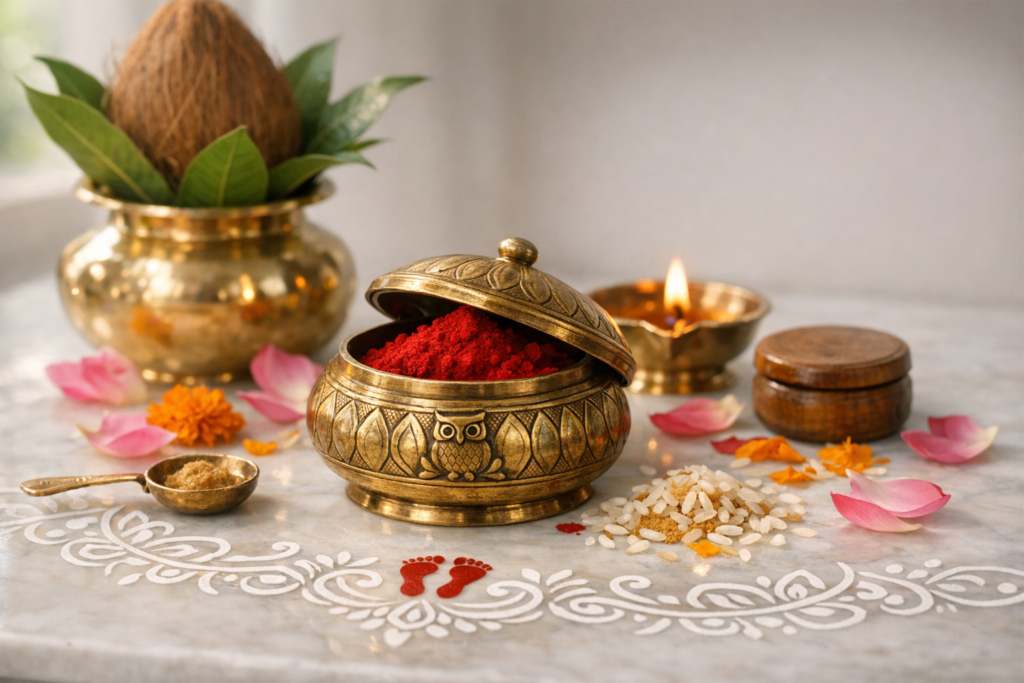
Home observances typically begin with snāna and a clear sankalpa naming Vaishakh, Shukla Paksha, and Tritiya, followed by Panchopachara or Shodashopachara to Vishnu and Lakshmi. Recitation of Vishnu Sahasranama, Lakshmi Ashtottara Śatanāmāvali, or selected chapters from Srimad-Bhagavatam and Bhagavad-Gita is customary. Tulasi pūjā and deepa-dāna further stabilize sattva and gratitude.
Many observe a light upavāsa or strictly sattvic āhāra, dedicating time to japa, dhyāna, and svādhyāya. The focus is on cultivating inner “inexhaustibility”—habits that do not depreciate under stress: steadiness of mind, moral clarity, and compassion in everyday action.
Classical guidance extols anna-dāna, jala-dāna, vastra-dāna, and vidyā-dāna performed on Akshaya Tritiya as akshaya in merit. Contemporary expressions include supporting community kitchens, clean-water projects, scholarships, tree planting, and heritage conservation—by aligning spiritual intent with measurable social outcomes, communities transform devotion into durable welfare.
Gold purchases are popular on this day; responsible dharma emphasizes living within means, transparent financial dealings, and prioritizing essentials before ornaments. Selecting hallmarked metal, supporting ethical supply chains, and balancing acquisition with charity aligns “Lakshmi” with “Dharma,” ensuring prosperity is as principled as it is practical.
Do: Initiate study, skill-building, or a health regimen that can be sustained; begin a disciplined savings habit; reconcile with relatives and colleagues; plant trees; and support artisans, temples, and institutions engaged in cultural and environmental stewardship. Small beginnings on Akshaya Tritiya are traditionally understood to compound as “akshaya.”
Avoid: Actions born of greed, waste, or harm—exploitative lending, ostentatious spending, animal cruelty, and food waste. Traditional households also defer celebratory undertakings when ashoucha (birth/death impurity) applies, following dharma-shastra guidance and community norms.
For panchang alignment across regions, if Tritiya prevails at local sunrise, that civil date is observed. For time-specific acts (purchases, dāna, or sankalpa), many prefer to act while the Tritiya tithi is ongoing. When uncertainties arise, local panchang, temples, or scholars are consulted. Diaspora families should use location-aware calendars, as tithi spans can shift a full civil day relative to India.
Vaishakh itself holds special esteem in Smriti and Purānic compendia, which praise this season of renewal wherein snāna, vrata, and dāna yield heightened merit. Aligning Akshaya Tritiya initiatives with year-long plans—education access, environmental care, and community service—converts momentary enthusiasm into structural good.
In countless households, elders recount how a first coin saved, a sapling planted, or a reconciliation attempted on Akshaya Tritiya quietly changed life trajectories. The festival’s durability rests not on spectacle but on the calm resolve to begin—and then to keep going—so that merit, wisdom, and compassion remain inexhaustible.
Key takeaways for 2026 and beyond: track Vaishakh Shukla Tritiya using a reliable panchang; privilege daana and seva over consumption; if beginning a venture, document clear ethical commitments and community benefit; for those marking Parashurama Jayanti or concluding Varshi Tap parana, participate in inter-community goodwill that honors the shared dharmic ethos.
In essence, Akshaya Tritiya is a civilizational invitation—across Hindu, Jain, Buddhist, and Sikh communities—to launch what is good, repair what is broken, and serve so that the fruits of action remain “akshaya,” inexhaustible for all.
Inspired by this post on Dandavats.