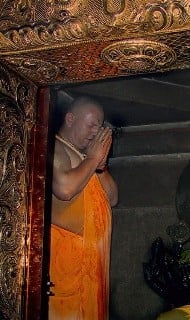
“God is not the name for a form. It is the name for all the forms.” This teaching expresses a core intuition of Hinduism’s philosophical vision: ultimate reality transcends any single image or concept, yet compassionately allows every meaningful image, concept, and practice to become a valid doorway to the Divine. Across the dharmic spectrum—Hinduism, Buddhism, Jainism, and Sikhism—this insight animates a non-exclusivist ethos that values Unity in spiritual diversity and the lived multiplicity of sacred paths.
Classical Vedanta names the ultimate reality Brahman: the limitless, non-dual ground of being-consciousness-bliss. The Upanishads summarize this with lapidary precision: “sarvam khalvidam brahma” (all this is indeed Brahman), “neti neti” (not this, not this), and “ishavasyam idam sarvam” (all this is pervaded by the Lord). These statements are not contradictory; rather, they define a spectrum of discourse. Brahman is beyond limiting predicates (nirguṇa) and also the immanent source sustaining the world and devotion (saguṇa).
To articulate how the One appears as many, Vedanta engages the categories of nāma–rūpa (name–form), upādhi (limiting adjunct), and māyā (power of manifestation). The Chāndogya Upanishad gives the classic clay–pot example: many pots differ by name and shape, yet their substance remains clay. Analogously, diverse deities, images, and practices differ conventionally, while their ontological basis abides as Brahman.
Within the empirical order (vyavahāra), worship focuses through Ishvara—the personal Lord—so that mind and heart may converge. At the highest standpoint (paramārtha), the same reality is formless awareness, untouched by the distinctions mind creates. The two are complementary registers, not rivals; each completes the other’s meaning and therapeutic value.
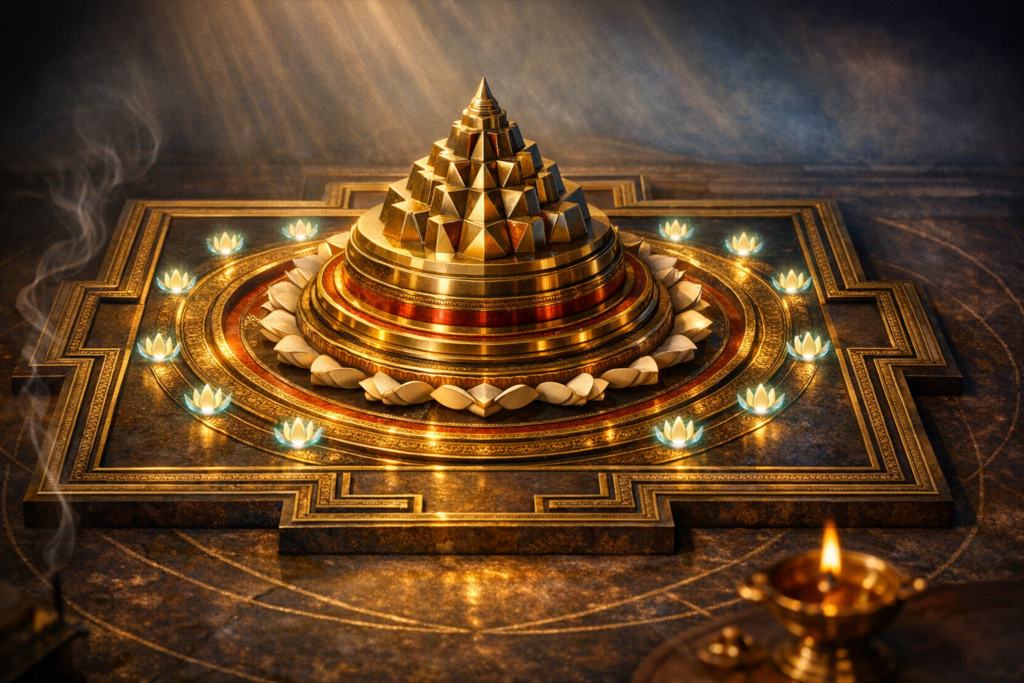
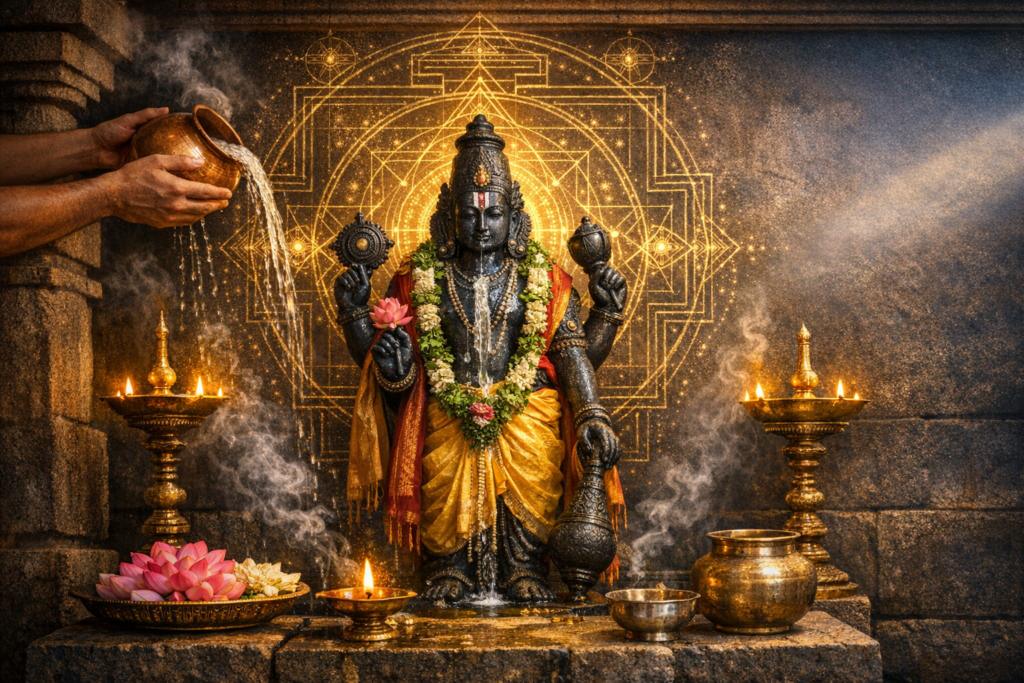
Hindu practice therefore never treats a mūrti as a mere object. The image functions as a hermeneutic bridge, translating the Infinite into approachable signs without confining it. Both iconic and aniconic forms participate: the Śiva liṅga, for example, signals the ineffable axiality of consciousness rather than anthropomorphic detail. In this light, pūjā is not “idolatry” but a sophisticated semiotics of the sacred.
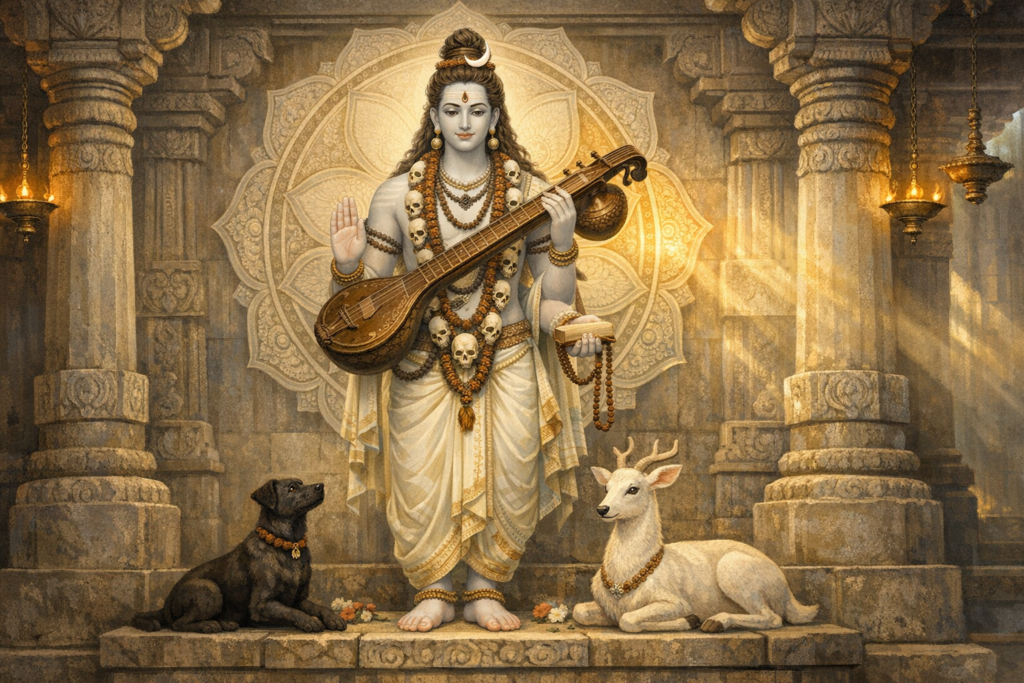
Equally central is the Ishta-devatā principle: each practitioner may choose a form—Krishna, Durga, Shiva, Vishnu, or a non-figural emblem—that resonates with temperament, duty, and stage of life. This freedom is not fragmentation; it is a pedagogy of attention that aligns psychology with sādhanā, turning preference into a disciplined pathway to universality.
The Bhagavad Gita codifies this pluralism with remarkable clarity. “ye yathā māṁ prapadyante tāṁs tathaiva bhajāmy aham” (4.11)—as people approach Me, so do I receive them—and “yo yo yām yām tanum bhaktaḥ śraddhayārcitum icchati, tasya tasyācalāṁ śraddhāṁ tāṁ eva vidadhāmy aham” (7.21)—the Lord stabilizes each devotee’s faith in the chosen form. The message is unambiguous: sincere devotion sanctifies diverse modalities of approach.
Vedic poetry compresses the same thesis into a single line: “Ekam sat viprā bahudhā vadanti” (Truth is One; sages speak of It variously). When read with the Upanishadic “sarvam khalvidam brahma,” the teaching yields a consistent frame: the One pervades the many; the many reveal the One.
Different Vedantic schools nuance this unity without negating it. Advaita emphasizes non-dual identity (Brahman alone is ultimately real), Viśiṣṭādvaita upholds qualified non-dualism (the world and souls as real modes of Brahman), while Dvaita maintains duality-in-relation (eternal distinction ordered by devotion). In practice, all three valorize saguṇa bhakti and ethical self-discipline as reliable means to spiritual realization.
Jainism’s Anekāntavāda enriches this conversation by affirming that reality is many-sided; each statement about the Real is partial yet valuable. This epistemic humility resonates with the Ishta principle: a plurality of standpoints and forms can cohere without contradiction, provided they acknowledge each other’s conditional perspectives and common quest for liberation.
Buddhism, while non-theistic, aligns with this inclusivity through the doctrines of pratītya-samutpāda (dependent origination) and upāya (skillful means). Diverse meditative forms, visualizations, and ethical trainings operate as provisional rafts, not final absolutes. The insight that no single construct exhausts reality mirrors the intuition that no single form can monopolize the sacred.
Sikhism’s Ek Onkar declares a formless, singular Truth that permeates all. The practice of nām-simran and the affirmation that the Divine is both nirgun and sargun present a powerful consonance with the Vedantic spectrum. Multiplicity of names coexists with uncompromising unity—another articulation that God is not a form, but all forms can be illumined by the One.
Philosophically, Hinduism is best described as panentheistic with non-dual depth: the world abides in God, yet the Divine exceeds all worlds. The ancient image of Indra’s Net—an infinite web of jewels, each reflecting all others—beautifully renders this metaphysics of luminous interdependence. Diversity is neither error nor threat; it is the very texture through which the Infinite communicates.
From a cognitive perspective, forms and names act as scaffolds for attention, emotion, and memory. Neuroscientific studies of meditation suggest that mantra-japa, visualization, and ritual synchronize networks of salience, executive control, and affect regulation. Understood this way, mūrti-pūjā and recitation are precision tools for transforming habit-patterns, not concessions to superstition.
Yoga philosophy integrates these insights into a practical triad: karma (selfless action), bhakti (devotion), and jñāna (contemplative discernment). Each path permits forms as gateways—service to the vulnerable (a living altar), devotion to a chosen Ishta (a personal shrine), or inquiry into the witness-consciousness (a formless meditation). All three are meant to converge in experiential non-separation.
Across India’s sacred geography, pilgrims consistently describe a common tone in diverse encounters: the stillness of darśan in a quiet shrine, the jubilant crescendo of kīrtan, or the contemplative hush of a forest hermitage. The affect may vary—awe, love, serenity—but the undertone is shared: contact with a presence that cannot be contained by any single image, yet shines through each one.
Common misconceptions dissolve under this lens. Worship of images is not a claim that divinity is limited to stone or metal; it is a disciplined recognition that the Infinite can disclose itself anywhere—hence also in a crafted symbol consecrated by mantra, intent, and community. The point is not the image alone, but the relation it enables and the transformation it sustains.
Socially, this ontology nourishes Religious pluralism in India without erasing conviction. Non-exclusivist theologies invite dialogical confidence: each tradition can speak from its heart while honoring the sacred depth of the other. In public life, such an ethos reduces sectarian frictions and fosters cooperative care for the common good.
Ethically, the vision that God pervades “all forms” grounds reverence for persons, species, and ecosystems. The maxim “Vasudhaiva Kutumbakam” (the world is one family) follows naturally: if the same light animates every being, dignity and responsibility extend across all relations. Spirituality and sustainability thus become mutually reinforcing imperatives.
Practically, seekers can proceed with three guidelines. First, choose an Ishta that naturally evokes devotion; affinity is not indulgence but alignment. Second, cultivate a complementary formless practice—silent mantra, breath awareness, or inquiry—so that attachment to any single representation dissolves into spacious presence. Third, translate devotion into service, allowing love for the Divine-in-all to become tangible healing for the world.
In sum, the teaching that “God is not the name for a form; it is the name for all the forms” distills a civilizational wisdom. Vedantic metaphysics, the Gita’s pluralism, Jain Anekāntavāda, Buddhist upāya, and Sikh Ek Onkar converge on a shared horizon: a Truth too vast for monopoly, yet tender enough to meet each pilgrim where they stand. Such a horizon sustains unity across dharmic traditions and offers a principled basis for harmony in a diverse world.
Inspired by this post on Hindu Blog.