The National Commission for Scheduled Tribes (NCST) has confirmed that Monalisa Bhosle was 16 years old at the time of her marriage to Farman Khan on 11 March 2026 in Kerala, with allegations that a forged birth certificate was used to facilitate the union. Following this determination, Khargone Police registered a case under the Protection of Children from Sexual Offences (POCSO) Act, naming Farman Khan as the accused. These developments place the matter squarely within India’s child protection and criminal justice frameworks.
This episode resonates beyond the particulars of one family: it underscores a foundational legal and ethical principle in India that the safety and rights of minors are paramount, irrespective of faith, locale, or familial circumstance. For many households, such cases evoke concern about adolescent vulnerability, documentation integrity, and the need for timely institutional responses—concerns that are widely shared across communities.
As a constitutional body established under Article 338A, the NCST monitors safeguards for Scheduled Tribes and can engage where vulnerable individuals may require protection. In matters involving contested age at marriage, commissions and courts typically rely on a structured verification protocol anchored in documentary evidence, with medical assessment used only where records are unavailable or unreliable. The NCST’s confirmation therefore carries procedural weight, particularly when documentation is disputed.
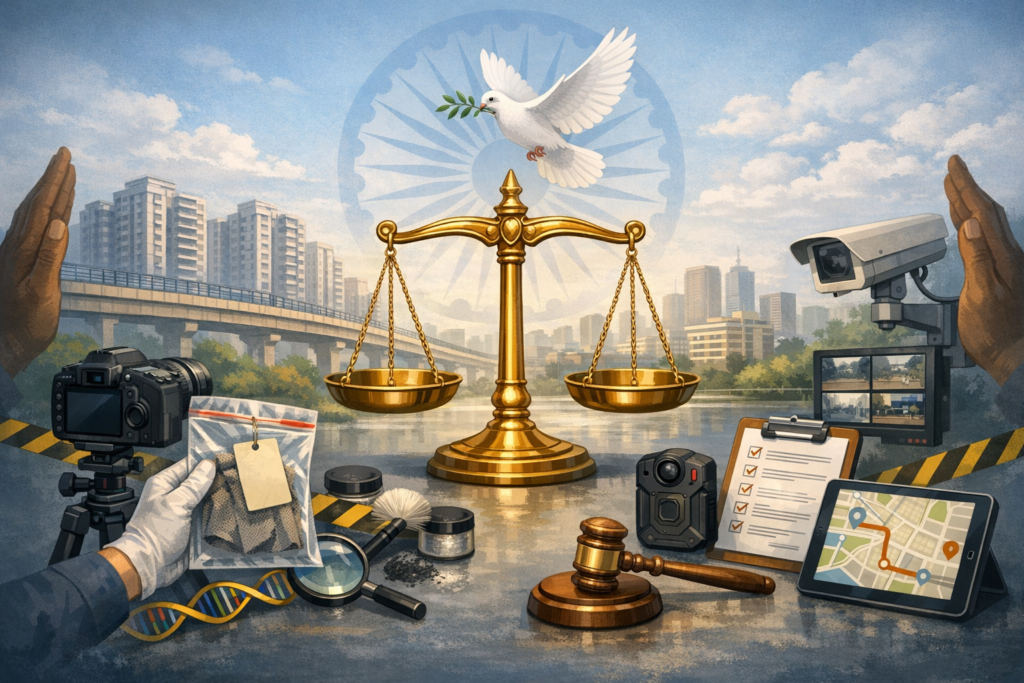
Age determination in India generally follows the evidentiary hierarchy recognised by the Supreme Court: matriculation or school records first; certificates from municipal or panchayat registrars next; and, only in the absence of satisfactory documentation, ossification or dental examinations (see Jarnail Singh v. State of Haryana, 2013). Allegations that a forged birth certificate was used strike at the core of evidentiary reliability and can trigger both protective and penal responses.
Where forged records are suspected, the Indian Penal Code (IPC) provides relevant offences, including forgery (Section 465), forgery for the purpose of cheating (Section 468), and using a forged document as genuine (Section 471), often read with cheating (Section 420). Verification commonly entails cross-checks with the Civil Registration System (CRS), local registrar ledgers, school admissions data, and digital trails, along with chain-of-custody safeguards to preserve evidentiary integrity.
The POCSO Act, 2012, defines a child as any person below 18 years of age and criminalises sexual activity with a minor regardless of consent or marital status. Jurisprudence, including Independent Thought v. Union of India (2017), confirms that marriage does not operate as a defence to sexual offences involving minors. If the age finding is sustained by the court, POCSO’s victim-centric procedures and statutory presumptions guide investigation and trial.
Running in parallel, the Prohibition of Child Marriage Act (PCMA), 2006, renders child marriages voidable at the option of the minor and empowers courts to grant custody, maintenance, residence, and annulment-related reliefs. In practice, POCSO addresses the criminal dimension while PCMA secures civil protections, creating a complementary framework to safeguard minors comprehensively.
The case also illustrates routine inter-state coordination in criminal procedure: while the marriage is reported to have occurred in Kerala, registration by Khargone Police reflects mechanisms such as Zero FIR and subsequent transfer to the jurisdictional station when required. Effective cooperation across state lines is central to timely evidence collection, witness examination, victim protection, and the orderly progression of a case docket.
POCSO embeds child-sensitive processes throughout: statements are to be recorded in a supportive environment; medical examinations must proceed with informed assent; and Child Welfare Committees, psychosocial services, and special courts play defined roles. Statutory timelines seek to minimise secondary trauma and advance expeditious adjudication, emphasising the primacy of a victim-centric approach.
Although widely discussed as an interfaith marriage, Indian law evaluates such circumstances through the lens of age, consent, and documentation, not religious identity. Communities across the dharmic traditions of Hinduism, Buddhism, Jainism, and Sikhism share a common ethical imperative to protect minors, and broader social harmony benefits when public discourse remains evidence-led and rights-based. Fostering Religious Tolerance and Hindu-Muslim unity requires firmly rejecting communal generalisations while insisting on due process for all parties.
This incident also highlights the importance of robust documentation practices: timely birth registration, secure storage of certificates, and careful verification before consequential life events such as marriage. Families regularly encounter document checks during school admissions, passport applications, and court-related processes; cultivating a documentation culture that prizes accuracy and traceability reduces scope for misuse and strengthens access to justice.
Key milestones to watch include the court’s final acceptance of age determination, outcomes of forensic document analysis, any parallel PCMA proceedings, and inter-state coordination steps such as the transfer of case materials and protection measures for the minor. As with all criminal allegations, culpability will be determined by the courts after a fair trial, and it remains essential to uphold the presumption of innocence alongside uncompromising child protection.
In sum, the NCST’s confirmation that Monalisa Bhosle was a minor at the time of marriage, coupled with the POCSO case registered against Farman Khan, recentres the discussion on child protection and the rule of law. Advancing these principles—without vilifying any community—reinforces justice, strengthens public trust in institutions, and supports the social cohesion that underpins India’s plural society.
Inspired by this post on Hindu Jagruti Samiti.