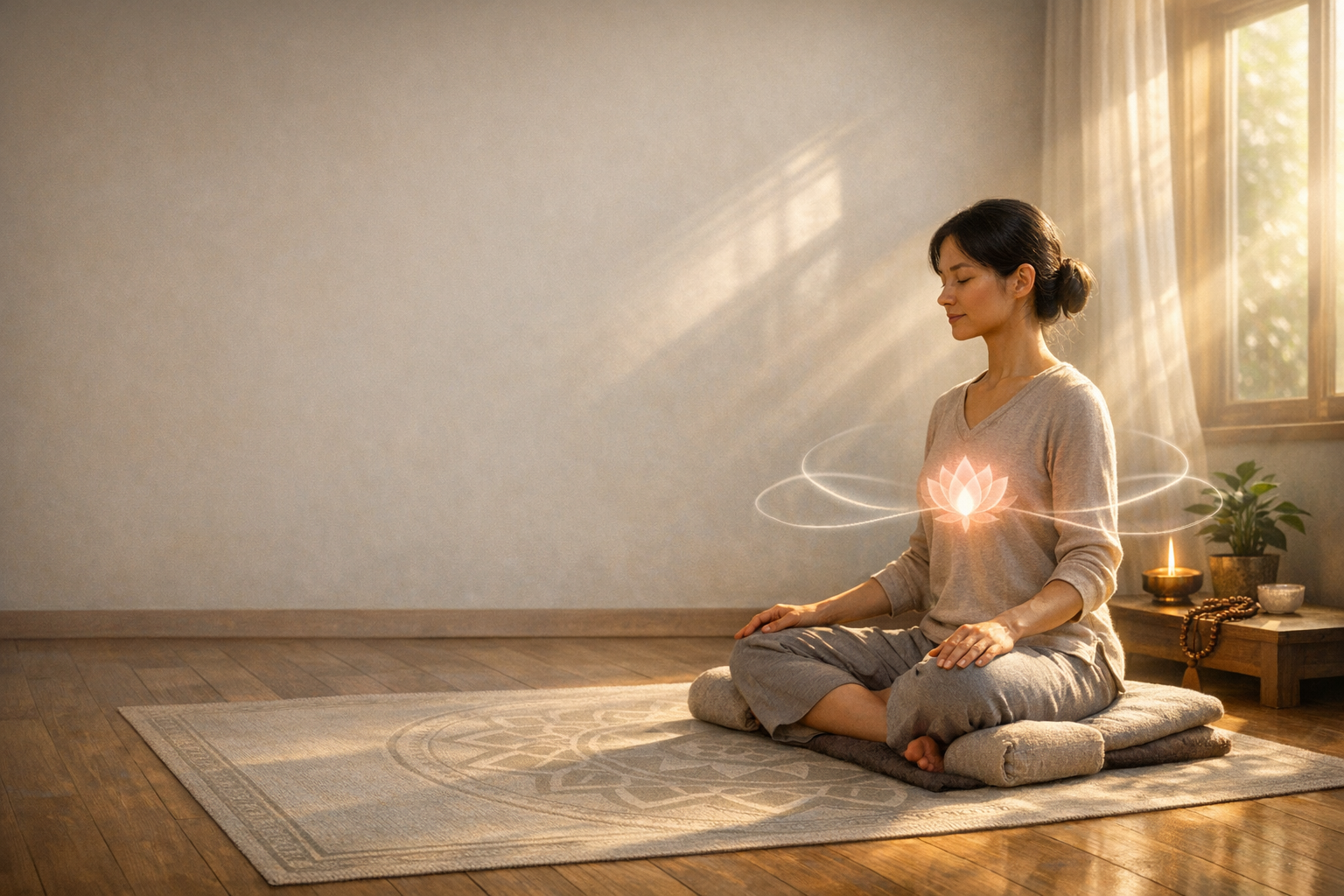
SB 3.28.8 condenses a complete protocol for seated meditation within a few precise instructions: after steadying the mind and stabilizing the postures, one should prepare a seat in a secluded and sanctified place, sit in an easy posture—svasti samāsīnaḥ—with the body erect, and then practice regulated breath control. Situated in the Sankhya-yoga teachings attributed to Kapila in the Srimad Bhagavatham, this guidance aligns environment, posture, and respiration into a single continuum designed to quiet the senses, gather attention inward, and support sustained dhyana.
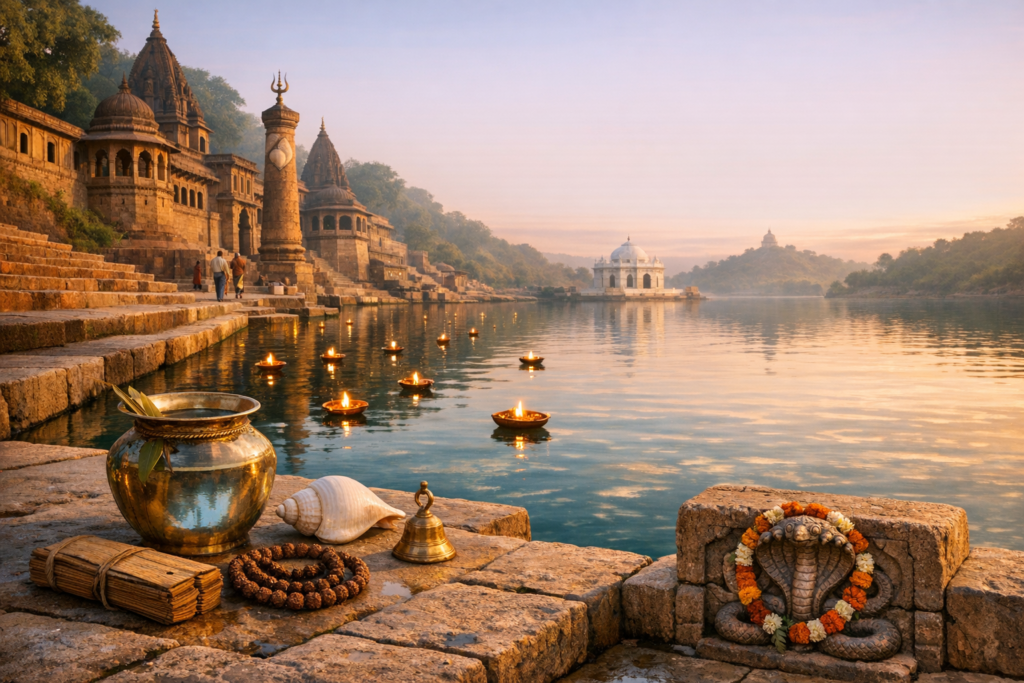
The directive to choose a “secluded and sanctified place” is both spiritual and practical. A sanctified location (clean, calm, and intentionally consecrated) reduces sensory load and lowers cognitive switching, which contemporary contemplative research associates with improved attentional stability and autonomic balance. Seclusion minimizes interruption, while sanctity raises the mind’s affective tone toward reverence—an internal condition of sattva that supports steady meditation. This counsel harmonizes with the Bhagavad Gita (6.11–13): a clean area, protected from disturbances, prepared for practice, and oriented to clarity rather than distraction.
Seat preparation further refines the setting. Traditional sources recommend a seat that is neither too high nor too low and that insulates slightly from ground moisture and temperature shifts. In practical Yoga terms, the seat should allow a neutral pelvis and stable base so the torso can rise without effort. A folded blanket or a firm cushion that elevates the hips above the knees often enables the spine to stack naturally. Orientation to the east or north is customary in many traditions, not as dogma but as a way to ritualize intention and regularize habit, both of which strengthen meditative consistency.
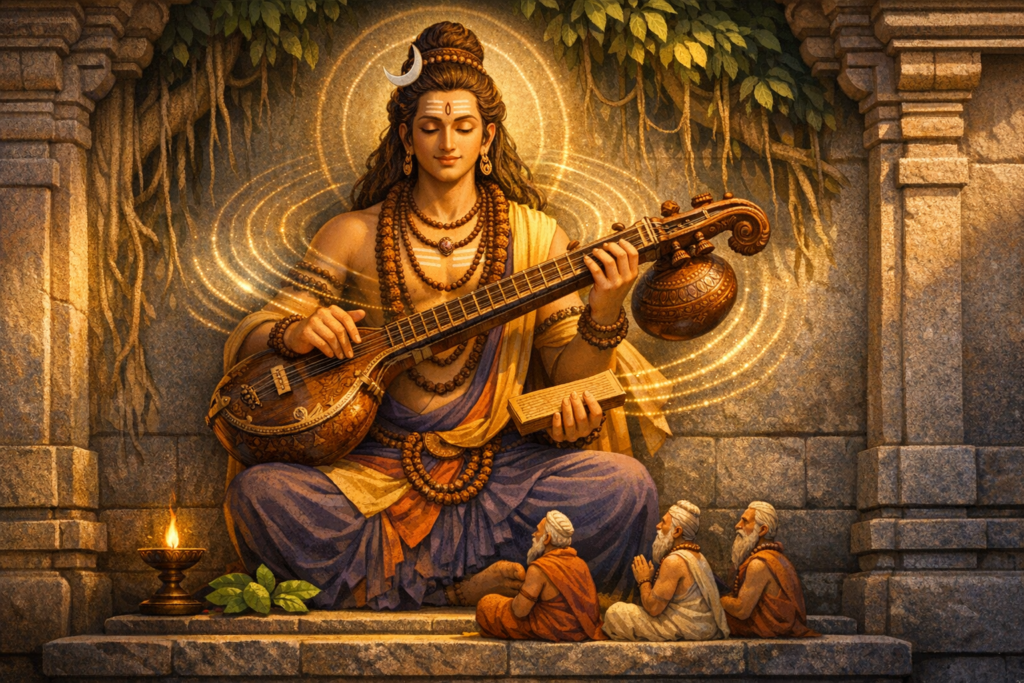
The phrase svasti samāsīnaḥ (“sitting in an easy, favorable posture”) emphasizes stability without strain. “Easy” here does not imply laxity; it signals a posture that can be held comfortably for the full duration of practice. The body erect refers to a lengthened yet unforced alignment: the sacrum balanced, lumbar curve natural, sternum softly lifted, shoulders resting, jaw relaxed, and the crown floating as the chin gently recedes. Such alignment optimizes breath mechanics, reduces musculoskeletal tension, and supports the mind-body connection essential to pratyahara and dharana.
Classical asanas well-suited to this instruction include sukhasana, siddhasana, padmasana (for those with adequate hip and knee preparation), or vajrasana with support. Props are not concessions but instruments of precision: elevating the seat to free the diaphragm, placing light support under the knees to prevent strain, or using a wall to sense axial length can all help. Endurance in stillness arises more from correct geometry than from willpower; when the posture is right, effort recedes and awareness stabilizes.
Breath control (pranayama) completes the triad of place–posture–respiration. Gentle, continuous, nasal breathing with the diaphragm is the starting point. A simple and time-tested sequence is to establish even inhalation and exhalation (samavrtti, e.g., 4–4) and then lengthen the exhalation (visamavrtti, e.g., 4–6) to cultivate parasympathetic balance. Breath retention (kumbhaka) belongs to the advanced phase and should be introduced gradually and under guidance, especially for those with cardiovascular, respiratory, or pregnancy-related considerations. The intent is not to force the breath but to refine its rhythm so prana moves smoothly, allowing the senses to release their outward pull (pratyahara) and the attention to gather around a single point (dharana).
Physiologically, regulated breathing supports vagal tone, improves heart-rate variability, and can stabilize carbon dioxide levels, all correlates of steadier attention and emotional regulation. Subjectively, practitioners often report a spreading sense of ease in the abdomen and chest, softening of the facial muscles, and greater clarity in the interoceptive field. When the exhalation lengthens naturally and the breath becomes silent, a subtle inwardness emerges without coercion—a hallmark of effective pranayama in meditation contexts.
Kapila’s protocol dovetails with the broader architecture of Yoga—yama and niyama (ethical preparation), asana (stability), pranayama (rhythmic regulation), pratyahara (sensory withdrawal), dharana (focused attention), dhyana (unbroken contemplation), and ultimately samadhi. Within the Srimad Bhagavatham’s meditation sequence, attention is guided to the heart-lotus and the indwelling witness (Paramatma), a theistic focus that integrates devotion with contemplative absorption. The same structural logic holds when the chosen object is the breath, a mantra, or a sacred image: alignment, regulation, and inward unification culminate in steady awareness.
These instructions resonate across the wider family of Dharmic contemplative traditions, reinforcing unity in diversity. In Buddhism, anapanasati (mindfulness of breathing) and the Satipatthana emphasis on posture, secluded settings, and sustained attention parallel the same core mechanics. In Jainism, samayik and kayotsarga stress ethical calm, stable posture, and inward steadiness. In Sikh tradition, simran and naam japna often combine seated stillness with regulated attention on sacred sound. While the theological frames differ, the shared grammar—clean space, stable seat, erect spine, refined breath, and unwavering attention—demonstrates a common quest for inner clarity and compassion.
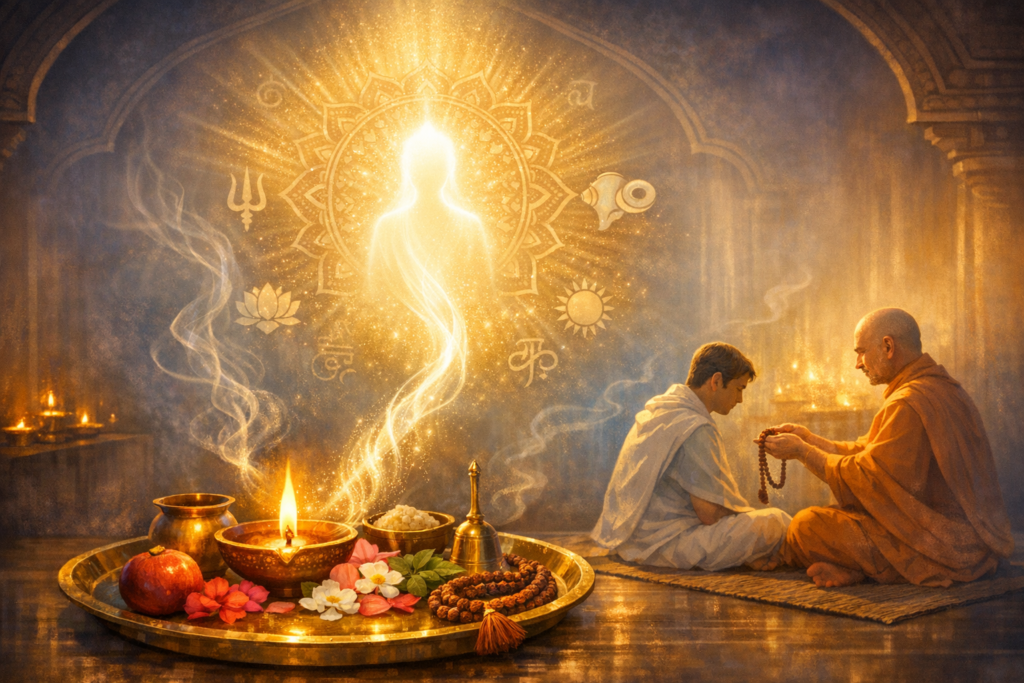
A practical 20–30 minute session based on SB 3.28.8 can proceed as follows in narrative form: arrive in a quiet, clean space, symbolically consecrate the seat to establish intention, and take an elevated posture that permits an erect, relaxed spine. Let the breath settle into soft, diaphragmatic waves, then adopt an even ratio (such as 4–4) for several minutes before easing into a slightly longer exhale (e.g., 4–6). As the breath quiets, allow the senses to recede—sounds and sensations pass through without capture—while the mind rests either on the breath, a mantra, or the heart’s center as taught in Srimad Bhagavatham. When attention disperses, return to posture cues and the exhale’s lengthening, re-establishing pratyahara and dharana without judgment. Conclude by softening the control on the breath, integrating the stillness into ordinary awareness.
Signs that practice is proceeding well include a quiet, effortless breath; warmth without agitation; stable, relaxed gaze; and continuity of attention that feels steady rather than rigid. Warning signs—dizziness, breath hunger, facial strain, racing thoughts amplified by forced breathing—suggest the need to simplify, reduce ratios, or pause. Individual conditions matter: those with hypertension, arrhythmias, asthma, migraines, or during pregnancy should keep to gentle, non-retentive patterns and consult qualified guidance. In Yoga, safety and precision are expressions of ahimsa and satya, not afterthoughts.
When honored as a single, integrated instruction, SB 3.28.8 becomes a reliable blueprint for contemplative depth. The secluded and sanctified space shapes the mind’s affect; svasti samāsīnaḥ ensures structural ease; and breath control unknots the nervous system, revealing the quiet center that Dharmic traditions unanimously cherish. By returning to this simple yet profound triad, practitioners advance not only in technical Yoga practice but also in the shared ethical and spiritual vision that unites Hinduism, Buddhism, Jainism, and Sikhism in their commitment to wisdom, compassion, and inner freedom.
Inspired by this post on Dandavats.