Vishu Phalam 2026–2027 presents annual predictions for all twelve rashis (zodiac signs), with complementary Nakshatra Phalam, for the solar year beginning 14 April 2026 and ending 14 April 2027. Anchored in the Vishu observance in Kerala, this yearly horoscope contextualizes life trends through Vedic astrological principles while emphasizing dharmic values, ethical conduct, and practical decision-making.
In the broader dharmic landscape, this Mesha Sankramana–based new year resonates with Puthandu (Tamil New Year), Vaisakhi, Pohela Boishakh, and Pana Sankranti, reflecting a shared civilizational rhythm. The analysis therefore foregrounds unity across Hindu, Buddhist, Jain, and Sikh traditions by recommending universal, non-sectarian remedies and ethical practices that strengthen familial bonds and community well-being.
Scope and intent: The yearly reading integrates Rashi-based gochar (transits), Nakshatra Phalam touchpoints, and Panchanga considerations to outline probable tendencies in health, education, vocation, finance, family dynamics, and spiritual growth. The guidance supports reflective choices without fatalism; individual effort (purushartha), right livelihood, and compassion remain decisive in shaping outcomes.
Calendar basis: Vishu marks the Sun’s ingress into Mesha (Mesha Sankramana), the first solar month Medam in Kerala. While the regional civil calendar Kolla Varsham commences in Chingam, Vishu is culturally regarded as the auspicious solar doorway for agricultural, fiscal, and personal planning in Kerala and among the Malayali diaspora.
Astrological framework: The analysis follows the sidereal zodiac (nirayana) commonly used in Vedic astrology with standard ayanamsa practice, and references classical Panchanga elementstithi, nakshatra, yoga, and karanawhen interpreting auspiciousness. Readers using alternative schools should transpose results accordingly to their preferred panchangam or ayanamsa.
Methodological note: Outcomes are inferred from major gochara influences for 2026–2027, supported by traditional heuristics such as Aaya–Vyaya (income–expenditure), Dhana–Labha (resources–gains), Chandra bala (Moon strength), and Tara bala (stellar support). Precise muhurta selection for critical events still requires locale-specific calculations and reconciliation of multiple Panchanga factors.
Planetary backdrop for 14 April 2026 to 14 April 2027 (approximate, school-dependent): Shani (Saturn) remains in Meena (Pisces) for sustained periods, encouraging depth, discipline, and simplification. Guru (Jupiter) transitions from Mithuna (Gemini) to exaltation in Karka (Cancer) mid-year, amplifying nourishment, learning, and protection. Rahu–Ketu shift from Kumbha–Simha (Aquarius–Leo) into Makara–Karka (Capricorn–Cancer) later in the cycle, refocusing collective priorities toward pragmatic structures and emotional integrity. Dates can vary marginally with ayanamsa and calculation method.
How to read Vishu Phalam: General trends are most meaningful from Chandra rashi (Moon sign). Those familiar with janma lagna may cross-check from the Ascendant for practical matters, and from Surya rashi for vocational emphasis. Personal mahadasha–antardasha sequences significantly modulate outcomes and should be weighed alongside transits.
Mesha (Aries): With Shani activating the twelfth house, prudent sleep hygiene, expense control, and contemplative practice become pivotal. Guru in the third, then fourth, rewards skill-building and consistent communication early, followed by domestic consolidation, property themes, and inner contentment as the year matures. Rahu’s movement from the eleventh to the tenth tilts from network-driven gains to visible career initiatives; Ketu’s fifth-to-fourth passage advises mindful parenting, measured speculation, and serenity at home. Aaya–Vyaya management is central; seva and structured breathwork can stabilize momentum.
Vrishabha (Taurus): Shani in the eleventh supports sustainable alliances, long-horizon goals, and disciplined gains. Guru in the second enhances speech, nutrition, and financial literacy early; its move to the third favors courageous initiatives, short learning sprints, and persuasive writing. Rahu’s tenth-to-ninth shift redirects from visibility at work to exploration, higher learning, and dharmic travel; Ketu from the fourth to the third encourages decluttering at home and laser-like focus in communications. Balanced dietetics, steady savings, and kindness in dialogue raise outcomes.
Mithuna (Gemini): Shani in the tenth signifies accountability, process excellence, and leadership through service. Guru gracing the first, then second, fortifies confidence, health routines, and later, revenue streams and resource management. Rahu’s ninth-to-eighth transition suggests a shift from adventurous learning to deeper research, inheritance logistics, or risk governance; Ketu’s third-to-second motion requests restraint in speech and mindful information diets. Professional certifications, study circles, and contemplative silence days can be catalytic.
Karka (Cancer): Shani in the ninth privileges ethics, mentorship, and pilgrimage-like learning; effort invested in study and service to elders yields compounding merit. Guru’s move from the twelfth to exaltation in the first replenishes vitality, motivation, and protective grace mid-year onward. Rahu from the eighth to the seventh invites transformation in shared resources first, then tactful collaboration in partnerships; Ketu’s second-to-first trajectory encourages simplicity, sattvic nourishment, and humility. Household harmony and study of Dharma texts carry exceptional support.
Simha (Leo): Shani in the eighth advises patience with slow-moving change, disciplined wellness, and prudent contingency planning. Guru’s presence in the eleventh can deliver communities of support and goal attainment early; the later twelfth-house phase favors retreat, research, and spiritual audit. Rahu’s seventh-to-sixth transition urges clarity in agreements and later empowers service, skill refinement, and health optimization; Ketu’s first-to-twelfth motion advocates ego-light conduct and deeper meditation. Transparent contracts and restorative practices are key allies.
Kanya (Virgo): Shani across the seventh demands maturity in partnerships, fair negotiations, and long-term commitments. Guru in the tenth, then eleventh, elevates career stature and subsequently expands the network of benefactors and teams. Rahu’s sixth-to-fifth shift highlights problem-solving superiority early and later creativity, children’s learning, and disciplined speculation; Ketu’s twelfth-to-eleventh movement supports renunciation of drains and alignment with mission-true communities. Time-blocking and ethical collaboration unlock compounding returns.
Tula (Libra): Shani in the sixth fortifies tenacity, health routines, and the ability to resolve disputes through process. Guru’s ninth-to-tenth journey upgrades worldview and credentials first, then catalyzes promotions and visible responsibility. Rahu moving from the fifth to the fourth calls for care in creative risks and later focus on home upgrades and emotional grounding; Ketu’s eleventh-to-tenth passage suggests discerning friendships and karma-focused excellence at work. A blend of study, seva, and breath-led fitness sustains momentum.
Vrischika (Scorpio): Shani in the fifth emphasizes disciplined creativity, children’s milestones, and method over impulse in markets. Guru from the eighth to the ninth signals transformation-through-learning, deeper research yielding into guidance, teaching, or advanced study. Rahu’s fourth-to-third shift inspires pragmatic real-estate or home improvements first, then bold communications and short courses; Ketu’s tenth-to-ninth move reframes public roles toward righteousness and scholarship. Patience, journaling, and satsanga refine outcomes.
Dhanu (Sagittarius): Shani seated in the fourth brings duty at home, infrastructure repairs, and calm-centered leadership. Guru’s seventh-to-eighth movement endorses cooperative wins and, later, inner work around shared resources and health sovereignty. Rahu’s third-to-second relocation favors communicative boldness first, then tactical savings and revenue strategy; Ketu’s ninth-to-eighth track deepens pilgrimage-like study and detachment from dogma. Mindful budgeting and compassionate dialogue stabilize the arc.
Makara (Capricorn): Shani in the third rewards consistent outreach, documentation, and skill mastery. Guru crossing from the sixth to the seventh uplifts wellness, daily systems, and subsequently, agreements, client relationships, and marital cooperation. Rahu’s second-to-first shift increases appetite for visibilitybest channeled into service-led leadership; Ketu’s eighth-to-seventh progression encourages clarity in shared-assets and softly spiritualizes partnerships. Structured learning and transparent finances are decisive levers.
Kumbha (Aquarius): Shani through the second house mandates disciplined speech, savings, and nutritioneach becoming a backbone of stability. Guru from the fifth to the sixth supports scholarly pursuits, children’s success, and later, robust routines and service excellence. Rahu’s first-to-twelfth relocation calls for balanced self-presentation and, later, quiet strategy and rest; Ketu’s seventh-to-sixth move simplifies partnerships and enhances process improvement. Moderation, metta-like compassion, and steady sadhana bring durable gains.
Meena (Pisces): Shani’s presence in the first defines the year with sobriety, focus, and a priority on health and integrity. Guru in the fourth and then the fifth nourishes home life, learning environments, and subsequently creativity, children’s education, and inspired scholarship. Rahu’s twelfth-to-eleventh shift moves from retreat and spiritual expense into networks, goals, and thoughtful gains; Ketu’s sixth-to-fifth path curbs overwork and later refines creative purpose. Simple living, meditative depth, and service to knowledge thrive.
Nakshatra Phalam highlights: As Guru traverses Mithuna into Karka, natives with janma nakshatras in Mrigashira (Gemini padas), Ardra, and Punarvasu may notice surges in curiosity, teaching–learning cycles, and communicative grace; with exaltation across late Punarvasu, Pushya, and Ashlesha, maternal support, nourishment, and ethical leadership often strengthen. With Shani stabilizing Purvabhadrapada, Uttarabhadrapada, and Revati sectors during the cycle, patience, duty to community, and spiritual maturation are favored. Individual outcomes vary with natal placements, tara bala, and current dashas.
Aaya–Vyaya and Dhana–Labha planning: The 2026–2027 horizon rewards conservative budgeting in the first half for many rashis and strategic deployment of reserves as Guru strengthens in Karka. Quarterly reviews of income–expenditure, aligned to Sankranti checkpoints, and a habit of earmarking dana amplify material steadiness and merit (punya).
Dharmic, non-sectarian remedies: Daily sadhana in Brahma muhurta; mantra japa (for example, Gayatri or a personally chosen Ishta mantra), metta-bhavana or maitri meditation, and svadhyaya create inner ballast. Seva (selfless service), annadana, and tree-planting integrate prosperity with compassion; Jain pratikraman-inspired reflection, Sikh simran and seva, and Buddhist mindfulness anchor shared civilizational ethics. On Saturdays, silence practices and charity toward the vulnerable harmonize Shani’s lessons; on Thursdays, study and guru-reverence strengthen Guru’s grace.
Auspicious timings (general guidance): For routine initiations, Abhijit muhurta (midday window) and early Brahma muhurta are widely regarded as supportive when free from personal Panchanga afflictions. Critical legal, marriage, or property events require local Panchanga with Chandra bala, Tara bala, and avoidance of major doshas; alignments such as Pushya nakshatra days, Dwipushkara or Tripushkara yogas, and favorable weekdays for the task add resilience.
Technical note on Chandra bala and Tara bala: Navigating daily auspiciousness commonly weighs the Moon’s sign and tara counts from janma nakshatra. Supportive taras include Sampat (2), Kshema (4), Saadhana (6), Mitra (8), and Atimitra (9), whereas Vipat (3), Pratyak (5), and Naidhana (7) warrant caution. Reconcile tara strength with weekday lord, sun–moon yoga, and task-specific hora for robust muhurta selection.
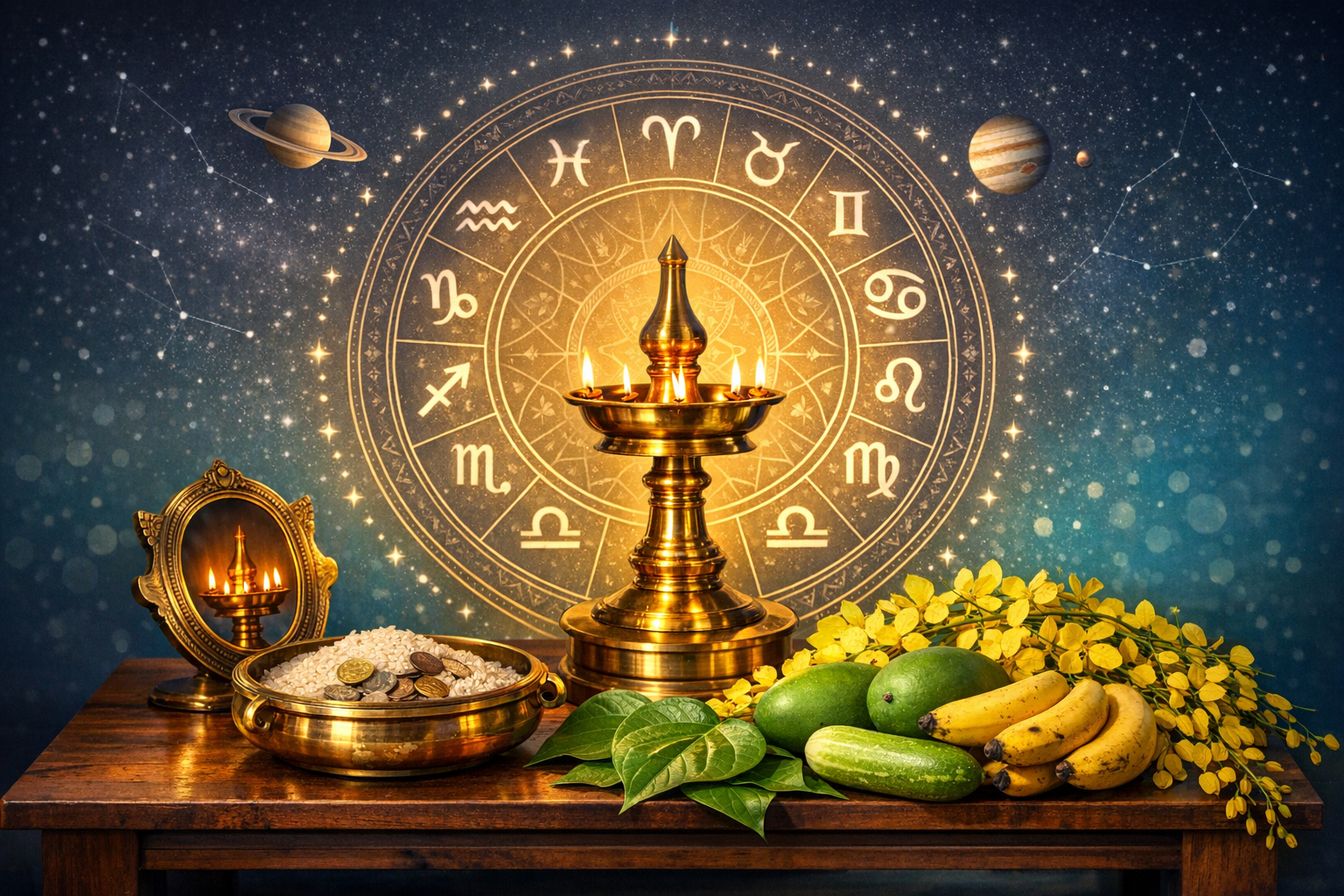
Vishu observances and psychological priming: The Vishu Kani arrangement and Vishukkaineetam embody collective optimism and intergenerational care. When paired with a thoughtfully drafted yearly sankalpa and a realistic ninety-day execution plan, these rituals transform sentiment into disciplined progress aligned with dharma.
Action checklist for the year: anchor a weekly learning slot (Guru), maintain a non-negotiable wellness routine (Shani), schedule quarterly budget audits (Aaya–Vyaya), complete a skill micro-credential by mid-year (Mithuna emphasis), and dedicate monthly hours to seva across communities, honoring unity in diversity.
Conclusion: Vishu Phalam 2026–2027 synthesizes Rashi and Nakshatra Phalam with Panchanga wisdom to illuminate a year of steady discipline under Shani in Meena and nurturing expansion as Guru attains exaltation in Karka. Readings are most constructive when used as mirrors for conscious action, compassion, and shared well-being across all dharmic traditions.
Responsible use: Health and financial decisions should be corroborated with qualified professionals; astrology here functions as a cultural–spiritual compass supporting reflective choices and societal harmony.
Inspired by this post on Hindu Pad.