On 14 April 2026, communities across Tamil Nadu and the wider dharmic world observe Chithirai Vishu, also known as Puthandu and Varusha Pirappu, as the Tamil New Year. In the pan-Indian solar reckoning, the day coincides with Mesha Sankranti, often described as the Solar New Year or Souramana Ugadi. This date inaugurates Parabhava Varusha (2026–2027) in the traditional 60-year Samvatsara cycle used across many Hindu calendars. In several South Indian traditions, the auspicious window associated with this festival is also referred to as Vishvath Punyakalam.
The exact Mesha Sankramana punyakalam for 2026 occurs at 9:25 AM on 14 April (IST). This moment marks the Sun’s sidereal ingress into Mesha Rashi (Aries), which is the astronomical anchor for the solar new year in the nirayana or sidereal system of timekeeping. Observances aligned to this minute are traditionally considered especially meritorious for snana, japa, homa, and dana, as preserved in dharmashastra-guided almanac practices.
Chithirai Vishu is anchored in the nirayana zodiac widely used in South India. While the tropical zodiac ties the equinox to a fixed seasonal point in March, the sidereal zodiac accounts for precession by referencing constellational positions. Most contemporary Indian panchangas employ a standardized ayanamsa, commonly the Lahiri ayanamsa, to compute the exact ingress time of the Sun into Mesha Rashi, thereby fixing the date and hour of Mesha Sankranti and the associated punyakalam.
Within the Tamil calendar, this day marks the opening of Chithirai Masam and the civil year in the solar reckoning. Hence, Puthandu or Varusha Pirappu is both calendrical and cultural, bridging astronomical precision with household ritual. Many families begin the morning with snana, lamp-lighting, and simple offerings, followed by panchanga shravanam, the ritual reading of the new year almanac that symbolically introduces the rhythms of time for Parabhava Varusha.
Parabhava Varusha (2026–2027) is one name within the cyclical 60-year Samvatsara sequence familiar across regions. Panchanga compendia often expand these annual markers with traditional epithets and forecasts, such as aaya-vyaya (revenue-expense) assessments, megha varsha notes, and agricultural indications. While interpretive frameworks vary by school and region, the shared purpose is to align individual and community life with cosmic time in a spirit of reflection, prudence, and ethical action.
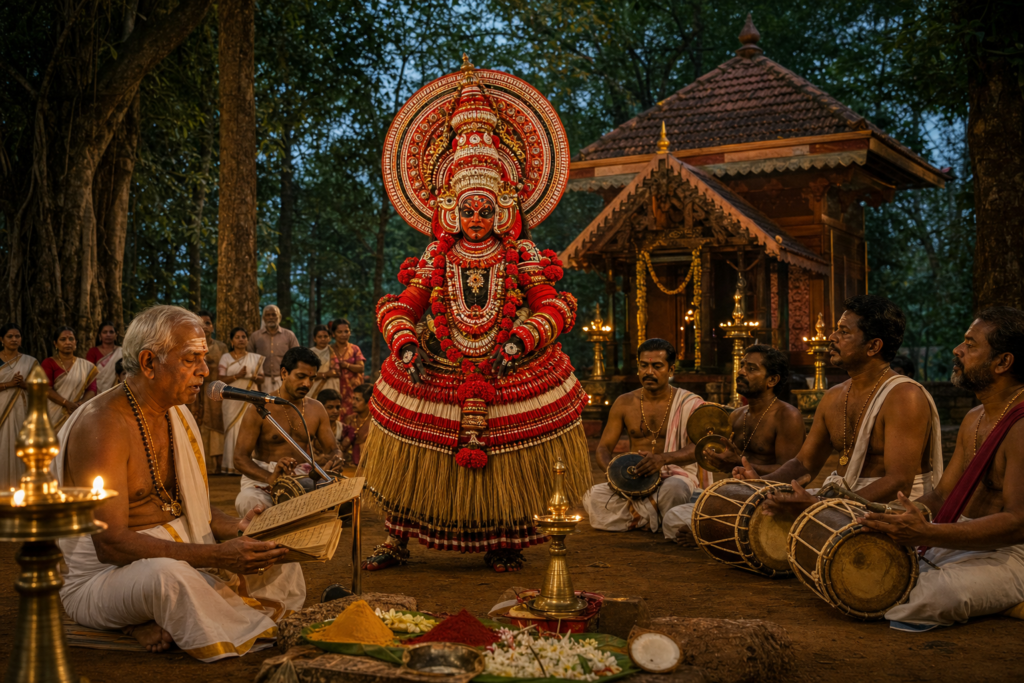
In Tamil Nadu, Puthandu customs emphasize clarity, balance, and auspicious beginnings. Homes are often adorned with kolam at the threshold, and deities are offered naivedyam prepared fresh at dawn. Many families prepare maanga pachadi, a dish that harmonizes diverse tastes to evoke the shadrasa principle: life in the new year will include sweetness and bitterness, tang and heat, inviting equanimity and resilience. Visits to local temples and panchanga patanam in community settings reinforce collective intention for the year ahead.
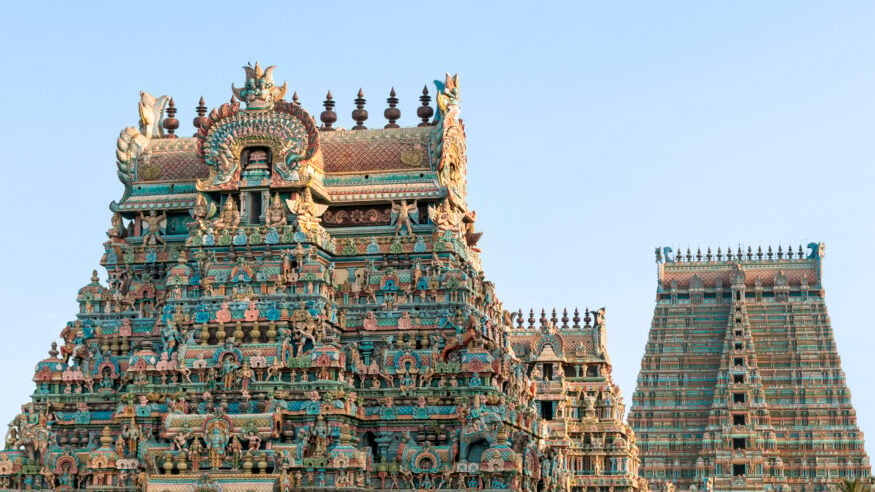
Chithirai also heralds temple festivals such as the renowned Chithirai Thiruvizha in Madurai, which unfolds through the month and is associated with Meenakshi and Sundareswarar, culminating in processional pageantry that has deep roots in sacred geography and civic life. The social tapestry of the season is interwoven with devotional music, communal service, and reaffirmation of values that link household and temple, the personal and the public.
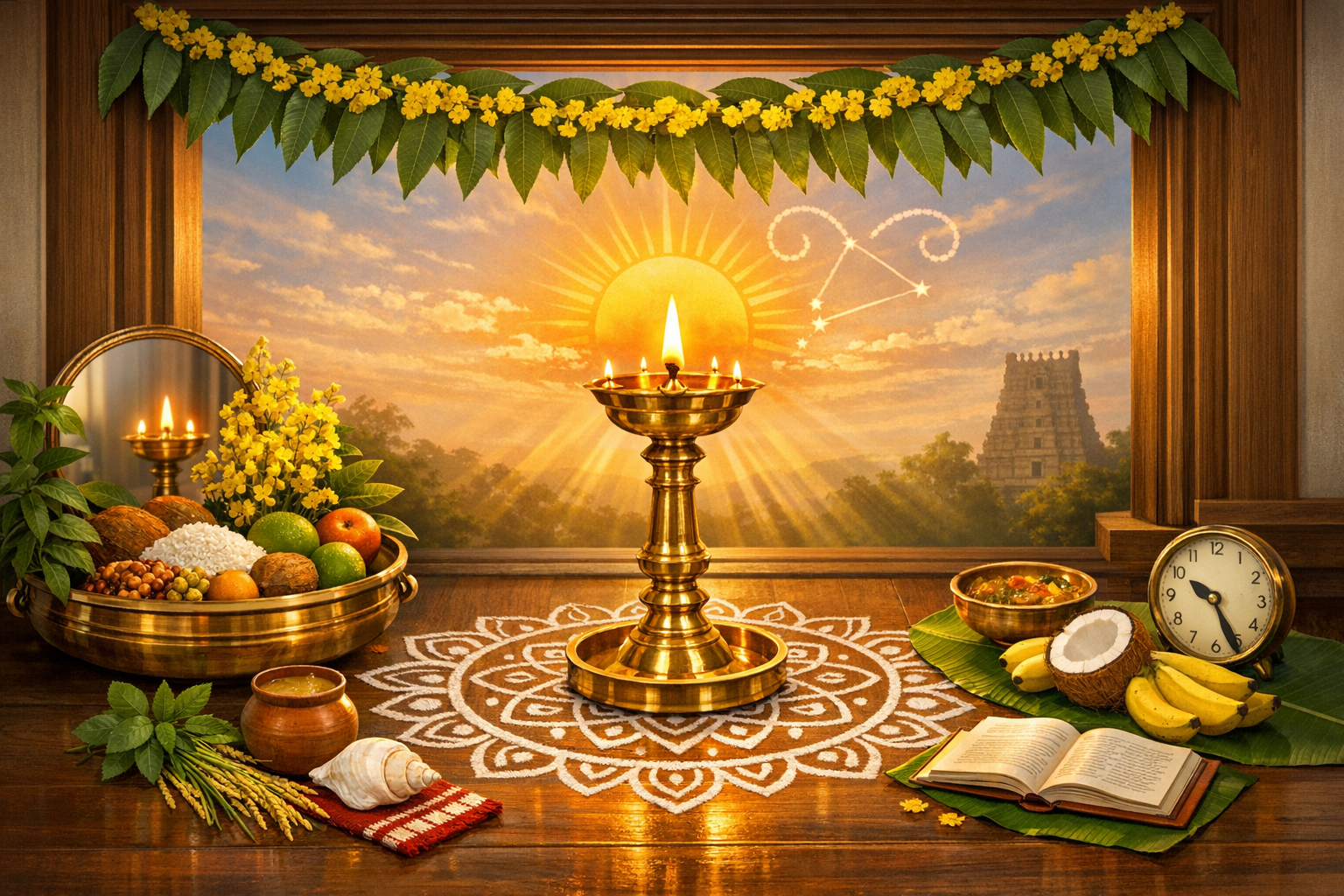
In Kerala, the same solar transition is observed as Vishu. The Vishukkani carefully arranged the previous night featuring auspicious items such as kani konna blossoms, grains, fruits, mirror, and lamp is the first sight one seeks at daybreak. The practice, believed to set a tone of plenitude and focus for the year, is followed by Vishu kaineettam, a gesture of generosity from elders to younger members of the household. For many, childhood memories of waking to the glow of the lamp and the fragrance of the kani remain an enduring emotional anchor for the season.
Across India, Mesha Sankranti unifies diverse regional expressions of the Solar New Year. In Punjab, Vaisakhi or Baisakhi resonates strongly within Sikh dharma as a harvest celebration and a historic commemoration of the Khalsa’s formal initiation in 1699. In Odisha, the day is observed as Maha Vishuba Sankranti or Pana Sankranti, integrating ritual bathing, dana, and seasonal beverages such as pana. Assam welcomes Bohag Bihu, the first Bihu of the agricultural cycle, while many in eastern India greet Naba Barsha or Pohela Boishakh around the same date. In Sri Lanka, the Sinhala and Tamil New Year likewise aligns with this solar ingress, and in Southeast Asia similar observances appear in Songkran and cognate festivals, underscoring a shared civilizational grammar of time and renewal across the dharmic and closely related cultural sphere.
These convergences highlight a vital philosophical thread in the dharmic family unity in diversity. Hindu, Buddhist, Jain, and Sikh communities often meet this seasonal threshold with distinctive rites yet common aspirations: clarity of mind, ethical living, and reverence for time as a sacred continuum. The ideal of Vasudhaiva Kutumbakam finds quiet expression in these parallel celebrations, affirming kinship across traditions while honoring local practice.
From a ritual-technical perspective, Mesha Sankranti observances privilege the sankramana kala. Traditional manuals often recommend that sanctifying acts be situated as closely as practical to the exact ingress time, provided they do not contravene sunrise-based constraints in specific traditions. In 2026, with the sankramana at 9:25 AM IST, households and temples can comfortably synchronize snana, archana, and dana within daylight, aligning personal schedules with the astronomical cue.
Practically, many households structure the morning flow as follows: early snana; lighting of a deepa on the home altar; simple mantras to Surya, Ganesha, and the family’s ishta devata; panchanga shravanam for Parabhava Varusha; naivedyam and shared prasada; and a modest act of dana. Such a cadence harmonizes scriptural guidance with contemporary life, avoiding excess while preserving meaning.
Nomenclature reflects both etymology and lived culture. Vishu denotes equanimity and balance, resonant with the Sun’s reset in Mesha. Puthandu and Varusha Pirappu emphasize birth and beginning, apt for the first day of the Tamil solar year. Chithirai, the opening month of the Tamil calendar, further situates the festival within a seasonal arc that connects astronomical calculation with agrarian rhythms, temple calendars, and civic life.
The astronomical rationale is straightforward. In the sidereal framework, the Sun’s entry into Aries 0 degrees signals the start of the solar year. Because precession slowly alters the alignment between constellations and the tropical zodiac, the sidereal Mesha Sankranti occurs in mid-April rather than at the March equinox. The nirayana system adopted by solar panchangas thus ties the new year to a stellar reference, preserving continuity with ancient jyotisha methodologies.
As with all almanac-based observances, local sunrise, longitude, and computational conventions may produce small differences in published muhurta. Reputable panchangas customarily note their ayanamsa and algorithms. For Tamil households following Thirukkanitha calculations, the practical impact is usually limited to minutes, not hours, yet precision matters when scheduling core rites proximate to sankramana kala.
Beyond technical exactitude, the festival encodes ethical reflection. The shadrasa symbolism of maanga pachadi teaches acceptance and equipoise; panchanga shravanam encourages foresight tempered by humility; dana cultivates compassion; and collective worship binds neighborhoods and towns with shared intent. These elements are not mere custom but a curriculum for inner alignment at the threshold of Parabhava Varusha.
In civic spaces and temples, Chithirai Vishu and its cognate observances in other regions help renew social cohesion. They foster intergenerational learning, from elders sharing Vishukkani wisdom to youth engaging in seva and cultural arts. The emphasis on balance personal, familial, ecological, and spiritual is a timely reminder that new beginnings are sustained not by spectacle, but by steady, dharmic practice.
Anchored in the precise moment of Mesha Sankranti yet expansive in cultural meaning, Chithirai Vishu, Puthandu, and Varusha Pirappu offer a harmonized template for renewal. By honoring the 9:25 AM IST sankramana as a shared sacred cue, communities across Hinduism, Buddhism, Jainism, and Sikhism can meet the year Parabhava with clarity, gratitude, and a living sense of unity in diversity.
Inspired by this post on Hindu Pad.