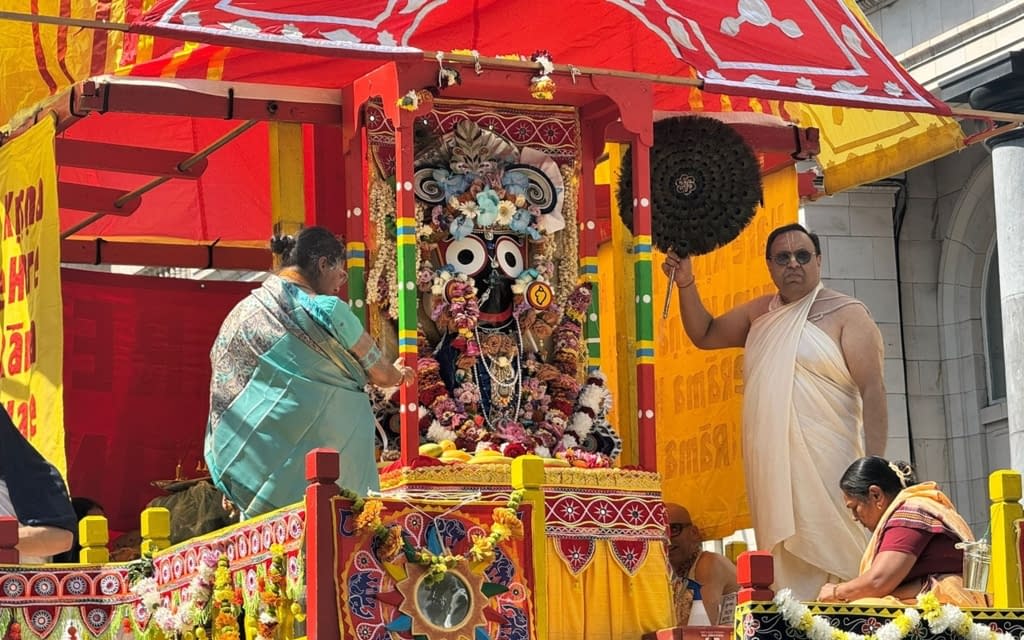
Parabhava 2026–2027 occupies a pivotal place in the classical 60-year Samvatsara cycle referenced in Vedic literature and widely used in the Hindu calendar and regional Panchang traditions. In medieval astronomical discourse, a Samvatsara is a “Jovian year,” synchronized to Jupiter’s motion, while regional almanacs harmonize lunar and solar measures to mark the civil year. The designation Parabhava Nama Samvatsaram for 2026–2027 therefore carries a shared cultural signal across communities that observe Ugadi, Gudi Padwa, Puthandu, Vishu, and related new-year rites.
Philologically, parabhava connotes “defeat,” “setback,” or “decline.” Traditional almanacs interpret this not as predetermined misfortune, but as a cautionary theme: inattentive leadership, imprudent expenditure, or ethical drift can turn manageable headwinds into avoidable losses. Read prudently, the name functions as a collective risk lens for households, institutions, and governments during the year beginning around Chaitra Shukla Pratipada (Ugadi) and the solar ingress of Mesha Sankranti in March–April 2026 and extending to March–April 2027.
Because regional calendars differ in epoch and observance, the exact start timing of Parabhava varies slightly by Panchang. Nonetheless, the shared emphasis on vigilance and corrective action is consistent across North and South Indian almanac traditions, as well as within related dharmic observances aligned to this seasonal threshold and to Chaitra Navratri 2026.
Classical sources such as Vedanga Jyotisha, Surya Siddhanta, Brihat Samhita, and later jyotisha commentaries inform how Samvatsara names are interpreted in mundane (worldly) astrology. These sources do not impose fatalism; rather, they encourage foresight, ethical rectitude, and collective discipline when a year-name signals stressors that may otherwise compound.
At the level of polity and governance, Parabhava years are traditionally associated with risks of misjudgment, policy whiplash, and strategic overreach. In practical terms, this can manifest as leadership churn, heightened contestation in legislative spaces, or frictions in center–state coordination. History shows that in similarly themed years, institutions that explicitly foreground transparency, subsidiarity, and steady execution tend to reduce losses and rebound faster after shocks.
Economic readings tied to Aaya Vyaya 2026-2027 often caution that expenditure (vyaya) can outrun income (aaya) unless budgetary prudence is applied early in the cycle. Households and enterprises may face liquidity tightness, elevated input costs, and a premium on working-capital efficiency. Traditional advice emphasizes strengthening cash buffers, phasing capex more conservatively, and prioritizing essentials. For governments, credible medium-term consolidation paths and targeted social protection typically mitigate the harsher edges of such a configuration.
Food systems and water security also receive attention in Parabhava. Almanac-based guidance warns of uneven rainfall distribution and localized crop stress unless timely planning is undertaken. Resilience improves through diversified cropping, prudent procurement, groundwater recharge, inter-basin cooperation, and community-level food storage—practices long embedded in village sabhas and revived today through watershed and commons-restoration initiatives.
Public health patterns in challenging years tend to reflect fatigue-related ailments, respiratory issues in urban basins, and stress-linked mental-health burdens. Traditional counsel converges with modern public-health priorities: continued immunization, air-quality management, attention to the vulnerable, and strengthening primary care and community nutrition (annadāna and local food commons) as buffers against volatility.
Social cohesion can be tested by misinformation cycles, rumor-led mobilizations, or identity anxieties. Lived wisdom across Hindu, Buddhist, Jain, and Sikh communities consistently highlights that seva, shared meals (langar, annadāna), ahimsa, and dialogic forums lower temperatures and prevent small sparks from becoming structural fractures. In this respect, Parabhava’s warning is less about defeat than about the price of neglecting everyday compassion and inter-community reciprocity.
Planetary backdrops used in mundane assessment help contextualize these cautions. For major portions of 2026–2027, Jupiter shifts from Gemini into Cancer (exaltation) while Saturn traverses Pisces—an arrangement that, in many traditions, mixes analytic overdrive (late-Gemini themes) with a strong call for ethical consolidation and institutional sobriety (Saturn in a water sign). Jupiter’s move into Cancer is usually protective for education, caregiving, and water-related initiatives, but Saturn’s demand for process rigor tempers exuberance and penalizes shortcuts.
Classical mundane techniques place weight on the Aries ingress (Mesha Sankranti) and on charts cast for Chaitra Shukla Pratipada. Traditional rules observe whether malefics dominate angles (kendras) or afflict the lagna and Moon—configurations that often correlate with policy missteps, disease spikes, or weather irregularities. The Ardra Pravesha (monsoon onset) chart is similarly consulted for rainfall spread, with red flags if Saturn and Mars afflict water significators without benefic relief.
Two eclipse seasons in any solar year correspond to the lunar nodes’ geometry. Traditional texts mark the weeks around each season as periods favoring reflection over escalation, heightened information hygiene, and conservative risk-taking. This is particularly relevant for financial markets, high-stakes negotiations, large-scale infrastructure switches, and executive reshuffles.
Sectorally, Parabhava-linked stressors tend to cluster around energy (price spikes or supply lags), logistics (weather or regulatory bottlenecks), and compliance-heavy industries (where process discipline is paramount). Currency volatility and trade-route rerouting can add transient friction to exporters and importers, increasing the premium on hedging and origin–destination diversification.
At the individual level, the negative pull of Parabhava often appears as overconfidence followed by avoidable loss, or as procrastination that allows small issues to become expensive problems. Traditional guidance encourages moderate speech, clean accounting, steady sadhana, and a disciplined daily rhythm (dinacharya). Lapses in sleep, erratic spending, and reactive decision-making map closely to the very pitfalls that the year-name cautions against.
Dharmic remedial frameworks converge on service, restraint, and clarity. Commonly advised practices across traditions include anna-dāna and gau-seva (Hindu), metta-bhavana and dana (Buddhist), ahimsa-satya and aparigraha-focused dana (Jain), and langar-seva and kirtan (Sikh). These measures are not superstition; they are community-scale risk reducers that reliably strengthen social safety nets, improve nutrition, and lower resentment—thereby diluting Parabhava’s harsher social expressions.
Ritual and contemplative supports likewise aim at harmonizing intent and action: regular japa, stotra recitation, vrata observances aligned to one’s kula and ishta, Navagraha shanti where appropriate, and contemplative practice (dhyana, mindfulness, simran) to stabilize attention. These are complemented by civic dharma: timely tax compliance, fair wages, and transparent bookkeeping—practical expressions of satya and daya that reinforce systemic trust.
The seasonal arc of the year offers natural moments for course correction. Ugadi and Chaitra Navratri 2026 invite sankalpa for ethical restraint and service; Vishu, Puthandu, and Baisakhi renew commitments to agrarian and household order; the monsoon onset encourages water stewardship; the Deepavali period supports debt reconciliation and inventory right-sizing; and the year’s close provides deliberate audit and restitution (prāyaścitta) where required.
Importantly, nothing in the Parabhava reading advocates sectarian hierarchy or exclusion. The unifying emphasis—shared by Sanatana Dharma’s pluralistic ethos and by Buddhist, Jain, and Sikh traditions—is that multiple valid sādhanā-margas can work together to steady families, institutions, and societies. Where missionary-style uniformity seeks a single gate, the Indic approach operationalizes unity in diversity: many gates, one courtyard of compassion and responsibility.
In synthesis, the negative aspects signaled by Parabhava 2026–2027 cluster around four themes: avoidable losses through haste, fiscal leakage through weak discipline, social irritation through careless speech, and health drags through neglect of routine. The counterweights are clear and proven: transparent accounting, phased planning, service-oriented community action, and stable daily practice. Read in this way, Parabhava’s message is constructive: decline is not destiny when dharma is lived deliberately.
Inspired by this post on Hindu Pad.