Matsya Jayanti, the appearance day of the Matsya Avatar of Lord Vishnu, is observed on Chaitra Shukla Tritiya, the third lunar day of the bright fortnight of Chaitra (March–April). In 2026, the festival falls on March 21, recognizing Matsya, the fish incarnation, as the first manifestation in the revered Dashavatara sequence. As a springtime observance closely aligned with the northern-hemisphere equinox period, it evokes renewal, preservation, and the safeguarding of wisdomcore themes carried by this Avatar across Vedic and Puranic literature.
The calendrical rule for Matsya Jayanti follows the tithi (lunar day), not the civil date. The festival is kept when Tritiya prevails, typically giving primacy to the tithi present at sunrise in most regional almanac traditions. Due to the moon’s motion and time-zone differences, local Panchang computations may shift observance by a day from one region to another. Consulting a reliable regional Panchang for Chaitra Shukla Tritiya 2026 ensures precision in muhurat, sankalpa timing, and vrata break (parana) guidance.
For 2026, March 21 corresponds to Chaitra Shukla Tritiya for a broad set of regional calendars. Many devotees note the seasonal symbolism: as the bright fortnight begins to accelerate in the first month of the spring cycle (per the Purnimanta reckoning in North India and the Amanta reckoning transition in other regions), Matsya Jayanti arrives as an auspicious recall that dharma endures through cycles of change. This resonance encourages households to plan puja, vrata, and charitable acts in a manner consistent with local sunrise and tithi boundaries.
The earliest literary articulation of the Matsya narrative appears in the Satapatha Brahmana, where a fish warns Manu of an impending deluge and guides him to safety. Later Puranic sources, notably the Matsya Purana and the Bhagavata Purana, expand this motif into a comprehensive avatar theology: Lord Vishnu assumes the form of Matsya to protect Vaivasvata Manu, the Saptarishis, and the seed of life through the pralaya (cosmic dissolution). A boat is secured to the horn of the divine fish with the serpent Vasuki, symbolizing the tether between cosmic order and spiritual refuge.
Textual recensions vary in detail. In several narratives, a daitya seizes the Vedas at the brink of dissolution, and Vishnu as Matsya retrieves the scriptural corpus to re-establish cosmic knowledge at the dawn of a new creation cycle. This diversity of accounts, far from contradiction, underscores a unifying theme: preservation of sacred wisdom and continuity of dharma amid destabilizing forces. The emphasis on knowledge as a living thread carried across ages is central to the festival’s philosophical depth.
Philosophically, Matsya Jayanti affirms that spiritual discernment (buddhi) and righteous conduct (dharma) are the dependable “boat” across the ocean of uncertainty. The avatar’s place at the head of the Dashavatara has often been readespecially in modern interpretive literatureas echoing a movement from aquatic life to increasingly complex forms, though the avatar doctrine is foremost theological and symbolic. The underlying message is clear: at moments of transition, steadfast remembrance, ethical restraint, and scriptural reflection stabilize individual and collective life.
Iconography portrays Matsya either as a full fish form or as a fish-bodied deity with a human torso above the waist, bearing the conch (shankha), discus (chakra), mace (gada), and lotus (padma). Art-historical depictions sometimes include the horn to which Manu’s ark is tied, visually encoding the rescue motif. In temple and home worship, images or yantras representing Matsya Narayana are placed on a clean altar, evoking the presence of Vishnu in a form specifically associated with guidance through delugeliteral and metaphoric.
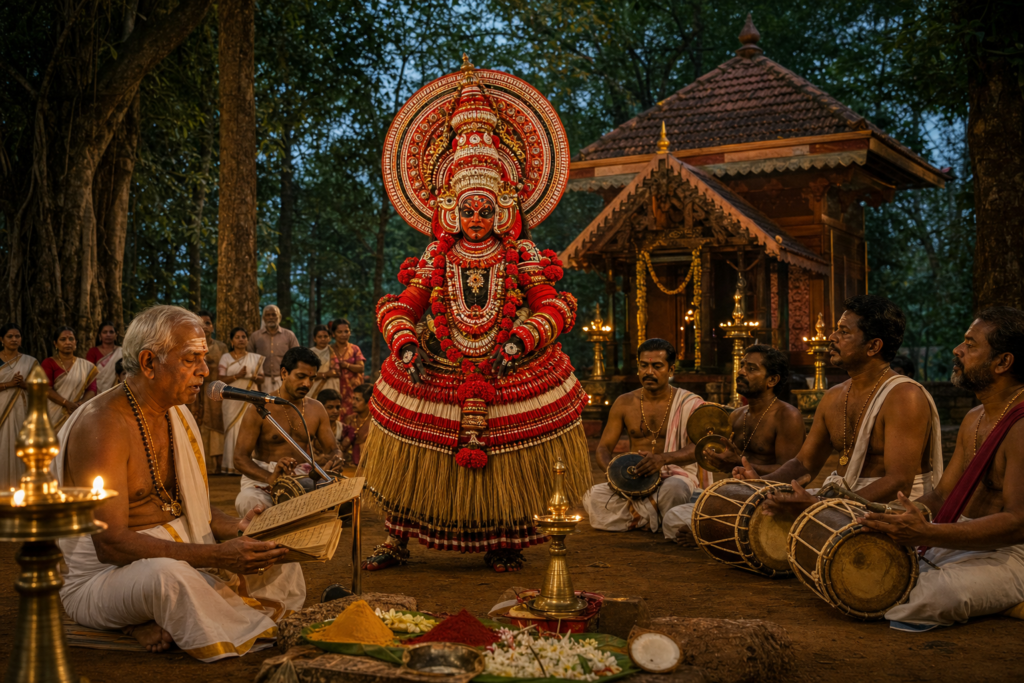
Puja vidhi for Matsya Jayanti follows a Shodashopachara or Panchopachara sequence, adapted to household capacity. After a purifying bath and cleaning of the shrine, a sankalpa is taken for Chaitra Shukla Tritiya, explicitly naming Matsya Avatar Jayanti. The deity is invoked (avahana) with dhyana, offered seat (asana), water (arghya), ceremonial bath (abhisheka) where available, fresh clothes or vastra, sandal paste, flowers, lamps, incense, water and naivedya as per dietary vows, and arati. A brief reading or listening of the Matsya narrative from the Puranas reinforces the day’s intention to safeguard knowledge and ethical living.
Fasting (vrata) on Tritiya is observed with satvik discipline. Many follow phalahara (fruits, milk) or a light anukalpa diet without grains, while some undertake nirjala fasting if health permits. Onions, garlic, and overly pungent or tamasic foods are traditionally avoided. Emphasis is placed on inner restraint, gentle speech, and acts of dana such as offering grains, jaggery, or clothing to the needy, libraries, schools, or dharma institutions, aligning with the avatar’s theme of protecting and transmitting knowledge.
Mantra recitation typically centers on Vishnu’s names and hymns. Vishnu Sahasranama, Purusha Sukta, Gajendra Moksha stotra, or the Dashavatara stotra from the Gita Govinda are time-honored choices. Simple, accessible japa such as “Om Namo Bhagavate Vasudevaya” or “Om Matsyaya Namah” integrates breath, attention, and devotion. Many devotees also read selections from the Matsya Purana or the Matsya episode in the Bhagavata Purana to internalize the avatara-katha alongside formal worship.
Temple observances vary by region. Vaishnava temples highlight special abhishekam, alankaram, and satsang on Matsya-tattva, while community gatherings may include nama-sankirtana and discourses on scriptural preservation. Homes often complement the day’s puja with children’s readings of the Manu and the boat narrative, reinforcing intergenerational learning and the festival’s educational dimension.
In several parts of India, Chaitra Shukla Tritiya also intersects with local spring observances such as Chaitra Teej or Gangaur-related practices, allowing families to offer combined respect to Vishnu and Devi within the same seasonal matrix. This co-celebration naturally embodies unity in diversity within Sanatana Dharma, where multiple devata traditions harmonize in daily religious life without contradiction.
Matsya Jayanti also resonates across the wider dharmic family. In Buddhist art and practice, the “pair of golden fish” appears among the Ashtamangala as a symbol linked with auspiciousness and freedom of movement across the ocean of suffering. Jain dharmic emphasis on ahimsa and careful stewardship of life dovetails with the day’s ethical tenor, while Sikh principles of seva and community uplift reinforce the festival’s call for protecting knowledge, serving society, and conserving natural resources. The shared valuescompassion, discipline, and truth-seekingaffirm unity among Hindu, Buddhist, Jain, and Sikh traditions.
Ecologically, a fish-avatar festival naturally highlights reverence for water. Many communities use the occasion to support jal sanrakshan initiatives, reduce waste, clean local water bodies, and practice mindful consumption. Simple household stepsconserving water during ablutions, avoiding chemical offerings, and favoring biodegradable materialsallow worship to become a living commitment to planetary well-being consonant with dharmic ethics.
From a calendrical perspective, Chaitra marks the spring threshold in numerous regional systems. North Indian Purnimanta calendars treat Chaitra as the first month, while Amanta calendars in several regions transition from Phalguna to Chaitra after the new moon. Because tithi spans may straddle civil midnights, Matsya Jayanti scheduling follows the tithi’s presence relative to sunrise and the local day. This is why well-vetted regional Panchang data, rather than generalized approximations, should guide home or temple muhurat planning in 2026.
Questions about differences between Matsya Jayanti and Matsya Dwadashi arise often. While several almanac traditions firmly locate Matsya Jayanti on Chaitra Shukla Tritiya, some communities observe Matsya-themed worship on other dates such as certain Dwadashi days tied to specific local parampara. Both practices honor Vishnu’s Matsya-tattva; households typically follow the sampradaya of their family or local temple while maintaining the shared theological intent of safeguarding dharma and wisdom.
Eligibility for observance is inclusive. Anyone can honor Matsya Avatar Jayanti through puja, mantra, vrata, or study, with modifications for age, health, and circumstance. Dietary discipline is best aligned with one’s well-being under satvik guidance; for those who cannot fast, moderated meals coupled with scripture recitation and charitable giving preserve the festival’s spirit. Families sometimes feed fish with small, eco-safe flour pellets near clean, permitted waters as a gesture of compassion for aquatic life, always mindful of local regulations and ecological impact.
For home preparation in 2026, it is helpful to settle the exact Chaitra Shukla Tritiya tithi locally, gather puja materials in advance, and plan readings of the Matsya narrative alongside Vishnu Sahasranama or Dashavatara stotra. Aligning worship with a clear sankalpaprotection of knowledge in the family, commitment to ethical speech, and service to communitybridges text and lived practice. As March 21 approaches, Matsya Jayanti 2026 offers a luminous opportunity to anchor life in enduring dharmic values amid the swift currents of change.
Inspired by this post on Hindu Pad.