Panchangam, sometimes written as Panchangamu, Pancanga, Panchanga, or Panchaanga, functions as the classical Hindu Almanac and Hindu Calendar. In eastern India it is widely known as Panjika, and in Odisha as Panji. Rooted in Vedic astronomy and the jyotiṣa tradition, it organizes time, ritual, and civic life by presenting daily, monthly, and yearly calculations in a precise, standardized format that communities across the Indian subcontinent and the diaspora consult for religious festivals, fasts, temple rites, and everyday decisions.
The term pañcāṅga literally means “five limbs,” referring to the five fundamental elements used to reckon time: tithi (lunar day), vara (weekday), nakṣatra (lunar mansion), yoga (a specific astronomical combination), and karaṇa (half-tithi). Together, these parameters provide both an astronomical snapshot of the Sun–Moon–Earth relationships and a cultural framework for auspicious timing (muhūrta), festival scheduling, and personal observances.
The Panchangam is computed on a sidereal framework (nirāyaṇa), anchoring the zodiac to fixed stars rather than the tropical equinox. To reconcile the observed precession of the equinoxes, Indian almanacs apply an ayanāṁśa (most commonly the Lahiri ayanāṁśa, recommended by India’s Calendar Reform Committee in the mid-20th century). Classical sources such as the Sūrya Siddhānta, Aryabhata’s Aryabhaṭīya, and Varāhamihira’s Br̥hat Saṁhitā inform the methods, while modern dr̥k (observational/ephemeris-based) Panchangams increasingly use high-precision astronomical algorithms for superior accuracy.
Technically, each limb has a clear astronomical basis. A tithi is defined by the elongation between the Moon and the Sun; every 12 degrees of separation marks one tithi, producing 30 tithis per synodic month, split into Śukla Pakṣa (waxing) and Kṛṣṇa Pakṣa (waning). The weekday (vara) follows the sunrise-to-sunrise convention in most traditions. The nakṣatra divides the ecliptic into 27 segments (13°20′ each), with an occasional 28th (Abhijit) considered in select contexts. The yoga is derived from the sum of the Sun’s and Moon’s longitudes projected onto 27 equal parts. The karaṇa, a practical scheduler, represents half a tithi; seven are movable (Bava, Bālava, Kaulava, Taitila, Gara, Vaṇija, and Viṣṭi/Bhadra) and four are fixed (Śakuni, Catuṣpāda, Nāga, and Kiṁstughna).
Hindu Almanac usage varies by region, yet its logic remains consistent. Lunar months can be observed in two naming traditions: amānta (month ends on Amāvasyā) and pūrṇimānta (month ends on Pūrṇimā), leading to differences in month labeling even when the actual day count is the same. Intercalation through adhika māsa (an extra lunar month) keeps the lunisolar year aligned with the solar year; in rare cases a kṣaya māsa (a “missing” month) occurs. Solar calendars—vital in Tamil Nadu (Tamil solar months), Kerala (Kollavarsham), parts of Odisha and Bengal (solar Saṅkrānti-based transitions)—reckon months by the Sun’s ingress (saṅkrānti) into successive zodiacal signs.
Multiple era systems co-exist: Vikrama Samvat, Śaka Samvat, regional solar years (e.g., Kollavarsham), and the Bengali calendar. The Panjika tradition in Bengal and Odisha (Panji) is deeply embedded in cultural life, guiding major observances such as Durga Puja, while Tamil Panchangam and Malayalam Panchangam provide parallel solar-lunisolar reference systems. Historically, related lunisolar frameworks have informed timekeeping across dharmic traditions, creating shared temporal rhythms even when local customs differ.
Differences between vakya (mean-motion, tabular) and dr̥k (ephemeris-based) Panchangams explain minor date or timing variations across publications. Dr̥k Panchangams incorporate modern planetary ephemerides and location-specific sunrise/sunset, moonrise/moonset, and transit data, which is especially important for readers outside India where time zones and latitude/longitude significantly shift observance times. For practical use, a reliable Panchangam should always match the reader’s location and time zone.
A typical Panchangam or Panjika page lists sunrise and sunset, moonrise and moonset, the prevailing tithi with its end time, nakṣatra with end time, yoga, karaṇa, vara, and the current pakṣa and māsa. Many editions also include Rahu Kālam, Yamaganda, and Gulikā Kālam (avoidance periods), Abhijit Muhūrta (midday auspicious window), Durmuhūrta, Amr̥ita Kāla, as well as regional tools such as Choghadiya and star-based assessments like Tārabala and Candra-bala.
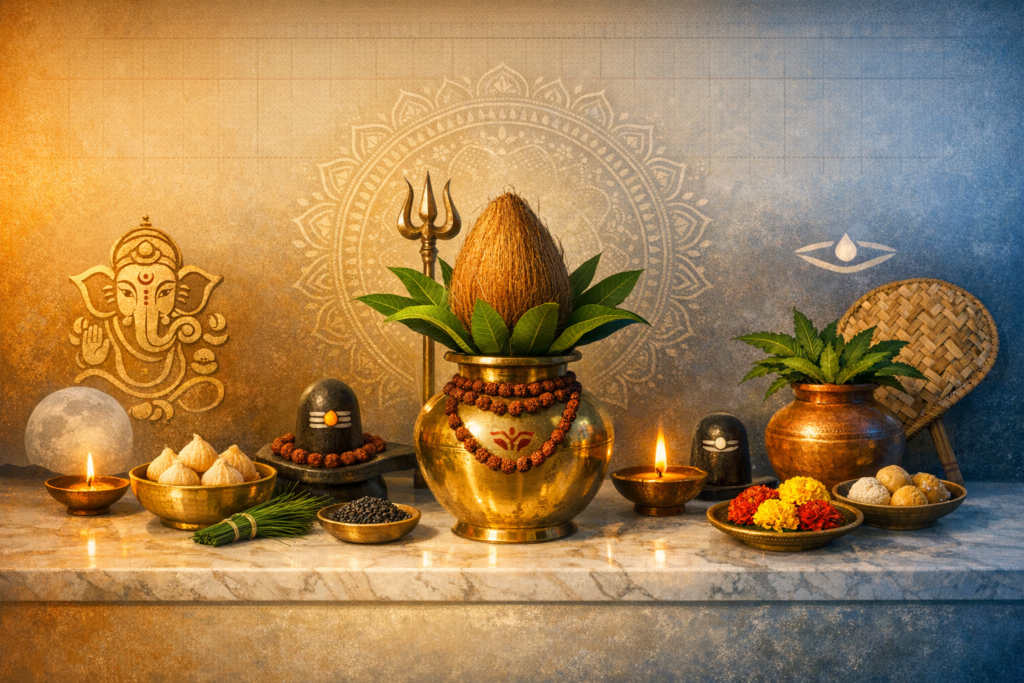
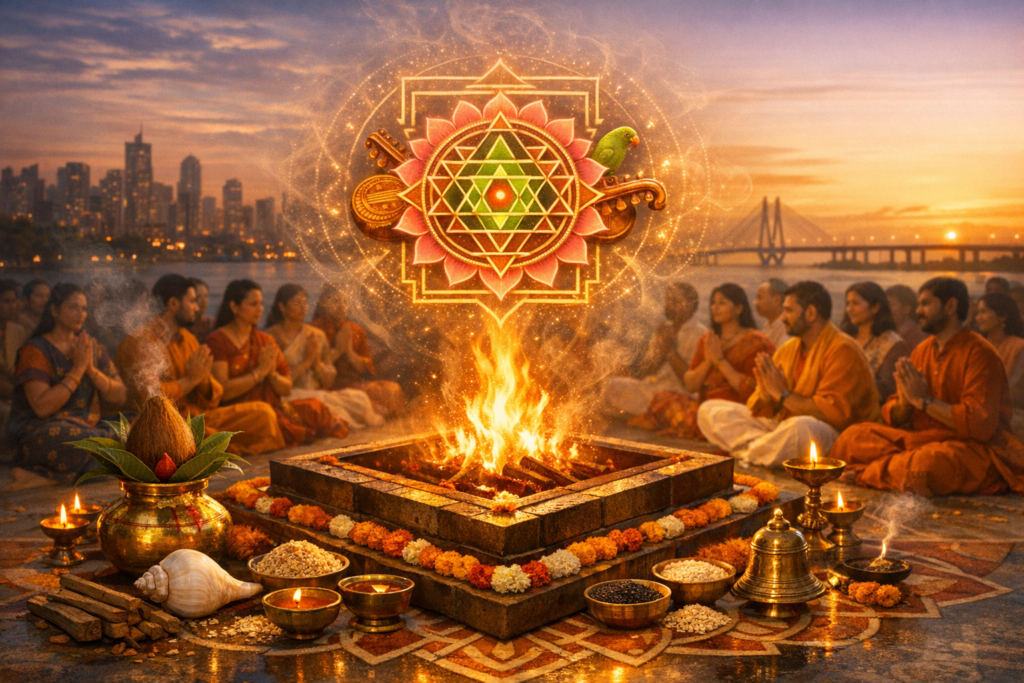
Muhūrta selection draws on these entries to plan household rites, travel, ceremonies, and temple functions. Abhijit Muhūrta (centered around local solar noon) is considered broadly favorable in many regions. Rahu Kālam, Yamaganda, and Gulikā Kālam are avoidance spans derived by dividing daylight and night into segments according to weekday. In western India, Choghadiya divides day and night into eight periods each; categories such as Amr̥t, Śubha, and Lābha are sought, while Roga, Kāla, and Udvega are commonly avoided. South Indian practice often references Tārabala—assessing the relationship between one’s janma nakṣatra and the day’s nakṣatra—along with Candra-bala for emotional steadiness. The karaṇa Viṣṭi (Bhadra) is widely treated as inauspicious for initiating auspicious tasks, though it may be deemed effective for challenging undertakings in some traditions.
Festival timing illustrates how the Hindu Calendar encodes subtle rules. Many vratas, such as Ekādaśī, follow the tithi present at local sunrise, with pāraṇa (fast-breaking) specified by precise tithi transitions. Amāvasyā and Pūrṇimā anchor significant observances and monthly rhythms. Certain festivals, like Mahāśivarātri, privilege night spans (niśītha), while Sankrānti-based observances (e.g., Makara Saṅkrānti) depend strictly on the Sun’s ingress moment rather than sunrise. Regional Panjika traditions add layers, such as Bhadra considerations in eastern India or Panchaka precautions during specific lunar positions.
Eclipses—Chandra Grahan (lunar) and Surya Grahan (solar)—are listed with start, maximum, and end times, along with visibility data. Ritual guidelines (e.g., sutaka windows, temple protocols) often reference these timings. The Panchangam also marks saṅkrāntis, equinoxes, solstices, and seasonal anchors that align religious life with natural cycles, echoing the Vedic emphasis on ṛta (cosmic order).
Beyond ritual, the Hindu Almanac supports everyday decisions. Many households glance at the day’s tithi and nakṣatra on a kitchen wall calendar before setting out; shopkeepers consult Choghadiya; families use Abhijit Muhūrta for quick, necessary acts when a fuller muhurta is not feasible. The Panjika on a priest’s desk and the Panchangam app on a student’s phone both serve the same purpose—harmonizing human activity with celestial rhythms in a way that feels relatable and stabilizing.
Importantly, lunisolar timekeeping fosters unity among dharmic traditions. Jaina communities observe Mahāvīr Jayanti and Paryuṣaṇa by tithi; Buddhist observances such as Vesak and Maghi Purnima follow full-moon cycles; Sikh history engaged with the Bikrami system, and many gurdwaras still reference it for select observances even as the Nanakshahi calendar provides a solar framework. This shared grammar of tithis, pakṣas, and lunar months enables a common temporal language that honors diversity while nurturing cultural closeness.
Because Panchangam computation is technical, several misconceptions persist. Astronomy and astrology interact in this domain: the astronomical core (positions, transits, elongations) is objective and computable, while interpretive layers (muhūrta selection, avoidance windows) reflect cultural consensus. Variations across Panchangams are not contradictions as much as expressions of differing computational methods (vakya vs dr̥k), reference ayanāṁśa, regional customs, and, crucially, user location. A well-chosen, location-specific, dr̥k-based Panchangam reduces confusion for readers in global time zones.
Practical reading strategies help. When a tithi ends before sunrise, observe the standard rule associated with that festival (for example, Ekādaśī is kept when that tithi prevails at sunrise in most traditions, with nuanced exceptions). Always check “tithi ends at” and “nakṣatra ends at” times on the chosen Panchangam, note Rahu Kālam/Yamaganda/Gulikā for the day, and scan for Abhijit Muhūrta. For weddings, housewarmings (Gṛha Praveśa), and naming ceremonies, consult muhurta sections that integrate Tārabala and Candra-bala alongside core pañcāṅga factors—and defer to regional sampradāya norms.
Regional calendars additionally preserve rich lexicons and seasonality: Chaitra Month marks spring’s onset in many North Indian traditions; Kārttika Māsa carries devotional weight across regions, including the Odia Panchuka; Margazhi (Mārgaśīrṣa) in Tamil Nadu emphasizes pre-dawn devotional practice; and Kerala’s Meena Masam and Vṛṣabha Masam anchor agricultural and temple cycles. Such diversity coexists with a shared Panchangam logic, reflecting unity in diversity across India’s cultural landscape.
The Panchangam’s scholarly lineage is notable. Varāhamihira synthesized earlier traditions; Aryabhata introduced systematic planetary models; the Sūrya Siddhānta refined calculations; and modern reformers endorsed sidereal standards and the Lahiri ayanāṁśa to harmonize practice. Contemporary dr̥k Panchangam publishers now use high-precision ephemerides, ensuring that Hindu Calendar entries, eclipse predictions, and festival timings align with observational astronomy while honoring venerable sampradāyas.
In sum, Panchangam/Panjika is both scientific and sacred: a precise astronomical almanac and a living cultural guide. By explaining tithi, vara, nakṣatra, yoga, and karaṇa, and by encoding muhurta, eclipses, saṅkrānti, and vratas, it offers a coherent, time-tested way to plan life. Its shared lunisolar grammar bridges Hindu, Buddhist, Jaina, and Sikh communities, strengthening social harmony. For readers, selecting a location-specific, dr̥k Panchangam—and learning to interpret its daily entries—translates the sky’s motions into meaningful, compassionate action on earth.
Inspired by this post on Hindu Pad.