The 523rd death anniversary (Annamacharya Vardhanthi) of Sri Tallapaka Annamacharya will be observed from 14 March to 21 March 2026 under the auspices of Tirumala Tirupati Devasthanams (TTD). Spanning Tirupati, Tirumala, and Tallapaka, the commemoration unites devotees, scholars, and artists in a week-long offering of sankeertana, scholarship, and service centered on the timeless bhakti legacy of Annamaiah.
TTD has identified multiple sacred and cultural venues for the celebrations: Tallapaka Dhyanamandiram, the 108-ft Annamacharya Statue at Tallapaka, Narayanagiri Gardens in Tirumala, Annamacharya Kalamandiram, and Mahati Kalakshetram in Tirupati. These locations collectively embody meditation, remembrance, and performance, ensuring the Vardhanthi resonates across devotional, educational, and cultural dimensions.
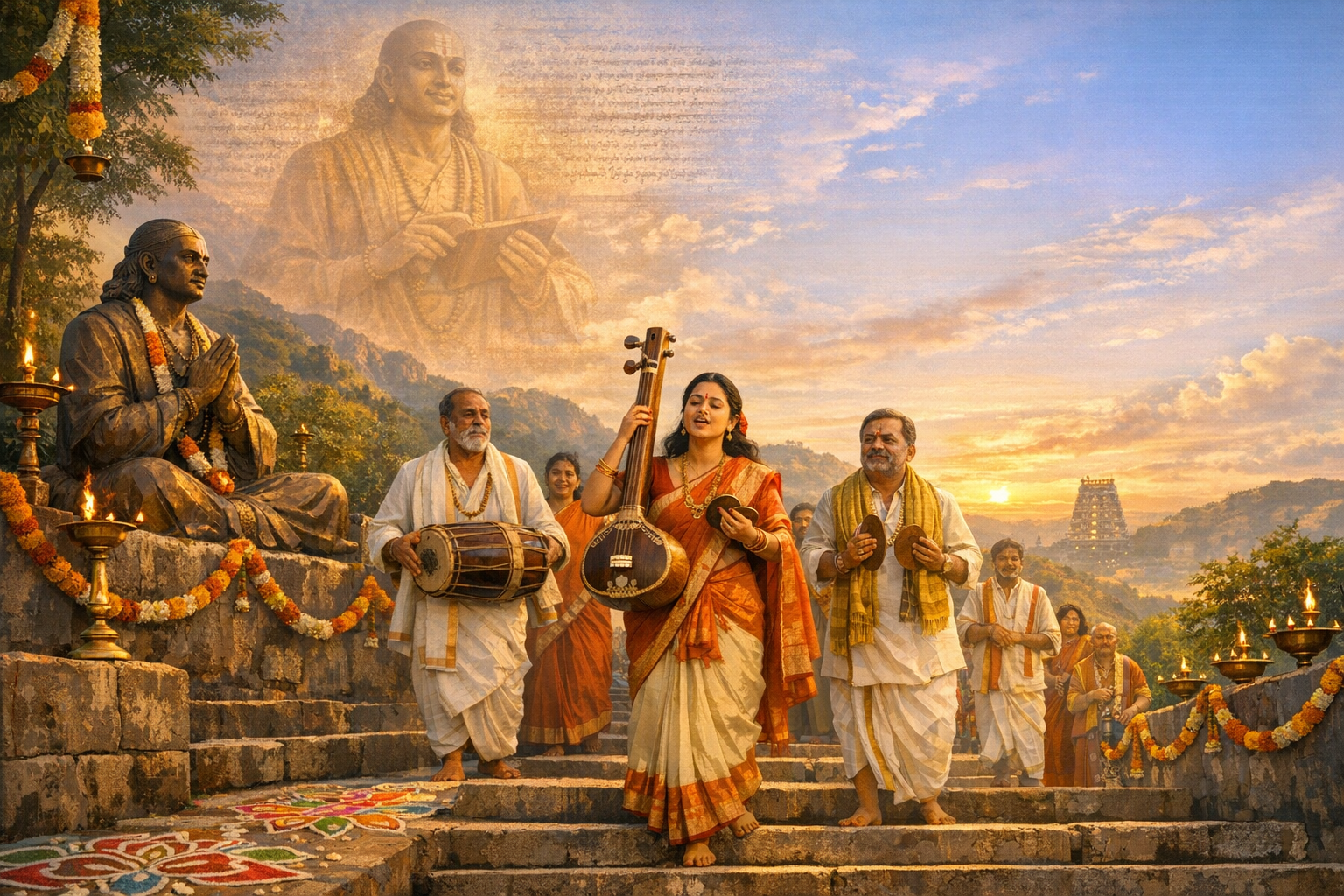
The inaugural morning highlights Metlotsavam on 14 March at 6 a.m., an uplifting congregational ascent in which devotees proceed along the steps (metlu) to Tirumala while singing Annamaiah’s sankeertanas. This living tradition affirms a shared pilgrimage of voice and foot, heart and mind, where rhythmic chanting and measured steps become a unified sadhana.
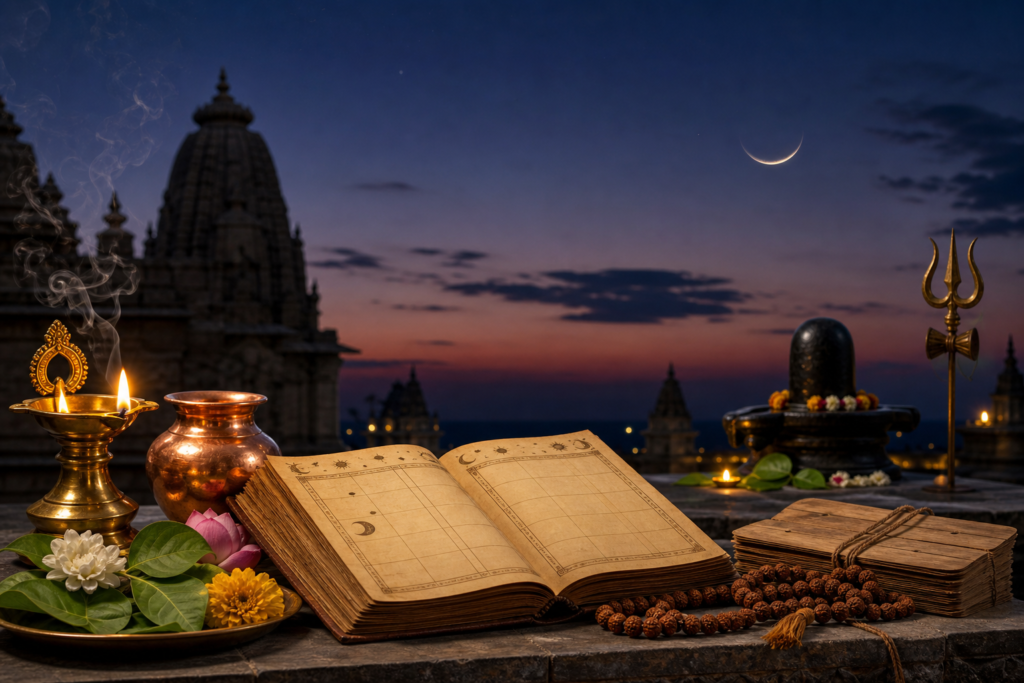
Annamacharya (Annamaiah), the seminal 15th-century saint-poet of Tallapaka, is revered as a pioneering vaggeyakara who composed thousands of Telugu sankeertanas in praise of Sri Venkateswara and Alamelu Manga. Preserved for posterity on copper plates and revived in the modern era through systematic notation and pedagogy, his corpus now anchors devotional practice, classical performance, and literary study across Andhra Pradesh and beyond.
In the dharmic understanding, a saint’s Vardhanthi marks the day of ultimate union with the Divine. It is therefore commemorated as an aradhana, emphasizing remembrance through music, contemplation, community service, and learning. The Tirupati observances sustain this spirit by balancing devotional performance with reflective forums that deepen insight into Annamaiah’s theology, poetics, and social vision.
The chosen venues symbolically trace Annamaiah’s journey and influence. Tallapaka Dhyanamandiram and the 108-ft Annamacharya Statue foreground the saint’s native legacy and meditative ideals; Narayanagiri Gardens in Tirumala situates communal remembrance near the sacred hills; Annamacharya Kalamandiram evokes structured learning and repertoire-building; Mahati Kalakshetram underscores the continuing vitality of classical arts rooted in sankeertana.
Programming during Annamacharya Vardhanthi typically includes goshti ganam (group singing), sankeertana parayanams, classical music and dance recitals, Harikatha and upanyasas, as well as seminars that study textual, musical, and theological aspects of the corpus. A detailed day-wise schedule is generally issued by TTD closer to the dates; participants are advised to consult official TTD notifications for final timings, venue confirmations, and darshan-related advisories.
Annamaiah’s sankeertanas display a rigorous yet accessible aesthetic. Linguistically, they fuse chandas (meter), yati (caesura), and prasa (alliteration) with vivid metaphors and ethical clarity. Thematically, they range from adhyatma sankeertanas (inward, philosophical devotion) to sringara-bhakti (the aesthetics of love as divine longing), addressing both the inner discipline of sadhana and the outer rhythms of temple-centered worship.
From a musicological perspective, the lyrics have been set to raga-tala frameworks by subsequent generations, entering teaching lineages and concert platforms. Their pedagogy strengthens sahitya-raga alignment, cultivates bhava (expressive sentiment), and encourages sangati development appropriate to each composition’s devotional intent. In performance practice, collective singing during goshti ganam highlights the democratic, community-facing heart of the bhakti tradition.
The material history of Annamaiah’s oeuvre is as compelling as its devotional resonance. Copper-plate preservation safeguarded thousands of compositions, enabling scholarly cataloging, notation, and dissemination. TTD and associated cultural institutions have, over decades, expanded archival, training, and outreach efforts so that learners, performers, and researchers can access reliable texts, commentaries, and performance resources.
Annamaiah Vardhanthi also reflects the broader unity of dharmic traditions. The sankeertana format shares deep kinship with Sikh kirtan, Jain stavan, and Buddhist gatha recitationeach emphasizes devotion expressed through ethical text, communal singing, and contemplative discipline. The week’s programs therefore offer a living example of spiritual pluralism, affirming humility, compassion, and truth-seeking as common values across Hinduism, Buddhism, Jainism, and Sikhism.
The lived experience of Metlotsavam is frequently described as transformative. As participants harmonize steps and song in the cool morning light, the ascent becomes a meditative arcbreath syncing to tala, heart aligning with sahitya, and community energy dissolving the distance between individual and collective devotion. For many, this is where Annamaiah’s poetry fully awakens: in shared voice, steady movement, and the presence of Tirumala’s sacred hills.
Those planning to attend may consider arriving early for the 14 March start, leaving ample time for assembly and movement. Comfortable, modest attire, light shawls for the morning chill, and hydration essentials are recommended. Crowd management advisories, security checks, and traffic diversions can vary during major observances; consulting TTD’s official channels for the latest guidance helps ensure a smooth, safe experience.
Accessibility and inclusivity are core considerations. Families with elders or children may plan shorter segments of participation, choosing seated programs at Annamacharya Kalamandiram or Mahati Kalakshetram. Quiet reflection at Tallapaka Dhyanamandiram allows those with mobility constraints to partake meaningfully in the Vardhanthi’s meditative ethos without strenuous movement.
Environmental responsibility aligns naturally with the event’s spirit of seva. Participants are encouraged to minimize single-use plastics, follow local waste segregation protocols, and keep pathways and venues clean. Such practices honor the sanctity of Tirumala-Tirupati’s sacred geography and support collective well-being during high-footfall festivities.
Scholars and students of literature, music, and religion can leverage the Vardhanthi to observe how text, raga, and ritual interrelate in situ. Close listening to diction, prosody, and bhava in live performance, along with attending lectures and discussions, enriches understanding of how Annamaiah’s compositions operate simultaneously as poetry, prayer, and pedagogy.
Those unable to travel may seek updates and potential broadcasts through TTD’s official information channels. Whether on-site or remote, engagement with Annamaiah’s sankeertanasthrough learning, listening, or reflective readingcontinues the Vardhanthi’s core impulse: to sustain devotion, deepen understanding, and share spiritual music with sensitivity and respect.
The 523rd Annamacharya Vardhanthi ultimately reframes remembrance as renewal. By carrying forward Annamaiah’s sankeertana tradition across Tallapaka, Tirupati, and Tirumala, the celebrations affirm that devotion matures through disciplined art, compassionate community, and unity across dharmic streams. In that shared space, Annamaiah’s voice is not a distant past; it is an enduring presence.
Note: Program elements and timings are subject to TTD’s official announcements. Participants should verify details, including Metlotsavam arrangements, venue access, and darshan advisories, through TTD before travel.
Inspired by this post on Hindu Pad.