Chaitra Masam is the first lunar month in the Telugu calendar (Telugu Hindu Panchangam) and marks the ceremonial opening of the ritual year across Telugu-speaking communities. In Telugu Panchangam for Andhra Pradesh, Chaitra Masam 2026 starts on March 19 and ends on April 17. By Gregorian reckoning, the month therefore spans March–April. Similar dates are applicable to Marathi, Gujarati, and Kannada Panchanga because the governing lunar tithis are shared across these traditions.
Calendrically, Chaitra is defined in the amanta system used in the Telugu Panchangam, where a lunar month begins the day after Amavasya (new moon) and concludes at the next Amavasya. In 2026, the new moons on 19 March and 17 April bracket the month, explaining the start–end dates above. Because tithi observance follows sunrise in local time, communities in different time zones may experience a one-day shift for certain rites when compared with Indian panchangams.
With Ugadi at the heart of the month, Chaitra 2026 inaugurates the Parabhava Nama Samvatsaram. The Panchang (almanac) for the new year is traditionally heard as Panchang Shravanam, an interpretive reading that summarizes the year’s varsha-phala (broad forecasts) through the five limbs of the almanac: tithi, nakshatra, yoga, karana, and var (weekday). This practice underscores how the Telugu calendar integrates astronomy, ritual timekeeping, and social rhythms into a coherent cycle of auspicious living.
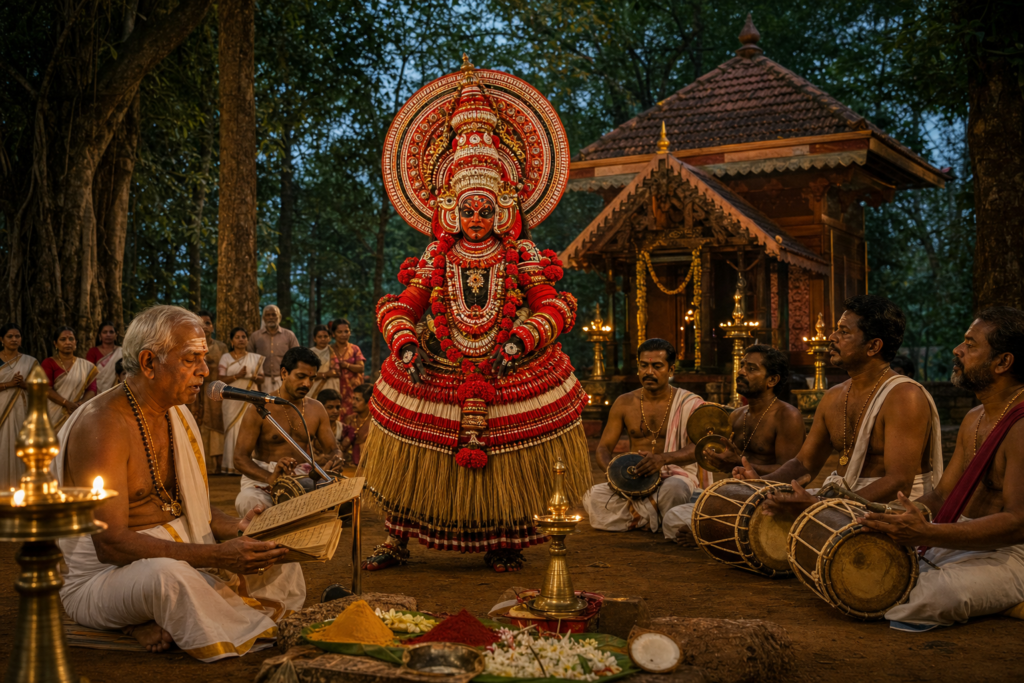
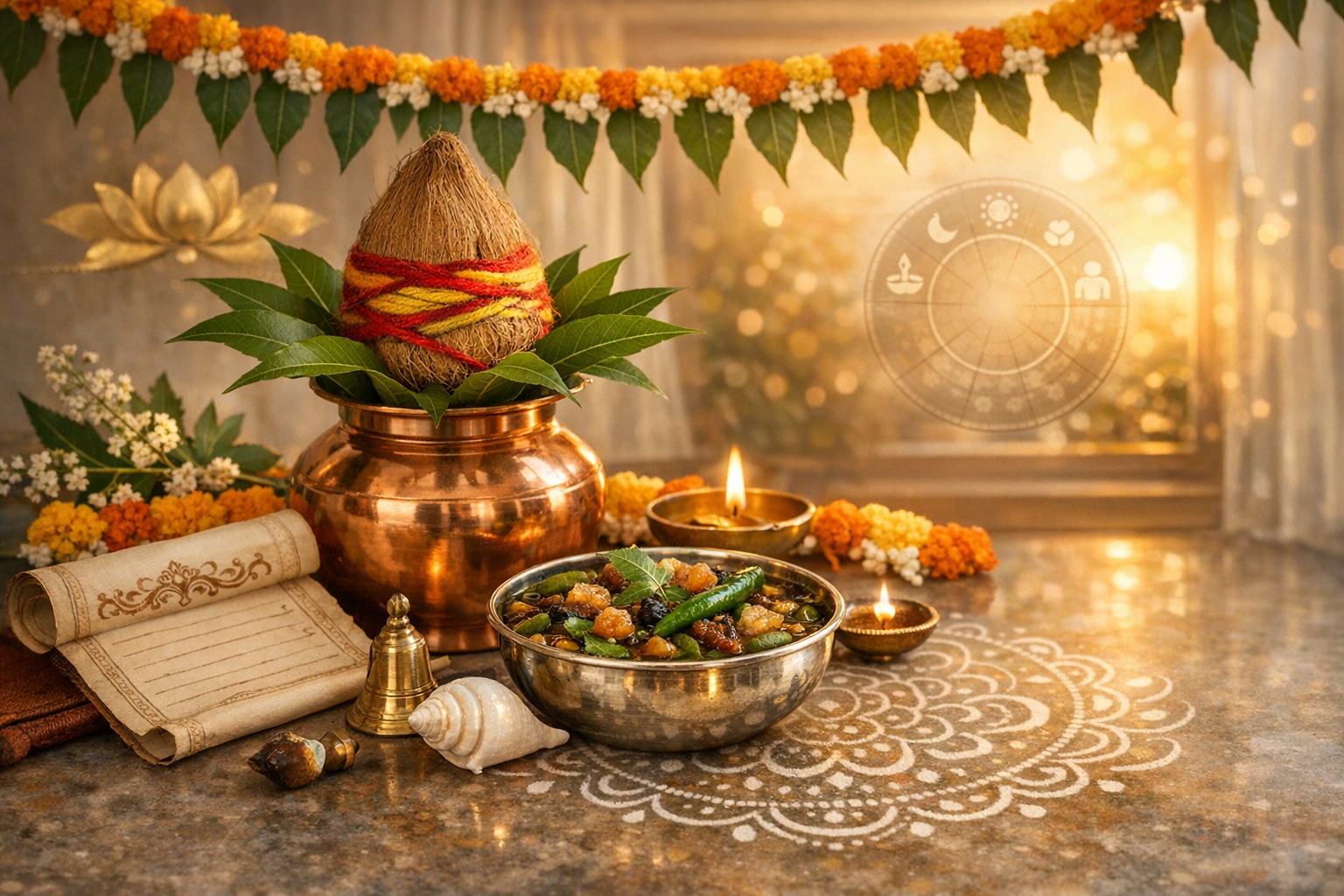
Chaitra Shukla Pratipada is observed as Ugadi, the Telugu New Year, synchronizing with Gudi Padwa (Maharashtra) and Navreh (Kashmiri Pandits) on the same tithi. Households welcome the season with thorough cleaning, rangavalli (rangoli), and the recitation of Vedic and Puranic verses. Many families prepare the emblematic “Ugadi pachadi,” a neem–jaggery–tamarind seasonal blend that symbolizes life’s six rasassweet, sour, salty, bitter, pungent, and astringentevoking a reflective awareness that the new year will bring a full range of experiences to be met with equanimity and devotion.
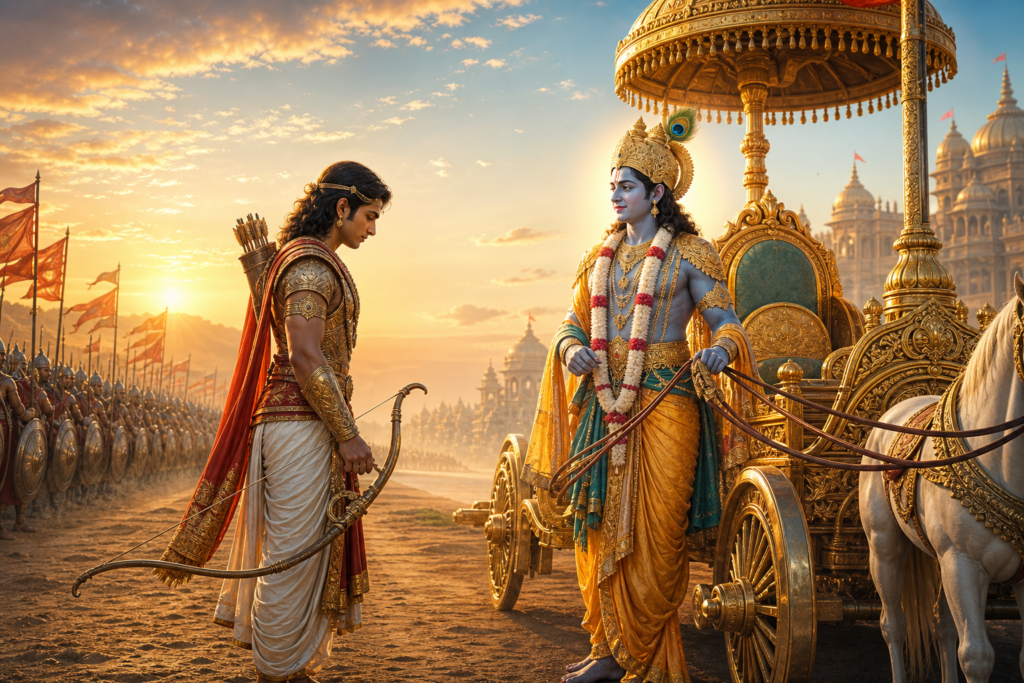
Chaitra Navratri unfolds from the first day of the bright fortnight (Shukla Paksha) and culminates on Sri Rama Navami (Shukla Navami). Across Telugu-speaking regions, this period is suffused with Rama bhaktiparayana of Valmiki Ramayana or Sundara Kanda, special alankarams for the deities, and community sankeertana. The famed Sri Sita Rama Kalyanam at temples such as Bhadrachalam exemplifies the month’s devotional center of gravity, drawing devotees who seek Sri Rama’s grace for household harmony, courage, and righteous conduct (dharma).
Chaitra Purnima, the full-moon anchor of the month, is widely observed for Satyanarayan puja and, in many regions of India, Hanuman Jayanti. Practices vary by sampradaya and region; Andhra and Telangana often follow distinct dates for Hanuman Jayanti compared with North Indian calendars. The guiding principle remains the same: the full moon of Chaitra is honored as a highly meritorious time (punyakala) for vrata, japa, dana, and satsanga.
Chaitra also hosts observances that strengthen bonds with kindred dharmic traditions. In the Jain community, Mahavir Jayanti is celebrated in Chaitra Shukla (typically Trayodashi/Chaturdashi), honoring Bhagavan Mahavira’s birth and the timeless ideal of ahimsa. Around the time of Mesha Sankranti in mid-April, the Sikh festival of Vaisakhi marks the solar new year and, historically, the founding of the Khalsaan occasion suffused with seva and shared community meals (langar). For many Buddhist communities, the April full moon is a day of special merit, observed through meditation and dana. These convergences illustrate how Chaitra naturally fosters unity-in-diversity among Hindu, Buddhist, Jain, and Sikh traditions through shared cycles of sacred time.
From a technical perspective, understanding the amanta–purnimanta distinction helps reconcile regional calendars. Telugu, Kannada, and Marathi panchangams typically follow the amanta convention (new moon to new moon), while many North Indian almanacs adopt the purnimanta convention (full moon to full moon). Despite this civil-month difference, festival dates match because they are anchored to identical tithis; Chaitra Shukla Paksha in both systems corresponds to the same lunar phase window, ensuring that Ugadi/Gudi Padwa/Navreh, Chaitra Navratri, and Sri Rama Navami align nationwide.
Mesha Sankranti (Sun’s ingress into Aries) usually occurs around 13–14 April and falls within Chaitra Masam 2026. This solar transition underpins several regional new yearsPuthandu (Tamil New Year) in Tamil Nadu, Vishu in Kerala, Vaisakhi in Punjab, and Rongali Bihu in Assamhighlighting how lunar and solar calendars harmonize across India. For devotees tracking both systems, this overlap offers a uniquely resonant span of days to undertake new beginnings, resolve personal vows (sankalpas), and schedule shubha muhurtham.
The Panchang’s five limbs serve practical purposes throughout the month. Tithi selection guides fasts (vratas) such as Ekadashi, while nakshatra, yoga, and karana inform domestic rites, study plans, and travel. Many households use Chaitra to commence scriptural study cycles, begin Sanskrit learning, or restart long-paused sadhanas because the month is traditionally seen as shubha for initiating knowledge pursuits (vidyarambha) and devotional disciplines (bhakti and japa).
For those planning rites in 2026, a few technical guidelines improve accuracy. First, consult a region-specific Telugu Panchangam that calculates tithi at local sunrise, since sunrise-bound tithi may shift observance to the previous or next civil date compared with IST. Second, when scheduling homas, upanayanam, griha pravesh, or vivaha during Chaitra, consider not only the tithi but also nakshatra compatibility, weekday (var), tarabalam, and community-specific canons. Third, diaspora communities in North America, Europe, and Southeast Asia should rely on locally computed panchangams; even a few hours’ difference in moon–sun longitudes can move a tithi across the sunrise boundary.
The emotional tenor of Chaitra is as integral as its technicalities. Households report a palpable sense of renewal: the scent of mango blossoms and neem leaves, the cadence of conch and bell at dawn, and the shared tasting of Ugadi pachadi tie ritual to feeling. Elders often recount formative Ugadi morningsstanding before the family shrine as Panchang Shravanam unfoldsreminding younger generations that calendars are not only for counting days but for cultivating values: gratitude (kruta-jnata), restraint (dama), and steadfastness (dhriti).
In summary, Chaitra Masam 2026 in the Telugu calendar runs from March 19 to April 17 and opens the Parabhava Nama Samvatsaram. It carries the symbolic and practical weight of a new beginning: Ugadi on Chaitra Shukla Pratipada, the nine nights of Chaitra Navratri culminating in Sri Rama Navami, and the plenary grace of Chaitra Purnima. Because tithi-based observances are shared across Telugu, Marathi, Gujarati, and Kannada Panchanga traditions, most festivals align nationwide. Within this luminous month, Hindu, Buddhist, Jain, and Sikh communities each honor renewal in ways that complement one anotheraffirming the shared civilizational wisdom that time, lived ritually and ethically, becomes a pathway to inner clarity and collective harmony.
Inspired by this post on Hindu Pad.