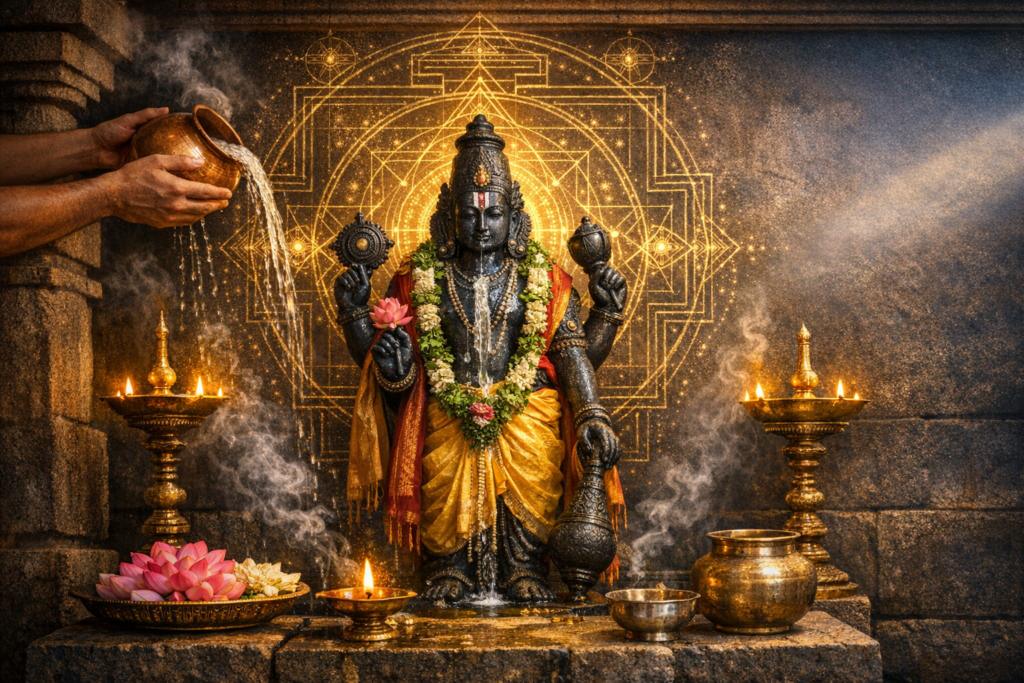
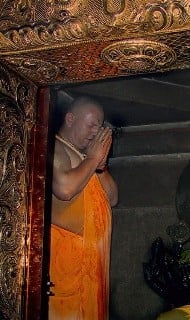
“This is possibly the only temple in China where we are still praying to a Hindu God,” says Li San Long, a Chedian resident, with a smile. The remark, quietly delivered before a small village shrine in Fujian, opens a door to a rarely discussed chapter of Asian history: the arrival, adaptation, and endurance of Hindu worship and iconography along China’s southeast coast. What appears today as a modest, community-run place of devotion is, in fact, a living footnote to a grand narrative carried by the Maritime Silk Road, Indian Ocean trade, and centuries of intercultural exchange.
Chedian’s continued veneration of a Hindu deity is not an isolated curiosity; it is a reminder that Hindu temples once stood in the bustling Chinese ports that connected South Asia, Southeast Asia, and East Asia. Archaeological, art-historical, and textual evidence demonstrates that Hindu motifs and deities reached Quanzhou (Zayton), Guangzhou (Canton), and other littoral nodes during the Song (960–1279) and Yuan (1271–1368) dynasties, precisely when Chinese maritime commerce expanded dramatically. These shrines—some now fragmentary or absorbed into larger complexes—testify to a shared cultural heritage that linked Indian and Chinese societies through commerce, craft, and devotion.
The context is the high tide of the Maritime Silk Road, when Indian Ocean trade brought pepper, textiles, aromatics, precious woods, and metallurgical know-how to China’s ports, while ceramics, silks, and sophisticated financial practices moved outward. South Indian (especially Tamil) merchant guilds operating across the Indian Ocean world intersected with Chinese maritime networks, anchoring diasporic communities that needed sanctuaries for worship and association. Such sanctuaries did not represent proselytizing missions; rather, they served as cultural hearths—temples that knit diaspora life to ancestral rites while welcoming local collaborators, artisans, and patrons into a cosmopolitan urban fabric.
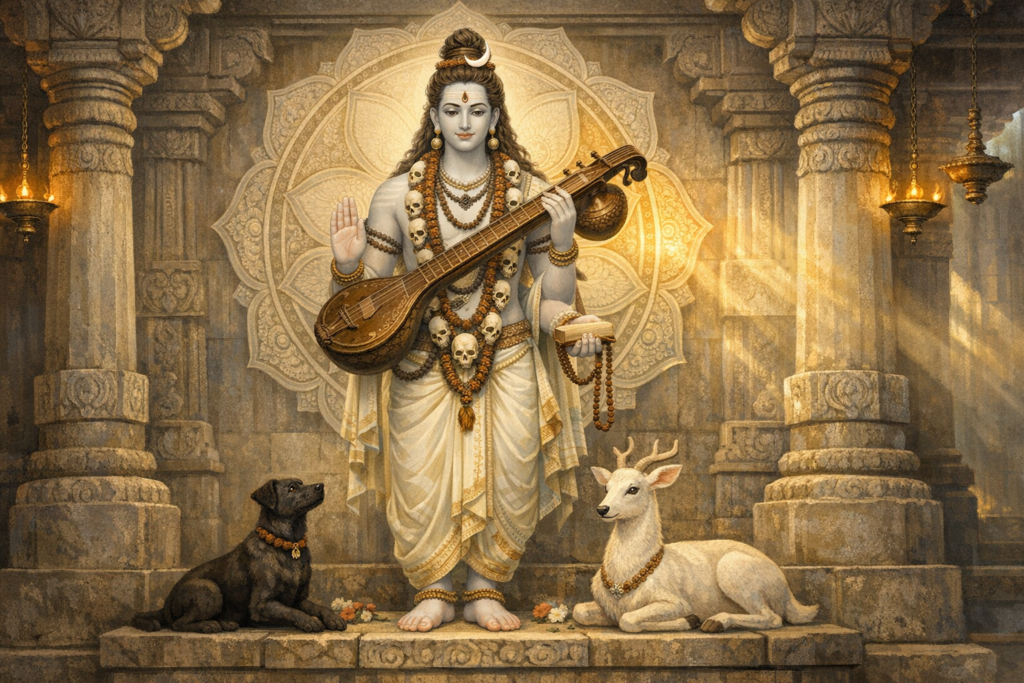
Port cities like Quanzhou became epicenters of this intercultural mosaic. Song-era gazetteers and the writings of travelers attest to foreign merchants settled there, while modern archaeology has recovered material traces of their religious lives. In several cases, the archaeological footprint is unmistakable: iconographic programs, sculptural fragments, and temple columns carved with unmistakably Indic motifs—floral bands, vyalas, dancers, elephants, and depictions consistent with Shaiva, Vaishnava, and Ganesha traditions.
Quanzhou’s Kaiyuan Temple, a major Buddhist complex, preserves two granite columns and other stonework whose stylistic and iconographic elements align with South Indian Hindu temple architecture of the 12th–14th centuries. Art historians have long noted the workmanship—lotus bands, yali-like creatures, and deity panels—suggesting the reuse of structural components from a Hindu shrine once patronized by merchant communities. Nearby, the Quanzhou maritime collections house sculptures attributed to Hindu deities, reinforcing the picture of a dynamic, plural religious landscape during the Song–Yuan zenith of Indian Ocean trade.
Beyond Quanzhou, scattered finds and documentary references indicate a broader presence along the coast. Guangzhou, a maritime hub for over a millennium, records the ebb and flow of foreign settlements that included Indian traders. While many once-independent shrines vanished due to urban redevelopment, political change, or syncretic absorption into larger complexes, their residues—stone fragments, iconographic borrowings, and ritual survivals—still surface in museums, temple courtyards, and local memory.
Religious pluralism along China’s coast did not operate in sealed compartments. Instead, a process of syncretism and mutual translation unfolded across Buddhist, Hindu, and local traditions. Several deities central to Indic cosmology entered the East Asian Buddhist pantheon as protectors and guardians. Skanda (Kartikeya) appears in Chinese temples as Weituo; Mahākāla—an aspect linked to Shaiva traditions—becomes Daheitian in tantric Buddhist contexts; and Vinayaka (Ganesha) surfaces in esoteric lineages. Even at the level of language, core Indic philosophical terms traveled widely: dhyāna evolved into chan (Zen/Seon), while concepts such as karma and samsāra found Chinese renderings and doctrinal homes within Buddhist scholasticism.
Against that historical backdrop, the shrine at Chedian becomes legible as a living vestige—less a curious anomaly than a last echo of a once-extensive network of Hindu worship spaces. The community’s rites—simple offerings, incense, and seasonal observances—sustain a memory that exceeds the village itself. For many visitors and researchers, the experience of standing before weathered stone and persistent devotion invokes a quiet awe: it is an encounter with continuity in a landscape transformed by centuries of commerce, politics, and cultural change.
Conservation frameworks have begun to recognize this layered past. Quanzhou’s inscription as a UNESCO World Heritage site highlights the city’s role as an emporium of the world during the Song–Yuan period, emphasizing its cosmopolitan religious ecology—including Islamic, Manichaean, Christian, Buddhist, and Hindu traces. Within that framework, the Hindu sculptural corpus stands out as both fragile and invaluable, needing careful documentation, protection, and interpretation that does justice to its South Asian origins and its Chinese afterlife.
Technically, reconstructing this story relies on interdisciplinary methods. Art historians analyze iconography and stylistic features—such as posture, attributes, and attendant figures—to identify deities and regional schools. Archaeologists consider quarry marks, tool signatures, and regional stone types to trace provenance. Epigraphists hunt for donor names, guild titles, and dates; when inscriptions are absent, stratigraphic context and comparative stylistics provide relative dating. Scholars of maritime trade triangulate this with shipwreck cargoes, ceramic typologies, and port records, linking the arrival of Indic art to known waves of Indian Ocean commerce.
South Indian circuits, particularly during the Chola Dynasty (c. 9th–13th centuries), often function as the connective tissue in this reconstruction. Chola maritime power intersected with merchant guild networks—such as the famed Ainnurruvar and Manigramam—whose activities are epigraphically attested across South and Southeast Asia. While direct inscriptions in coastal China are rare, the stylistic affinity of surviving carvings, the timing of Song–Yuan commercial expansion, and the well-documented reach of Tamil merchant communities jointly support the conclusion that Hindu shrines in ports like Quanzhou were sustained by those very transoceanic networks.
Situating these sites within the broader dharmic family underscores an ethic of unity amid diversity. Hinduism, Buddhism, Jainism, and Sikhism share civilizational threads—dharma, non-harm, disciplined self-cultivation, and reverence for learning—that historically enabled respectful coexistence. China’s absorption of Indic ideas via Buddhism, and the quiet persistence of Hindu worship in places like Chedian, illustrate how these traditions can interact without erasing difference. Framed through this lens, the remnants of Hindu temples in China become symbols of interreligious harmony and intellectual exchange, rather than markers of separation.
There are also contemporary implications for cultural diplomacy and Indo-China relations. Joint academic projects, traveling exhibitions, digital archives, and conservation workshops can safeguard the material record while deepening public understanding. Collaborative study of maritime trade and religious heritage—spanning archaeology, history, art history, and epigraphy—offers a constructive, non-political avenue for engagement. Such efforts strengthen the shared custodianship of a heritage that belongs to both shores of the Indian Ocean and to the wider East Asian sphere.
Preserving living practice is as vital as conserving stone. Community-centered documentation in villages like Chedian—ritual calendars, oral histories, icon caretaking—can be integrated with artifact conservation to protect both tangible and intangible heritage. Modest signage, bilingual interpretive materials, and partnerships with local schools ensure that younger generations inherit context alongside custom. In this way, the site functions simultaneously as a shrine, a classroom, and a bridge across time.
Emotionally, the endurance of a single flame or the fragrance of incense can carry more history than a shelf of reports. For those who have watched devotees in Fujian bow before an image that traveled oceans in memory and form, the encounter affirms that culture is not static display but living practice. The smallness of Chedian’s shrine, far from diminishing its importance, magnifies its resonance: it is a community’s steadfast answer to oblivion.
Returning to the words heard at the shrine—“This is possibly the only temple in China where we are still praying to a Hindu God”—the claim may be debated by specialists who track dispersed sites and syncretic survivals. Yet the sentiment expresses a truth that scholarship repeatedly confirms: the historical presence of Hindu worship in China is real, its imprint is measurable, and its spirit endures—sometimes in repurposed columns within a grand Buddhist temple, sometimes in a museum case, and sometimes, as in Chedian, in the living rhythms of village devotion.
In recognizing these traces—material and immaterial—the narrative shifts from a forgotten footnote to a shared chapter in Asian history. The story of China’s Hindu temples is, ultimately, a story of people and pathways: of merchants and monks, sculptors and sailors, rituals and relationships. It invites renewed attention, not only to conserve artifacts or rewrite textbooks, but to celebrate a civilizational capacity for hospitality, exchange, and unity in spiritual diversity.
Inspired by this post on Dandavats.