Sri Prasanna Venkateswara Swamy Temple at Buragamanda village in Sadum mandal, Chittoor district (Andhra Pradesh), will conduct Balalayam rituals in the traditional manner from February 23 to 26, 2026. As part of the programme, Acharya Ritvik Varanam is scheduled at 9:00 AM on February 23, 2026.
Balalayam (Bāla-ālaya) refers to the temporary sanctum arrangement and the ritually mediated transference of divine presence (chaitanya) to an interim abode or utsava murti, as prescribed in the Vaishnava Agama. This transition enables conservation or preparatory works in the main garbhagriha while ensuring that nitya-archana and nitya-naivedya continue without interruption.
In Agamic praxis, such transitional rites typically precede Samprokshana (Kumbhabhishekam), the grand reconsecration that reaffirms the sanctity of the temple’s architectural core. By safeguarding unbroken worship, the Balalayam functions as a bridge between heritage care and daily devotional life.
Acharya Ritvik Varanam marks the formal appointment of the acharya and ritviks who lead and supervise the ceremonies. Through sankalpa, guru-vandanam, and procedural recitations, they assume ritual responsibility on behalf of the kshetra and the devotee community.
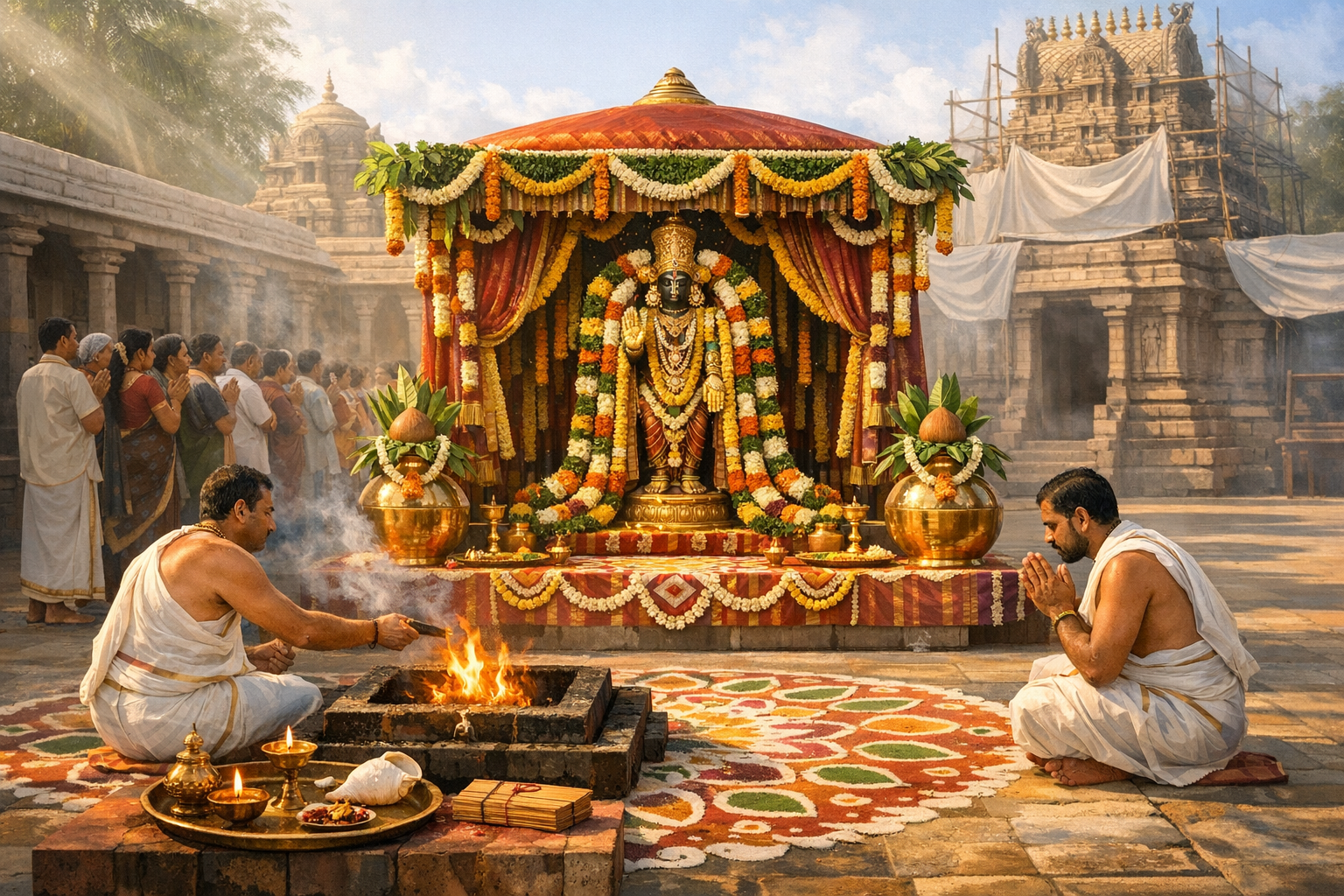
A conventional multi-day sequence for Balalayam often comprises Punyahavachanam (purificatory rites), Vastu Puja, Mrtsangrahanam (ritual gathering of earth), Ankurarpanam (sowing of sacred seeds), Yagasala pratistha (consecration of the ritual pavilion), Kalasha-sthapana, and Avahana-Utsarga for the interim enshrinement. Variations reflect the temple’s archaka parampara and the governing Agama.
Kalashas, energized through mantra and homa, act as repositories of prana-shakti. Their subsequent abhishekam and sprinkling confer sanctity on the spaces, icons, and participants, aligning the physical environment with the ritual geometry enjoined in Agama texts.
Across Andhra Pradesh, Venkateswara temples generally follow either Vaikhanasa or Pancharatra tradition. While specific liturgical details at Buragamanda are determined by the temple’s hereditary archakas, both traditions uphold the shared theological aim of preserving dharma through uninterrupted worship.
From a Temple Architecture and conservation standpoint, Balalayam is indispensable when structural interventions are planned for the garbhagriha, vimana, or mandapa. The ritual transfer of presence allows artisans and sthapatis to work responsibly while the temple’s sacral rhythm remains intact.
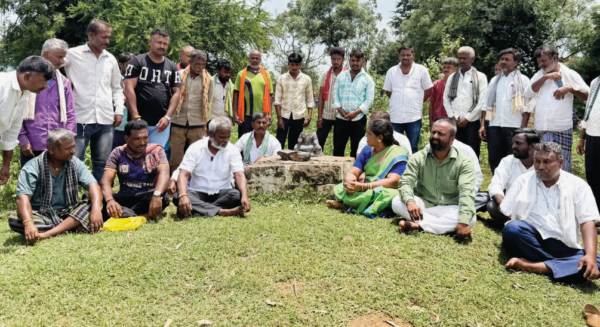
Devotees in and around Chittoor district often observe simple vratas, adopt sattvic food, and engage in nama-japa during these samskaras. Quiet participation, modest attire, orderly queuing, and attention to archaka guidance help sustain kshetra maryada and enhance collective experience.
Complementary parayana during Vaishnava consecration rites commonly includes Vishnu Sahasranama, Purusha Sukta, Narayana Sukta, Sri Suktam, and select Divya Prabandha pasurams, which harmonize with Agama mantras and Vedic chant. Such recitations deepen bhakti while strengthening social cohesion.
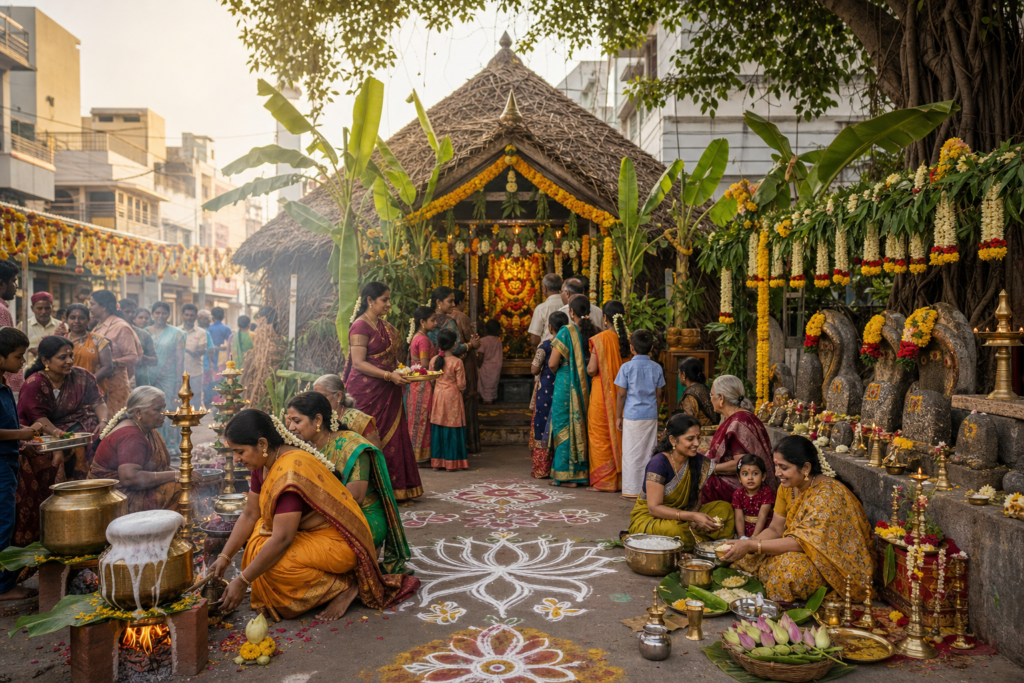
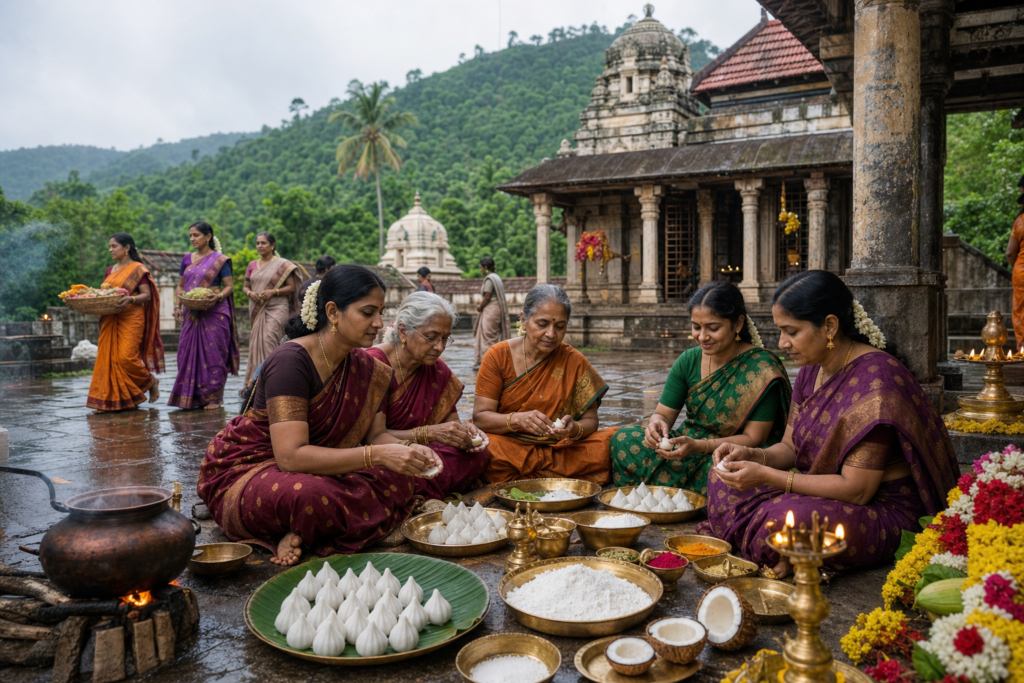
Many families experience these rites as a living pedagogythe fragrance of sambrani, the resonance of ghanta-nada, and the luminous presence of homa-agni together evoke continuity with ancestral practice. The Balalayam thereby becomes both a spiritual and cultural touchstone.
Although Balalayam is rooted in the Hindu temple ritual corpus, its ethical orientationpurification, seva, restraint, and harmonyresonates with the wider dharmic ethos shared by Hinduism, Buddhism, Jainism, and Sikhism. The ceremony thus models a civilisational grammar of reverence and responsible stewardship.
At Buragamanda, the Balalayam programme will be observed from February 23 to 26, 2026, with Acharya Ritvik Varanam at 9:00 AM on February 23. Traditional arrangements for darshan and nitya-archana typically continue throughout, guided by the temple’s established Agama.
As a convergence of ritual precision and community devotion in Andhra Pradesh, the Balalayam at Sri Prasanna Venkateswara Swamy Temple affirms cultural resilience while inviting devotees to renewed contemplation of dharma. The kshetra’s continuity of worship exemplifies the living vitality of Hindu temples.
Within the multi-day schedule, detailed timings for individual rites are ordinarily announced on-site by temple functionaries. Observing instructions from volunteer teams enables smooth movement, safeguards sanctity, and allows more devotees to participate meaningfully.
Inspired by this post on Hindu Pad.