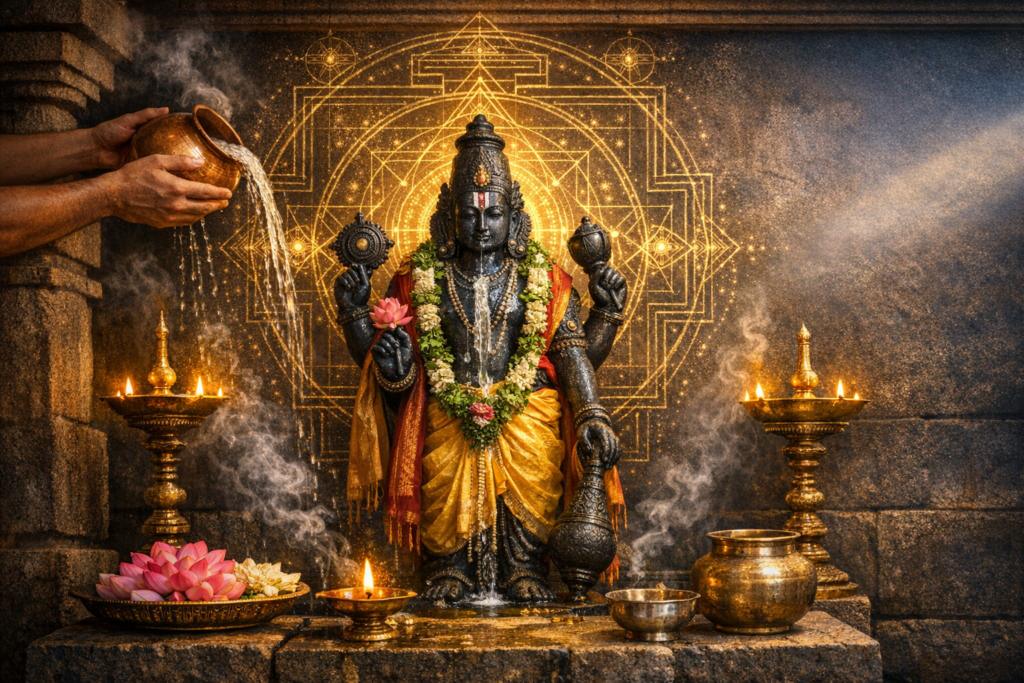
Hatkeshwar Jayanti (Hatkeshwar Mahadev Jayanti) commemorates the appearance of Lord Hatkeshwar, a highly revered form of Lord Shiva venerated across Western and Central India and especially honored as Kula Devata by many families. The observance is both devotional and genealogical in spirit, weaving together worship of Shiva with remembrance of ancestral lineages, communal service, and ethical commitments aligned with dharma.
In 2026, Hatkeshwar Jayanti date is April 1. As per the Hindu calendar, the festival is observed on Chaitra Chaudasana—the Chaturdashi (14th lunar day) of the month of Chaitra. In many regional Panchangas, particularly in Gujarat, this appears as Chaitra Vad Chaudas (Krishna Paksha Chaturdashi). Because tithi is a lunar measure and therefore location-specific, devotees outside India are advised to confirm local tithi timings with a reliable Panchang to ensure observance during the correct lunar window.
Hatkeshwar (also rendered as Hatakeshvara in Sanskritic sources) is an epithet of Shiva. The name is traditionally associated with luminous purity (hataka can denote “gold”) and protective guardianship, themes that align closely with Shiva’s role as benevolent Lord (Mahadeva) who upholds order while offering refuge to seekers. In practice, devotion to Hatkeshwar Mahadev expresses Shiva-bhakti through Shivalinga worship, recitation of sacred stotras, and vrata (observational vows) that emphasize self-restraint, clarity, and compassion.
A distinctive feature of Hatkeshwar Jayanti is its Kula Devata orientation within numerous families—most notably among the Nagar community (often referred to as Nagar Brahmins) of Gujarat and parts of Rajasthan and Maharashtra. Many households mark the day by honoring familial lineages, renewing ethical vows, and offering gratitude for intergenerational protection and guidance. This familial dimension deepens the festival’s emotional resonance, as memories of elders, traditional recipes for prasad, and inherited stotras are brought into an annual cycle of remembrance and renewal.
Several temples serve as focal points for Hatkeshwar Mahadev Jayanti. The Hatkeshwar Mahadev Temple at Vadnagar (Gujarat) is especially significant for families connected to the region; the shrine is notable for its Nagara-style superstructure, iconographic panels, and ritual calendar anchored in the Chaitra fortnight. In Central India, Raipur’s Hatkeshwar Mahadev Temple on the Kharun River similarly hosts elaborate abhisheka, Rudra patha, and annadana on the Jayanti, reinforcing the festival’s blend of personal devotion and public service.
Although both Hatkeshwar Jayanti and Maha Shivaratri are Shiva-centric observances linked to a Krishna Paksha Chaturdashi, they belong to different lunar months and embody complementary emphases. Maha Shivaratri (Magha/Maasi Krishna Chaturdashi) foregrounds all-night vigil and cosmic contemplation of Shiva’s anugraha (grace). Hatkeshwar Jayanti, by contrast, in Chaitra, often places special accent on Kula Devata remembrance, pradosha worship, and community welfare, while retaining core Shaiva practices such as Shivalinga abhisheka and the chanting of Om Namah Shivaya.
From a calendrical standpoint, the defining element of Hatkeshwar Jayanti is Chaturdashi in Chaitra. In many regional traditions, observances that honor Shiva prioritize the pradosha segment (the twilight-centered period on Chaturdashi) for puja. As a result, even when the tithi spans two civil dates in a given locale, communities typically orient the main worship toward the Chaturdashi evening. This approach harmonizes with the well-established Shaiva preference for pradosha-kala upasana.
The spiritual discipline (vrata) observed on this day is intentionally sattvic. Many devotees keep a fast (upavasa) or follow a fruit-and-milk regimen (phalahara), maintaining quietude, study, and service. This measured practice is not merely ritual correctness; it is an internal method for refining attention and intention—a lived expression of ahimsa and self-mastery that resonates with the broader dharmic ethos shared across Hindu, Buddhist, Jain, and Sikh traditions, including compassion (karuna), generosity (dana), and service (seva).
A commonly observed sequence for Hatkeshwar Mahadev Jayanti begins with sankalpa—an explicit statement of intention specifying place, date, and purpose (for example, Sri Hatkeshwar-jayanti-vrate). The sankalpa anchors the devotee’s resolve to honor lineage, uphold dharma, and seek Shiva’s benevolence for family and community. This is followed by purification rites such as achamana and sprinkling of sanctified water, aligning body and mind with the day’s spiritual objectives.
Shivalinga abhisheka is central. Panchamrita (a blend commonly composed of milk, yogurt, ghee, honey, and sugar) is used according to one’s sampradaya, interleaved with pure water libations and soft recitation of mantras. Across many households and temples, the rhythm of abhisheka is synchronized with the chanting of the Sri Rudram (Rudra Namakam and, where followed, Chamakam), along with the Panchakshari mantra Om Namah Shivaya, invoking purification, steadiness, and inner luminosity.
Bilva patra (bilva leaves) are then offered as alankara. The trifoliate bilva is symbolically associated with Shiva and is traditionally considered integral to Shaiva upasana. Ethical gathering of bilva—without damaging trees and with mindful reverence—is often highlighted by family elders, who pass down fine points of practice such as rinsing the leaves gently, ensuring they are fresh, and placing them with the stalk side facing away from the linga as per customary guidance.
Devotees commonly recite the Tryambaka mantra (Maha Mrityunjaya Mantra—Tryaṁbakaṁ yajāmahe…) and stotras such as the Shiva Mahimna Stotra, Lingashtakam, and short hymns from the Skanda Purana or other Shaiva compilations preserved in family tradition. The sonic cadence of these hymns is held to aid one-pointedness (ekagrata), while their themes—grace, protection, and release from fear—deepen the day’s devotional psychology.
Naivedya offerings are prepared in a sattvic manner and later shared as prasada within families and communities. The social dimension often includes annadana (food distribution), community cleanup, tree planting, and support for local gaushalas or charitable clinics. These outward actions express the inner ethic celebrated on Hatkeshwar Jayanti: devotion must translate into tangible care for living beings and the ecosystems that sustain them.
A notable, living practice linked to Hatkeshwar Jayanti is the renewal of bonds with elders and the retelling of family narratives connected to the Kula Devata. Genealogical details such as gotra and pravara are remembered and taught to younger generations, often alongside practical instruction in ritual procedure. This intergenerational transmission preserves not only religious knowledge but also the ethical grammar—truthfulness, restraint, mutual respect—that undergirds stable social life.
In the inclusive spirit championed by this platform—fostering unity among the dharmic traditions of Hinduism, Buddhism, Jainism, and Sikhism—Hatkeshwar Jayanti is best understood as a day that affirms shared values. Ahimsa, compassion, disciplined living, and service are virtues celebrated across these traditions. When devotees offer abhisheka, keep a fast, or engage in annadana, they are participating in a wider dharmic culture that respects multiple paths while emphasizing the common aim of inner refinement and societal harmony.
For planning, many households keep the central puja during pradosha-kala on April 1, 2026 (local time in India), supplementing it with an early-morning sankalpa and a brief evening arati. Those outside India should verify whether Chaturdashi prevails at their local pradosha; if not, they align worship with the tithi span recognized by their community or temple. Such care in timing exemplifies the Hindu calendar’s precision and its sensitivity to lunar measures that shape the devotional cadence of the day.
Ultimately, Hatkeshwar Jayanti offers a complete Shaiva sadhana in microcosm: inner purification through vrata, mantra-japa for mental steadiness, abhisheka for consecration, stotra-paraayana for insight, and dana-seva for societal well-being. Families frequently describe a palpable quietude settling over the home after the puja—an atmosphere of gratitude that endures beyond the calendar date and informs everyday conduct. In that enduring ethic lies the true legacy of Hatkeshwar Mahadev.
Inspired by this post on Hindu Pad.