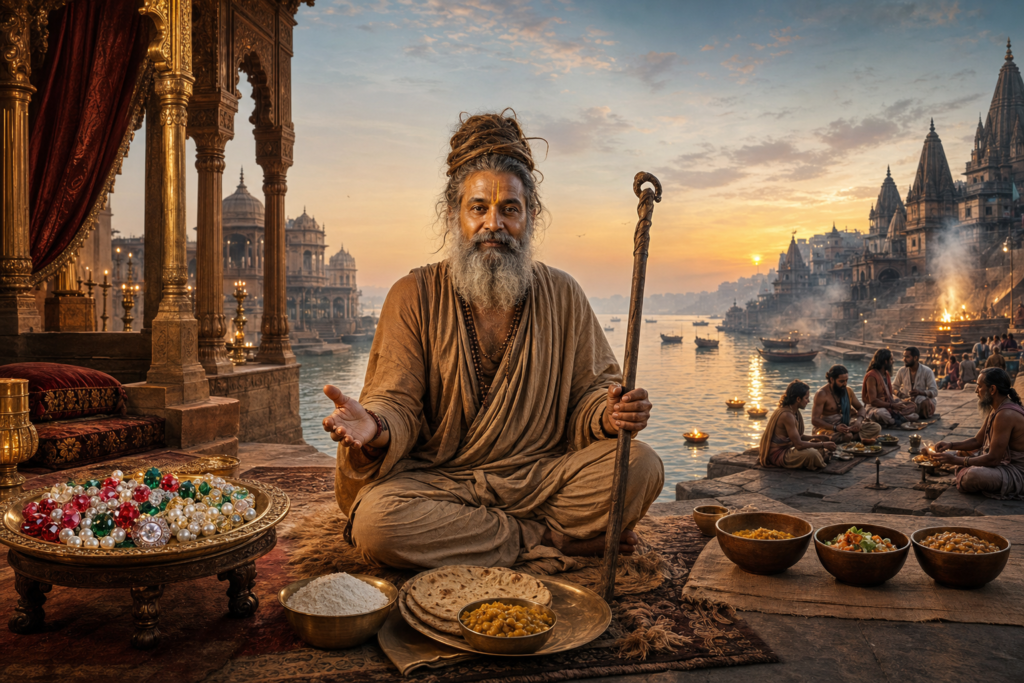
Sri Caitanya Math in Mayapur is revered as the place Srila Bhaktisiddhanta Sarasvati Thakura called “Vrindavana Pattan”the site where the sacred forests of Vrindavana are manifest. Through the spiritual potency attributed to Sarasvati Thakura, the holy sites of Syama-Kunda, Radha-Kunda, and Giri-Govardhana are present in this landscape, creating a devotional geography that mirrors Vrindavana while nurturing a broad, inclusive culture of pilgrimage.
Founded in 1918, the Math served as the headquarters for Krishna Consciousness preaching across India, anchoring the early Gaudiya renaissance in the modern era. Historical accounts note that at its peak, approximately 800 resident devotees supported a constant stream of visitors, reflecting the institution’s organizational discipline and its role as a vibrant center of bhakti practice, education, and community outreach.
Visitors frequently report a contemplative atmosphere reminiscent of Vrindavana’s mood when circumambulating the manifestations of Syama-Kunda, Radha-Kunda, and Giri-Govardhana. The setting encourages meditative reflection, kirtan, and study, while the temple architecture and daily seva cultivate an experience that is both aesthetically refined and spiritually grounding.
On the appearance day of Srila Bhaktisiddhanta Sarasvati Thakura, the community reflects on themes central to his legacyprecision in practice, intellectual rigor, and compassionate service. These values resonate across dharmic traditions, aligning with the shared commitments to non-violence, inner discipline, and compassionate action that are cherished in Hinduism, Buddhism, Jainism, and Sikhism.
As a living heritage site, Sri Caitanya Math in Mayapur functions as both a temple and a research-friendly environment, inviting pilgrims, students, and scholars to engage with Gaudiya history, sacred geography, and devotional aesthetics. The confluence of “Vrindavana Pattan” with Mayapur’s broader sacred landscape deepens understanding of pilgrimage networks and the dynamic continuity of bhakti in contemporary India.
For those seeking clarity, the Math offers a structured encounter with Krishna Consciousness that emphasizes unity within diversityhonoring varied modes of worship while guiding visitors toward a shared ethos of reverence and service. In this way, Sri Caitanya Math stands as a bridge between Vrindavana and Mayapur, between historical memory and living practice.
Inspired by this post on Dandavats.