
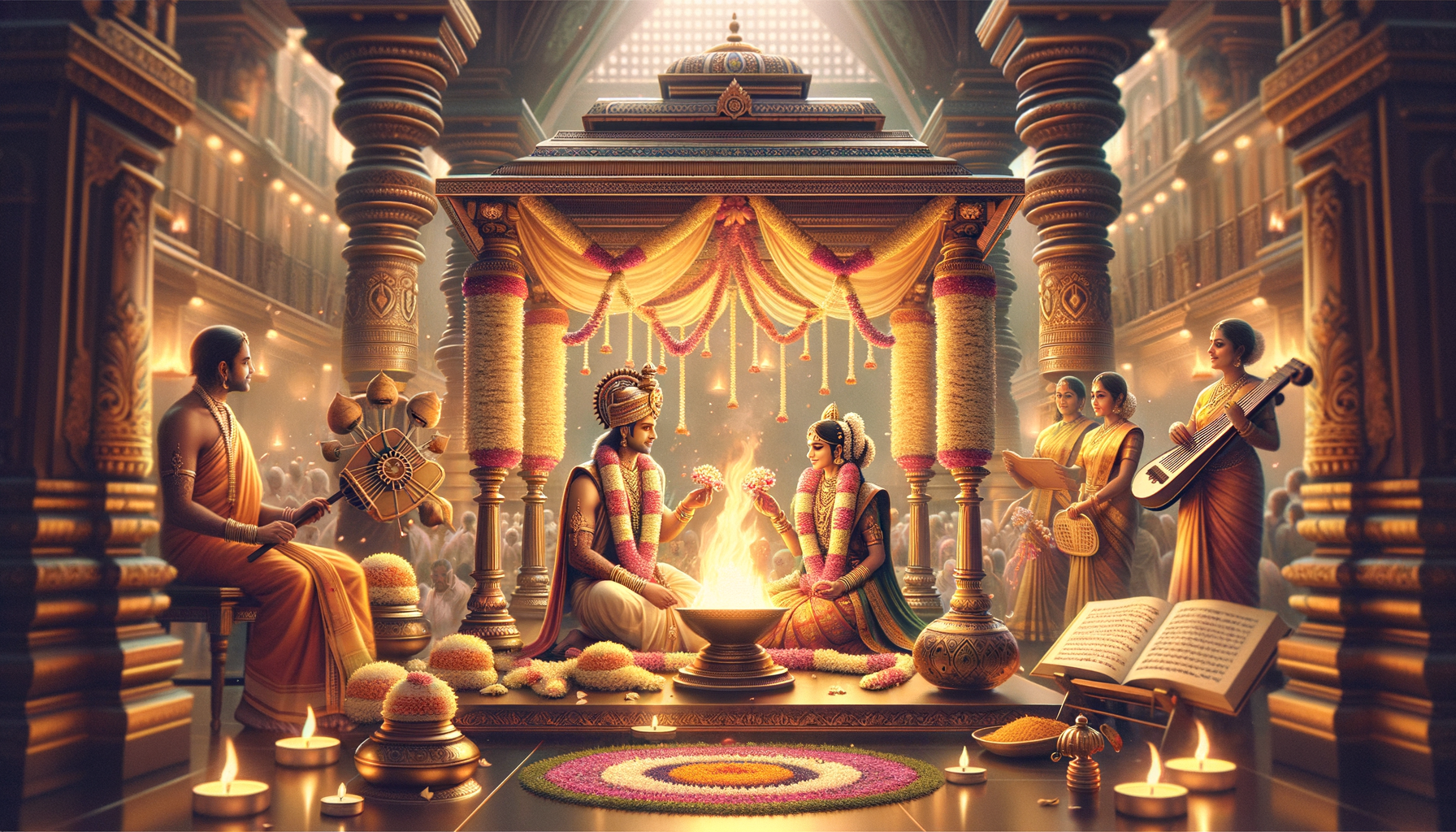
Thirumana Kandam appears in some present-day Ramayana recitations and printed compilations as a discrete chapter devoted to the marriage of Sri Rama and Sita. It does not occur as a separate kanda in the Sri Valmiki Ramayana; rather, the marriage narrative (Sita’s swayamvara and the subsequent wedding) is embedded within Bala Kanda. The emergence of a standalone “Thirumana Kandam” reflects later devotional practice, and traditional accounts attribute its composition to a Sanskrit scholar roughly a century ago, offered as an expression of gratitude to Prabhu Sri Rama.
In Tamil, “Thirumana” denotes marriage, and the devotional framing of Sita Kalyanam as a distinct liturgical unit has been especially influential in South India. While Sri Valmiki Ramayana provides the canonical narrative arc, regional retellings such as the Kamba Ramayanam and allied performance traditions helped center the wedding as a self-contained celebration. Over time, communities curated a focused chapter for collective singing, storytelling, and temple observances, which many now recognize as Thirumana Kandam.
The function of Thirumana Kandam is primarily devotional. By giving the Sita Kalyanam its own space, congregations can dwell on themes that the wedding foregroundsdharma anchored in companionship, mutual respect, familial blessing, and community joy. For devotees, hearing or singing these verses during Sita Kalyanam utsavams deepens bhakti, builds communal bonds, and keeps the ethical heart of the Ramayana alive in shared practice.
From a textual-history perspective, such devotional accretions are neither unusual nor accidental. Across Hindu scriptures and related dharmic literatures, living traditions often extract, expand, or reframe pivotal episodes for kirtan, harikatha, and festival use. This dynamism parallels the broader dharmic ethosseen in Hinduism, Buddhism, Jainism, and Sikhismof adapting timeless values like compassion, truthfulness, and responsibility to evolving cultural settings. In this light, Thirumana Kandam can be appreciated as a bridge between the epic’s narrative integrity and the community’s need for a focused, celebratory meditation on Sita Kalyanam.
Scholarly clarity remains important. Identifying Thirumana Kandam as a later devotional composition preserves the distinction between the Sri Valmiki Ramayana’s structure and subsequent liturgical adaptations. At the same time, recognizing the devotional text’s role in spiritual life encourages respectful engagement rather than a false opposition between “textual purity” and “popular practice.” Both critical study and living tradition enrich understanding.
For readers and practitioners, a balanced approach is fruitful: study the Bala Kanda passages narrating the swayamvara and marriage in a reliable translation of the Sri Valmiki Ramayana, then experience Thirumana Kandam in community settingsparticularly during Sita Kalyanam programs. Listening to compositions such as “Sita Kalyana Vaibhogame,” attending temple celebrations, and comparing regional renderings alongside the source text foster both accuracy and devotion.
Ultimately, Thirumana Kandam exemplifies how the Ramayana’s moral and spiritual core continues to inspire. As a devotional chapter, it honors Sri Rama and Sita while inviting contemporary audiences into a shared space of reverence and ethical reflection. Approached with both scholarly care and devotional warmth, it strengthens unity across dharmic traditions by celebrating virtues that are universally cherished.
Inspired by this post on Hindu Pad.










